
Iron deficiency triggers restless leg syndrome because your brain can’t produce enough dopamine to control muscle movement, even when your blood iron levels appear normal. Your brain requires adequate iron to manufacture dopamine in the basal ganglia, which regulates voluntary motor functions. When brain iron drops, dopamine production stalls, causing involuntary leg movements and muscle spasms that worsen at night. Understanding this connection reveals why targeted iron therapy can restore proper neurotransmitter balance.
The Connection Between Iron Levels and Brain Function

Although your blood iron levels might appear normal on standard tests, your brain could still be experiencing iron deficiency that directly contributes to restless legs syndrome.
Brain iron deficiency can trigger restless legs syndrome even when your blood iron tests show completely normal levels.
This disconnect occurs because brain iron stores can become depleted independently of your peripheral iron status. When you have low brain iron, it disrupts dopamine production in the basal ganglia, the brain region responsible for controlling muscle activity and movement.
Related guide: Best Leg Wedge Pillows for Elevating Circulation
MRI studies consistently show that people with RLS have reduced iron levels in specific brain areas, particularly affecting dopamine pathways.
This explains why many RLS patients respond positively to iron supplementation despite having normal serum ferritin levels. Your brain’s iron requirements differ from your body’s general iron needs, making brain-specific deficiency possible even when blood tests appear normal.
How Dopamine Production Depends on Adequate Iron
Your brain requires adequate iron to produce dopamine, the neurotransmitter that controls muscle movement and prevents the uncomfortable sensations of RLS.
When you’re iron deficient, particularly in brain tissue, your dopamine production drops considerably even if your blood iron levels appear normal.
This disruption in neurotransmitter synthesis directly triggers the muscle spasms and involuntary leg movements you experience with restless leg syndrome.
Iron’s Dopamine Connection
When your body lacks sufficient iron, it struggles to produce adequate amounts of dopamine, an essential neurotransmitter that controls movement and muscle activity.
Iron serves as an important cofactor in dopamine synthesis, meaning without adequate iron levels, your brain can’t manufacture this critical chemical messenger effectively.
This deficiency creates a cascade effect throughout your nervous system. When dopamine production drops due to low iron levels, you’ll likely experience the uncomfortable sensations and uncontrollable urge to move that define restless legs syndrome.
Research shows that about 15% of RLS patients have below-normal iron in their blood, directly correlating with reduced dopamine availability in their brains.
The good news? Iron supplementation often improves RLS symptoms, demonstrating how restoring proper iron levels can normalize dopamine function and reduce those troublesome nighttime leg sensations.
Brain Iron Deficiency
The relationship between iron and dopamine becomes even more complex when you examine what happens specifically in your brain tissue. You might’ve normal serum iron levels, yet still experience RLS because brain iron deficiency can occur independently of your blood iron status.
MRI studies reveal that many RLS patients show low iron levels specifically in their brain tissue, even when blood tests appear normal.
This brain iron deficiency directly impairs dopamine synthesis in the basal ganglia, where movement regulation occurs. Your brain requires adequate iron concentrations to produce sufficient dopamine for proper muscle control.
When brain iron drops below ideal levels, dopamine production falters, triggering the uncomfortable sensations and irresistible urge to move that characterize RLS, particularly during rest periods.
Neurotransmitter Production Requirements
Although dopamine receives widespread attention as a “feel-good” neurotransmitter, its production depends entirely on a complex biochemical cascade that can’t function without adequate iron.
Your brain uses iron as a critical cofactor for tyrosine hydroxylase, the enzyme responsible for converting tyrosine into L-DOPA, dopamine’s direct precursor. When iron deficiency occurs, this neurotransmitter production pathway becomes severely compromised.
Without sufficient iron, your brain simply can’t manufacture enough dopamine to maintain normal neurological function. This deficiency becomes particularly problematic as dopamine levels naturally decline throughout the day.
If you’re already dealing with low iron stores, this evening dopamine drop intensifies, triggering the uncomfortable sensations and irresistible urge to move that characterize restless leg syndrome.
Your body’s neurotransmitter production fundamentally stalls without this essential mineral.
Understanding the Basal Ganglia’s Role in Movement Control
Deep within your brain, a collection of interconnected structures called the basal ganglia orchestrates every deliberate movement you make. These nuclei control voluntary motor functions, procedural learning, and routine behaviors that you perform daily.
When the basal ganglia function properly, your movements flow smoothly and coordinated.
Dopamine serves as the critical neurotransmitter that enables this seamless movement control. Your brain produces dopamine within the basal ganglia, and when levels drop—particularly in the evening—problems emerge.
This dopamine deficiency impairs the basal ganglia’s ability to regulate movement, leading to involuntary muscle movements and uncomfortable sensations.
In restless legs syndrome, disrupted dopamine signaling creates that irresistible urge to move your legs, especially when dopamine levels naturally decline at night.
Why Iron Deficiency Disrupts Neurotransmitter Balance

When your body lacks sufficient iron, it disrupts the delicate biochemical processes needed to produce dopamine in your brain. This neurotransmitter is essential for controlling muscle activity and movement, and when dopamine levels drop, you’re more likely to develop restless legs syndrome (RLS).
What’s particularly concerning is that you can have low brain iron levels even when your blood tests show normal iron levels. This explains why many RLS patients don’t realize iron deficiency is their underlying problem.
Research reveals that 35% of people with iron deficiency anemia experience RLS symptoms, compared to just 5% of the general population.
The good news? When you address iron deficiency through supplementation or dietary changes, you’ll often see significant improvement in your RLS symptoms as neurotransmitter balance gets restored.
The Science Behind Evening and Nighttime RLS Symptoms
As evening approaches, your brain’s dopamine levels naturally decline, which explains why your restless legs syndrome (RLS) symptoms become more intense during nighttime hours.
This decrease affects your brain’s basal ganglia, disrupting muscle activity and movement control when you’re trying to rest.
The science reveals four key factors behind evening RLS symptoms:
- Prolonged rest periods trigger the urge to move your legs as you wind down for sleep.
- Low brain iron levels contribute to nighttime symptom exacerbation, even when iron in the blood appears normal.
- Pregnancy-related iron demands intensify evening RLS due to hormonal changes and increased iron requirements.
- Iron deficiency anemia correlation affects 35% of individuals, with symptoms primarily worsening during nighttime hours.
Measuring Brain Iron Versus Blood Iron Levels
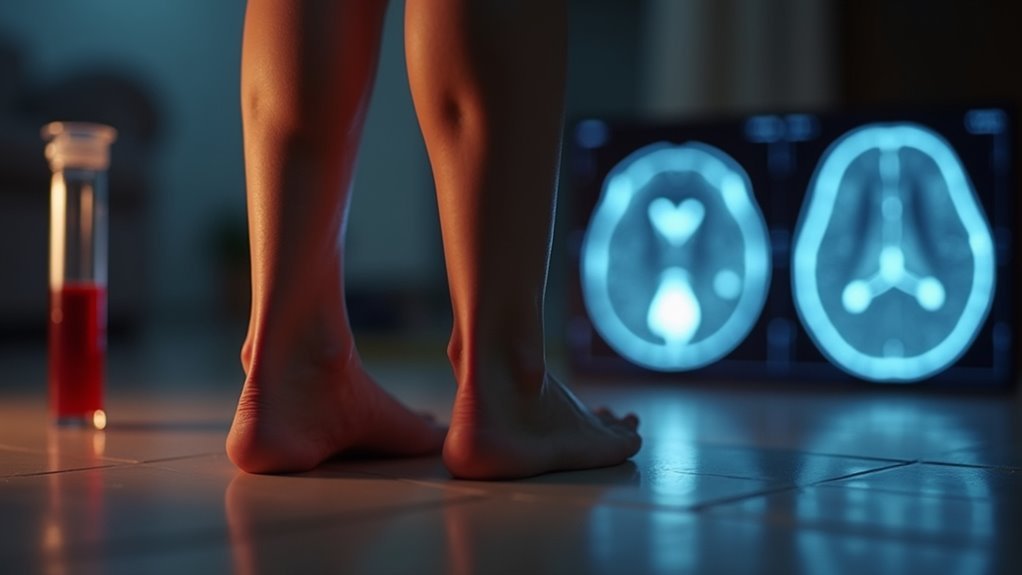
When you’re dealing with RLS, standard blood tests can’t tell you everything you need to know about your iron status.
Your brain iron levels might be dangerously low even when your blood work shows normal results, creating a diagnostic blind spot that’s frustrated doctors for years.
You’ll need to understand why measuring brain iron presents unique challenges and how medical professionals work around these limitations to assess your condition accurately.
Brain Iron Assessment Challenges
One of the most significant obstacles in treating RLS lies in accurately evaluating brain iron levels, as doctors can’t easily measure iron directly in your brain during routine clinical visits. This limitation creates several assessment challenges that affect your diagnosis and treatment:
- Blood tests don’t tell the whole story – You might’ve normal blood iron levels while experiencing brain iron deficiency, making standard ferritin tests unreliable indicators.
- MRI scans aren’t routine – Advanced brain iron assessment through specialized MRI remains limited to research settings rather than everyday clinical practice.
- Delayed diagnosis occurs frequently – Without proper brain iron assessment, you may experience prolonged symptoms before receiving appropriate iron therapy.
- Treatment gaps persist – Inadequate brain iron assessment leads to missed opportunities for targeted interventions.
Blood Test Limitations
While your doctor routinely orders blood tests to check iron levels, these standard measurements can’t reveal what’s happening inside your brain where RLS symptoms actually originate. Your serum ferritin and peripheral iron levels might appear completely normal, yet you’re still experiencing those uncomfortable sensations in your legs.
| Measurement Type | Location | RLS Relevance | Accessibility | Accuracy for RLS |
|---|---|---|---|---|
| Serum Ferritin | Blood | Limited | Routine | Often Normal |
| Peripheral Iron | Blood | Limited | Routine | Often Normal |
| Brain Iron | Brain Tissue | Direct | Requires MRI | Most Accurate |
| Brain MRI | Brain Tissue | High | Specialized | Research-based |
| Indirect Assessment | Clinical | Moderate | Available | Variable |
Studies show only 15% of RLS patients have below-normal blood iron levels, creating a diagnostic disconnect. MRI studies confirm this gap between blood and brain iron status affects treatment decisions.
Diagnostic Inference Methods
Because direct brain iron measurement remains impractical for most patients, doctors must rely on diagnostic inference methods that piece together clues from available tests.
These diagnostic inference methods help bridge the gap between blood markers and brain iron status:
- Ferritin level assessment – Your blood ferritin serves as the primary indicator, though it doesn’t always reflect brain iron stores accurately.
- MRI brain imaging – Specialized scans can reveal correlations between low brain iron and RLS symptoms when standard tests appear normal.
- Clinical symptom evaluation – Your RLS severity often correlates with iron deficiency, especially since 35% of IDA patients experience restless legs.
- Combined marker analysis – Doctors examine multiple indicators together rather than relying solely on blood iron levels to assess your overall iron stores.
Ferritin Testing as a Diagnostic Tool for RLS
How can doctors accurately diagnose the iron deficiency that drives restless legs syndrome when standard blood tests don’t tell the complete story?
The answer lies in ferritin testing, which measures your body’s stored iron rather than circulating iron levels. While you might’ve normal serum iron, ferritin testing reveals the true picture of your iron reserves.
When your ferritin drops to 50 mcg/L or below, you’re at high risk for RLS symptoms, even if other iron markers appear normal. This diagnostic tool helps doctors identify low levels of iron in your brain, which can’t be measured directly.
Studies consistently show that patients with these reduced ferritin levels respond well to iron supplementation, making this test essential for proper RLS diagnosis.
Iron Absorption Challenges in RLS Patients
If you’re dealing with RLS, you’ll likely face significant hurdles when trying to absorb iron through traditional oral supplements.
Your digestive system often can’t efficiently process these supplements, and you may experience uncomfortable gastrointestinal side effects that make consistent treatment difficult.
That’s why many doctors now recommend intravenous iron therapy, which bypasses your digestive system entirely and delivers iron directly into your bloodstream.
Poor Oral Iron Uptake
When you’re dealing with restless legs syndrome, your body’s ability to absorb iron from oral supplements can become appreciably compromised, creating a frustrating cycle where standard iron therapy fails to provide relief.
This poor oral iron uptake stems from several interconnected factors that make treating iron deficiency particularly challenging:
- Gastrointestinal interference – Your digestive system may struggle to process and absorb oral iron effectively, reducing bioavailability appreciably.
- Brain-specific iron requirements – Your brain needs more than minimal body iron stores, requiring higher doses that oral supplements often can’t deliver.
- Side effect limitations – Gastrointestinal reactions from oral iron can force you to reduce dosages or discontinue treatment entirely.
- Masked deficiency – You might’ve low brain iron levels despite normal serum ferritin, making standard oral supplementation inadequate for symptom relief.
Gastrointestinal Side Effects
One of the most significant barriers to successful oral iron therapy lies in the uncomfortable gastrointestinal side effects that plague many RLS patients.
You’ll likely experience nausea, constipation, and abdominal discomfort when taking oral iron supplements. These gastrointestinal side effects don’t just cause discomfort—they actively interfere with your body’s ability to absorb iron effectively.
About 30% of people taking oral iron report these troublesome symptoms, which often leads to skipping doses or abandoning treatment altogether.
When your digestive system can’t properly absorb iron due to these complications, your brain iron levels remain low, potentially worsening your RLS symptoms.
That’s why many doctors recommend IV iron therapy for patients who can’t tolerate oral supplements, since it bypasses your digestive system entirely.
IV Iron Benefits
While oral iron supplements often fall short due to poor absorption rates in RLS patients, IV iron therapy delivers iron directly into your bloodstream, circumventing the digestive challenges that hamper traditional treatment.
This targeted approach offers significant advantages for managing iron deficiency and restless leg symptoms:
- Rapid effectiveness – 76% of RLS patients with iron deficiency anemia experienced symptom reduction following IV treatment
- Extended relief – Improvements can last up to six months, providing sustained comfort
- Enhanced absorption – Direct delivery guarantees ideal iron levels in the body without gastrointestinal interference
- Comprehensive management – Addresses both underlying iron deficiency and RLS symptoms simultaneously
IV iron therapy represents a vital advancement in treating RLS associated with iron deficiency, offering hope when traditional oral supplements prove inadequate.
Dietary Sources of Iron for Symptom Management
Several dietary choices can greatly impact your iron levels and help manage restless leg syndrome symptoms. When selecting dietary sources of iron, focus on red meat, poultry, seafood, beans, dark leafy greens, and fortified cereals. These foods provide essential iron for effective management of restless legs.
You’ll boost iron absorption by pairing these foods with vitamin C-rich options like citrus fruits, strawberries, and bell peppers.
Adult men need about 8 mg of iron daily, while women require 18 mg, increasing to 27 mg during pregnancy.
Consider cooking with cast iron cookware to naturally increase your food’s iron content. Iron-rich snacks such as nuts and seeds can help you meet daily requirements and potentially reduce RLS symptom severity.
Oral Iron Supplementation Protocols and Dosing
When dietary changes aren’t sufficient to raise iron levels, your doctor may recommend oral iron supplementation as the next step in managing restless leg syndrome. This treatment becomes necessary when serum ferritin levels drop to 50 mcg/L or below.
Your supplementation protocol will typically include:
- Starting dose: 325 mg of ferrous sulfate taken daily
- Timeline expectations: Approximately one month for iron levels to increase and symptoms to improve
- Medical supervision: Regular monitoring to prevent toxicity and assess treatment response
- Alternative options: IV iron infusions if you experience gastrointestinal side effects or poor absorption
You shouldn’t attempt self-treatment with iron supplements. Proper medical oversight guarantees safe dosing while specialized diagnostic tools track your response to oral iron supplementation therapy.
When Intravenous Iron Treatment Becomes Necessary
When you can’t tolerate oral iron supplements due to gastrointestinal side effects or they’re simply not working, IV iron treatment becomes your next best option.
You’ll find that intravenous therapy can rapidly restore your iron levels and improve your RLS symptoms much faster than oral supplements.
If you’re dealing with severe iron deficiency anemia and persistent restless legs, IV iron offers a critical pathway to relief when traditional oral therapy has failed.
Oral Iron Fails
Although oral iron supplementation serves as the first-line treatment for iron deficiency-related restless legs syndrome, it doesn’t always deliver the results you need.
When oral iron falls short, several factors may be working against you:
- Poor gastrointestinal absorption – Your digestive system may not efficiently absorb iron from supplements, leaving your ferritin levels stubbornly low.
- Uncomfortable side effects – Nausea, constipation, and stomach upset can make oral iron intolerable, forcing you to discontinue treatment.
- Inadequate symptom relief – Even when you tolerate oral iron well, your RLS symptoms may persist without improvement.
- Underlying absorption disorders – Certain medical conditions can impair your body’s ability to absorb iron orally.
When these situations arise, IV iron becomes your next essential step toward symptom relief.
IV Treatment Benefits
Since oral iron has left you without adequate relief, intravenous iron therapy offers a direct pathway to restore your body’s iron levels and combat restless legs syndrome. IV infusion delivers iron directly to your bloodstream, bypassing gastrointestinal absorption issues that hindered oral supplements.
| Benefit | Timeline |
|---|---|
| Symptom relief begins | Within days |
| Peak improvement | 2-4 weeks |
| Duration of relief | Up to 6 months |
| Success rate for RLS patients | 76% experience significant relief |
| Brain iron delivery | Immediate increase |
When you’re an RLS patient with low hemoglobin levels, IV iron becomes essential. This treatment directly increases iron delivery to your brain, where deficient iron status triggers restless leg symptoms. You’ll likely experience meaningful improvements that traditional therapies couldn’t provide.
Timeline for Iron Therapy and Symptom Improvement
Understanding how quickly iron therapy can improve your restless leg syndrome symptoms helps set realistic expectations for treatment.
Your improvement timeline typically follows this pattern:
- First Month: You’ll need approximately one month of consistent iron therapy before seeing significant improvement in iron levels and noticeable reduction in symptoms of RLS.
- 4-6 Week Mark: Most patients report notable symptom relief during this timeframe as iron stores gradually replenish and reach therapeutic levels.
- Individual Variation: Your response time may differ based on absorption rates and iron deficiency severity, with some experiencing faster results than others.
- IV Therapy Exception: If you receive intravenous iron for severe deficiency, you might notice improvement within days rather than weeks.
Regular ferritin monitoring guarantees you’re reaching ideal levels.
Combining Iron Treatment With Other RLS Therapies
When iron deficiency contributes to your restless leg syndrome, you’ll often achieve the best results by combining iron treatment with other targeted treatments rather than relying on supplementation alone.
If your ferritin levels drop to 50 mcg/L or below, doctors typically recommend iron supplementation alongside medications like pramipexole or ropinirole for enhanced symptom control.
Studies show IV iron therapy can improve restless legs syndrome (RLS) symptoms in up to 76% of patients with iron deficiency anemia.
IV iron therapy demonstrates remarkable efficacy, improving RLS symptoms in three-quarters of iron-deficient patients according to clinical research.
You can further boost these results by incorporating non-pharmacological strategies like regular leg massage, stretching exercises, and consistent physical activity.
This multifaceted approach addresses both the underlying iron deficiency and immediate RLS symptoms, potentially improving your sleep quality and reducing nighttime discomfort more effectively than single-treatment methods.
Preventing Iron Deficiency to Reduce RLS Risk
While treating existing iron deficiency can improve RLS symptoms, taking proactive steps to prevent deficiency offers the most effective long-term strategy for reducing your risk of developing restless legs syndrome.
Preventing iron deficiency requires a thorough approach that addresses both dietary and lifestyle factors:
- Maintain adequate dietary iron intake through sources like red meat, which provides highly absorbable heme iron that your body can readily utilize.
- Monitor your ferritin levels regularly, ensuring they stay above 50 mcg/L to maintain sufficient iron stores and prevent RLS-related symptoms.
- Reduce excessive caffeine and alcohol consumption, as these substances can interfere with iron absorption and contribute to deficiency.
- Pay special attention during high-risk periods like pregnancy or menstruation when your iron needs increase considerably.
Frequently Asked Questions
Why Does Low Iron Cause Restless Leg Syndrome?
Low iron disrupts your brain’s dopamine production, which you need to control muscle movement properly. When you’re iron-deficient, your dopamine system can’t regulate leg muscles effectively, causing uncomfortable sensations and urges to move.
Do Electrolytes Help With Restless Leg Syndrome?
Electrolytes like magnesium and potassium can help reduce muscle cramps and spasms that worsen your RLS symptoms. While there’s no direct evidence, you should maintain balanced electrolyte levels for better muscle function.
What Causes Restless Leg Syndrome to Flare Up?
Your RLS symptoms can flare up from iron deficiency, evening dopamine drops, certain medications like antidepressants, caffeine or alcohol consumption, smoking, obesity, and hormonal changes during pregnancy’s third trimester.
How to Get Rid of Restless Legs Asap?
You can quickly relieve restless legs by taking iron supplements if you’re deficient, doing light stretching or walking, applying heat/cold to your legs, and avoiding caffeine completely.


