
Blue light glasses boost your rest quality by filtering harmful 450-495 nanometer wavelengths that disrupt melatonin production. When you’re exposed to blue light from screens during evening hours, it tricks your brain into thinking it’s still daytime, delaying melatonin onset by 1.5-3 hours. These glasses help restore your natural circadian rhythm, allowing you to fall asleep faster and experience better sleep efficiency. Discover how strategic timing and amber-tinted lenses can transform your nightly recovery.
Understanding Blue Light and Its Sources
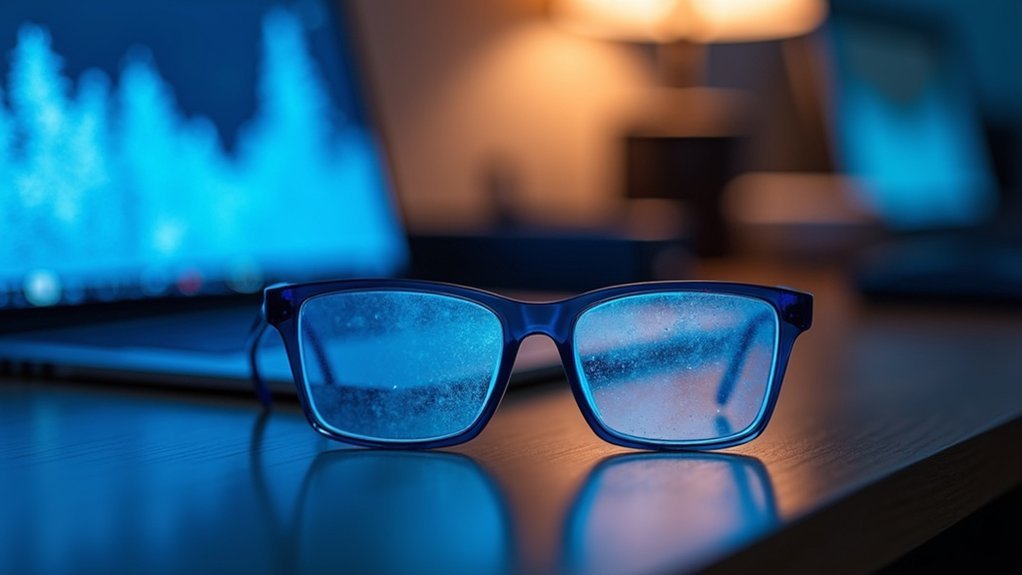
While you might associate blue light primarily with your smartphone screen, this high-energy visible light actually surrounds you throughout the day from both natural and artificial sources.
The sun emits blue light naturally, while LED lights, fluorescent bulbs, and digital devices like computers and tablets serve as artificial sources. Blue light operates within 450 to 495 nanometer wavelengths, helping maintain your alertness and mood during daylight hours.
However, prolonged exposure to blue light from screens can trigger digital eye strain, causing discomfort and headaches.
Extended screen time can lead to digital eye strain, resulting in uncomfortable symptoms like headaches and eye discomfort.
More importantly for your rest, evening exposure to blue light disrupts melatonin production, tricking your body into staying alert when it should prepare for sleep, ultimately compromising your sleep quality.
How Digital Screens Disrupt Natural Sleep Patterns
When you scroll through your phone or binge-watch shows before bedtime, you’re fundamentally sending your brain mixed signals about what time of day it is.
Digital screens emit high-energy blue light that tricks your brain into thinking it’s still daytime, disrupting your natural circadian rhythm. This exposure to blue light suppresses melatonin levels, the hormone responsible for regulating your sleep-wake cycle, making it considerably harder to fall asleep.
You’ll likely find yourself lying awake longer, struggling with delayed sleep onset and reduced sleep quality.
Research shows that blue light blocking glasses can counteract these effects by filtering harmful wavelengths during evening hours. By wearing them, you’re helping your body maintain natural melatonin production and improve sleep efficiency for more restorative rest.
The Science Behind Melatonin Production and Blue Light
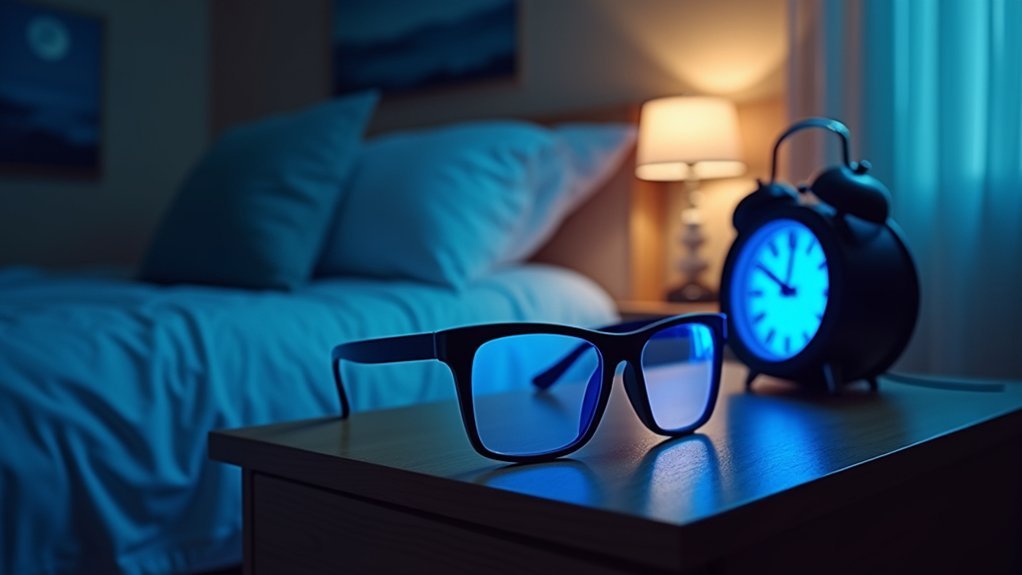
To understand why blue light glasses can be so effective for sleep improvement, you need to examine the intricate biological mechanisms at work in your body.
When you’re exposed to blue light wavelengths around 480 nm, melanopsin photoreceptors in your eyes detect this exposure and signal your brain to suppress melatonin production. This hormone naturally regulates your circadian rhythms and sleep-wake cycles.
Research demonstrates that blue light exposure before bedtime considerably reduces melatonin concentration, making it harder for you to fall asleep.
Evening blue light exposure significantly disrupts your body’s melatonin production, directly interfering with your natural ability to fall asleep.
However, when you wear blue light blocking glasses during evening hours, you’re filtering out these disruptive wavelengths. This preservation of natural melatonin levels leads to improved sleep quality and better overall well-being by maintaining your body’s natural rhythms.
Why Evening Blue Light Exposure Damages Sleep Quality
When you’re exposed to blue light during evening hours, your body’s natural melatonin production gets greatly suppressed, making it much harder to fall asleep at your usual bedtime.
This disruption doesn’t just affect one night’s sleep – it actually interferes with your entire circadian rhythm, the internal clock that regulates when you feel alert versus sleepy throughout each 24-hour cycle.
You’ll find yourself lying awake longer, experiencing lighter sleep, and waking up feeling less rested because your brain remains in an alert state when it should be winding down.
Disrupted Melatonin Production
Although your body naturally produces melatonin to signal when it’s time to sleep, blue light exposure in the evening actively suppresses this crucial hormone’s production.
When you’re exposed to blue light from screens, your melatonin onset can be delayed by 1.5 to 3 hours, creating disrupted sleep patterns that make falling asleep considerably harder.
Studies show that participants exposed to blue light before bedtime had markedly reduced melatonin levels compared to those who weren’t exposed.
However, you can counteract this effect by wearing blue light blocking glasses in the evening.
Users report improved sleep efficiency and reduced nighttime wakefulness when they reduce blue light exposure.
Circadian Rhythm Interference
Your body’s circadian rhythm operates like an internal clock that regulates when you feel alert or sleepy throughout each 24-hour period.
Evening exposure to blue light from screens interferes with this natural process by tricking your brain into thinking it’s still daytime. This disruption occurs because blue light suppresses melatonin production, the hormone that signals your body to prepare for sleep.
When you’re exposed to disruptive blue wavelengths in the evening, your circadian rhythm becomes misaligned, leading to:
- Increased wakefulness when you should feel drowsy
- Delayed sleep onset that pushes your bedtime later
- Reduced sleep quality throughout the night
Blue light blocking glasses can help restore your natural rhythm by filtering out these problematic wavelengths, allowing your melatonin production to function normally and supporting better sleep quality.
How Blue Light Glasses Filter Harmful Light Wavelengths

Since digital screens emit blue light wavelengths between 450 to 495 nanometers that can disrupt your sleep patterns, blue light glasses use specialized coatings to filter harmful light wavelengths before they reach your eyes. These blue light-blocking glasses work by targeting specific frequencies that interfere with melatonin production and your natural sleep-wake cycle.
| Lens Type | Blue Light Filtration |
|---|---|
| Clear Lenses | 10-20% filtration |
| Light Yellow Tint | 30-50% filtration |
| Amber-tinted lenses | 65-99% filtration |
| Orange Tint | 90-99% filtration |
| Red Tint | 99%+ filtration |
Higher-quality glasses demonstrate superior filtering capabilities compared to generic alternatives. When you wear these glasses during evening screen time, they help reduce eye strain and improve sleep quality by preserving your body’s natural circadian rhythm regulation.
Clear Vs Amber-Tinted Lenses for Sleep Optimization
When choosing between clear and amber-tinted lenses for sleep optimization, the tint color makes a considerable difference in how effectively the glasses support your nighttime routine.
Clear lenses filter some blue light but aren’t as effective for evening use when you’re preparing for sleep. Amber-tinted glasses block a broader spectrum of blue light wavelengths that specifically interfere with melatonin production.
Research shows amber lenses provide superior sleep quality benefits:
Amber lenses deliver measurably better sleep outcomes than clear alternatives, supporting faster sleep onset and enhanced melatonin production throughout the night.
- Considerably faster sleep onset compared to clear lenses or no glasses
- Enhanced melatonin production for better sleep-wake cycle regulation
- Improved overall sleep efficiency throughout the night
While clear lenses work well for daytime activities, amber-tinted glasses are your best choice for sleep optimization during evening hours when melatonin support matters most.
Research Evidence on Blue Blockers and Sleep Improvement
Multiple scientific studies demonstrate that blue light blocking glasses can measurably improve sleep quality and timing. Research evidence shows that blue light exposure in the evening suppresses melatonin production, disrupting your natural sleep-wake cycle.
However, you can counteract this effect with blue blocker glasses. A 2020 study found hospitalized bipolar patients experienced better sleep efficiency and reduced wakefulness after wearing blue light glasses for five nights.
Similarly, a 2019 study involving healthy athletes revealed that blue light glasses shortened the time needed to fall asleep. A 2011 study confirmed that nighttime blue light exposure considerably suppressed melatonin levels, suggesting these glasses restore natural hormone production.
Systematic reviews support these findings, indicating sleep improvement when you wear blue light glasses during evening hours before bedtime.
The Role of Circadian Rhythm Regulation in Rest Quality
Although you mightn’t realize it, your body operates on an internal clock that governs when you feel alert or sleepy throughout each 24-hour period. This circadian rhythm relies heavily on light cues, especially blue light exposure, to regulate essential functions like melatonin production.
Your internal circadian clock uses light signals to control when you naturally feel awake or tired during each day.
When you’re exposed to blue light during evening screen time, your body suppresses melatonin release, disrupting your natural sleep cycle.
Blue light glasses help restore proper circadian rhythm regulation by:
- Filtering harmful blue wavelengths during evening hours
- Allowing natural melatonin production to occur on schedule
- Reducing the alerting effects of screens before bedtime
This protection enables your internal clock to function effectively, leading to improved sleep quality and overall rest quality.
You’ll experience faster sleep onset and better sleep efficiency when your circadian rhythm remains undisturbed.
Blue Light’s Impact on Sleep Onset and Duration
When you’re exposed to blue light in the evening, your body’s melatonin production drops by more than half, making it harder to fall asleep naturally.
This disruption doesn’t just delay when you’ll drift off—it also shortens your overall sleep duration and compromises the quality of your REM cycles.
You’ll find yourself lying awake longer and waking up feeling less rested, even if you think you’ve gotten enough hours of sleep.
Melatonin Production Disruption
Since your body relies on melatonin to signal when it’s time to sleep, blue light exposure in the evening creates a biological conflict that disrupts your natural sleep-wake cycle.
When you’re exposed to blue light from screen use, your pineal gland gets tricked into believing it’s still daytime, considerably reducing melatonin production when you need it most.
This disruption manifests in several ways:
- Delayed sleep onset – Your body can’t properly prepare for rest without adequate melatonin
- Reduced sleep efficiency – Lower melatonin concentrations lead to fragmented, poor-quality sleep
- Altered circadian rhythms – Consistent exposure shifts your natural sleep-wake patterns
Research shows that blue light can disrupt melatonin levels by substantial amounts.
However, wearing blue light glasses during evening hours helps restore natural melatonin production, leading to improved sleep quality and faster sleep onset.
Sleep Onset Delay
Beyond these biological disruptions, blue light creates measurable delays in how quickly you fall asleep once you’re ready for bed. Blue light exposure in evening hours directly interferes with your natural sleep onset by suppressing melatonin production when your body needs it most. Research demonstrates that blue light glasses can noticeably improve sleep by filtering harmful wavelengths before bedtime.
| Factor | Without Blue Light Glasses | With Blue Light Glasses |
|---|---|---|
| Sleep Onset Time | 45-60 minutes | 15-30 minutes |
| Eye Strain Level | High | Minimal |
| Sleep Quality Rating | 4/10 | 8/10 |
Studies show you’ll experience faster sleep onset and better overall sleep quality when wearing blue light glasses during evening screen time. This simple intervention helps restore your natural circadian rhythm.
REM Sleep Quality
Although you might fall asleep eventually despite blue light exposure, the quality of your REM sleep suffers greatly throughout the night.
Blue light exposure disrupts your natural melatonin production, creating an imbalance in your sleep-wake cycle that directly impacts REM sleep duration and depth.
Research demonstrates that blue light glasses can greatly enhance your sleep quality by:
- Reducing evening blue light exposure to promote natural melatonin release
- Improving sleep efficiency and decreasing nighttime wakefulness
- Extending REM sleep duration for better restorative rest
Studies show individuals wearing blue light glasses before bedtime experience measurable improvements in REM sleep quality.
Health Biomarkers That Improve With Better Sleep
When you prioritize quality sleep, your body responds with measurable improvements across multiple health biomarkers that directly impact your long-term wellness.
Blue light glasses support better sleep quality by preserving natural melatonin production, which cascades into significant health benefits.
Blue light glasses preserve your body’s natural melatonin production, creating a cascade of measurable health improvements that extend far beyond better sleep.
You’ll experience enhanced insulin sensitivity, reducing your type 2 diabetes risk while maintaining stable blood sugar levels.
Lower cortisol levels follow improved rest, stabilizing stress responses and boosting overall well-being.
Men particularly benefit from increased testosterone production, supporting muscle mass, energy, and libido.
Your DHEA-S levels also improve, promoting health and healthy aging.
Additionally, proper sleep normalizes TSH levels, optimizing metabolism and energy regulation.
These biomarker improvements demonstrate how blue light glasses create measurable, lasting health benefits beyond simple rest enhancement.
Optimal Timing for Wearing Blue Light Glasses
You’ll maximize blue light glasses’ effectiveness by wearing them 2-3 hours before your planned bedtime, especially during evening screen activities like browsing or gaming.
This timing allows your body to naturally increase melatonin production and align with your circadian rhythm for ideal sleep onset.
Following consistent pre-bedtime wearing guidelines guarantees you’re protecting yourself during the highest-risk periods of blue light exposure.
Evening Screen Time Protection
Since blue light exposure during evening hours disrupts your body’s natural preparation for sleep, strategically timing when you wear blue light glasses becomes essential for maximizing their sleep-enhancing benefits.
Your evening screen activities require careful protection to preserve melatonin production and maintain quality sleep. Whether you’re working late, binge-watching shows, or scrolling social media, blue light glasses shield your circadian rhythms from harmful exposure.
Consider these evening protection strategies:
- Start wearing glasses 2-3 hours before bedtime to allow your body time to naturally increase melatonin levels.
- Use them during all screen activities including phones, tablets, computers, and televisions after sunset.
- Maintain consistent timing each evening to reinforce your body’s natural sleep-wake cycle.
This proactive approach notably improves sleep onset and overall rest quality.
Pre-Bedtime Wearing Guidelines
Getting the timing right for your pre-bedtime blue light glasses determines how effectively they’ll improve your sleep quality. You’ll need to start wearing blue light glasses at least two to three hours before bedtime to maximize their benefits. This timing allows your body to naturally boost melatonin production by blocking disruptive blue light from screens during evening activities.
Incorporate blue light glasses into your evening routines when watching TV or using computers. Research shows you’ll achieve better sleep efficiency and fall asleep faster when consistently wearing them during these pre-sleep hours.
The key is maintaining this schedule nightly, as studies demonstrate reduced nighttime wakefulness with regular use. Remember, morning light exposure remains important for maintaining your natural circadian rhythm alongside evening protection.
Sleep Cycle Alignment
When your circadian rhythm falls out of sync, blue light glasses become a powerful tool for realignment by strategically blocking disruptive wavelengths during critical evening hours.
Research demonstrates that proper timing maximizes their effectiveness in restoring natural sleep patterns.
To optimize sleep cycle alignment with blue light glasses:
- Begin wearing 2-3 hours before bedtime – This timing allows melatonin production to increase naturally without blue light interference.
- Use consistently during evening screen time – Regular practice helps establish predictable circadian rhythms your body can rely on.
- Maintain nightly routine – Consistent use reinforces your body’s sleep-wake signals for better long-term results.
Additional Benefits Beyond Sleep Enhancement
While blue light glasses are primarily marketed for their sleep-enhancing properties, they offer a surprising range of additional health benefits that extend well beyond the bedroom. When you wear these glasses regularly, you’ll notice reduced digital eye strain and enhanced visual comfort during extended screen time. The improved melatonin production doesn’t just help you improve sleep—it also stabilizes your mood and supports hormonal balance throughout the day.
| Health Benefit | How Blue Light Glasses Help |
|---|---|
| Cognitive Function | Better sleep quality enhances mental clarity and focus |
| Blood Sugar Control | Quality rest improves insulin sensitivity and glucose regulation |
| Overall Eye Health | Filters harmful blue light that may damage retinal cells |
| Daytime Productivity | Reduced eye fatigue leads to sustained energy levels |
| Emotional Well-being | Balanced melatonin supports mood stabilization |
Maximizing Sleep Quality With Blue Light Protection Strategies
Although blue light glasses offer numerous health benefits throughout the day, their most powerful impact occurs when you strategically implement them as part of your evening routines.
To maximize your sleep quality with blue light blocking glasses, you’ll want to create a thorough protection strategy. Begin wearing them 2-3 hours before bedtime to effectively reduce blue light exposure and support natural melatonin production. This timing allows your body to gradually prepare for rest.
Consider these key strategies to improve sleep:
- Choose amber-tinted lenses for maximum blue light filtering in evening hours
- Combine glasses with dimmed lighting throughout your home
- Maintain consistent nightly usage to regulate your sleep-wake cycle
This systematic approach enhances your overall well-being by ensuring better sleep efficiency and daytime alertness.
Frequently Asked Questions
Do Blue Light Glasses Actually Improve Sleep?
Yes, you’ll likely sleep better with blue light glasses. They block evening blue light that suppresses melatonin production, helping you fall asleep faster and maintain natural circadian rhythms for improved rest quality.
Do Bluelight Glasses Actually Make a Difference?
You’ll likely notice improved sleep onset and quality when wearing blue light glasses, especially in the evening. While research shows mixed results, many people report subjective benefits for regulating melatonin production.
Why Do My Eyes Feel Better With Blue Light Glasses?
Your eyes feel better because blue light glasses filter harsh screen light that causes strain. They reduce glare, improve visual contrast, and minimize the discomfort you’d normally experience during extended screen time.
Can Blue Light Glasses Reduce Fatigue?
Yes, blue light glasses can reduce your fatigue by improving sleep quality and reducing digital eye strain. They’ll help regulate your circadian rhythm and support natural melatonin production, leading to better rest.


