

Blue light disrupts your circadian rhythm by suppressing melatonin production up to 50%, tricking your brain into thinking it’s daytime when you should be winding down. Evening screen use elevates your heart rate and body temperature, delaying sleep onset by 30 minutes or more. This exposure shifts your natural sleep-wake cycle, extending your circadian rhythm length and creating hormone imbalances that affect metabolism. The chronic overstimulation rewires your sleep architecture, and understanding these mechanisms can help you reclaim your natural rest patterns.
Blue Light Suppresses Melatonin Production More Than Other Light Types
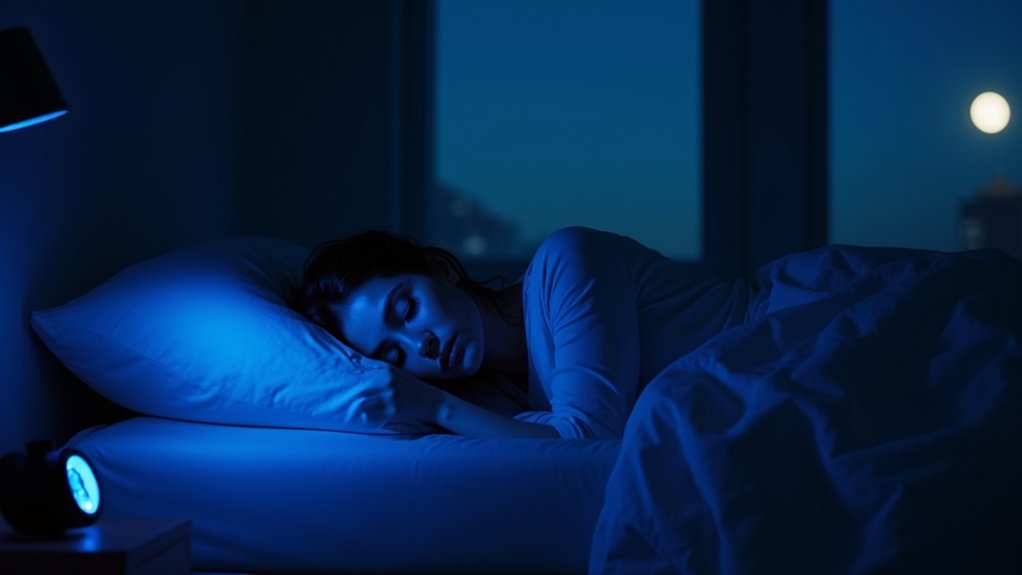
Although all types of light can influence your body’s natural sleep-wake cycle, blue light stands out as the most potent disruptor of melatonin production.
Unlike green or red light, exposure to blue light can slash your melatonin levels by up to 50% during evening hours. This dramatic suppression disrupts sleep by delaying when you naturally feel tired.
Related guide: Best Amber Night Lights That Won't Disrupt Melatonin
Blue light exposure during evening hours can dramatically cut melatonin production in half, significantly delaying your body’s natural sleepiness signals.
Blue light’s impact on your circadian rhythms extends beyond simple melatonin reduction. The suppression lasts longer than other light wavelengths, creating cascading effects on your sleep quality.
When you’re exposed to blue-emitting screens before bedtime, you’ll likely struggle to fall asleep as your body’s natural preparation for rest becomes compromised. This enhanced disruption makes blue light particularly problematic for maintaining healthy sleep patterns.
Evening Screen Time Elevates Body Temperature and Heart Rate
Beyond disrupting melatonin production, evening screen exposure triggers physical changes that make sleep even more elusive. When you use devices before bedtime, exposure to blue light creates a cascade of physiological responses that work against your body’s natural sleep preparation.
Your evening screen time causes these disruptive effects:
- Elevated body temperature – preventing the natural cooling your body needs for sleep
- Increased heart rate – making it harder to shift into restfulness
- Enhanced nighttime arousal – keeping your mind and body alert
- Reduced melatonin levels – further disrupting your sleep hormone production
Research shows that even brief blue light exposure can lead to prolonged wakefulness.
Your body can’t properly wind down when battling these elevated physical responses, making quality sleep nearly impossible.
Digital Device Usage Within One Hour of Bedtime Delays Sleep Onset
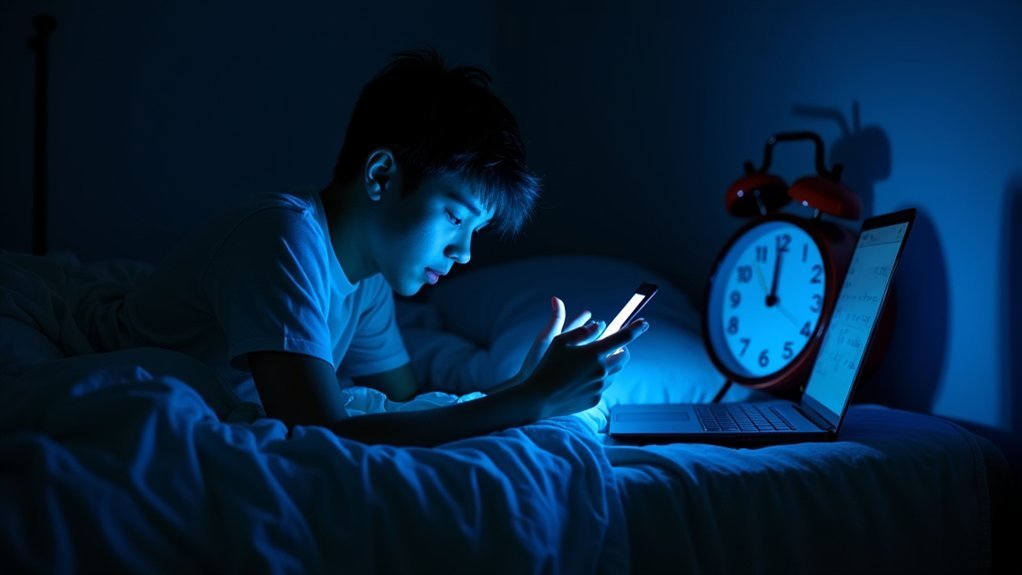
When you scroll through your phone or watch TV within an hour of bedtime, you’re fundamentally telling your brain to stay awake.
Blue light exposure from digital devices suppresses melatonin production, the hormone that signals it’s time to sleep. This disruption can delay your sleep onset by up to 30 minutes on average.
Your circadian rhythms become misaligned when screens interfere with your body’s internal clock.
Research shows 90% of Americans use digital devices before bed, creating widespread sleep difficulties. Even small amounts of blue light can greatly disrupt your sleep cycle.
Your brain interprets screen light as daylight, keeping you alert when you should be winding down.
Limiting device usage during this critical hour helps restore your natural sleep-wake patterns.
Blue Light Exposure Shifts Your Natural Sleep-Wake Cycle
Your brain’s internal clock operates on a roughly 24.25-hour cycle, but blue light exposure can push this delicate timing system out of sync with the natural day-night rhythm.
When you’re exposed to blue light in the evening, it tricks your brain into thinking it’s still daytime, delaying melatonin production and shifting your circadian rhythm forward.
This disruption affects your natural sleep cycles in several ways:
- Delayed sleep onset – You’ll feel alert when you should be sleepy
- Reduced melatonin production – Your body’s sleep hormone gets suppressed
- Poor sleep quality – You’ll experience lighter, less restorative sleep
- Increased risk of sleep disorders – Chronic exposure can lead to insomnia
Even dim blue light can greatly misalign your internal clock with your environment.
Artificial Lighting After Sundown Extends Circadian Rhythm Length
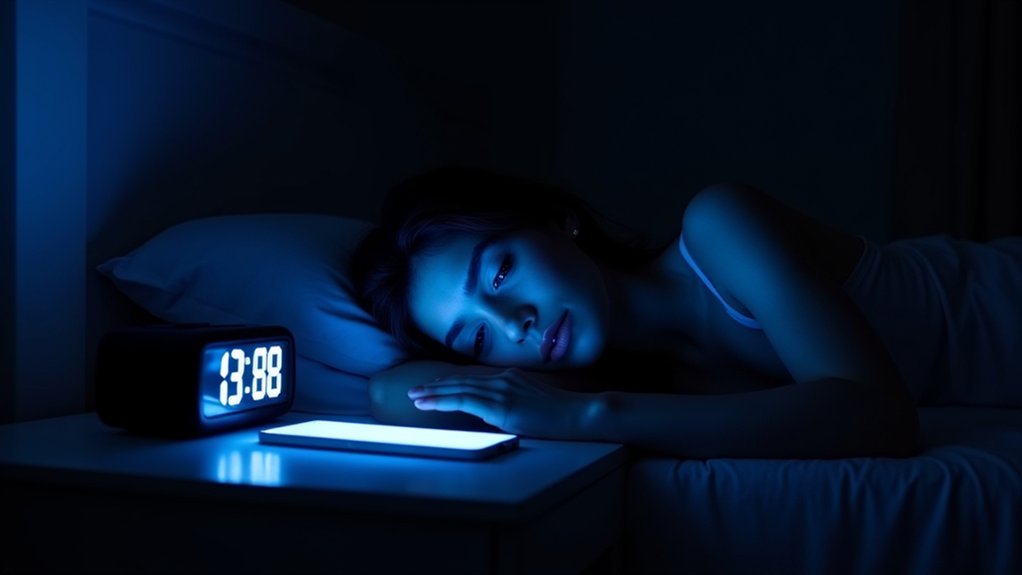
When you expose yourself to artificial lighting after sundown, you’re fundamentally telling your internal clock to stay awake longer than nature intended.
This extended evening light exposure pushes your circadian rhythm beyond its natural 24-hour cycle, making it harder for your body to recognize when it’s time to wind down.
As a result, your natural sleep onset gets delayed, leaving you tossing and turning when you should be drifting off to sleep.
Extended Evening Light Exposure
As evening settles in and you switch on your devices or bright indoor lights, you’re unknowingly extending your body’s internal clock beyond its natural 24-hour cycle.
This artificial lighting disrupts your circadian rhythm by suppressing melatonin production, which signals your body to prepare for sleep. Blue light exposure particularly affects this process, delaying sleep onset and keeping you alert when you should be winding down.
Extended evening light exposure creates these disruptions:
- Prolonged circadian rhythm – Your internal clock stretches beyond 24 hours
- Reduced melatonin – Essential sleep hormones get suppressed
- Delayed sleep timing – You’ll struggle to fall asleep at normal hours
- Increased alertness – Your brain stays active when it should relax
Chronic exposure leads to serious health issues including metabolic disorders and mental health conditions.
Delayed Natural Sleep Onset
This evening light exposure fundamentally alters your sleep-wake cycle by extending your circadian rhythm beyond its natural 24.25-hour length.
When you’re exposed to blue light at night from electronic devices and LED lighting, your body struggles to recognize it’s time to wind down. This artificial illumination inhibits melatonin production, the hormone responsible for signaling sleepiness to your brain. The result is delayed natural sleep onset, leaving you lying awake when you should be drifting off naturally.
Your internal clock becomes misaligned with the external environment, creating a cascade of timing issues.
Regular exposure can disrupt circadian rhythm patterns so severely that you develop chronic sleep disorders, pushing your bedtime later and later each night.
Screen Blue Light Maintains Alertness When Your Body Should Wind Down
When you scroll through your phone or watch TV before bed, you’re flooding your brain with blue light that tricks it into thinking it’s still daytime.
This artificial stimulation suppresses your body’s natural melatonin production, the hormone responsible for making you feel sleepy and ready for rest.
As a result, you’ll find yourself lying awake longer, struggling to fall asleep even though your body desperately needs recovery time.
Evening Screen Usage Effects
After sunset, your electronic devices become unwitting saboteurs of sleep. Evening screen usage floods your eyes with artificial blue light, which your brain interprets as daylight. This exposure to blue light suppresses melatonin production, the hormone that signals bedtime to your body.
Just one hour of blue light before bedtime can greatly delay sleep onset and disrupts circadian rhythm patterns.
The consequences affect your sleep patterns in multiple ways:
- Delayed sleep onset – You’ll struggle to fall asleep at your usual time
- Reduced sleep quality – Your deep sleep phases become shortened and fragmented
- Shifted circadian timing – Your internal clock moves later, creating a mismatch with your schedule
- Prolonged alertness – You’ll feel wired when you should feel drowsy
This widespread issue affects approximately 59% of Americans nightly.
Melatonin Suppression Mechanisms
Blue light works as a biological override switch, directly interfering with your brain’s melatonin factory. When you’re exposed to screens during evening hours, blue light exposure triggers your brain to halt melatonin production—the hormone responsible for signaling sleep time.
This melatonin suppression doesn’t just affect the moment you’re using devices; it extends beyond your actual screen time, creating lasting disruption to your sleep quality.
Your brain interprets blue light as daylight, maintaining alertness when you should naturally wind down. This biological confusion throws off your circadian rhythms, keeping you wired when your body expects darkness.
The result? You’ll struggle to fall asleep, experience restless sleep, and wake up feeling unrested, robbing you of a restorative night’s sleep.
Sleep Onset Delays
Although your body naturally begins its wind-down process as darkness approaches, screen exposure creates a biological traffic jam that prevents sleep from arriving on schedule.
Blue light exposure from electronic screens disrupts your circadian rhythm by maintaining alertness when you should be preparing for rest. This interference with melatonin production causes significant sleep onset delays that can extend well into the night.
Research reveals the measurable impact of bedtime screen use:
- Sleep onset delays can reach up to 2 hours after screen exposure
- Your heart rate remains elevated instead of naturally decreasing
- Body temperature stays higher, preventing drowsiness signals
- Melatonin suppression continues for hours after device use
Breaking this cycle requires eliminating screens within one hour of bedtime.
Late-Night Blue Light Creates Hormone Imbalances That Disrupt Sleep
When you scroll through your phone or binge-watch shows late at night, you’re unknowingly triggering a cascade of hormonal disruptions that can wreak havoc on your sleep.
Blue light exposure from electronic devices suppresses melatonin production, the hormone that signals your body it’s time to rest. Even minimal exposure shifts your circadian rhythms, creating hormone imbalances that extend far beyond sleep.
Your body’s natural regulatory systems become confused, affecting insulin sensitivity and metabolism. Chronic late-night blue light exposure increases your risk of obesity and type 2 diabetes.
Since you’re using devices for over two hours daily, often within an hour of bedtime, you’re consistently disrupting these essential processes. Limiting this exposure can restore melatonin levels and dramatically improve your sleep quality.
Electronic Devices Overstimulate Your Brain Before Bedtime
Beyond these hormonal disruptions, your brain faces another significant challenge from late-night device use. When you engage with smartphones and tablets before bed, the exposure to light overstimulates your neural pathways, making it harder to fall asleep.
This blue light affects your brain’s ability to wind down naturally, while the constant stream of information keeps your mind actively processing data when it should be preparing for rest.
Here’s how nighttime device use disrupts your sleep:
- Mental hyperactivity – Your brain stays alert processing notifications and content
- Delayed sleep onset – Screen stimulation extends the time needed to fall asleep
- Reduced sleep quality – Fragmented rest patterns develop from overstimulation
- Circadian misalignment – Natural sleep-wake cycles shift later
Limiting device use promotes better sleep improvement by allowing your mind to decompress naturally, while reducing blue light exposure that disrupts melatonin production.
Blue Light Interferes With Your Body’s Natural Darkness Signals
Your body relies on darkness to trigger melatonin production, the hormone that signals it’s time to sleep.
When you’re exposed to blue light in the evening, it suppresses this natural melatonin release and confuses your internal clock about whether it’s day or night.
This interference with your body’s darkness detection system disrupts the essential sleep cues that would normally prepare you for rest.
Melatonin Production Suppression
Although your body naturally produces melatonin as darkness falls, blue light exposure disrupts this essential process by tricking your brain into thinking it’s still daytime.
This interference greatly suppresses melatonin production, creating a cascade of problems that affect your overall well-being.
Blue light exposure inhibits melatonin secretion longer than other wavelengths, making it particularly problematic for your circadian rhythms.
When your natural melatonin levels drop, you’ll experience:
- Delayed sleep onset – falling asleep becomes increasingly difficult
- Circadian rhythm misalignment – your internal clock becomes confused
- Chronic sleep disorders – persistent sleep quality issues develop
- Multiple health issues – mood disturbances and other complications arise
Limiting evening blue light exposure helps restore your body’s natural melatonin production, promoting better sleep.
Evening Light Exposure
Since your body relies on darkness as a fundamental signal to initiate sleep preparation, evening blue light exposure creates a biological conflict that disrupts this ancient mechanism. Your circadian rhythms depend on these natural darkness cues to synchronize sleep-wake cycles properly.
When you use electronic devices before bed, you’re basically telling your brain it’s still daytime. This evening light tricks your internal clock, preventing melatonin release and keeping you artificially alert.
| Time Before Bed | Blue Light Source | Impact on Sleep |
|---|---|---|
| 30 minutes | Smartphone scrolling | Delayed sleep onset |
| 1 hour | TV watching | Reduced sleep quality |
| 2+ hours | Computer work | Severe rhythm disruption |
| All evening | Multiple devices | Chronic sleep disorders |
Your body can’t distinguish between natural sunlight and artificial blue light exposure, making this disruption particularly problematic.
Natural Sleep Cues
When darkness falls naturally, your brain receives a clear signal to begin winding down for sleep through a carefully orchestrated release of melatonin. This hormone acts as your body’s internal timekeeper, coordinating your circadian rhythms with the natural light-dark cycle.
However, blue light exposure disrupts these natural darkness signals, confusing your biological clock.
Your body relies on these essential environmental cues:
- Decreasing light levels trigger melatonin production
- Temperature drops signal bedtime preparation
- Consistent timing reinforces circadian rhythms
- Darkness duration determines sleep quality
When screens flood your environment with artificial blue light, they override these natural processes. Your brain interprets this exposure as daylight, suppressing melatonin and keeping you alert when you should feel drowsy.
Protecting these natural darkness signals is crucial for improved sleep health.
Chronic Nighttime Blue Light Exposure Creates Long-Term Sleep Pattern Disruption
While you might think that scrolling through your phone before bed only affects how quickly you fall asleep, chronic nighttime blue light exposure actually rewires your body’s entire sleep architecture over time.
This chronic exposure to blue light systematically undermines your natural sleep patterns by suppressing melatonin production when your body needs it most.
Your circadian rhythms become increasingly misaligned with the external environment, creating a cascade of health problems.
Poor sleep quality becomes your new normal, while metabolic disorders like diabetes and obesity become genuine risks.
Even dim light can disrupt melatonin secretion, contributing to depression and other mental health issues.
With 59% of adults experiencing digital eye strain from evening device use, nighttime blue light exposure has become a widespread threat to long-term wellness.
Frequently Asked Questions
How Does Blue Light Disrupt Circadian Rhythm?
Blue light exposure suppresses your melatonin production, especially during evening hours. It tricks your brain into thinking it’s daytime, delaying your body’s natural sleep signals and shifting your internal clock’s timing considerably.
How Does Blue Light Have a Poor Effect on Sleep?
Blue light suppresses your body’s melatonin production, making it harder for you to fall asleep. It delays your sleep timing, reduces sleep quality, and disrupts your natural sleep-wake cycle.
What Are the Downsides of Blue Light Therapy?
You’ll experience disrupted sleep patterns and suppressed melatonin production if you use blue light therapy improperly. Overuse can create dependency, shift your circadian rhythms, and cause irritability, mood swings, and poor sleep quality.
How Does Light Affect Circadian Rhythm?
Light directly controls your body’s internal clock by signaling when you should feel alert or sleepy. Bright light during day reinforces natural rhythms, while evening light exposure disrupts melatonin production and delays sleep.


