

Blue light from your screens disrupts hormone production by confusing your brain’s internal clock, the suprachiasmatic nucleus. When you’re exposed to blue light in the evening, it signals your brain to stay alert and suppresses melatonin production from your pineal gland. This throws off your natural circadian rhythm and elevates cortisol levels when they should be declining. The result is a cascade of hormonal imbalances that affect your sleep, stress response, and overall health. Understanding these mechanisms can help you protect your body’s delicate hormonal balance.
What Is Blue Light and Where Does It Come From?
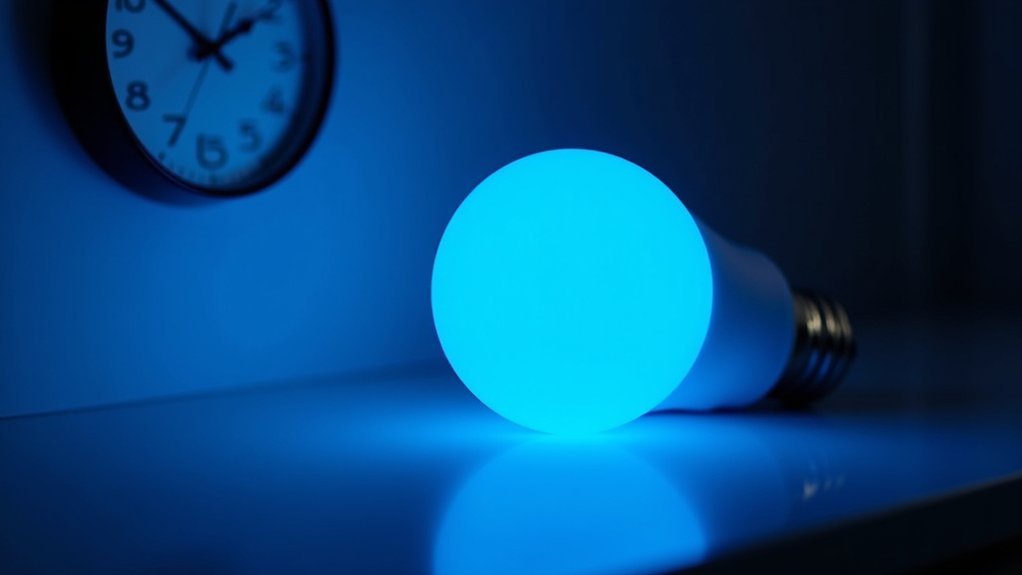
Blue light—a high-energy visible light with wavelengths between 460 and 500 nanometers—surrounds you daily through both natural and artificial sources. The sun serves as the primary natural emitter, while artificial sources include LED lights, fluorescent bulbs, smartphones, televisions, and computer screens.
Blue light from your smartphone, computer, and LED bulbs mimics the sun’s high-energy wavelengths, creating constant exposure throughout your day.
These digital devices have become major contributors to your blue light exposure, especially during evening hours when you’re scrolling through your phone or watching TV.
Related guide: Best Amber Night Lights That Won't Disrupt Melatonin
During daylight, this exposure to blue light benefits you by supporting alertness and performance. However, when artificial sources flood your environment at night, they disrupt melatonin production and confuse your internal clock.
Your circadian rhythms depend on natural light patterns, so evening blue light tricks your body into thinking it’s still daytime, preventing proper hormone regulation.
How Blue Light Affects Your Circadian Rhythm
When evening arrives and you’re exposed to blue light from screens, your brain’s suprachiasmatic nucleus—the master clock controlling your circadian rhythm—receives confusing signals that disrupt its natural 24.25-hour cycle. This exposure to light tricks your brain into thinking it’s still daytime, causing it to suppress melatonin production—your essential sleep hormone.
Related guide: Best Red Light Alarm Clocks That Won’t Suppress Melatonin
| Natural Evening | Blue Light Evening |
|---|---|
| Melatonin rises naturally | Melatonin stays suppressed |
| Body prepares for sleep | Brain remains alert |
| Circadian rhythm aligns | Rhythm becomes misaligned |
| Quality sleep occurs | Sleep difficulties arise |
Blue light’s wavelength particularly effectively disrupts this process compared to other light types. When your circadian rhythm consistently shifts due to nighttime blue light exposure, you’ll experience cascading health effects beyond poor sleep, including increased risks of obesity, diabetes, and depression.
The Science Behind Melatonin Suppression
Although your brain produces melatonin naturally as darkness falls, this delicate hormonal process becomes severely compromised when blue light enters your eyes during evening hours.
Your pineal gland responds to light signals through specialized retinal cells that detect blue wavelengths more intensely than other colors. When you’re exposed to artificial light from screens, these photoreceptors send signals to suppress melatonin production, effectively tricking your brain into thinking it’s daytime.
This disruption doesn’t require bright illumination—even dim blue light can delay melatonin release for several hours.
Your circadian rhythm becomes misaligned, causing your sleep-wake cycle to shift later. The result is compromised sleep quality, featuring difficulty falling asleep, frequent nighttime awakenings, and reduced REM sleep phases essential for physical recovery and memory consolidation.
Cortisol Disruption and Stress Hormone Imbalances
When blue light hits your eyes at night, it doesn’t just suppress melatonin—it triggers a cascade that throws your stress hormones into chaos.
Your body’s delayed melatonin production directly elevates cortisol levels, leaving you wired when you should be winding down.
This disruption creates a cycle where chronic exposure keeps your stress hormones persistently imbalanced, affecting everything from your metabolism to your mental clarity.
Blue Light Cortisol Connection
While your body’s stress response system evolved to handle natural light cycles, blue light exposure throws this delicate balance into chaos. When you’re exposed to blue light at night, it delays melatonin secretion, which directly interferes with cortisol’s natural rhythm.
Your cortisol levels should peak in the morning and decline throughout the day, but nighttime blue light disrupts this pattern, keeping stress hormone levels elevated when they should be dropping.
This disruption creates a cascade of problems. Your body receives mixed signals about whether it’s time to rest or stay alert, leading to increased anxiety and sleep disturbances.
Prolonged exposure compounds these issues, throwing your entire hormonal system off balance and contributing to chronic stress-related health problems.
Delayed Melatonin Affects Cortisol
The relationship between melatonin and cortisol operates like a biological seesaw—when one rises, the other should fall.
When blue light at night interferes with melatonin production, it creates a cascade effect that disrupts this delicate balance. Your disrupted melatonin signals don’t properly communicate with your adrenal glands, causing cortisol levels to remain elevated when they should naturally decline.
This elevated cortisol keeps your body in stress mode, making it harder to wind down for sleep. Over time, this disrupted sleep-wake cycle creates chronic hormonal imbalances that affect your metabolism, immune function, and mood regulation.
Chronic Stress Hormone Effects
Cortisol’s relentless presence in your system transforms what should be temporary stress responses into a chronic state of physiological alarm.
When blue light suppresses melatonin production, your stress hormone levels remain elevated throughout evening hours when they should naturally decline. This creates a vicious cycle where disrupted sleep patterns trigger even higher cortisol production.
You’ll experience persistent fatigue, difficulty managing daily stressors, and reduced resilience to life’s challenges.
Your body becomes trapped in fight-or-flight mode, making relaxation nearly impossible. The ongoing hormonal imbalance wreaks havoc on your mental health, intensifying anxiety and triggering mood disturbances.
Sleep disturbances compound these effects, creating deeper stress hormone disruptions that reinforce the cycle of chronic physiological stress.
Why Evening Screen Time Creates Sleep Problems
When you scroll through your phone or binge-watch shows before bed, you’re exposing yourself to blue light that powerfully suppresses melatonin production—the very hormone your body needs to initiate sleep.
This evening screen time disrupts your circadian rhythms, shifting your natural sleep-wake cycle and delaying sleep onset. Even dim light from devices can interfere with melatonin secretion, reducing both sleep quality and duration.
The effects of blue light affect more than just falling asleep—you’ll experience frequent nighttime awakenings and decreased REM sleep, which is essential for restoration.
This creates a cycle of poor sleep that leaves you feeling unrested. To protect your hormone balance, limit screen use 1-2 hours before bedtime and prioritize your sleep health.
Long-Term Health Effects of Disrupted Hormone Production
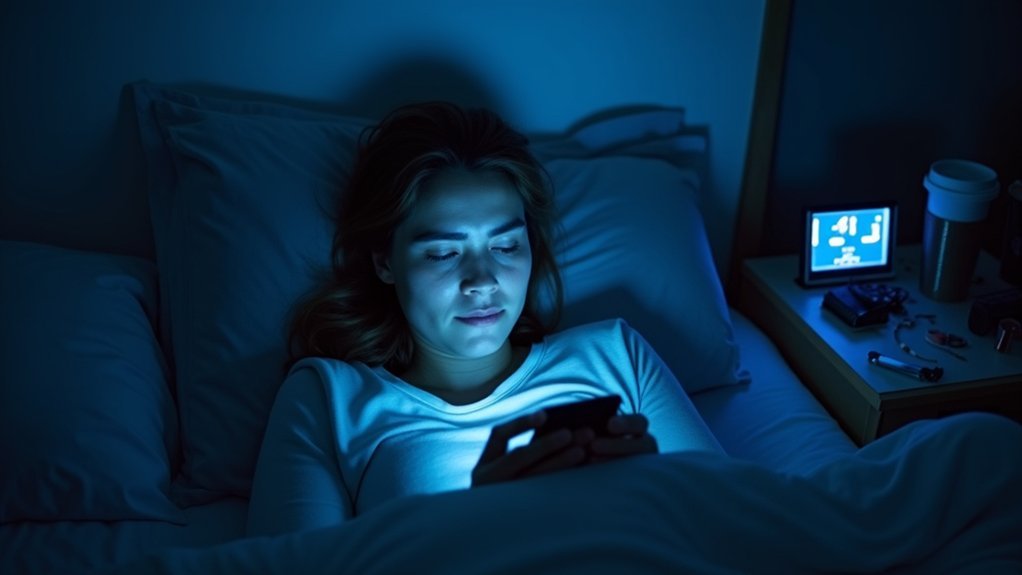
Beyond immediate sleep disruption, chronic exposure to blue light creates a cascade of serious health consequences that extend far beyond your bedroom. When your melatonin production remains suppressed over time, you’ll face increased risks for diabetes, heart disease, and obesity.
These hormonal imbalances don’t just affect your sleep quality—they trigger mood disturbances and persistent fatigue that compound daily.
Your mental health suffers considerably from disrupted circadian rhythms, with heightened risks for anxiety and depression. Blue light’s interference with insulin and glucose regulation leads to metabolic disorders that compromise your body’s fundamental processes.
Perhaps most concerning, research shows that disrupted melatonin production increases cancer risk, as melatonin naturally protects against tumor growth. These chronic conditions develop gradually, making prevention through blue light management essential.
Blue Light’s Impact on Other Essential Hormones
Beyond melatonin, blue light wreaks havoc on your body’s cortisol rhythm, throwing off your natural stress response cycle and leaving you wired when you should be winding down.
You’ll also experience suppressed growth hormone production, which typically peaks during deep sleep and is essential for tissue repair and metabolism.
Additionally, your insulin sensitivity changes as blue light exposure alters how effectively your body processes glucose, potentially setting you up for metabolic issues down the road.
Cortisol Rhythm Disruption
Although melatonin gets most of the attention when discussing blue light’s hormonal effects, cortisol—your body’s primary stress hormone—faces equally significant disruption from nighttime screen exposure.
Blue light exposure delays melatonin secretion, which triggers a cascade effect that disrupts your natural cortisol rhythm. Instead of declining as you prepare for sleep, your cortisol levels remain elevated during nighttime hours.
This hormonal imbalance creates heightened stress and fatigue, compromising your sleep quality and overall well-being.
When blue light exposure continues to disrupt circadian rhythms, you’ll experience irregular cortisol patterns that contribute to mood disturbances and anxiety.
Over time, these disrupted cortisol cycles interfere with metabolic processes, potentially causing weight gain and other serious health issues affecting both your physical and mental health.
Growth Hormone Suppression
While cortisol disruption creates immediate stress responses, blue light’s interference extends to growth hormone production—a process that occurs primarily during your deepest sleep phases.
When you’re exposed to blue light at night, it suppresses melatonin, which is essential for growth hormone secretion. This disruption of your sleep-wake cycles creates a cascade effect—inadequate sleep directly reduces growth hormone levels, impacting tissue repair, muscle recovery, and overall development.
Your circadian rhythm becomes misaligned, leading to hormonal imbalances that affect metabolic processes. Chronic blue light exposure compounds these issues by increasing stress levels, further inhibiting the natural pulsatile release of growth hormone.
For children and adolescents, this disruption can greatly impact their growth and development during critical developmental periods.
Insulin Sensitivity Changes
When blue light reaches your eyes during evening hours, it triggers a biochemical chain reaction that extends far beyond sleep disruption—directly undermining your body’s insulin sensitivity.
This blue light exposure interferes with melatonin production, creating melatonin suppression that disrupts insulin signaling pathways throughout your body. Your glucose metabolism suffers as cortisol levels fluctuate unnaturally, creating stress-induced metabolic disturbances.
The disruption doesn’t stop there. Your circadian rhythms become misaligned, leading to hormonal imbalances that trigger increased appetite and food cravings.
These changes compound your insulin resistance, making blood sugar regulation increasingly difficult. Chronic exposure creates a vicious cycle where your metabolic health deteriorates progressively, elevating your risk for type 2 diabetes and obesity-related conditions that stem from compromised hormone function.
Evidence-Based Strategies to Minimize Hormonal Disruption
Since understanding blue light’s impact on hormones is only half the battle, implementing practical strategies becomes essential for protecting your body’s natural rhythms. To reduce blue light exposure effectively, start limiting screen time 1-2 hours before bedtime to enhance melatonin production. Blue light blocking glasses during evening activities greatly minimize melatonin suppression while maintaining your circadian rhythm.
| Strategy | Implementation |
|---|---|
| Screen Management | Enable night mode on all devices |
| Lighting Choice | Use dim red lights for nighttime |
| Protective Gear | Wear blue light blocking glasses |
| Sleep Routine | Establish consistent wind-down periods |
These evidence-based approaches work together to preserve hormonal balance. Enabling night mode filters and establishing consistent sleep routines reinforces natural hormone cycles, ultimately improving your sleep quality and overall health.
Frequently Asked Questions
Does Blue Light Affect Growth Hormones?
Yes, blue light affects your growth hormones. When you’re exposed to blue light at night, it suppresses melatonin production, disrupts your sleep cycle, and reduces deep sleep stages where growth hormone secretion primarily occurs.
Why Does Blue Light Increase Cortisol?
Blue light tricks your brain into thinking it’s daytime, suppressing melatonin production. Without melatonin’s calming effects, your body can’t properly regulate cortisol, causing stress hormone levels to spike unnaturally.
What Hormone’s Production Is Disrupted by the Blue Light Emitted From Screens?
Blue light from your screens disrupts melatonin production, the hormone that regulates your sleep-wake cycle. When you’re exposed to blue light at night, you’ll experience delayed melatonin secretion and poor sleep quality.
What Are the Negative Side Effects of Blue Light Therapy?
You’ll experience disrupted sleep patterns, increased cortisol levels, and hormonal imbalances from blue light therapy. It can cause insomnia, mood disturbances, fatigue, and contribute to obesity, diabetes, and cardiovascular problems.


