

Your digital curfew should begin 1-2 hours before your intended bedtime to protect your natural sleep cycle. Blue light from screens delays melatonin release by up to 30 minutes, making it harder to fall asleep and achieve restorative rest. For younger kids aged 6-12, you’ll want to stop screen use 30 minutes to 1 hour before bed, while teens need at least 1 hour of device-free time before sleep. Discover how to implement these boundaries effectively across your entire household.
The Science Behind Blue Light and Sleep Disruption

When you scroll through your phone before bed, you’re flooding your brain with blue light that tricks it into thinking it’s still daytime. This artificial illumination delays your melatonin release by approximately 30 minutes, disrupting your natural sleep-wake cycle.
The hormone responsible for making you drowsy simply can’t do its job when screens confuse your circadian rhythm.
Your body’s natural sleep signals get hijacked when artificial light from devices disrupts melatonin production at bedtime.
Blue light’s sleep disruption extends beyond delayed bedtime. You’ll experience reduced total sleep time and struggle to achieve restorative REM sleep phases.
Research shows evening device use leads to poorer sleep quality and increased daytime sleepiness, particularly affecting adolescents whose circadian rhythms are still developing.
That’s why implementing a digital curfew becomes essential. Sleep medicine experts recommend stopping screen use at least 30 minutes before bedtime.
Age-Appropriate Digital Curfew Times for Different Life Stages
You’ll need to tailor your family’s digital curfew based on your children’s ages and developmental stages.
Younger kids aged 6 to 12 require earlier cutoff times—typically 30 minutes to an hour before bedtime—to guarantee they get their recommended 9 to 12 hours of sleep.
Teenagers face different challenges with their shifting sleep patterns and academic demands, so their digital boundaries need adjustments that account for later bedtimes while still protecting their 8 to 10 hours of rest.
Early Childhood Guidelines
As your child grows, their digital curfew needs will evolve dramatically based on developmental stages and sleep requirements. For children aged 2 to 5, you’ll need to establish stricter boundaries to protect their developing minds and bodies.
Here are essential early childhood guidelines:
- Limit screen time to no more than 1 hour per day for ideal development
- Turn off all devices at least 1 hour before bedtime to promote better sleep quality
- Keep electronic devices completely out of bedrooms during nighttime hours
These early years are critical for establishing healthy digital habits.
The blue light from screens can greatly disrupt your young child’s natural sleep patterns, making it harder for them to fall asleep and achieve restorative rest.
Teen Sleep Requirements
While your teenager may push back against earlier device shutoff times, their sleep needs are actually more demanding than younger children require.
Teens aged 13 to 18 need 8 to 10 hours of sleep nightly to support proper growth and development. Unfortunately, 75% of teens don’t meet these requirements, making technology curfew implementation essential.
You should establish your teen’s digital curfew at least one hour before their target sleep time. For example, if your teenager needs to wake at 6 AM, devices should be off by 9 PM. This allows adequate wind-down time and guarantees they get sufficient rest.
Consistent adherence to these boundaries helps combat late-night screen use effects, which research links to increased depression risk and poor coping skills among adolescents.
How Late-Night Screen Use Affects Teen Mental Health
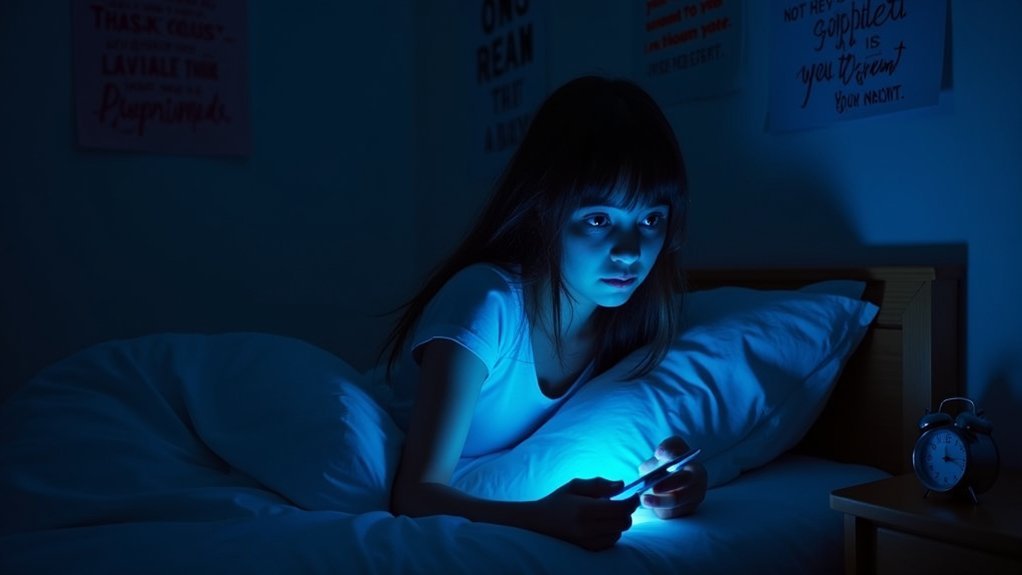
When your teen uses screens late at night, they’re not just losing sleep—they’re disrupting critical mental health processes.
The blue light from devices interferes with melatonin production and other hormones that regulate mood and emotional stability.
This sleep deprivation creates a cascade effect that directly impacts your teenager’s ability to cope with stress, manage emotions, and maintain psychological well-being.
Sleep Deprivation Mental Impact
Though your teen might seem fine after scrolling through their phone until 2 AM, late-night screen use creates a dangerous cycle that wreaks havoc on their mental health.
Sleep deprivation from excessive screen time doesn’t just make your teen tired—it actively mimics and worsens anxiety and depression symptoms.
The mental health consequences include:
- Decreased ability to cope with daily stressors and emotional challenges
- Increased rates of depression linked directly to bedtime device usage
- Heightened anxiety symptoms that mirror those of clinical disorders
When devices remain in bedrooms, sleep duration plummets while screen time skyrockets.
Your teen’s emotional attachment to their phone makes nighttime resistance nearly impossible.
Digital curfews offer a proven solution—studies consistently show that turning off devices at night dramatically improves both sleep quality and mental well-being.
Screen Light Disrupts Hormones
As your teenager stares at their glowing screen past midnight, blue light floods their brain and sabotages their body’s natural hormone production. This screen light specifically targets melatonin, the hormone responsible for regulating sleep cycles. Research shows blue light exposure delays melatonin release by approximately 10 minutes, creating a domino effect of sleep disruption.
| Time of Night | Melatonin Level | Screen Impact | Sleep Quality |
|---|---|---|---|
| 8-9 PM | Rising naturally | Moderate disruption | Good potential |
| 9-10 PM | Peak production | Significant delay | Compromised |
| 10+ PM | Should be stable | Severe suppression | Poor |
When you implement a digital curfew, you’re protecting your teen’s hormonal balance. Without this intervention, their natural sleep-wake cycle becomes increasingly disrupted, leading to chronic fatigue and mental health complications.
Creating Effective Device-Free Bedroom Policies
While establishing healthy sleep habits requires multiple strategies, creating a device-free bedroom policy stands as one of the most meaningful decisions you can make for your family’s digital wellness.
Starting this policy when your child first receives a smartphone helps establish healthy habits from the beginning. Your technology curfew should begin at least one hour before bedtime to reduce blue light exposure that interferes with melatonin production.
Studies consistently show that removing devices from bedrooms considerably improves sleep quality by eliminating notification distractions.
To enforce your device-free bedroom policy effectively:
- Designate specific charging stations outside bedrooms
- Model healthy device behavior yourself
- Create family-wide rules that everyone follows
These strategies reduce nighttime temptation and reinforce consistent boundaries across your household.
Overcoming Common Digital Curfew Implementation Challenges
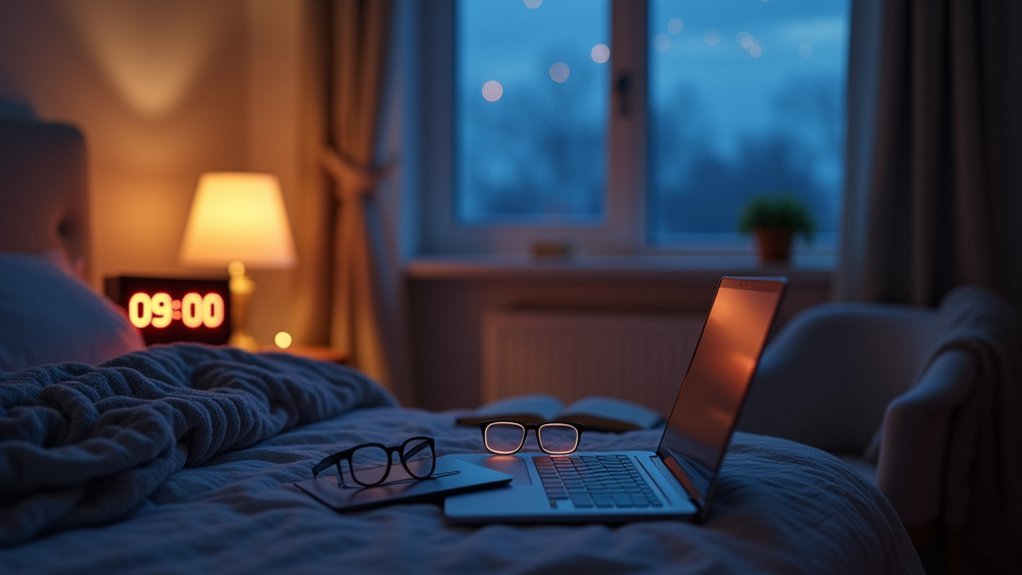
Despite having the best intentions, many families encounter resistance when implementing digital curfew policies. You’ll find success by starting gradually—reduce screen time by just 30 minutes before bedtime rather than enforcing drastic changes overnight. This approach helps children adjust without feeling overwhelmed by sudden restrictions on their media use.
Make your digital curfew a family effort by involving everyone in the process. When siblings and parents participate together, children won’t feel singled out or punished. Address their fear of missing out by reassuring them that important online interactions will still be available.
Transform bedrooms into “No Digital Device Zones” to eliminate temptation completely. Replace phone alarms with analog clocks, reinforcing the boundary between sleep spaces and digital connectivity while promoting healthier bedtime routines.
The Role of Parents in Modeling Healthy Tech Habits
When teens observe their parents scrolling through phones during dinner or checking emails late into the evening, they internalize these behaviors as normal and acceptable. Your actions speak louder than any rules you establish, making it essential to demonstrate healthy tech habits yourself.
Children mirror their parents’ digital behaviors, making your own screen habits the most powerful teaching tool you possess.
To effectively model responsible technology use, you should:
- Follow your own digital curfews by putting devices away at designated times and charging them outside bedrooms.
- Engage in open conversations about screen time limits and health implications rather than imposing rules without explanation.
- Establish family charging stations where everyone’s devices stay overnight, reinforcing boundaries together.
When you practice what you preach, you gain credibility with your teens and create an environment where digital wellness becomes a shared family value rather than a source of conflict.
Alternative Solutions When Phones Double as Alarm Clocks
Even with the best family tech policies in place, one common obstacle often undermines digital curfews: teens who depend on their smartphones as alarm clocks.
This dependency keeps devices such as smartphones within arm’s reach throughout the night, creating irresistible temptation to check notifications and scroll through apps.
You can easily solve this problem by investing in affordable analog alarm clocks for each bedroom.
This simple switch eliminates the excuse for keeping phones nearby during sleep hours. When you establish designated charging stations outside bedrooms, you’ll reinforce healthy boundaries while ensuring devices remain accessible for morning alarms.
Implementing this digital curfew strategy markedly improves sleep quality by removing late-night distractions and blue light exposure that disrupts natural sleep patterns.
Signs Your Current Digital Curfew Needs Adjustment
How can you tell if your digital curfew isn’t working as intended? Several key indicators suggest it’s crucial to reassess your current approach and make adjustments.
When digital boundaries fail to deliver expected results, it’s time to step back and evaluate what needs changing.
If your teen consistently struggles to wake up for school or reports feeling tired throughout the day, your digital curfew likely isn’t early enough to support healthy sleep habits. Late-night social media activity remains problematic, with studies showing 1 in 5 teens wake up to check devices.
Watch for these warning signs:
- Declining academic performance or decreased classroom engagement
- Increased irritability and mood swings affecting daily interactions
- Family conflicts arising from technology discussions and resistance to rules
When screen time continues interfering with sleep quality despite having boundaries in place, it’s crucial to reevaluate your digital curfew timing and consider implementing an earlier cutoff.
Building Family-Wide Screen Time Boundaries That Stick
While individual digital curfews can help manage one family member’s screen time, creating household-wide boundaries guarantees everyone’s on the same page and eliminates the “but mom gets to use her phone” arguments that undermine your efforts.
Start by involving everyone in discussions about establishing a digital curfew that works for your family’s schedule. Research shows turning off devices one hour before bedtime markedly improves sleep quality, so set your curfew accordingly.
Create a designated charging station away from bedrooms to reduce nighttime temptation. Hold regular family meetings to evaluate how well your screen time boundaries are working and make adjustments when needed.
This collaborative approach encourages cooperation and mutual respect, making everyone more likely to stick with the rules.
Frequently Asked Questions
What Time Should Curfew Be?
You should set curfew at least one hour before bedtime. For teenagers needing 8-10 hours of sleep, that’s typically 9:00-10:00 PM, depending on your school schedule and desired wake time.
How Late Should a 17 Year Old Stay Out?
You should generally be home by 10:00 PM on school nights to get adequate sleep. Weekend curfews can extend later, but your parents’ rules and local laws ultimately determine what’s appropriate for you.
What Is a Normal Curfew for a 15 Year Old?
You’ll typically see 15-year-olds have weekday curfews between 10 PM and midnight, with weekend curfews extending until midnight or 1 AM. You should consider your teen’s sleep needs and involve them in setting reasonable boundaries.
Should Teens Have Curfews?
You should definitely have curfews as a teen. They’ll help you get proper sleep, improve your mental health, boost academic performance, and strengthen family relationships by reducing screen time disruptions.


