

Gaming before bed disrupts your rest patterns through blue light exposure that suppresses melatonin production, delaying sleep onset and throwing off your circadian rhythm. Intense gameplay elevates your heart rate and floods your body with stress hormones like cortisol and adrenaline, keeping you in a heightened state of alertness when you should be winding down. The “just one more game” mentality pushes your bedtime later, creating chronic sleep debt that compounds over time and leads to lasting sleep disruption and cognitive decline.
Our Recommended Product on Amazon

As an Amazon Associate we earn from qualifying purchases.
The Science Behind Gaming’s Impact on Sleep Quality
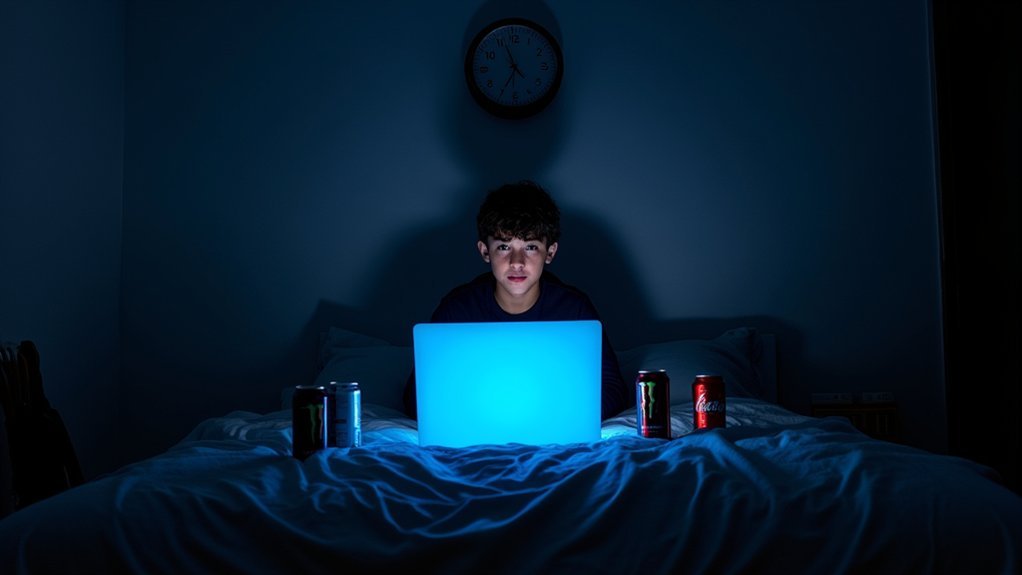
When you settle in for an intense gaming session, your brain doesn’t simply process entertainment—it triggers a cascade of physiological responses that can sabotage your sleep hours later.
Your gaming habits directly compromise sleep quality and duration through multiple mechanisms. Blue light exposure from screens suppresses melatonin production, disrupting your body’s natural circadian rhythms and delaying sleep onset.
Simultaneously, gaming elevates your mental and physiological arousal levels, creating a hyperalert state that contradicts the relaxation needed for quality rest. This heightened excitement lingers long after you’ve powered down, making it difficult to shift into sleep.
When these disrupted sleep patterns become chronic, they don’t just affect your rest—they greatly impact your mental health and daily functioning.
Blue Light Exposure and Melatonin Suppression
As your gaming device’s screen bathes your face in artificial light, it’s specifically the blue wavelengths that wreak havoc on your sleep preparation. Blue light tricks your brain into believing it’s daytime, effectively shutting down melatonin production when you need it most.
| Time Before Bed | Blue Light Effect | Sleep Impact |
|---|---|---|
| 3+ hours | Minimal disruption | Normal sleep onset |
| 2 hours | Moderate suppression | Slight delay |
| 1 hour | Significant reduction | Notable latency |
| 30 minutes | Severe melatonin block | Poor sleep quality |
| At bedtime | Complete disruption | Insomnia risk |
This hormonal interference directly increases your sleep onset latency, making it harder to fall asleep. Your circadian rhythms become confused, interpreting extended screen time as a signal to stay alert. Reducing evening gaming sessions protects your natural sleep mechanisms.
Physical and Mental Stimulation From Gaming
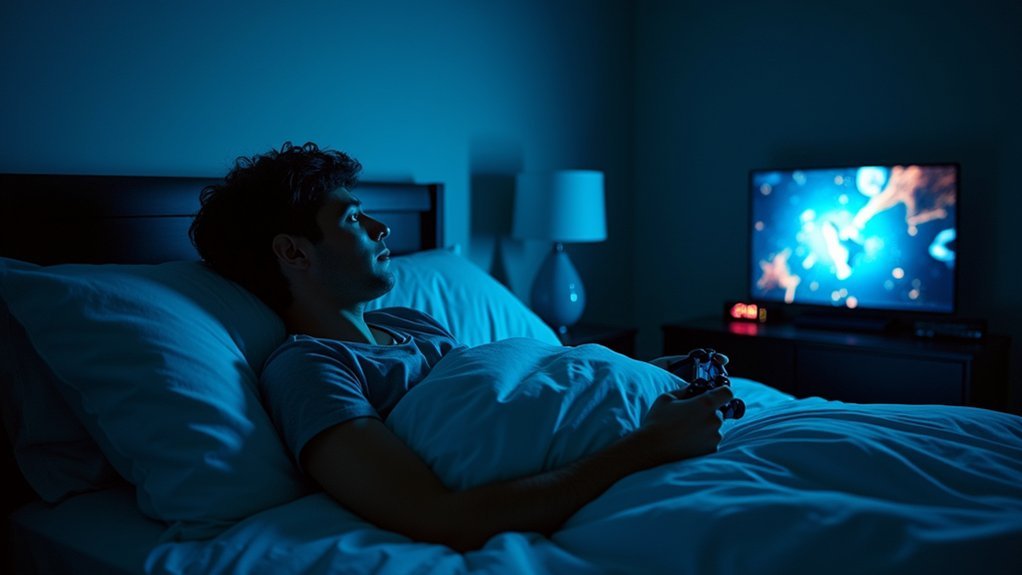
When you’re gaming, your heart rate spikes as your body responds to the intense visual and cognitive demands of gameplay.
This physiological arousal triggers your stress response system, flooding your body with hormones like adrenaline and cortisol that keep you in a heightened state of alertness.
You’ll find that this combination of increased heart rate, activated stress responses, and elevated mental alertness makes it incredibly difficult for your brain and body to shift into the relaxed state needed for quality sleep.
Heightened Heart Rate Effects
Although you mightn’t notice it during play, intense gaming sessions trigger significant physiological changes that can sabotage your sleep hours later. Your heart rate spikes dramatically during competitive moments, creating physiological arousal that doesn’t simply disappear when you turn off your console.
This elevated cardiovascular activity maintains heightened alertness long after you’ve finished playing, making sleep onset incredibly difficult. The increased mental activity from intense gameplay keeps your nervous system in an activated state, preventing the natural wind-down process your body needs.
When your heart continues racing from gaming excitement, you’re fundamentally fighting against your body’s circadian rhythm. This sustained arousal often leads to insomnia, as your cardiovascular system remains too stimulated to allow the deep relaxation necessary for quality rest.
Stress Response Activation
Beyond the cardiovascular impact, gaming triggers your body’s fundamental stress response system, flooding your bloodstream with cortisol and adrenaline that weren’t meant to surge during evening hours.
This biological alarm creates hyperarousal that directly conflicts with your natural sleep preparation. When you’re deep into intense gaming sessions, your brain interprets the virtual challenges as real threats, maintaining heightened alertness.
This stress response activation leads to delayed sleep onset, as your nervous system struggles to downshift from combat mode.
You’ll find yourself caught in bedtime procrastination cycles, choosing another match over rest. The resulting sleep loss accumulates nightly, progressively undermining your mental well-being and creating a destructive pattern where gaming becomes both escape and saboteur.
Mental Alertness Increase
Gaming’s intense cognitive demands create a perfect storm of mental and physical stimulation that leaves your brain buzzing with activity well past your controller’s shutdown.
Your mental alertness skyrockets as you process complex visual information, make split-second decisions, and coordinate intricate movements. This hyperactive state directly conflicts with your body’s natural bedtime preparation.
The combination of strategic thinking and blue light exposure from screens compounds the problem, keeping your mind sharp when it should be winding down.
Your heart rate remains elevated, and your nervous system stays primed for action rather than rest. This sustained mental alertness makes adapting to sleep nearly impossible, as your brain continues racing long after gaming ends, severely compromising your sleep quality.
Delayed Sleep Schedules and Bedtime Procrastination
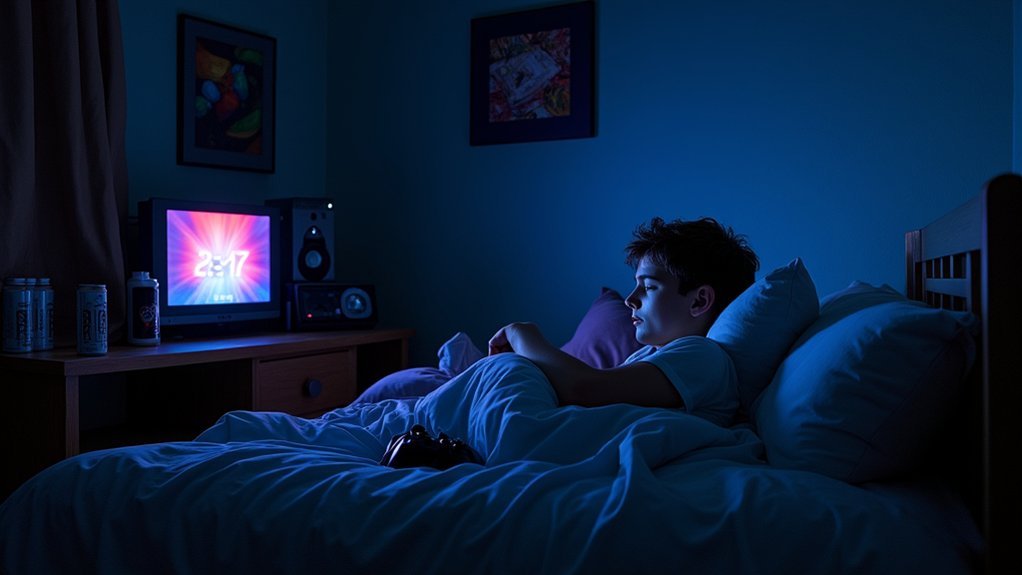
You’ve likely experienced the “just one more game” mentality that pushes your bedtime later and later into the night.
This gaming-induced procrastination disrupts your natural sleep schedule as you prioritize achieving the next level or completing another match over getting adequate rest.
These late-night sessions gradually erode your healthy sleep routines, creating a cycle where you’re consistently going to bed much later than you intended.
Gaming Induced Sleep Delay
When you’re immersed in an intense gaming session, it’s easy to tell yourself “just one more level” or “one more match” – a pattern that consistently pushes your bedtime later than intended.
This gaming induced sleep delay creates a cascade of sleep problems that compound over time.
Bedtime procrastination through late-night gaming affects your body’s natural rhythm in several ways:
- Excitement keeps you wired – Intense gameplay elevates your arousal levels, making delayed sleep onset inevitable.
- Time distortion occurs – Gaming sessions feel shorter than they actually are, causing unexpected schedule shifts.
- Sleep schedules become inconsistent – Irregular bedtimes disrupt your circadian rhythm.
- Accumulated sleep deprivation builds – Each late gaming night creates a sleep debt that impacts your overall health.
Late Night Gaming Sessions
Although your gaming session might feel like it’s only lasted an hour, you’ve actually been playing for three – and it’s now well past midnight. This time distortion is common during late-night gaming sessions, where 74% of adolescents admit staying up late to play games.
These habits create bedtime procrastination that disrupts your sleep patterns considerably. When you consistently delay sleep for gaming time, you’re affecting your sleep onset and accumulating sleep debt.
Adult gamers average nearly four hours daily, often losing track of time completely. Over 75% of regular players struggle with delayed bedtimes, experiencing increased daytime tiredness as a result.
Your sleep habits suffer when gaming becomes prioritized over rest, creating a cycle of poor sleep that impacts your overall well-being.
Breaking Healthy Sleep Routines
Gaming’s addictive pull doesn’t just steal hours from your night – it completely dismantles the structured sleep routines that keep your circadian rhythm functioning properly.
When you prioritize gaming over sleep hygiene, you’re creating a pattern of bedtime procrastination that leads to poor sleep quality.
Research shows this disruption manifests in four critical ways:
- Delayed sleep schedules – 74% of adolescents stay up late gaming, pushing back natural bedtimes.
- Time distortion – Averaging nearly 4 hours daily, you lose track of appropriate sleep timing.
- Sleep onset struggles – Over 75% of young gamers experience difficulty falling asleep.
- Long-term consequences – Adults report sleeping 47 minutes less than needed due to gaming habits.
These gaming and sleep conflicts create lasting sleep problems that persist well beyond your gaming years.
Social Gaming and Fear of Missing Out (FOMO)
Since social gaming revolves around real-time interactions with friends and online communities, it creates a powerful pull that’s difficult to resist when bedtime approaches.
When you’re engaged in online gaming sessions, you’ll often feel compelled to stay connected rather than log off and sleep. This Fear of Missing Out (FOMO) drives you to prioritize social interactions and in-game events over your sleep needs.
You’ll find yourself sacrificing sleep for extended gameplay, leading to accumulated sleep loss that affects your overall well-being.
If you’re an adolescent, you’re particularly susceptible to this phenomenon, frequently staying up late to participate with peers.
This creates disrupted sleep patterns and chronic sleep deprivation that impacts your daily functioning.
Accumulated Sleep Debt From Late-Night Gaming
When you consistently game late into the night, you’re not just losing a few hours of sleep—you’re building up a debt that compounds over time.
The longer your gaming sessions run, the more sleep you sacrifice, and research shows gamers lose an average of 47 minutes compared to non-gamers.
This accumulated sleep debt can’t be easily erased with one good night’s rest, requiring extended recovery time to restore your body’s natural balance.
Sleep Loss Builds Up
While you might think losing just an hour of sleep here and there won’t hurt, late-night gaming sessions create a dangerous pattern of accumulated sleep debt that compounds over time.
Even small amounts of sleep loss nightly build into significant deprivation affecting your cognitive function and overall health.
Research shows adolescents who game late report less sleep than non-gaming peers, leading to chronic sleep issues.
With 74% of teens staying up late to game, this trend’s widespread.
Your accumulated sleep debt manifests through:
- Increased daytime tiredness affecting daily performance
- Impaired decision-making capabilities during critical moments
- Higher accident risk due to cognitive impairment
- Gradual deterioration of mental and physical health
This sleep debt doesn’t disappear overnight—it requires consistent, quality rest to recover.
Gaming Duration Impact
The amount of time you spend gaming directly correlates with how much sleep debt you’ll accumulate. Gaming duration impact becomes significant when sessions extend into late hours, with adolescents averaging nearly six hours daily.
Extended late-night gaming creates a vicious cycle where you’ll sacrifice essential sleep repeatedly, building substantial sleep deprivation over time. Your circadian rhythms suffer disruption as prolonged gaming sessions push bedtime later each night.
This accumulated debt severely compromises your cognitive function, affecting decision-making and daily performance. The longer you game before bed, the more your sleep quality deteriorates, creating daytime fatigue that ironically drives you toward more gaming for stimulation.
Breaking this pattern requires conscious limits on gaming duration, especially during evening hours when sleep preparation should begin.
Recovery Time Needed
Because sleep debt accumulates faster than most gamers realize, you’ll need notably more recovery time than simply getting one good night’s rest.
Even small amounts of lost sleep build up chronically, affecting your cognitive function and overall health considerably.
Your recovery process requires structured approach:
- Stop gaming 90 minutes before bed to allow natural melatonin production
- Maintain consistent sleep schedules even on weekends to reset your circadian rhythm
- Prioritize 7-9 hours nightly for several weeks to fully recover accumulated debt
- Avoid caffeine after 2 PM to support deeper sleep cycles
Research shows teens who game frequently report markedly less sleep than non-gaming peers, creating lasting impacts.
Adults who gamed weekly as adolescents still sleep only 47 minutes more than they did during adolescence, demonstrating gaming’s long-term effects on sleep patterns and recovery needs.
Circadian Rhythm Disruption and Internal Clock Confusion
As you plunge into late-night gaming sessions, your body’s natural sleep-wake cycle becomes increasingly disrupted, creating a cascade of internal clock confusion that can persist long after you’ve powered down your console. Your circadian rhythm relies on consistent timing cues, but gaming pushes your sleep onset later each night. Exposure to blue light from screens compounds this problem by suppressing melatonin production, tricking your internal clock into thinking it’s still daytime.
| Gaming Impact | Effect on Sleep |
|---|---|
| Late-night sessions | Delayed sleep onset |
| Blue light exposure | Reduced melatonin production |
| Mental stimulation | Increased arousal levels |
This disruption creates accumulated sleep deprivation, making it increasingly difficult to reset your natural rhythm and establish healthy sleep patterns.
Gaming-Related Stress Response and Heightened Alertness
- Elevated heart rate that persists after you’ve stopped playing
- Hyperarousal preventing your mind from winding down naturally
- Delayed sleep onset that reduces overall sleep duration
- Chronic sleep deprivation from consistently pushing bedtime later
This cycle impairs your cognitive function the following day, creating daytime drowsiness and decreased mental performance that undermines your health and productivity.
Screen Time Duration and Sleep Architecture Changes
When you spend hours gaming before bed, your brain doesn’t simply switch off once you close your laptop or put down your controller. Extended screen time duration fundamentally alters your sleep architecture, creating cascading effects throughout the night.
The blue light from your gaming device suppresses melatonin production, forcing your body to fight its natural circadian rhythm. This disruption doesn’t just delay sleep onset—it restructures your entire sleep cycle.
Your gaming experience triggers profound changes in sleep quality, particularly reducing essential REM sleep phases. When you game for extended periods before bedtime, you’re fundamentally rewiring your brain’s sleep patterns.
Research consistently shows that longer gaming sessions lead to more fragmented sleep, decreased sleep efficiency, and shortened total sleep duration, leaving you less restored the following day.
Children and Teens: Heightened Vulnerability to Gaming Sleep Effects
While adults can struggle with gaming’s sleep effects, children and teens face considerably greater risks due to their developing brains and natural sleep patterns.
Video games affect adolescents more severely, as their circadian rhythms are naturally shifting later during puberty.
Your teen’s gaming habits create multiple sleep issues:
- Extended screen time – Regular gamers average nearly 6 hours daily, directly cutting into essential sleep hours.
- Blue light exposure – Gaming screens suppress melatonin production more dramatically in developing brains.
- Disrupted sleep cycle – Over 75% of young gamers experience later bedtimes and difficulty falling asleep.
- Daytime fatigue – 74% report staying up late gaming, leading to chronic tiredness.
These patterns threaten long-term health and wellness, as teens need 8-10 hours nightly for proper development.
Gaming-Induced Insomnia and Sleep Disorders
Beyond the age-related vulnerabilities discussed above, gaming creates serious sleep disorders that affect players across all demographics. Gaming-induced insomnia develops when you prioritize gaming success over healthy sleep-wake cycles. Blue light exposure suppresses your melatonin production, while mental arousal keeps your mind racing long after you’ve stopped playing.
| Sleep Issue | Gaming Impact | Result |
|---|---|---|
| Sleep Onset | Delayed bedtime | Longer time to fall asleep |
| Sleep Duration | Shortened rest periods | Chronic sleep deprivation |
| Sleep Quality | Fragmented sleep | Poor restoration |
| Circadian Rhythm | Disrupted timing | Irregular sleep patterns |
| Daytime Function | Reduced alertness | Impaired performance |
Children and adolescents face the greatest risk, as their developing brains struggle to regulate disrupted sleep patterns, leading to mood instability and cognitive decline.
Effective Sleep Hygiene Strategies for Gamers
Although gaming disrupts your natural sleep patterns, you can implement targeted sleep hygiene strategies to reclaim quality rest without abandoning your favorite hobby.
Establishing a consistent sleep schedule helps regulate your internal clock and improves overall sleep quality. Here are four essential strategies:
- Maintain regular bedtimes – Go to bed and wake up at the same time daily to strengthen your circadian rhythm.
- Limit blue light exposure – Stop screen time at least one hour before sleep to preserve melatonin production.
- Create a conducive sleep environment – Keep your bedroom dark, quiet, and cool for ideal rest.
- Practice calming pre-sleep activities – Replace late-night gaming with reading or meditation to shift into relaxation mode.
Remove gaming devices from your bedroom to reinforce it as a dedicated sleep sanctuary.
Alternative Evening Activities for Better Rest
Since your evening routine sets the stage for quality sleep, replacing stimulating gaming sessions with calming activities can dramatically improve your rest.
Reading or practicing mindfulness meditation helps relax your mind and counteracts gaming’s stimulating effects. Gentle yoga or stretching reduces evening tension while promoting relaxation that enhances sleep quality.
Creating a serene environment with soothing music or nature sounds provides an excellent alternative to high-stimulation gaming. Journaling clears racing thoughts, reducing stress and anxiety for improved sleep patterns.
These screen-free activities form an essential foundation for your pre-sleep routine.
Establishing consistent evening habits reinforces healthy sleep hygiene, leading to better overall rest and recovery.
Your body will thank you for choosing relaxation over digital stimulation.
Frequently Asked Questions
Is It a Bad Idea to Play Video Games Before Bed?
Yes, you’ll disrupt your sleep if you game before bed. The blue light suppresses melatonin production, while the mental stimulation keeps you alert. You should stop gaming at least one hour before sleeping.
What Happens When You Play Video Games Before Bed?
When you play video games before bed, you’ll experience heightened mental arousal and blue light exposure that suppresses melatonin production, making it harder to fall asleep and reducing your overall sleep quality.
Why Are Video Games Bad Before Bed?
You’ll struggle falling asleep because video games overstimulate your brain and blue light from screens suppresses melatonin production. This leads to poor sleep quality, shorter rest duration, and daytime fatigue.
Why Should You Not Play Video Games Before Bed?
You shouldn’t play video games before bed because they increase arousal, expose you to sleep-disrupting blue light, suppress melatonin production, and often lead to bedtime procrastination that sacrifices necessary sleep.


