

Your ideal bedroom temperature depends on your age and physiological needs. If you’re an adult, you’ll sleep best between 60-67°F, which supports your body’s natural cooling process and enhances deep sleep phases. Babies require a slightly warmer 68-70°F to prevent overheating and reduce SIDS risk. Seniors need the warmest conditions at 68-77°F due to increased temperature sensitivity with age. Understanding these age-specific requirements will help you optimize your sleep environment for maximum rest and recovery.
Optimal Temperature Range for Adults (60-67°F)

When you’re trying to achieve deep, restorative sleep, maintaining your bedroom temperature between 60°F and 67°F (15°C to 19°C) creates the ideal environment for your body’s natural sleep mechanisms.
This best range supports your core body temperature’s natural cooling process, which signals your brain it’s time to sleep. When your bedroom temperature stays within these parameters, you’ll experience improved sleep efficiency and enhanced deep sleep phases.
Your body relies on this temperature drop for best sleeping conditions. If you keep your thermostat set above 67°F, you’ll disrupt this essential cooling process and compromise sleep quality.
Pairing the correct bedroom temperature with breathable bedding maximizes your sleep environment’s effectiveness, ensuring you maintain comfortable conditions throughout the night.
Baby Sleep Temperature Guidelines (68-70°F)
While adults sleep best in cooler conditions, your baby requires a slightly warmer environment between 68°F and 70°F (20°C to 21°C) for safe, comfortable rest.
This ideal sleep temperature for infants helps prevent overheating, which reduces sudden infant death syndrome (SIDS) risk. Your baby’s smaller body can’t regulate temperature effectively, making them vulnerable to temperature fluctuations.
Follow these temperature guidelines by dressing your infant in breathable sleepwear like sleep sacks or lightweight sleepers instead of blankets.
You can monitor your baby’s comfort by feeling their stomach or neck—they should feel warm but not hot or sweaty.
Maintaining this precise temperature range guarantees your infant stays comfortable throughout the night while minimizing safety risks associated with improper sleeping conditions.
Senior Sleep Temperature Considerations (68-77°F)
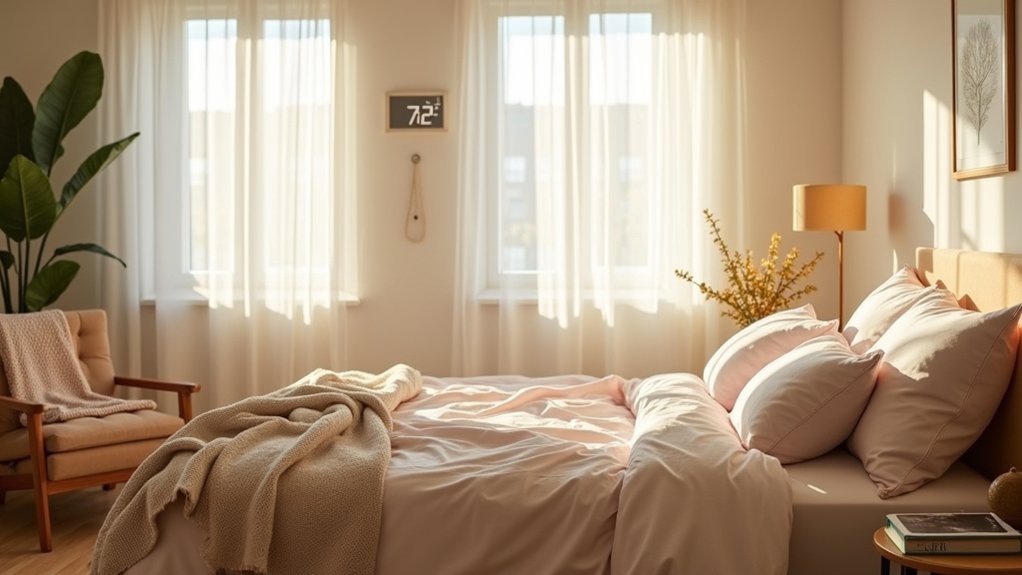
As age advances, sleep temperature needs shift noticeably from infant requirements. While the temperature for babies stays cooler at 68-70°F, older adults need warmer conditions for ideal overall sleep.
Your ideal sleep temperature as a senior ranges from 68-77°F, markedly broader than younger demographics require.
The relationship between temperature and sleep becomes more complex with age. You’ll likely find that ambient temperature sensitivity increases, making bedroom temperature adjustments essential for comfort.
Your sleeping temperature preferences may lean toward the warmer end of this range, as maintaining warmth enhances sleep duration and quality.
Individual comfort levels vary considerably among older adults. You should experiment within the 68-77°F range to discover your personal sweet spot.
Remember that exceeding 77°F typically reduces sleep efficiency, so you’ll want to avoid overheating your sleeping environment.
Frequently Asked Questions
What Is the Best Room Temperature for Deep Sleep?
You’ll sleep deepest when your bedroom’s between 60-67°F. This temperature range helps your body’s natural cooling process, promoting restorative sleep cycles. Temperatures above 70°F disrupt sleep quality and increase nighttime wakefulness.
What Is the Healthiest Temperature to Sleep In?
You’ll sleep healthiest at 60°F to 67°F, which promotes better sleep quality and efficiency. Don’t exceed 70°F, as warmer temperatures increase wakefulness and reduce restorative REM sleep your body needs.
What Is the Best Temperature for Restful Sleep?
You’ll sleep most restfully when your bedroom’s between 60°F and 67°F. This temperature range supports your body’s natural cooling process, helping you achieve deeper sleep stages and maintain better sleep quality throughout the night.
What Temperature Should a Bedroom Be Overnight?
You should keep your bedroom between 60°F and 67°F overnight for ideal sleep. This cooler temperature supports your body’s natural drop in core temperature, helping you fall asleep faster and achieve deeper, more restorative rest.


