
Bedtime anxiety disrupts your rest by triggering your body’s stress response system when you’re trying to wind down. Your system floods with cortisol and adrenaline, causing your heart rate to spike and creating muscle tension that prevents relaxation. Racing thoughts amplify during quiet hours, while rapid breathing blocks restorative sleep stages. This creates a self-perpetuating cycle where sleep deprivation increases worry, making future nights even more challenging. Understanding effective intervention strategies can help break this pattern.
How Anxiety Activates Your Body’s Alert System at Night
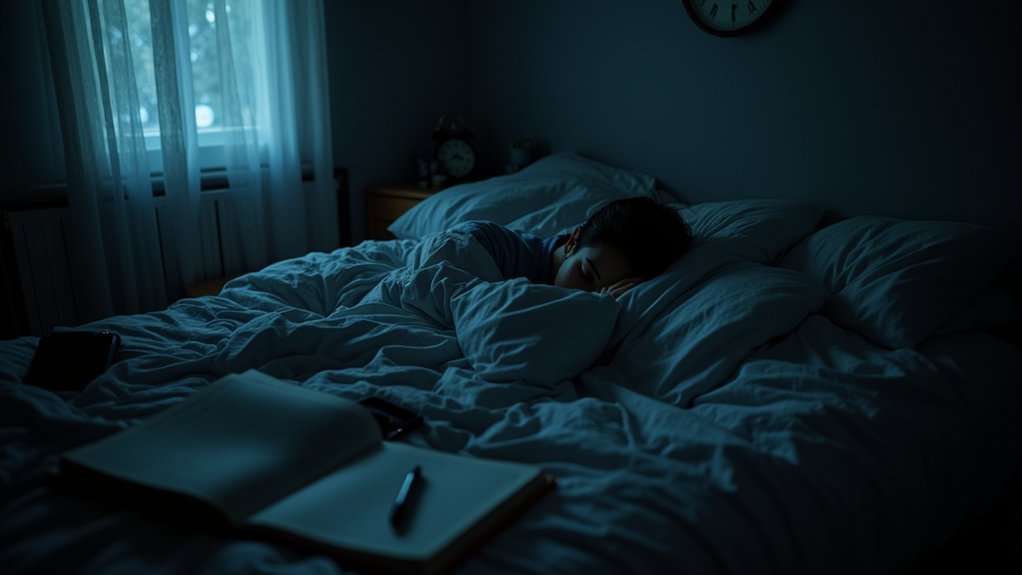
When you settle into bed at night, anxiety doesn’t simply disappear—it activates your body’s stress response system, flooding your bloodstream with cortisol and adrenaline that signal danger even when you’re safe in your bedroom.
Your heart rate increases dramatically, making peaceful sleep nearly impossible. Racing thoughts spiral through your mind, creating cognitive symptoms that amplify during nighttime’s quiet hours.
These physiological responses include muscle tension and rapid breathing, preventing your body from entering restorative sleep stages. Without proper relaxation techniques or a consistent bedtime routine, you’ll experience prolonged sleep deprivation.
This creates a vicious cycle where anxiety worsens your sleep quality, and poor sleep intensifies your stress levels the following day.
The Physical and Mental Symptoms That Keep You Awake
As your head hits the pillow, bedtime anxiety releases a barrage of physical symptoms that transform your comfortable bed into an uncomfortable battleground. Your heart races, sweat dampens your sheets, and muscle tension grips your body, making relaxation impossible.
These physical symptoms work alongside overwhelming mental symptoms like racing thoughts and excessive worry about tomorrow’s dangers or failures.
The emotional symptoms intensify everything—that crushing fear of impending doom keeps your mind hyperalert when it should be winding down. You’ll find yourself tossing, turning, or even avoiding bedtime altogether, creating behavioral patterns that worsen sleep disruptions.
This cycle of sleep deprivation becomes self-perpetuating. Poor sleep increases next-day irritability and concentration problems, which fuel more bedtime anxiety.
Breaking this anxiety-sleep disruption requires targeted relaxation techniques and consistent sleep habits.
Breaking the Cycle of Sleep Deprivation and Heightened Worry

The relentless cycle of sleep deprivation and heightened worry creates a self-reinforcing trap that becomes increasingly difficult to escape without deliberate intervention.
When bedtime anxiety prevents you from falling asleep, you’ll likely experience insomnia that increases your worry about sleep itself. This bidirectional relationship means chronic anxiety feeds sleep disturbances, which then amplify your emotional health struggles the next day.
Breaking this cycle of anxiety requires targeted strategies. Cognitive Behavioral Therapy for Insomnia (CBT-I) has proven highly effective at retraining your mind to associate your bed with rest rather than worry.
You can also implement relaxation techniques that calm your racing thoughts and physical tension. These interventions help interrupt the destructive pattern, allowing you to reclaim restorative sleep and improve your overall well-being.
Evidence-Based Techniques to Calm Pre-Sleep Anxiety
Clinical research has validated numerous techniques that effectively reduce pre-sleep anxiety, offering you practical tools to reclaim peaceful nights.
Establish a consistent bedtime routine to signal your brain it’s time to sleep. Practice relaxation techniques like deep breathing, progressive muscle relaxation, or guided imagery to calm your nervous system.
Limit screen time at least one hour before bed to boost melatonin production naturally. Create a sleep-friendly environment by keeping your bedroom dark, quiet, and cool.
Use cognitive-behavioral techniques to reframe anxious thoughts and develop practical coping skills. These evidence-based strategies work together to break anxiety’s grip on your sleep, helping you improve sleep quality and reduce pre-sleep anxiety effectively.
Creating a Bedroom Environment That Promotes Relaxation

When you transform your bedroom environment into a sanctuary designed for rest, you’re actively addressing one of the most controllable factors in your fight against bedtime anxiety.
Creating ideal sleep hygiene starts with making your space dark, quiet, and cool to promote relaxation and better sleep. You’ll want to invest in comfortable bedding that supports your body properly, preventing discomfort that triggers anxiety at night.
Remove screens at least an hour before bed to boost melatonin production naturally. Keep your space clutter-free to reduce stress levels that fuel nighttime worries.
Add calming elements like essential oils or soft music to enhance your relaxation response. These environmental changes directly improve sleep quality while creating the peaceful atmosphere your anxious mind needs to unwind effectively.
Frequently Asked Questions
Why Does My Anxiety Get Worse When I Lay Down?
When you lay down, you’re removing daytime distractions that normally keep anxious thoughts at bay. Your mind becomes hyperactive without stimulation, while your body’s stress response increases heart rate and tension, preventing relaxation.
How Do You Deal With Nighttime Anxiety?
You can manage nighttime anxiety by practicing deep breathing exercises, maintaining consistent sleep schedules, creating dark quiet bedrooms, avoiding evening caffeine, and using cognitive-behavioral techniques to reframe worrying thoughts.
What Is the 3 3 3 Rule for Anxiety in Children?
You’ll teach your child to identify three things they can see, three things they can hear, and three things they can feel to ground them in the present moment and reduce anxiety.
Why Does My Anxiety Hit so Hard at Night?
Your anxiety intensifies at night because daytime distractions fade, allowing accumulated worries to surface. Your brain processes memories while hormones fluctuate, and you’re lacking developed coping mechanisms to manage overwhelming thoughts.


