
You can calm your mind tonight using proven breathing techniques that activate your body’s natural relaxation response. Try the 4-7-8 method: inhale for four counts, hold for seven, then exhale for eight to lower your heart rate and ease racing thoughts. Box breathing—inhaling, holding, exhaling, and holding for four seconds each—releases daily tension effectively. Diaphragmatic breathing engages your parasympathetic nervous system for deeper calm, while alternate nostril breathing balances your mind for ideal sleep preparation and enhanced relaxation.
How Breathing Affects Sleep Quality and Nervous System Regulation

When you’re tossing and turning at night, your breathing pattern might be the culprit disrupting your sleep. Your nervous system responds directly to how you breathe, creating a powerful connection between breath control and sleep quality.
Deep breathing activates your parasympathetic nervous system, which signals your body to relax and prepare for rest. When you practice diaphragmatic breathing, you’re encouraging slower, more deliberate breaths that naturally lower your heart rate and reduce anxiety.
This breathing technique triggers your body’s relaxation response, effectively decreasing cortisol levels that keep you awake. Each controlled breath sends signals to calm racing thoughts and ease physical tension.
The 4-7-8 Method for Deep Relaxation Before Bed
One simple breathing technique can transform your pre-sleep routine into a powerful relaxation ritual. The 4-7-8 technique involves inhaling for four counts, holding your breath for seven counts, and exhaling slowly for eight counts.
Transform your bedtime routine with the 4-7-8 breathing technique: inhale for four, hold for seven, exhale for eight counts.
This specific pattern activates your body’s natural relaxation response, helping calm your body and mind before bed.
By extending your exhale longer than your inhale, you’ll effectively lower your heart rate and encourage deep relaxation throughout your nervous system. This makes the method particularly effective for managing overwhelming emotions that keep you awake.
Practice the 4-7-8 technique four times consecutively for maximum calming effects.
When you incorporate this breathing pattern into your nightly routine, you’ll notice significant improvements in sleep quality over time.
Box Breathing to Release Daily Tension and Stress
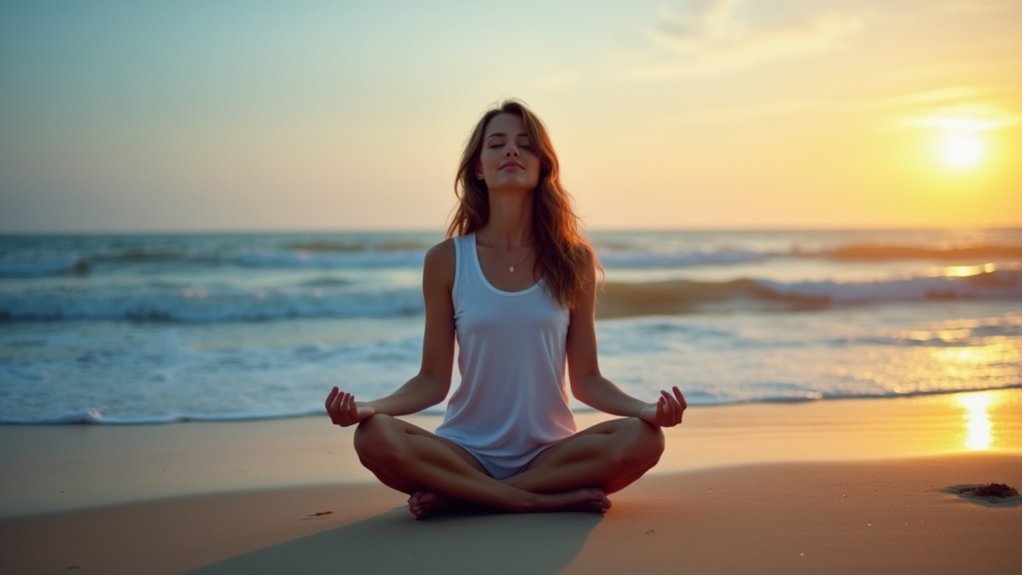
While daily stress accumulates in your body throughout the day, box breathing offers a structured approach to release tension and restore mental clarity. This powerful technique involves inhaling, holding, exhaling, and holding again—each breath for a count of four seconds.
When you’re feeling overwhelmed at work or struggling with afternoon fatigue, box breathing anchors you in the present moment. You’ll find this method particularly effective because it’s used in high-pressure environments like military and healthcare settings.
Just five minutes of practice greatly improves your concentration and efficiency. Whether you’re starting your morning, preparing for meetings, or winding down, box breathing helps calm your mind by counteracting stress’s physical effects.
Among all breathing techniques, it’s remarkably versatile and accessible.
Diaphragmatic Breathing for Physical and Mental Calm
Since diaphragmatic breathing engages your body’s largest breathing muscle, it creates deeper relaxation than shallow chest breathing ever could. This belly breathing technique transforms your breathing pattern by activating your diaphragm effectively, helping both body and mind achieve profound calm.
To practice, lie down and place one hand on your chest, another on your abdomen. Breathe slowly through your nose, ensuring your belly rises while your chest stays relatively still. This proper technique maximizes oxygen intake and triggers your body’s relaxation response.
Just five minutes of diaphragmatic breathing, practiced three to four times daily, can reduce stress considerably. It’s especially beneficial if you’re managing chronic conditions like COPD or heart problems, while also improving focus and emotional well-being.
Alternate Nostril Breathing to Balance Your Mind
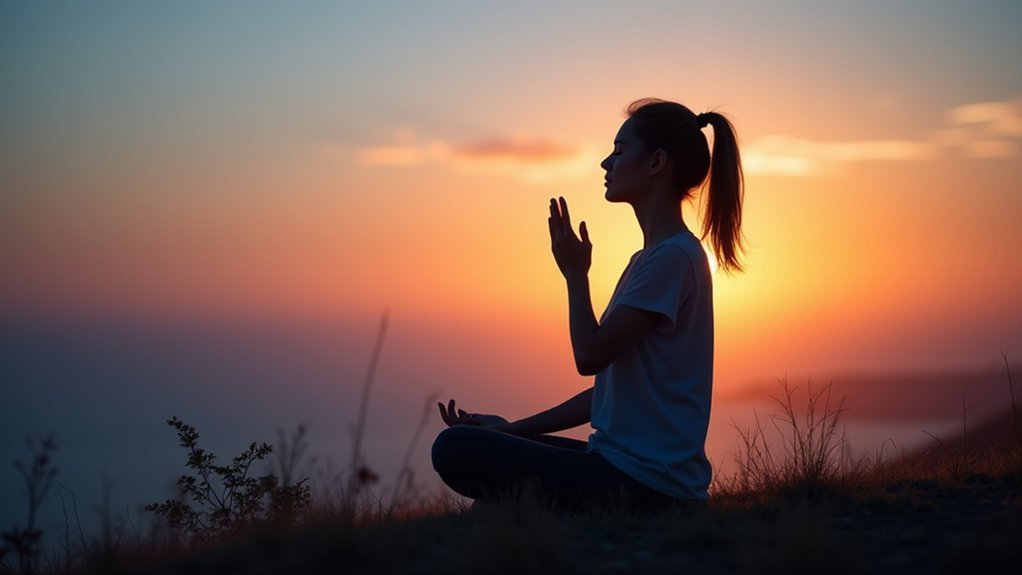
When you’re seeking mental equilibrium, alternate nostril breathing—known as Nadi Shodhana Pranayama in Sanskrit—offers a powerful way to balance your nervous system.
This breathing exercise promotes deep relaxation while enhancing mental clarity and reducing stress levels considerably.
Practice this technique on an empty stomach during morning or evening routines. Start by using your right thumb to close your right nostril after exhaling completely. Inhale slowly through your left nostril, then switch fingers to close the left nostril and exhale through the right.
Continue this alternating pattern for up to five minutes.
Regular practice opens your nasal passages, improving airflow and helping with congestion. You’ll notice enhanced cardiovascular function alongside the calming effects that make alternate nostril breathing essential for mental balance.
Creating Your Nighttime Breathing Routine for Better Sleep
Building on these daytime breathing practices, you can harness specific techniques designed to prepare your mind and body for restorative sleep.
Start by finding a comfortable position in bed and practice 4-7-8 breathing—inhale for four counts, hold for seven, and exhale for eight. This technique helps calm the nervous system effectively.
Follow with diaphragmatic breathing, taking slow deep belly breaths for five to ten minutes. Focus on your belly rising and falling naturally.
You can also try resonant breathing at 5-7 breaths per minute for ten to twenty minutes, which greatly reduces anxiety.
Frequently Asked Questions
What Is the Best Breathing Technique for Instant Calm?
You’ll find 4-7-8 breathing most effective for instant calm. Inhale for four seconds, hold for seven, then exhale for eight. This technique quickly slows your heart rate and signals your body to relax immediately.
What Is the 4 7 8 Breath Method?
You’ll inhale through your nose for four counts, hold your breath for seven counts, then exhale through your mouth for eight counts. This technique slows your heart rate and calms your nervous system effectively.
What Is the 5 5 5 Technique?
You’ll inhale for five counts, hold your breath for five counts, then exhale for five counts. This simple breathing pattern slows your heart rate, reduces anxiety, and helps you focus on the present moment.
How to Calm Anxiety Fast Breathing?
You can use 4-7-8 breathing by inhaling for 4 counts, holding for 7, then exhaling for 8. This technique quickly reduces anxiety levels and promotes relaxation in just a few breathing cycles.


