

You can improve your sleep quality by applying gentle pressure to specific acupressure points on your body. Target HT7 on your wrist for calming effects, SP6 above your inner ankle to extend sleep duration, and Yin Tang between your eyebrows to reduce anxiety. Apply firm pressure for 2-3 minutes per point while breathing deeply to activate your body’s natural relaxation response. These techniques offer a drug-free approach to achieving restful nights and enhanced sleep quality through consistent practice.
Understanding Acupressure Points for Sleep Enhancement
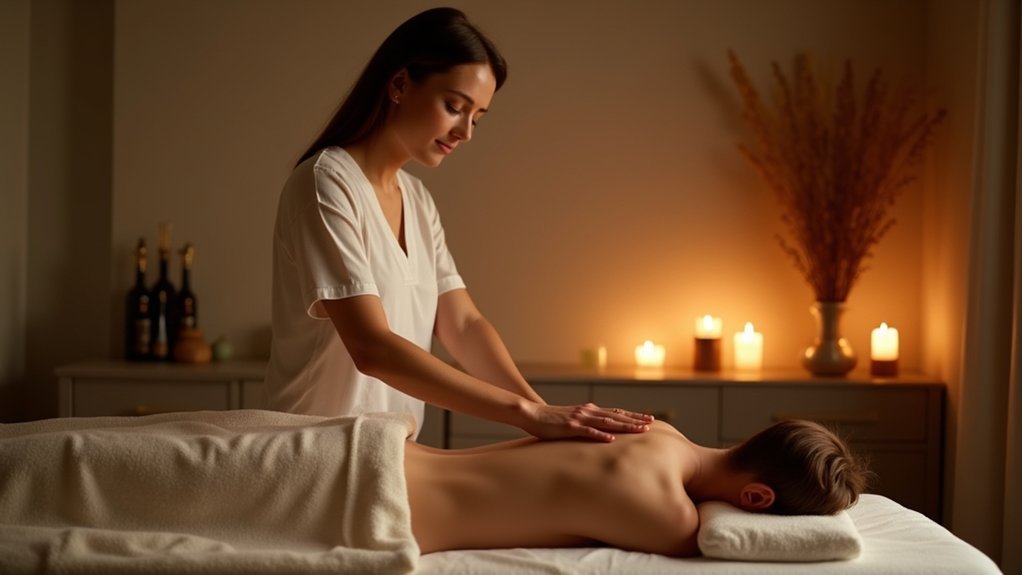
When you’re struggling with sleepless nights, acupressure offers a natural solution by targeting specific points on your body that promote relaxation and better sleep quality.
Acupressure provides a gentle, drug-free approach to achieving restful sleep by activating your body’s natural relaxation response through targeted pressure point stimulation.
This ancient technique involves applying firm pressure to specific pressure points that directly influence your nervous system’s ability to calm down.
Key acupressure points for combating insomnia include HT7 on your wrist, which provides powerful calming effects, and SP6 located four finger-widths above your inner ankle.
You’ll also find Yin Tang between your eyebrows particularly effective for reducing anxiety.
An Mian, positioned behind your ears, specifically targets sleep disorders.
Essential Pressure Points to Promote Deep Rest
Since your body contains numerous pressure points that can release deeper, more restorative sleep, mastering the five most effective locations will transform your nightly rest routine.
Traditional Chinese Medicine identifies specific acupressure points that combat insomnia while delivering calming effects for your health and wellbeing.
The An Mian point behind your ears targets anxiety and sleep disturbances when you apply pressure gently. HT7 on your wrist’s underside provides cognitive benefits alongside deep sleep enhancement. SP6, located above your inner ankle, extends restorative sleep duration and can relieve pain. Yin Tang between your eyebrows reduces nighttime anxiety effectively.
- Apply gentle pressure for 2-3 minutes per point
- Focus on consistent breathing while stimulating each location
- Practice these acupressure techniques 30 minutes before bedtime
Step-by-Step Techniques for Self-Applied Acupressure

Three simple preparation steps will guarantee your self-applied acupressure delivers maximum relaxation benefits. First, find a comfortable position and breathe deeply. Second, locate your target pressure points accurately. Third, apply firm pressure for 30 seconds to three minutes.
| Pressure Point | Location | Technique |
|---|---|---|
| An Mian | Behind ears | Apply firm pressure for pain relief |
| Spirit Gate (HT7) | Outer wrist crease | Gentle massage to quiet mind |
| SP6 | Four finger-widths above inner ankle | Use deep pressure for sleep quality |
| Bubbling Spring | Sole of foot | Circular motions for relaxation |
Start with the Spirit Gate for immediate relaxation. Apply firm pressure while maintaining comfortable positioning. Progress to SP6 using deep pressure techniques. Finish with Bubbling Spring massage using circular motions. This self-applied acupressure sequence enhances sleep quality effectively.
Combining Breathing Methods With Pressure Point Therapy
Although pressure point therapy provides significant benefits on its own, you’ll amplify these effects dramatically by incorporating coordinated breathing techniques into your practice.
Combining pressure point therapy with coordinated breathing techniques creates a powerful synergy that dramatically amplifies relaxation and therapeutic benefits.
When you combine deep breathing with acupressure, you’re creating a powerful synergy that enhances relaxation and promotes better sleep quality by calming your nervous system.
- Spirit Gate Technique: Inhale deeply while applying pressure to HT7, then exhale slowly to maximize calming effects and quiet your mind.
- Abdominal Breathing Method: Practice diaphragmatic breathing during sessions to increase oxygen flow and enhance therapeutic benefits.
- Rhythmic Synchronization: Use steady breathing patterns while stimulating pressure points like SP6 to synchronize your body and mind.
This combination addresses insomnia more effectively than either technique alone, supporting both physical recovery and mental health through balanced, restorative practice.
Creating Your Nightly Acupressure Routine for Better Sleep

Establishing a consistent nightly acupressure routine transforms your bedtime preparation into a powerful tool for achieving deeper, more restorative sleep.
Begin with An Mian and HT7 (Shen Men) pressure points, applying steady pressure for two to three minutes each to combat insomnia and create calming effects.
Include SP6 (San Yin Jiao) in your nightly routine, as research shows it improves deep sleep duration and overall sleep quality—though pregnant individuals should avoid this point.
Add Yin Tang at your eyebrow center, which studies confirm greatly enhances sleep quality.
Complete your routine with Inner Frontier Gate on your inner forearm and Wind Pool on your neck’s back for thorough stress relief.
Practice consistently before bedtime to maximize benefits.
Frequently Asked Questions
What Is the Pressure Point to Make You Relax?
You can relax by applying gentle pressure to the Spirit Gate point on your outer wrist below your pinkie finger for two to three minutes to quiet your mind.
What Is the Pressure Point to Reduce Tiredness?
You can reduce tiredness by applying gentle pressure to the Spirit Gate point on your outer wrist crease for two to three minutes, which helps quiet your mind and boost energy levels.
How Do You Massage to Help You Sleep Better?
You’ll massage the Spirit Gate point on your wrist crease below your pinky using circular motions for two to three minutes. Apply gentle pressure consistently on both wrists to promote better sleep naturally.
What Are the 5 Forbidden Acupressure Points?
You shouldn’t use SP6, HT7, ST25, LI4, or P6 points without caution. They’re contraindicated during pregnancy, heart conditions, or bowel obstructions. Always consult a qualified practitioner before applying pressure.


