

Stress-fighting foods work by targeting your body’s biochemical stress response through specific nutrients that regulate cortisol levels and support neurotransmitter production. Omega-3s reduce inflammation and cortisol, while magnesium calms your nervous system by stabilizing mood-regulating neurotransmitters. Complex carbohydrates boost serotonin production, probiotics enhance the gut-brain connection where 90% of serotonin originates, and antioxidants combat stress-induced inflammation. These nutrients fundamentally rewire your body’s stress mechanisms at the cellular level, creating natural resilience and emotional balance through targeted nutritional intervention.
The Science Behind Stress-Fighting Nutrients
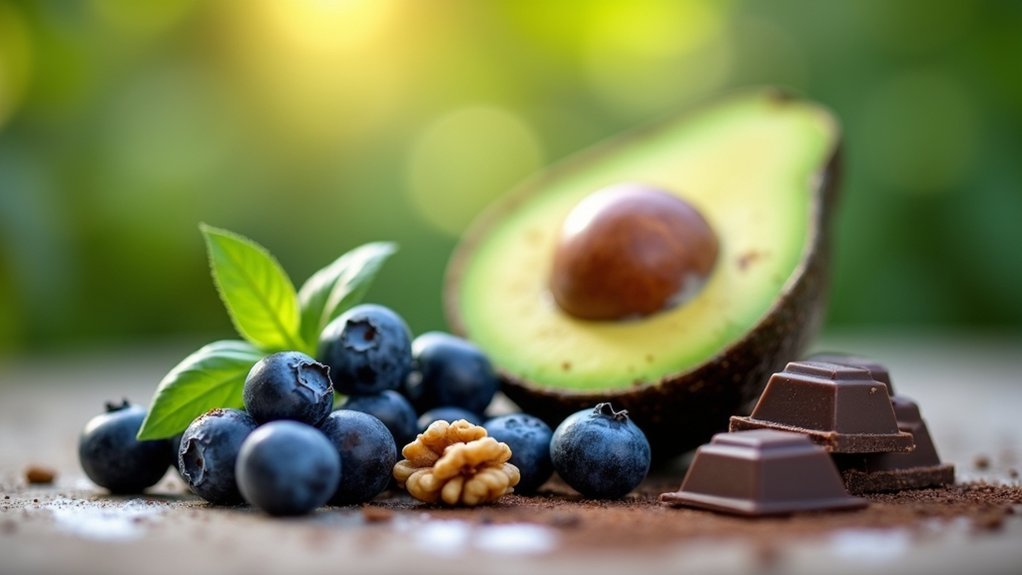
When stress strikes, your body triggers a cascade of hormonal and inflammatory responses that can wreak havoc on your physical and mental well-being. Your cortisol levels spike, inflammation increases, and your nervous system becomes overactive.
However, specific nutrients can counteract these harmful effects through targeted biological mechanisms. Omega-3 fatty acids directly combat inflammation while reducing elevated cortisol levels. Magnesium regulates neurotransmitters throughout your nervous system, effectively calming anxiety responses.
Vitamin C works double-duty by lowering cortisol and strengthening your compromised immune function during stressful periods. Probiotics support your gut microbiome’s vital role in serotonin production, the neurotransmitter responsible for mood regulation.
Meanwhile, complex carbohydrates promote steady serotonin release, creating sustained calming effects rather than temporary mood spikes. These nutrients work synergistically to restore your body’s natural balance.
Omega-3 Fatty Acids and Cortisol Regulation
Although stress sends cortisol levels soaring through your bloodstream, omega-3 fatty acids act as your body’s natural cortisol regulators, directly intercepting this stress hormone before it can cause lasting damage.
These essential fats reduce inflammation throughout your body, breaking the cycle that links chronic inflammation to elevated stress responses. When you consume omega-3s from fatty fish like salmon, you’re supporting vital neurotransmitter function that regulates anxiety and mood.
| Omega-3 Source | Cortisol Reduction | Mental Health Benefit |
|---|---|---|
| Salmon | Significant decrease | Improved mood stability |
| Sardines | Lower stress response | Reduced anxiety levels |
| Mackerel | Enhanced resilience | Better stress management |
| Supplements | Measurable improvement | Sustained emotional balance |
Your body’s stress resilience improves dramatically with consistent omega-3 intake, creating a protective barrier against daily stressors.
Magnesium’s Role in Calming the Nervous System
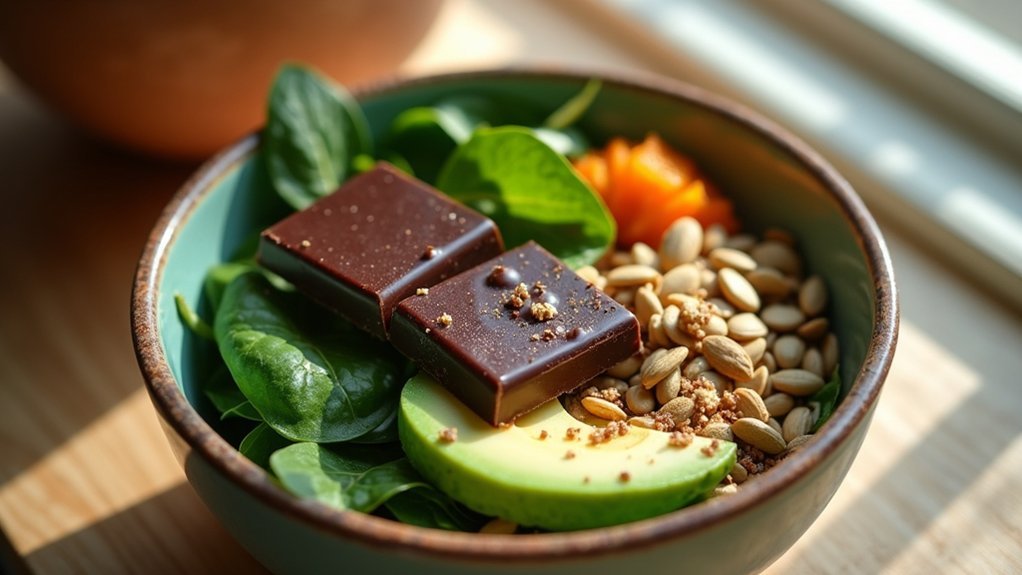
While your body battles daily stressors, magnesium acts as nature’s tranquilizer, directly regulating the neurotransmitters that control your nervous system’s response to anxiety and tension.
Magnesium serves as your body’s natural calming agent, expertly managing the neurochemical pathways that govern stress and anxiety responses.
When you’re deficient in magnesium, your cortisol levels spike, intensifying stress responses throughout your system.
This crucial mineral stabilizes your mood by influencing serotonin release, creating calming effects that counteract anxiety symptoms.
You’ll find magnesium-rich foods like leafy greens, nuts, seeds, and fatty fish particularly effective for enhancing mental well-being and promoting relaxation.
Research demonstrates that magnesium supplementation greatly reduces anxiety levels in high-stress individuals.
Complex Carbohydrates and Serotonin Production
As your body processes complex carbohydrates from whole grains, legumes, and vegetables, it triggers a cascade of biochemical reactions that boost serotonin production—your brain’s primary mood-regulating neurotransmitter.
When you consume these foods, insulin release allows tryptophan to cross into your brain more efficiently, where it converts to serotonin.
Complex carbohydrates deliver four key mental health benefits:
- Maintain stable blood sugar levels that prevent energy crashes
- Reduce mood swings through steady glucose release
- Promote sustained calmness via enhanced serotonin synthesis
- Support long-term mental health with consistent nutrient delivery
Research consistently shows that diets rich in complex carbohydrates correlate with lower stress levels.
Probiotics and the Gut-Brain Connection
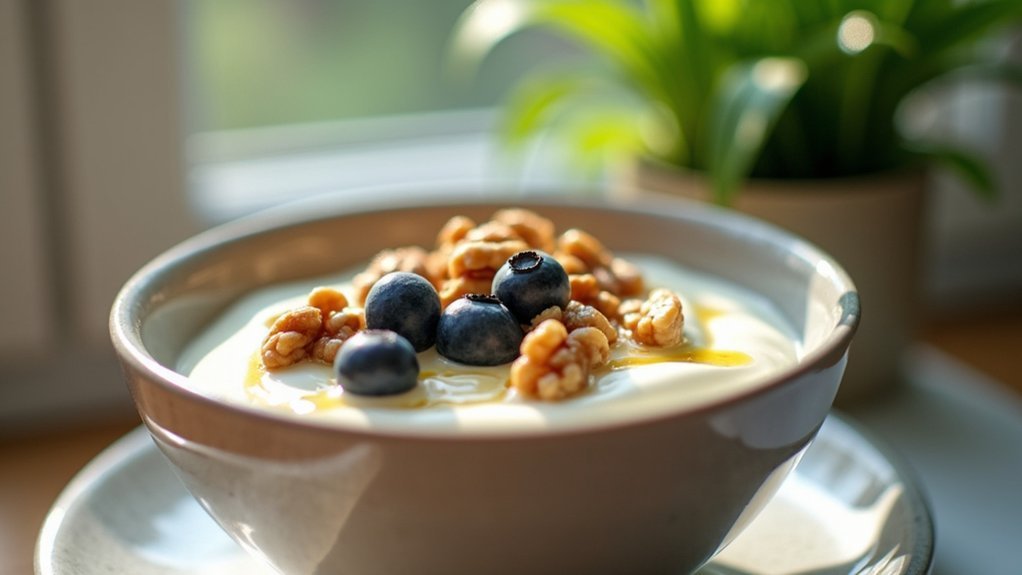
Your brain’s serotonin production extends far beyond what complex carbohydrates can stimulate—nearly 90% of this mood-regulating neurotransmitter actually originates in your gut.
Nearly 90% of your mood-regulating serotonin actually originates in your gut, not your brain.
This gut-brain connection makes probiotics essential for your mental well-being. When you consume probiotic-rich foods like yogurt, kefir, and sauerkraut, you’re maintaining a balanced gut microbiome that directly impacts your mood and stress levels.
These beneficial bacteria don’t just improve digestion—they actively reduce cortisol, your body’s primary stress hormone.
Studies show that regular probiotic consumption leads to decreased anxiety and improved emotional regulation. Fermented foods also boost short-chain fatty acid production, which enhances brain health.
Vitamin B Complex’s Impact on Stress Hormones
Your body’s stress response relies heavily on B vitamins to regulate cortisol production and maintain hormonal balance.
When you’re deficient in B6, B9, or B12, your cortisol levels can spike, leaving you feeling anxious and overwhelmed.
You can naturally lower these stress hormones by incorporating B-rich foods like leafy greens, eggs, and legumes into your daily meals.
B Vitamins Lower Cortisol
When your body faces stress, it releases cortisol as part of its natural defense mechanism, but B vitamins can help keep these hormone levels in check. These essential nutrients work by supporting neurotransmitter synthesis, which directly influences your body’s stress response and promotes better emotional well-being.
B vitamins, particularly B6, B9, and B12, actively counteract cortisol’s effects through these mechanisms:
- Neurotransmitter production – They help synthesize mood-regulating chemicals like serotonin.
- Hormone regulation – They support balanced cortisol levels during stressful situations.
- Stress perception – Higher B vitamin intake reduces how intensely you experience stress.
- Mood stability – They promote consistent emotional balance throughout daily challenges.
You’ll find these stress-fighting nutrients in whole grains, eggs, and leafy greens, making them powerful allies against chronic stress.
Stress Response Regulation
Although stress triggers a complex cascade of hormonal changes throughout your body, vitamin B complex acts as a powerful regulator that helps maintain balance in this delicate system.
When you’re stressed, your body releases cortisol and other hormones that can disrupt normal functioning. B vitamins directly influence this response by supporting the production of essential neurotransmitters like serotonin and dopamine, which counteract stress signals.
You’ll find that maintaining adequate B vitamin levels helps keep your cortisol levels in check, preventing the excessive hormone surges that worsen anxiety.
This creates a more stable internal environment for effective stress management. By promoting healthy hormone regulation, B vitamins guarantee your body’s stress response system doesn’t become overactive, helping you maintain emotional equilibrium during challenging situations.
L-Theanine for Natural Relaxation
One remarkable amino acid found naturally in green tea offers a unique solution for stress relief without the drowsiness that typically accompanies relaxation aids.
L-theanine delivers its calming effect through multiple biological pathways, making it an effective natural stress reducer.
L-theanine works through several natural mechanisms in your body to reduce stress while preserving mental clarity and alertness.
When you consume l-theanine, your brain experiences significant changes that promote relaxation:
- Increases GABA, serotonin, and dopamine production – neurotransmitters essential for mood regulation and calm feelings
- Lowers cortisol levels – reducing your body’s primary stress hormone response
- Enhances alpha brain wave activity – improving focus while maintaining tranquility
- Balances caffeine effects – providing steady energy without jitters when combined
This unique amino acid effectively manages your stress response while keeping you alert and mentally sharp, making it ideal for maintaining productivity during stressful periods.
Antioxidants That Combat Stress-Induced Inflammation
When you’re stressed, your body produces inflammation that can worsen anxiety and mood issues.
You’ll find powerful relief in vitamin C-rich foods like citrus fruits and bell peppers, which actively reduce cortisol levels and inflammatory markers in your system.
Dark chocolate also delivers potent antioxidants called flavonoids that combat stress-induced inflammation while naturally boosting your mood.
Vitamin C’s Anti-Inflammatory Power
While your body faces daily stressors, vitamin C acts as a frontline defender against the inflammatory damage they cause. This powerful antioxidant neutralizes free radicals that trigger inflammation and anxiety, while simultaneously lowering cortisol levels to reduce stress’s physiological impact.
Your immune system benefits tremendously from vitamin C’s anti-inflammatory properties. When you consume vitamin C-rich foods, you’re supporting neurotransmitter synthesis, particularly dopamine, which directly affects your mood regulation.
Four ways vitamin C combats stress-induced inflammation:
- Neutralizes harmful free radicals that damage cells and increase anxiety
- Reduces cortisol production to minimize stress hormone effects
- Decreases inflammation markers throughout your body
- Accelerates recovery time from stressful situations
Higher vitamin C levels correlate with better psychological resilience and faster stress recovery.
Dark Chocolate’s Antioxidant Benefits
Beyond citrus fruits and leafy greens, dark chocolate emerges as a surprising ally in your fight against stress-induced inflammation. This indulgent treat packs powerful antioxidants called flavonoids that actively reduce inflammation while improving blood flow throughout your body.
When you consume quality dark chocolate with at least 70% cacao, you’ll trigger a significant drop in cortisol levels—your primary stress hormone can decrease by up to 30%. These antioxidants also boost endorphin and serotonin production, naturally elevating your mood and promoting relaxation.
Additionally, dark chocolate contains magnesium, which supports healthy stress responses and helps regulate anxiety. Regular consumption doesn’t just satisfy cravings; it enhances cognitive function while combating stress-related inflammation.
Protein’s Stabilizing Effect on Blood Sugar
The relationship between protein consumption and blood sugar stability forms a cornerstone of stress management through nutrition. When you consume protein-rich foods, you’re slowing glucose absorption into your bloodstream, preventing the spikes and crashes that trigger stress responses.
This stabilization directly impacts your cortisol levels, reducing the primary stress hormone that wreaks havoc on your mental well-being.
Incorporating protein into your healthy diet provides these key benefits:
- Steady energy release from high-quality sources like eggs and lean meats
- Enhanced neurotransmitter production through essential amino acids for mood regulation
- Increased satiety that reduces cravings and maintains blood sugar balance
- Lower cortisol levels that minimize stress’s physiological effects
You’ll experience improved mood stability and decreased anxiety when protein becomes a consistent part of your stress-reduction strategy.
How Fiber Supports Better Sleep Quality
When you’re stressed and can’t sleep, your fiber intake might be the missing piece of the puzzle.
Fiber helps stabilize your blood sugar levels throughout the night, preventing those disruptive spikes and crashes that can jolt you awake or keep you tossing and turning.
Additionally, the fiber you consume feeds beneficial gut bacteria that produce compounds supporting the gut-brain connection, which directly influences your sleep quality and stress levels.
Blood Sugar Stabilization
Although blood sugar spikes can wreak havoc on your sleep cycle, fiber acts as your body’s natural stabilizer by slowing sugar absorption into your bloodstream.
This blood sugar stabilization prevents the dramatic peaks and crashes that trigger stress hormones and disrupt your sleep patterns.
When you consume fiber-rich foods like vegetables, beans, and whole grains, you’re creating steady energy release that supports restful sleep.
Here’s how fiber promotes better sleep through blood sugar control:
- Prevents midnight energy crashes that wake you up
- Maintains consistent serotonin production for mood regulation
- Reduces stress hormone cortisol spikes during sleep
- Supports gut health through the gut-brain axis connection
Studies consistently show that adequate fiber intake correlates with improved sleep quality and lower stress levels, making it essential for your nighttime routine.
Gut-Brain Connection Benefits
Beyond stabilizing blood sugar, fiber creates a powerful communication highway between your gut and brain through the vagus nerve, directly influencing how well you sleep.
The gut-brain connection relies on beneficial gut bacteria that flourish when you consume high-fiber foods like whole grains, legumes, and vegetables. These microbes produce short-chain fatty acids that reduce brain inflammation and boost serotonin production—your body’s natural sleep regulator.
When you combine stress-relieving foods with healthy fats, you’re supporting ideal neurotransmitter function while reducing anxiety levels.
However, inadequate fiber intake creates dysbiosis, flooding your system with stress hormones that disrupt sleep patterns.
Frequently Asked Questions
Why Does Food Reduce Stress?
When you eat, your body releases nutrients that directly impact brain chemistry and hormone production. You’re stabilizing blood sugar, boosting mood-regulating neurotransmitters like serotonin, and providing essential minerals that help your nervous system manage stress responses effectively.
How to Actually Reduce Stress?
You’ll reduce stress by eating omega-3 rich fish, high-fiber whole grains, and magnesium-packed leafy greens. Avoid processed foods and caffeine while staying hydrated with calming herbal teas like chamomile.
Which Foods Help to Reduce Stress?
You’ll reduce stress by eating fatty fish like salmon, magnesium-rich avocados and dark chocolate, probiotic yogurt and kefir, whole grains and legumes, plus vitamin C foods like oranges and bell peppers.


