
Your circadian rhythm resets through specialized melanopsin-containing cells in your retina that detect light and signal your brain’s suprachiasmatic nucleus. When you’re exposed to morning sunlight, it triggers cortisol release for alertness while suppressing melatonin production. This natural process requires just 5-10 minutes of outdoor light, which is 10 to 1000 times brighter than indoor lighting. Understanding proper timing and intensity of light exposure can transform your sleep quality and overall health outcomes.
Understanding Your Body’s Natural Light-Dark Cycle

While you sleep and wake naturally with the rising and setting sun, your body’s internal biological clock orchestrates this daily rhythm through a sophisticated system centered in your brain.
Your circadian rhythm depends on specialized melanopsin-containing cells in your retina that detect light exposure and communicate directly with your internal clock. Natural sunlight, being 10 to 1000 times brighter than indoor lighting, provides the powerful signal needed to synchronize your biological processes with the 24-hour cycle.
During daylight hours, this system promotes cortisol release to keep you alert. As darkness falls, your brain triggers melatonin production to prepare you for sleep.
Maintaining this natural light-dark cycle is essential for ideal health outcomes and preventing circadian rhythm disruption.
The Science Behind Light and Melatonin Production
When darkness signals the end of the day, your brain’s suprachiasmatic nucleus orchestrates a remarkable biochemical shift that prepares your body for sleep. This master circadian rhythm controller receives direct input from specialized retinal cells that detect light changes, triggering melatonin production when darkness falls.
Morning light exposure, especially blue light, effectively signals your body to stay alert while suppressing melatonin release. However, artificial blue light from screens disrupts this natural process, interfering with your sleep cycle by preventing proper melatonin production.
Natural light proves far more powerful than indoor lighting—often 10 to 1000 times brighter. This intensity difference explains why outdoor exposure is essential for maintaining healthy melatonin regulation and proper circadian rhythm alignment throughout your daily cycle.
Morning Sunlight: Your Most Powerful Circadian Reset Tool

Nothing beats morning sunlight for hitting your circadian reset button. Just 5-10 minutes of direct sunlight exposure triggers cortisol release, signaling your body that it’s time to start the day and synchronizing your internal biological clock with the external environment.
This natural light exposure offers powerful benefits for your sleep-wake cycle:
- Enhanced mood and cognitive performance through improved hormone regulation of cortisol and serotonin
- Increased alertness and faster reaction times from blue-enriched light that combats morning sleepiness
- Better sleep quality and reduced risk of chronic sleep problems by properly regulating circadian rhythms
Morning light exposure helps maintain healthy circadian rhythms essential for your overall well-being, making it your most effective tool for resetting your biological clock naturally.
Blue Light’s Double-Edged Impact on Sleep Patterns
Although morning sunlight provides the ideal circadian reset, blue light from your digital screens tells a more complex story. This artificial light wavelength (415-455 nm) disrupts your melatonin production when you’re exposed during evening hours, throwing off your sleep patterns and circadian rhythm.
You’ll find yourself struggling to fall asleep as blue light increases alertness precisely when your body should prepare for rest. However, blue light isn’t entirely problematic—morning exposure actually enhances your mood, attention, and reaction times while helping synchronize your circadian rhythm.
To protect your sleep quality, limit screen time at least one hour before bedtime and dim indoor lighting. Remember, timing matters more than avoiding blue light completely, as strategic exposure to sunlight remains beneficial.
Timing Your Light Exposure for Maximum Effectiveness
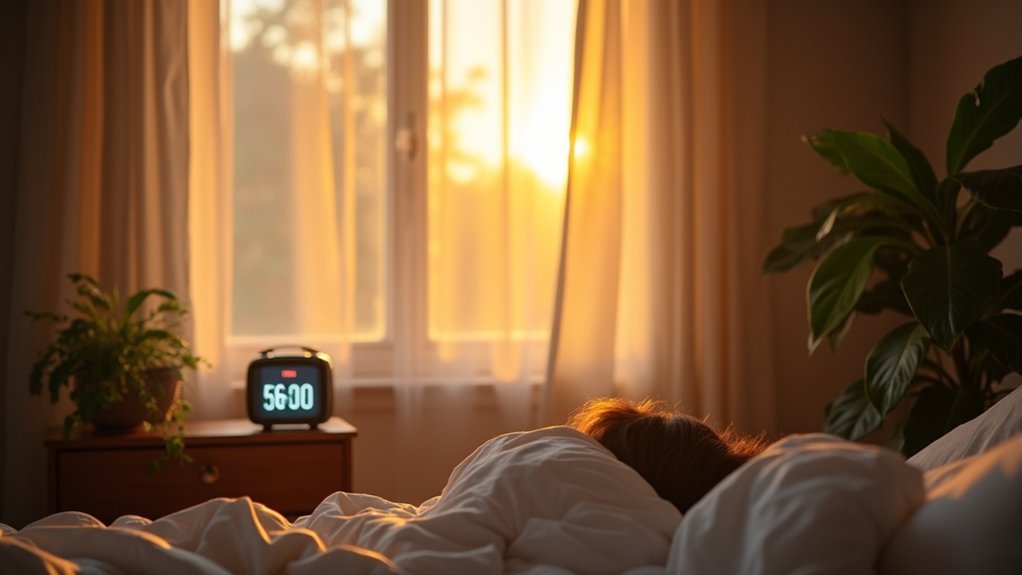
Since your body’s internal clock responds differently to light throughout the day, strategic timing transforms ordinary light exposure into a powerful tool for optimizing your circadian rhythm.
Morning light within your first waking hour resets your sleep schedule by signaling your brain to align with natural daylight hours. This blue-enriched exposure enhances alertness while promoting healthy cortisol production.
- Maximize morning benefits: Seek outdoor light immediately upon waking, as natural sunlight provides 10-1000 times more intensity than indoor lighting.
- Protect evening melatonin: Limit evening bright light exposure from screens and artificial sources to prevent sleep hormone suppression.
- Create gradual changes: Dim indoor lights progressively as bedtime approaches to signal your body’s preparation for rest.
Proper circadian timing requires respecting your body’s natural light-dark cycle preferences.
Creating an Evening Light Environment That Promotes Sleep
You’ll want to start dimming your indoor lights at least two hours before bedtime to signal your body it’s time to wind down.
Put away screens or switch them to night mode since blue light suppresses melatonin production and keeps you alert when you should be getting sleepy.
Consider using red or amber lighting alternatives in the evening, as these warmer tones won’t interfere with your natural sleep preparation process.
Dim Lights Before Bed
When evening arrives, your body naturally expects light levels to decrease, triggering the release of melatonin that prepares you for restorative sleep. Dimming lights one to two hours before bedtime helps support your circadian rhythms by mimicking nature’s shift from day to night.
Bright artificial lighting suppresses melatonin production, delaying sleep onset and disrupting your internal clock.
To optimize your sleep quality, implement these evening lighting strategies:
- Gradually reduce indoor lighting throughout your home as bedtime approaches
- Switch to warm-colored bulbs to minimize blue light exposure that interferes with melatonin
- Create a dark environment using blackout curtains or sleep masks for deeper sleep
These simple adjustments signal your body it’s time to wind down, promoting natural hormone release essential for quality rest.
Avoid Blue Light Screens
Although dimming traditional lights helps prepare your body for sleep, the blue light from phones, tablets, computers, and televisions poses a particularly potent threat to your circadian rhythm. This specific light exposure, ranging from 415-455 nanometers, directly suppresses melatonin production, making it considerably harder to fall asleep naturally.
You’ll dramatically improve your sleep quality by limiting screen time at least one hour before bedtime. This simple change allows your melatonin levels to rise properly, supporting healthy circadian rhythm function.
If you can’t avoid screens entirely, use blue light blocking glasses or screen filters to minimize exposure. These tools help protect your sleep health while maintaining evening productivity.
Creating consistent boundaries around nighttime technology use strengthens your body’s natural sleep-wake cycle.
Use Red Light Alternatives
Red light’s longer wavelength and lower energy make it an ideal evening lighting choice that won’t disrupt your body’s natural melatonin production.
Unlike blue light, red light won’t interfere with your circadian rhythms, allowing your body to naturally prepare for sleep during evening hours.
Research shows red light therapy can greatly improve sleep quality by enhancing deep sleep duration and reducing disturbances.
You’ll create a soothing environment that signals your brain to wind down when you incorporate red light into your nighttime routine.
Consider these red light alternatives for better sleep hygiene:
- Install red light bulbs in bedrooms and living areas for evening use
- Use red light therapy lamps 30-60 minutes before bedtime
- Replace bright overhead lighting with dim red reading lights after sunset
Artificial Light Strategies for Shift Workers and Travelers
Because your body’s internal clock relies heavily on light cues, strategic artificial light exposure can help you maintain healthier circadian rhythms when working irregular hours or crossing time zones.
If you’re among shift workers, expose yourself to bright light during work hours, particularly night shifts, to signal alertness. Blue light therapy lamps effectively mimic sunlight, boosting mood and reducing sleepiness.
For jet lag recovery, seek bright light in mornings when traveling east and evenings when traveling west.
However, avoid bright artificial lighting before sleep to support melatonin production and improve sleep quality.
Maintaining a consistent sleep schedule, even on days off, remains essential for minimizing circadian rhythm disruptions from shift work and travel.
Light Therapy Techniques for Seasonal Rhythm Disruptions
Many people experience disrupted sleep patterns and mood changes during darker winter months when natural sunlight becomes scarce.
Light therapy offers an effective solution for resetting your circadian rhythm during seasonal changes. Using a 10,000 lux light therapy lamp for 20-30 minutes each morning can greatly reduce Seasonal Affective Disorder symptoms and improve sleep quality.
The timing of light exposure is vital for success:
- Maintain consistency – Use your light therapy device at the same time daily to strengthen your internal clock
- Optimize evening habits – Dim lights and use blue light filters on screens to support natural melatonin production
- Choose bright light sources – Blue-enriched light most effectively resets disrupted rhythms and enhances daytime alertness
Building Sustainable Daily Light Habits for Better Sleep
While light therapy provides targeted relief for seasonal disruptions, developing consistent daily light habits creates the foundation for long-term sleep improvement.
Start each morning with 5-10 minutes of natural light exposure to trigger cortisol release and set your circadian clock for ideal alertness.
Spend more time outdoors throughout the day, as outdoor light can be 1000 times brighter than indoor lighting, effectively synchronizing your rhythm.
As evening approaches, gradually dim your indoor lights to signal your body it’s time to prepare for rest.
Avoid screens before bedtime to prevent melatonin suppression.
This consistent light exposure schedule becomes the cornerstone of proper sleep hygiene, ensuring you’ll achieve a good night’s sleep naturally.
Frequently Asked Questions
Does Light Reset Circadian Rhythm?
Yes, light definitely resets your circadian rhythm. When you’re exposed to bright light, especially blue light in the morning, it signals your brain’s master clock to synchronize your sleep-wake cycle with day-night patterns.
How Much Sunlight to Reset Circadian Rhythm?
You’ll need 30 minutes of direct morning sunlight exposure daily to effectively reset your circadian rhythm. Even 5-10 minutes can help, but longer exposure provides better hormone regulation and sleep improvements.
What Is the Fastest Way to Reset a Circadian Rhythm?
You’ll reset your circadian rhythm fastest by getting 5-10 minutes of bright morning sunlight daily, then gradually shifting your sleep schedule by one hour per day while avoiding evening screen time.
How to Use Light Therapy for Circadian Rhythm?
Use a 10,000 lux light therapy lamp for 20-30 minutes each morning to reset your circadian rhythm. Avoid blue light from screens in the evening, and gradually dim indoor lights to promote melatonin production.


