
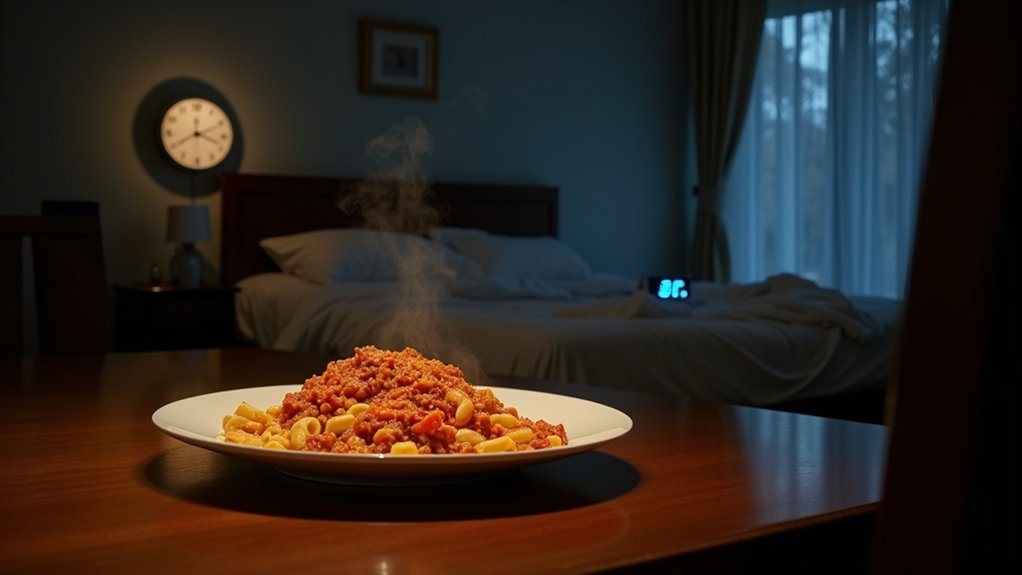
Your meal timing directly impacts your sleep quality by influencing your circadian rhythms and internal clock. When you eat late at night, you’re sending conflicting signals to your body’s natural sleep-wake cycle, making it harder to fall asleep and stay rested. Large meals within three hours of bedtime keep your digestive system active when it should be winding down, while irregular eating schedules worsen insomnia. Strategic meal timing creates the foundation for discovering deeper sleep strategies.
The Science Behind Meal Timing and Sleep Cycles

While you’re likely aware that what you eat affects your sleep, the timing of your meals might be even more critical for achieving quality rest. Your body operates on natural circadian rhythms that regulate sleep-wake cycles, and meal timing directly influences these biological clocks.
When you eat late at night, you’re basically sending conflicting signals to your internal systems, leading to disrupted sleep patterns. Research demonstrates that irregular eating schedules can worsen insomnia and other sleep disorders.
Your metabolism and sleep cycles work together more efficiently when they’re synchronized. Consuming high-fiber foods earlier in the day promotes longer, more restful sleep, while late evening consumption can reduce sleep quality.
Aligning your eating patterns with your body’s natural rhythms optimizes both metabolic function and overall sleep quality.
How Late-Night Eating Disrupts Your Natural Rest Patterns
When you eat close to bedtime, your digestive system works overtime, making it nearly impossible for your body to shift into sleep mode.
Your blood sugar levels spike and crash from late-night snacking, throwing off your circadian rhythms and leaving you tossing and turning.
That heavy meal you consumed just before bed doesn’t just sit there quietly—it creates physical discomfort that fights against your body’s natural drive to rest.
Digestion Delays Sleep Onset
As you settle down for the night, that late dinner you enjoyed just an hour earlier begins working against your body’s natural sleep processes. Your digestive system requires significant energy to break down food, keeping your body in an active state when it should be winding down for rest.
| Food Type | Impact on Sleep | Recommended Timing |
|---|---|---|
| Large meals | Causes discomfort, delays sleep onset | 3+ hours before bed |
| High-fat foods | Triggers acid reflux, extends digestion | 4+ hours before bed |
| Spicy dishes | Increases heartburn risk | Avoid after 6 PM |
| Sugary snacks | Creates blood sugar spikes | Limit evening consumption |
| Processed foods | Disrupts sleep quality | Choose whole foods instead |
Late-night snacking particularly disrupts your eating habits, causing sleep disturbances that compound over time, affecting your overall rest quality.
Blood Sugar Disrupts Circadian
Beyond the physical discomfort of digestion, late-night eating creates a cascade of metabolic disruptions that throw your body’s internal clock into chaos.
When you consume food late at night, especially high-sugar or high-fat options, your blood sugar levels spike dramatically. These elevated glucose levels interfere with your circadian rhythms, the natural biological processes that regulate sleep-wake cycles.
Your body’s melatonin production suffers when blood sugar remains elevated, directly compromising sleep quality. The subsequent crashes create restlessness and frequent awakenings throughout the night.
Research shows that disrupted sleep patterns and increased daytime fatigue result from this glucose metabolism interference. Maintaining a consistent eating schedule and avoiding meals within three hours of bedtime helps stabilize blood sugar levels and supports your natural circadian rhythm function.
Late Meals Cause Discomfort
While your digestive system continues working overtime to process that late dinner, your body struggles to shift into the restorative sleep it desperately needs.
Eating large meals within three hours of bedtime creates physical discomfort that prevents you from falling asleep easily. Your stomach churns through heavy foods while you’re trying to rest, causing indigestion and acid reflux that jolts you awake throughout the night.
Late-night snacking on high-fat or processed foods compounds these problems, blocking your change into deeper sleep stages.
Poor nutrition choices amplify digestive stress, creating a cycle where disrupted sleep patterns lead to more unhealthy eating habits. This interference with natural digestion greatly reduces your quality of sleep, leaving you tired and less alert the following day.
Optimal Windows for Your Last Meal of the Day
When you’re planning your evening routine, timing your last meal becomes essential for achieving quality sleep. You should finish eating at least three hours before bedtime to allow proper digestion and prevent sleep disruptions.
This timing window helps your body process food effectively, reducing the risk of indigestion that can cause frequent nighttime awakenings.
If you must engage in late-night snacking, choose high-fiber foods or low-fat dairy products instead of heavy, processed options. These lighter choices won’t interfere with your rest as considerably as rich meals would.
Establishing a consistent eating schedule that aligns with your natural circadian rhythms will enhance both your sleep quality and duration, creating a sustainable routine for better overall health.
Morning and Afternoon Eating Habits That Enhance Sleep

Your daytime eating choices create a foundation that directly impacts your nighttime rest quality. Start with a balanced breakfast rich in fiber and protein to stabilize blood sugar levels throughout the day.
Eating meals at consistent times, especially during morning and afternoon hours, supports your circadian rhythms and sleep regulation.
Incorporate foods high in magnesium like spinach and nuts during lunch to enhance relaxation later. Choose midday snacks with whole grains for sustained energy without blood sugar spikes.
A balanced diet that avoids heavy or high-fat afternoon meals prevents digestive discomfort at night.
These strategic daytime eating patterns work together to optimize your body’s natural rhythms, ultimately delivering better quality sleep when bedtime arrives.
Foods to Prioritize Based on Time of Day
Building on these foundational eating patterns, specific foods deliver maximum sleep benefits when consumed at ideal times throughout your day.
Prioritize foods high in fiber like whole grains and vegetables during morning and afternoon hours—they’ll stabilize your blood sugar and support healthy sleep patterns. Avoid anything high in sugar late in the day, as it can trigger sleep disorders and restlessness.
Evening food choices should focus on magnesium-rich foods such as spinach, nuts, and seeds that naturally relax your muscles.
Light snacks containing tryptophan, like turkey or bananas, can boost sleep-promoting neurotransmitters before bed. Skip heavy, spicy, or high-fat options after dinner to prevent indigestion that disrupts your good night’s sleep.
Creating a Meal Schedule That Supports Better Rest

Since your body’s internal clock thrives on predictability, establishing consistent meal times creates a powerful foundation for quality sleep. A well-structured meal schedule directly influences your circadian rhythms, creating a natural flow that enhances sleep quality.
To optimize your rest through strategic eating patterns:
- Finish eating three hours before bedtime to allow complete digestion and prevent sleep disruption
- Choose high-fiber snacks if you need late-night options, avoiding heavy foods that interfere with sleep onset
- Include sleep-promoting nutrients like magnesium and tryptophan in earlier meals to support natural drowsiness
Regular meal timing prevents the negative effects of skipped meals, which disrupt your sleep-wake cycle and increase fatigue.
When you maintain consistent eating patterns, you’re supporting both proper digestion and restorative sleep.
Frequently Asked Questions
Does Eating Affect Sleep Quality?
Yes, what you eat directly impacts your sleep quality. Large meals before bed cause discomfort and indigestion. You’ll sleep better if you choose fiber-rich or low-fat dairy snacks and maintain regular eating schedules.
Why Do I Feel More Tired After Eating Healthy?
You’re feeling tired after eating healthy because nutritious foods increase serotonin and melatonin production, divert blood flow to digestion, and contain sleep-promoting compounds like tryptophan that naturally make you drowsy.
What Is It Called When You Feel Lazy After Eating?
You’re experiencing “postprandial somnolence,” commonly called a food coma. This happens when your body redirects energy toward digestion, temporarily reducing alertness and making you feel drowsy after meals.
Why Do I Sleep Better When I Eat Less?
You sleep better when you eat less because your body doesn’t work hard digesting food, preventing discomfort and acid reflux while promoting melatonin production during the natural fasting state.


