

Your 2 PM caffeine fix destroys tonight’s rest because caffeine’s five-hour half-life keeps half its stimulating power active until 7 PM, blocking adenosine receptors that signal natural drowsiness. This interference disrupts your sleep-wake cycle, reduces deep sleep and REM stages, and creates a vicious cycle where poor sleep leads to increased caffeine dependence. Hidden sources like chocolate, soft drinks, and medications worsen the problem, while natural alternatives can boost afternoon energy without sabotaging your sleep architecture.
Caffeine’s 5-Hour Half-Life Keeps You Wired Past Bedtime

When you grab that afternoon coffee at 2 PM, you’re unknowingly setting yourself up for a restless night. Caffeine has a five-hour half-life, meaning half of it remains in your system by 7 PM. This lingering stimulant disrupts your natural wind-down process, making it harder to fall asleep at your usual bedtime.
Even if you manage to drift off, your sleep quality suffers considerably. The remaining caffeine interferes with deep sleep and REM stages, leaving you feeling groggy despite spending adequate time in bed. Your body can’t fully recover when caffeine blocks its natural restoration processes.
To protect your sleep quality, avoid caffeine at least eight hours before bedtime. This simple timing adjustment helps guarantee caffeine’s half-life doesn’t sabotage your nightly rest.
How Afternoon Coffee Blocks Sleep-Inducing Adenosine
As afternoon hours tick by, your brain accumulates adenosine—a crucial neurotransmitter that builds up throughout the day and signals your body it’s time to sleep.
When you drink coffee after 2 PM, caffeine consumption directly blocks adenosine receptors in your brain, preventing this natural drowsiness signal from working effectively.
This interference disrupts your sleep-wake cycle by fundamentally tricking your brain into staying alert when it should be winding down.
Even though adenosine continues accumulating, caffeine masks its sleep-promoting effects for hours.
The result? You’ll struggle to fall asleep at your usual bedtime because your body’s natural sleep mechanisms aren’t functioning properly.
This blockade considerably reduces sleep quality and throws off your entire circadian rhythm.
The 2PM Cutoff Rule for Better Sleep Quality

Understanding this adenosine interference reveals why sleep experts recommend stopping caffeine consumption by 2 PM. This cutoff isn’t arbitrary—caffeine’s five-hour half-life means consuming it after 2 PM keeps stimulating effects active well into your bedtime.
Research shows caffeine taken just six hours before sleep markedly disrupts your rest, making the 2 PM cutoff essential for quality sleep.
When you resist that afternoon slump with coffee, you’re trading temporary alertness for nighttime sleep difficulties. You’ll struggle falling asleep and experience reduced total sleep duration.
If you typically sleep around 10 PM, stopping caffeine intake by 2 PM gives your system enough time to clear the stimulant. Following this rule enhances sleep quality, improving your daily functioning and overall well-being.
Why Your Brain Stays Alert Hours After That Late Latte
Even though you finished that latte hours ago, caffeine’s molecular grip on your brain hasn’t loosened. That afternoon coffee you enjoyed at 3 PM is still circulating through your system well into the evening, blocking sleep-promoting chemicals and keeping your mind razor-sharp when it should be winding down.
Here’s why your brain won’t cooperate at bedtime:
- Caffeine blocks adenosine receptors – preventing your natural sleepiness signals from working
- Peak alertness occurs 30-60 minutes after consumption but effects linger for hours
- Half-life of 5 hours means significant amounts remain active during bedtime
- Reduced deep sleep phases occur even when you manage falling asleep
This persistent alertness doesn’t just delay sleep onset – it fundamentally compromises your sleep quality throughout the night.
Afternoon Caffeine Reduces Deep Sleep and REM Stages
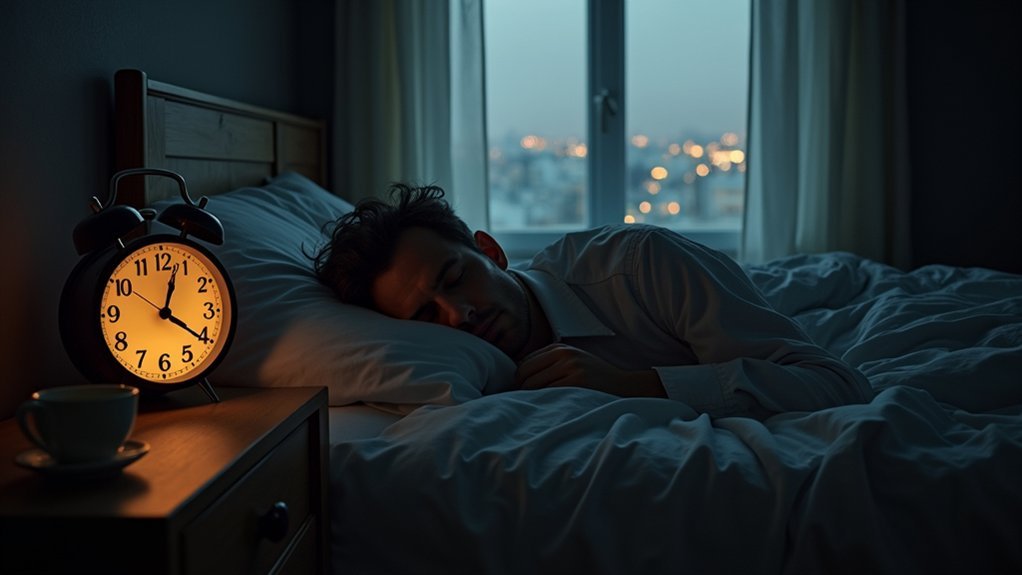
When you drink caffeine in the afternoon, it blocks adenosine receptors in your brain that normally signal it’s time to sleep.
This interference disrupts your body’s natural sleep architecture, specifically reducing the amount of time you spend in deep sleep and REM stages.
You’ll find yourself getting less restorative sleep even if you manage to fall asleep at your usual bedtime.
Caffeine Blocks Sleep Chemicals
While you might think that afternoon coffee won’t hurt your sleep, caffeine actively blocks adenosine—a crucial chemical your brain produces to signal drowsiness and promote rest.
When you consume afternoon caffeine, you’re fundamentally preventing your brain from recognizing it’s time to wind down, which can disrupt the natural sleep-wake cycle and reduce overall sleep hours.
This chemical interference creates several problems:
- Your brain can’t properly signal when it’s time to sleep
- Adenosine buildup gets delayed, pushing sleepiness later into the night
- Natural drowsiness patterns become confused and irregular
- Sleep onset becomes considerably more difficult
Since caffeine blocks adenosine for hours after consumption, even that 3 PM coffee continues working against your body’s natural sleep preparation well into the evening.
Reduced Recovery Sleep Time
As caffeine lingers in your system throughout the evening, it doesn’t just delay sleep onset—it fundamentally alters the architecture of your sleep itself. When you consume caffeine in the afternoon, you’re sabotaging the restorative stages your brain desperately needs.
| Sleep Stage | Without Afternoon Caffeine | With Afternoon Caffeine |
|---|---|---|
| Deep Sleep Duration | 90-120 minutes | 45-70 minutes |
| REM Sleep Quality | Rich, restorative | Fragmented, shallow |
| Total Sleep Cycles | 4-5 complete cycles | 2-3 incomplete cycles |
| Recovery Efficiency | Ideal brain restoration | Noticeably impaired |
| Morning Alertness | Natural, sustained | Groggy, caffeine-dependent |
Your sleep habits become compromised as caffeine blocks essential recovery phases, creating a vicious cycle where poor sleep drives increased caffeine dependence the following day.
The Vicious Cycle of Coffee Dependence and Sleep Deprivation
When you’re trapped in caffeine dependence, you’ll find yourself reaching for more coffee each day just to feel normal as your sleep debt continues mounting.
Your body develops increasing tolerance to caffeine’s effects, forcing you to consume larger amounts to achieve the same alertness you once got from a single cup.
This escalating cycle leaves you more exhausted each morning, creating an ever-growing gap between the energy you need and the restorative sleep you’re actually getting.
Sleep Debt Accumulation
Because caffeine’s effects can linger in your system for up to twelve hours, that afternoon coffee you’re sipping at 2 PM might still be coursing through your veins when you’re trying to wind down for bed.
This creates a dangerous pattern of sleep debt accumulation that compounds night after night.
When caffeine disrupts your ability to fall asleep at a reasonable hour, you’re robbing yourself of precious sleep time.
The consequences pile up quickly:
- You’ll experience reduced sleep quality even when you do drift off
- Your total sleep hours decrease, leaving you chronically tired
- Insomnia becomes more likely as your sleep cycle gets thrown off
- You’ll need more caffeine the next day to function, perpetuating the cycle
This relentless accumulation of sleep debt transforms your relationship with rest into a losing battle.
Increasing Caffeine Tolerance
This sleep debt crisis feeds directly into an even more insidious problem: your body’s growing tolerance to caffeine. As you consume coffee regularly, you’ll need increasingly larger amounts to achieve the same alertness effects. This caffeine tolerance creates a dangerous cycle where you’re drinking more throughout the day, including that fatal 2PM cup.
| Time Period | Caffeine Amount | Sleep Impact | Dependence Level |
|---|---|---|---|
| Week 1-2 | 1-2 cups | Minimal | Low |
| Month 1-3 | 3-4 cups | Moderate | Building |
| Month 6+ | 5+ cups | Severe | High |
Your increased intake will disrupt sleep patterns since caffeine consumed six hours before bedtime greatly reduces sleep quality. Without caffeine, you’ll experience diminished alertness and fatigue, deepening your caffeine dependence and destroying your sleep hygiene.
Hidden Caffeine Sources That Sabotage Evening Rest
How often do you reach for what seems like an innocent snack or drink, unaware that it’s quietly undermining your sleep?
These hidden caffeine sources can sabotage your evening rest without you realizing it.
Sneaky caffeine lurking in everyday foods and drinks can secretly steal your sleep before you even notice.
Many common items contain surprising amounts of caffeine that trigger sleep disruptions:
- Dark chocolate – Even small amounts before bed act as stimulants
- Soft drinks and energy drinks – Can pack up to 300mg of caffeine when consumed during afternoon hours
- Pain relievers and cold medications – Often contain hidden caffeine that affects sleep if taken late in the day
- Black and green teas – Deliver 40-120mg of caffeine per cup
Coffee-flavored desserts also pose risks when eaten after 2PM, making these hidden caffeine sources particularly troublesome for quality rest.
How Late-Day Stimulants Disrupt Your Circadian Rhythm
When you consume caffeine after 2 PM, you’re fundamentally hijacking your body’s natural sleep-wake cycle because the stimulant’s half-life can keep it circulating in your system for up to 12 hours.
Your brain’s adenosine receptors, which normally signal drowsiness as evening approaches, get blocked by lingering caffeine molecules, preventing your circadian rhythm from following its intended pattern.
This interference doesn’t just delay tonight’s sleep—it creates a domino effect that can throw off your entire sleep schedule for days.
Caffeine’s Half-Life Impact
Although caffeine provides that much-needed energy boost during your afternoon slump, its lingering presence in your system can sabotage your sleep hours later.
Caffeine’s half-life averages five hours, meaning half the amount you consume at 2 PM remains active at 7 PM. This biological reality directly impacts your circadian rhythm and sleep schedule.
Understanding caffeine’s persistence helps explain why that afternoon coffee disrupts your nighttime rest:
- Even 6-hour gaps aren’t enough – Caffeine consumed six hours before bed considerably impairs sleep quality
- Deep sleep suffers – Reduced REM and deep sleep phases leave you feeling unrested
- Falling asleep becomes harder – Prolonged wakefulness delays your natural sleep onset
- Daytime fatigue increases – Disrupted sleep patterns create a cycle of exhaustion and caffeine dependence
Sleep Cycle Interference
Your body’s internal clock operates on a delicate 24-hour cycle that caffeine can throw completely off balance. When you consume stimulants after 2 PM, you’re basically hijacking your circadian rhythm’s natural wind-down process.
This interference prevents your brain from producing adequate melatonin, the hormone responsible for signaling bedtime. Late-day caffeine blocks adenosine receptors, keeping your nervous system artificially alert when it should be preparing for rest.
This disruption doesn’t just affect when you fall asleep—it fundamentally alters your sleep cycle architecture. You’ll experience reduced deep sleep and REM stages, resulting in poor sleep quality despite adequate hours in bed.
The consequence? You’ll wake up experiencing daytime sleepiness, creating a vicious cycle where you reach for more caffeine to compensate.
Adenosine Blocking Effects
Adenosine accumulates in your brain throughout the day like a natural sleepiness meter, gradually building pressure for rest as hours pass. When you consume caffeine at 2 PM, you’re fundamentally jamming this biological signal. Caffeine blocks adenosine receptors, preventing your body from recognizing it’s time to wind down.
This interference wreaks havoc on your circadian rhythm by:
- Masking natural tiredness signals when you should feel drowsy
- Extending alertness well beyond your intended sleep time
- Disrupting the body’s ability to predict appropriate rest periods
- Creating artificial energy that conflicts with biological sleep drives
The result? You’ll struggle to fall asleep even when exhaustion sets in.
Your circadian clock becomes confused, unable to distinguish between natural wakefulness and caffeine-induced alertness, ultimately destroying your sleep quality.
Why Decaf Alternatives Preserve Your Sleep-Wake Balance
When you switch to decaf coffee, you’re making a strategic move that preserves your natural sleep-wake rhythm while maintaining the comforting ritual you love. With only 3-10 mg of caffeine per 12 oz cup, decaf coffee dramatically reduces sleep disruption compared to regular coffee.
| Aspect | Regular Coffee | Decaf Coffee |
|---|---|---|
| Caffeine Content | 95-200 mg | 3-10 mg |
| Sleep Impact | High disruption | Minimal disruption |
| Adenosine Reset | Blocked | Natural function |
| Evening Consumption | Sleep destructive | Sleep-friendly |
The Swiss Water Process removes caffeine without chemical residues, giving you a cleaner alternative. By drinking decaf in the morning while avoiding all caffeine after 2 PM, you’ll reset your adenosine receptors. This combination improves sleep quality and enhances daytime alertness, creating better sleep patterns overall.
Natural Energy Boosters That Won’t Ruin Tonight’s Sleep
Beyond switching to decaf, you can tap into powerful natural energy sources that actually support better sleep rather than sabotage it.
These alternatives align with your natural circadian rhythm instead of fighting against it.
- Morning sunlight exposure – Step outside within an hour of waking to boost alertness and regulate your sleep-wake cycle naturally
- Brief physical activity bursts – Take 5-10 minute movement breaks throughout your day for sustained mental clarity
- Nutrient-dense snacks – Choose fruits, nuts, or yogurt over sugary options to avoid energy crashes
- Strategic hydration – Drink water consistently, as dehydration causes fatigue faster than you’d think
Consider a short nap (15-20 minutes) before 3 PM for an energy boost that won’t interfere with bedtime.
Frequently Asked Questions
Why Shouldn’t You Have Caffeine After 2pm?
You shouldn’t have caffeine after 2PM because it’ll disrupt your sleep quality. Caffeine’s long half-life keeps it active in your system for hours, blocking sleep-promoting chemicals and making it harder to fall asleep tonight.
How to Avoid Afternoon Caffeine Crash?
You’ll avoid afternoon caffeine crashes by cutting off consumption before 2PM, taking short walks, choosing healthy snacks like nuts over sugary treats, staying hydrated, and maintaining consistent sleep schedules.
Is 2 Pm Too Late to Have Coffee?
Yes, 2 PM’s too late for coffee if you sleep around 10 PM. Caffeine’s five-hour half-life means it’ll still affect your system at bedtime, disrupting your sleep quality and leaving you tired tomorrow.
How to Reverse the Effects of Caffeine to Sleep?
You can reverse caffeine’s effects by drinking plenty of water, practicing deep breathing exercises, eating magnesium-rich foods like nuts, and establishing a consistent bedtime routine to help your body relax.


