

Pre-workout supplements containing caffeine can disrupt your sleep for up to six hours after consumption, blocking adenosine receptors that promote natural drowsiness and shifting your circadian rhythm. When you take pre-workout within six hours of bedtime, you’ll likely experience restlessness, elevated heart rate, and difficulty falling asleep despite feeling exhausted. This sleep disruption increases cortisol levels, reduces protein synthesis, and impairs muscle recovery. Understanding proper timing strategies can help you maintain both workout performance and quality rest.
How Pre-Workout Supplements Disrupt Your Natural Sleep Patterns
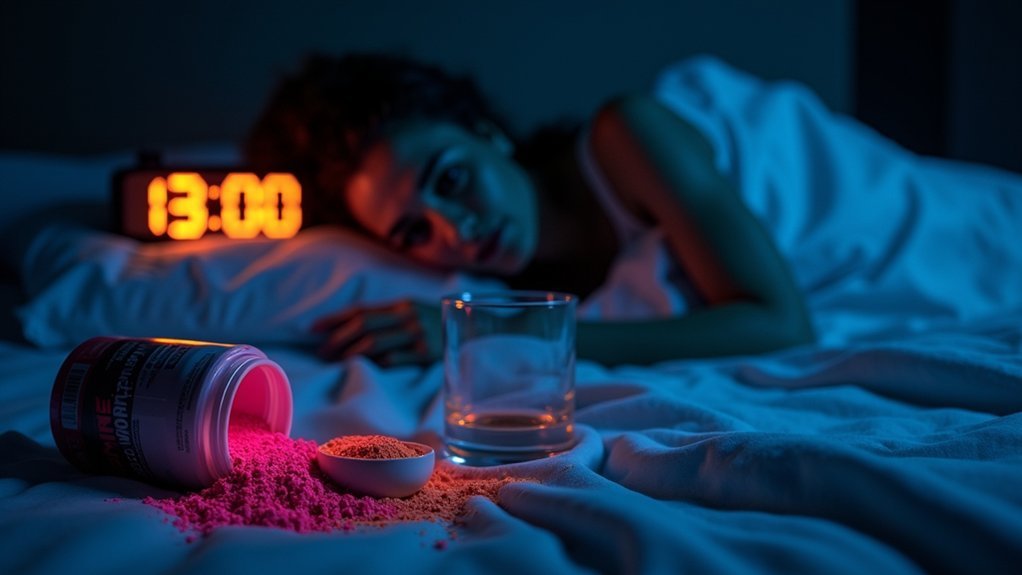
Although you might feel energized and ready to crush your evening workout, taking pre-workout supplements too late in the day can wreak havoc on your sleep cycle.
The high caffeine content in most pre-workout formulas stays active in your system for up to five hours, creating significant sleep disturbances when consumed during late training sessions.
This disruption goes beyond just feeling wired—caffeine actively interferes with your circadian rhythms, preventing you from reaching deep sleep stages essential for muscle recovery.
Even if you stick to the recommended dosage, the stimulating effects can keep you alert long past your bedtime.
Following recommended dosages doesn’t guarantee you’ll avoid the alertness that extends well beyond your intended bedtime.
Your body’s natural sleep patterns become compromised, leading to a cycle where poor rest undermines your next day’s performance and recovery.
The Science Behind Caffeine’s Impact on Your Circadian Rhythm
Caffeine’s interference with your circadian rhythm operates through a sophisticated biological mechanism that goes far beyond simply keeping you awake.
When you consume caffeine, it blocks adenosine receptors in your brain—the same receptors responsible for promoting sleepiness and regulating your internal body clock. This disruption doesn’t just affect immediate sleep quality; it actually shifts your natural sleep-wake cycle timing.
Research reveals that caffeine delays your circadian rhythm, creating lasting sleep disturbances that extend well beyond the supplement’s immediate effects.
The timing of caffeine consumption becomes critical here—consuming it within six hours of bedtime greatly impacts sleep quality. High doses above 400mg amplify these negative side effects, creating a cascade of sleep disruption that can persist for days.
Why Late-Day Pre-Workout Consumption Keeps You Wired
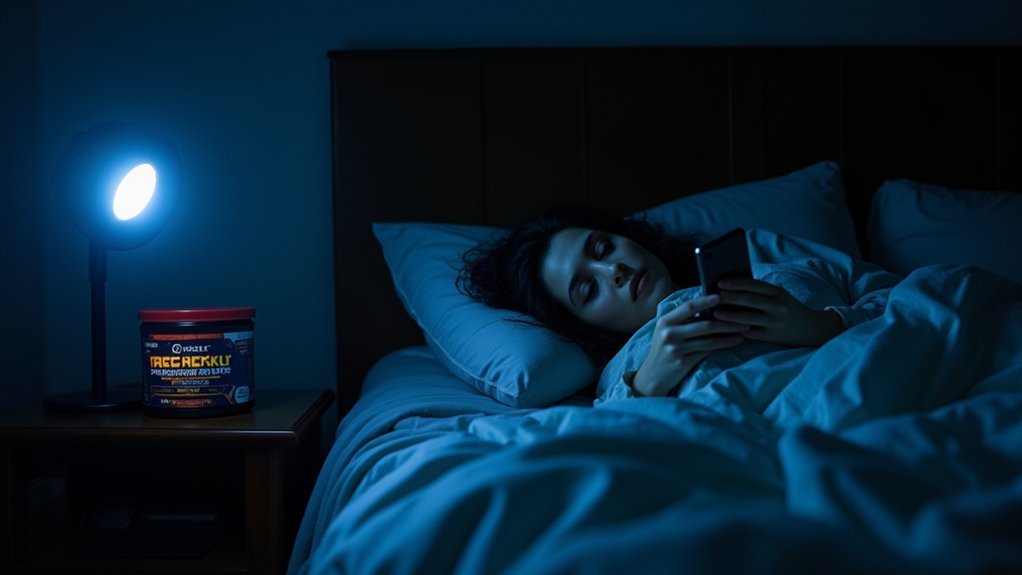
When you down a pre-workout supplement in the late afternoon or evening, you’re fundamentally flooding your system with 200-400mg of caffeine—roughly double the amount in a standard cup of coffee.
This massive dose peaks within 30-60 minutes and maintains its grip on your system for up to five hours.
Your body’s reaction creates a perfect storm for sleep disruption:
Late-afternoon pre-workout creates a biochemical cascade that systematically dismantles your body’s natural preparation for restorative sleep.
- Energy levels spike unnaturally when they should naturally decline toward bedtime
- Sensitive individuals experience heightened anxiety and elevated heart rate that persists well into the night
- Workout performance benefits don’t justify the trade-off of compromised rest and recovery
Even if you eventually fall asleep, caffeine’s lingering effects sabotage deep sleep quality.
Your pre-workout becomes counterproductive, stealing tomorrow’s energy to fuel today’s session.
Hidden Stimulants in Pre-Workouts That Sabotage Your Sleep
Beyond caffeine’s obvious sleep-sabotaging effects, pre-workout formulas pack a cocktail of lesser-known stimulants that’ll keep you tossing and turning hours after your workout ends.
Hidden stimulants like theobromine and synephrine lurk in your pre-workout supplements, disrupting sleep long after their primary effects fade. While caffeine levels can reach 400mg—four times more than coffee—these additional compounds create cumulative sleep disturbances you probably didn’t see coming.
Even nitric oxide boosters, designed for better blood flow, can spike your heart rate and trigger restlessness.
The problem? Many ingredient labels don’t clearly list every stimulant component, leaving you unknowingly consuming more than your body can handle. This undermines your sleep quality and tomorrow’s performance.
The 6-Hour Rule: When Your Last Pre-Workout Dose Should Be

The timing of your pre-workout supplement can make or break your sleep quality, and most people get this critical window completely wrong.
You need to consume your last pre-workout dose at least 4-6 hours before bedtime to avoid disrupting your rest. Caffeine’s half-life means it’ll linger in your central nervous system much longer than you think, sabotaging your ability to fall asleep.
Your individual caffeine sensitivity and workout intensity determine ideal timing:
- Monitor your total daily intake from all sources, including coffee and energy drinks
- Consider extending the window to 6+ hours if you’re particularly sensitive to stimulants
- Track how late-night pre-workout affects your sleep patterns and circadian rhythm
Getting this timing right protects your recovery and overall sleep quality.
How Beta-Alanine and Other Ingredients Affect Sleep Quality
While caffeine gets most of the attention for sleep disruption, beta-alanine and other pre-workout ingredients create their own unique challenges for your nighttime routine. Beta-alanine causes paraesthesia—that uncomfortable tingling sensation that makes relaxation nearly impossible. When combined with caffeine and nitric oxide boosters in pre-workout supplements, you’re setting yourself up for serious sleep disturbances.
| Ingredient | Sleep Impact | Recovery Cost |
|---|---|---|
| Beta-alanine | Tingling disrupts relaxation | Poor muscle repair |
| Caffeine | Blocks sleep hormones | Reduced growth hormone |
| Nitric oxide boosters | Maintains alertness | Incomplete restoration |
| Combined stimulants | Extended wakefulness | Compromised performance |
These ingredients remain active for hours, sabotaging your body’s natural wind-down process. Poor sleep quality directly undermines recovery, creating a cycle where your pre-workout supplements actually hurt your fitness goals.
Warning Signs That Your Pre-Workout Timing Is Ruining Your Rest
When you’re tossing and turning after an evening workout, your body’s sending clear signals that your pre-workout timing needs adjustment.
Restless nights following late training sessions are your body’s way of demanding smarter pre-workout supplement timing.
Poor caffeine intake scheduling creates obvious warning signs that directly impact your sleep quality.
Key indicators your timing’s off include:
- Physical symptoms: If you’re sensitive to stimulants, you’ll notice increased heart rate, jitters, or anxiety hours after your workout.
- Sleep disruption: Difficulty falling asleep or staying asleep, even when you feel physically exhausted.
- Next-day fatigue: Waking up groggy despite spending adequate time in bed.
Monitor your total daily caffeine consumption carefully.
When pre-workout timing coincides with other caffeine sources, you’re setting yourself up for insomnia.
These warning signs shouldn’t be ignored—they’re your body’s feedback system telling you to adjust your supplement schedule.
The Connection Between Poor Sleep and Decreased Workout Performance
When you don’t get quality sleep, your body can’t properly recover from workouts, leaving you weaker and more fatigued for your next training session.
The caffeine in your pre-workout supplement directly interferes with your sleep cycles, especially when you consume it too late in the day.
This poor rest then creates a vicious cycle where you’ll experience reduced strength, impaired endurance, and slower muscle recovery that undermines all your fitness efforts.
Sleep Disrupts Physical Recovery
Although you might prioritize your pre-workout nutrition and training schedule, you’re sabotaging your results if you’re not getting quality sleep.
Poor sleep creates a cascade of recovery problems that directly undermine your performance gains.
When you don’t get adequate rest, your body can’t properly repair itself after intense training sessions.
Here’s how sleep disruption affects your physical recovery:
- Increased muscle breakdown – Sleep deprivation decreases protein synthesis while accelerating muscle catabolism
- Elevated cortisol levels – Poor sleep triggers stress hormones that interfere with recovery processes
- Disrupted hormonal balance – Reduced testosterone and growth hormone production limits muscle repair
This creates a vicious cycle where your pre-workout efforts become less effective, leading to persistent fatigue and diminished training capacity.
Caffeine Impairs Sleep Quality
Many fitness enthusiasts unknowingly sabotage their sleep quality by consuming caffeine-containing pre-workout supplements too late in the day.
When you consume caffeine within six hours of bedtime, it markedly reduces your total sleep time and efficiency, keeping you in lighter sleep stages. This creates a destructive cycle where poor sleep quality directly undermines your workout performance the next day.
You’ll experience decreased strength, endurance, and cognitive function during exercise sessions. The resulting fatigue and reduced motivation damage your workout consistency over time.
Chronic sleep disruption from poorly timed caffeine intake leads to increased stress levels and hormonal imbalances, further compromising your recovery between workouts and diminishing your overall athletic performance potential.
Poor Rest Reduces Strength
While your pre-workout supplement might give you an initial energy boost, the sleep disruption it causes will devastate your strength performance in subsequent training sessions.
Poor sleep creates a cascade of problems that directly impact your ability to lift heavy and train effectively. Research shows that just one night of inadequate rest can slash your strength performance by 20%.
Your muscle recovery suffers dramatically since growth hormone release occurs primarily during deep sleep phases. Additionally, elevated cortisol levels from poor sleep promote muscle breakdown rather than growth.
The performance impacts extend beyond physical strength:
- Impaired cognitive function reduces focus and decision-making during workouts
- Increased fatigue limits your ability to complete training sessions effectively
- Compromised reaction times create safety risks with heavy weights
Stimulant-Free Alternatives for Evening Training Sessions
If you’re someone who trains in the evening, you’ve likely faced the dilemma of wanting pre-workout energy without sacrificing your sleep quality.
Stimulant-free pre-workouts offer the perfect solution for evening training sessions. These formulations rely on ingredients like citrulline malate to enhance blood flow and muscle pumps, while beta-alanine delays fatigue without caffeine’s stimulating effects.
BCAAs support muscle recovery and growth without disrupting your sleep schedule. Many formulations include L-theanine, which promotes relaxation and calmness after intense workouts, counteracting post-exercise jitters.
You’ll maintain your performance benefits while preserving healthy sleep patterns. This approach lets you train hard in the evening without lying awake hours later, ensuring proper recovery for your next session.
How to Calculate Your Personal Caffeine Cutoff Time
You’ll need to understand your body’s caffeine half-life to determine when stimulants clear your system before bedtime.
Calculate backwards from your planned sleep time, allowing at least 4-6 hours between your last caffeine intake and when you hit the pillow.
Your personal tolerance factors will fine-tune this timing, as some people metabolize caffeine faster while others remain sensitive to even small amounts hours later.
Your Caffeine Half-Life
Because caffeine’s half-life ranges from 3 to 7 hours depending on your individual metabolism, age, and genetic factors, you need to calculate your personal cutoff time to avoid sleep disruption.
Understanding your unique caffeine half-life helps enhance your pre-workout timing without sacrificing rest quality.
To determine your personal caffeine cutoff time:
- Track your bedtime – Subtract 6-8 hours from when you plan to sleep
- Monitor your sensitivity to caffeine – Notice how long stimulating effects last in your body
- Test different cutoff windows – Start conservative and adjust based on sleep quality
Your individual tolerance varies considerably from others. Some people metabolize caffeine faster, while others experience prolonged effects.
Consistent monitoring of your caffeine intake and sleep patterns helps establish your ideal cutoff time, supporting better wellness and recovery.
Sleep Schedule Calculations
Sleep schedule calculations require a systematic approach to pinpoint your exact caffeine cutoff time. Start by identifying your target bedtime, then subtract 4-6 hours to establish your initial cutoff window.
If you’re planning to sleep at 10 PM, you’ll need to stop caffeine consumption between 4-6 PM to prevent sleep disturbances.
However, individual sensitivity varies considerably. Some people require longer windows due to their personal response to caffeine’s five-hour presence in your system.
You’ll need to experiment through trial and error, monitoring how different cutoff times affect your ability to achieve restful sleep.
Track your caffeine intake timing and sleep quality for several weeks. Adjust your cutoff time earlier if you’re still experiencing disruptions, helping you maintain ideal sleep patterns tailored to your unique metabolism.
Personal Tolerance Factors
Three key variables determine your personal caffeine cutoff time: your body weight, genetic sensitivity, and metabolism speed. Your personal tolerance varies considerably from others, making individualized calculations essential for preventing sleep disruption.
Calculate your effective dose using 3-6 mg of caffeine per kilogram of body weight, then work backward from your bedtime. Most people need at least 6 hours between their caffeine cutoff time and sleep, but your sensitivity to caffeine might require 8-12 hours.
Track these factors to optimize your timing:
- Monitor total caffeine consumption from all sources throughout the day
- Assess your energy levels and sleep quality patterns regularly
- Adjust your cutoff time based on lifestyle changes and stress levels
Regular evaluation helps you maintain consistent sleep while maximizing pre-workout benefits.
Recovery Consequences of Sleep Disruption From Poor Pre-Workout Timing
When you consume pre-workout supplements containing caffeine too close to bedtime, you’re setting yourself up for a cascade of recovery problems that extend far beyond just feeling tired the next day.
Poor pre-workout timing triggers sleep disruption that directly sabotages your body’s recovery mechanisms. The elevated heart rate and energy from stimulants prevent you from falling asleep, reducing your total sleep time when muscle repair occurs during deep sleep stages.
Even one night of compromised rest impairs your athletic performance the following day. Chronic sleep deprivation from repeated timing mistakes elevates cortisol levels, creating a harmful cycle where stress hormones further block muscle recovery and performance gains, ultimately undermining the very goals your pre-workout was meant to support.
Strategies to Optimize Pre-Workout Use Without Sacrificing Sleep
Balancing your pre-workout supplementation with quality sleep doesn’t require sacrificing either your training intensity or recovery time. Smart timing and ingredient choices can optimize your performance while protecting your sleep quality.
Strategic pre-workout timing and ingredient selection allows you to maximize training performance without compromising your essential recovery sleep.
For evening workouts, you’ll need strategic adjustments:
- Choose stimulant-free pre-workout supplements or low-caffeine options, consuming them 4-6 hours before bedtime to prevent circadian rhythm disruption.
- Monitor your total daily caffeine intake, staying within the FDA’s 400mg limit to avoid insomnia from accumulated stimulants throughout the day.
- Establish a post-workout relaxation routine by avoiding screens and dimming lights to counteract pre-workout’s stimulating effects.
Taking your supplement 30-45 minutes before training allows nitric oxide boosters to enhance blood flow effectively.
Pairing it with a light carbohydrate and protein meal prevents digestive issues that could interfere with rest.
Frequently Asked Questions
Why Can’t You Take Pre-Workout After 5pm?
You shouldn’t take pre-workout after 5pm because its high caffeine content (200-400mg) stays active for 3-5 hours, disrupting your sleep cycle, causing insomnia, and preventing proper recovery.
Does Preworkout Ruin Sleep?
Pre-workout can absolutely ruin your sleep if you’re taking it too close to bedtime. You’ll struggle falling asleep and staying asleep because caffeine keeps you wired for hours after consumption.
Why Do You Have to Wait 30 Minutes After Taking Pre-Workout?
You wait 30 minutes because caffeine peaks in your bloodstream during this timeframe, maximizing energy and focus. This timing guarantees nitric oxide boosters activate properly, giving you ideal performance benefits when you start exercising.
Is 7pm Too Late for Pre-Workout?
Yes, 7pm’s too late for pre-workout. You’ll likely struggle falling asleep since caffeine lingers for five hours. Take it before 2-4pm instead, or choose stimulant-free options for evening workouts.


Leave a Reply