
The three best SAD box timing strategies are morning light exposure between 6-9 a.m. for ideal circadian reset, consistent daily scheduling at identical times for 20-30 minutes to strengthen your body’s natural rhythms, and seasonal timing adjustments that extend sessions to 1-2 hours during winter months while reducing frequency in spring. You’ll typically notice improvements within 10-14 days of consistent use, and combining light therapy with other treatments amplifies benefits. Master these timing principles to release your light box’s full therapeutic potential.
Morning Light Exposure for Circadian Reset
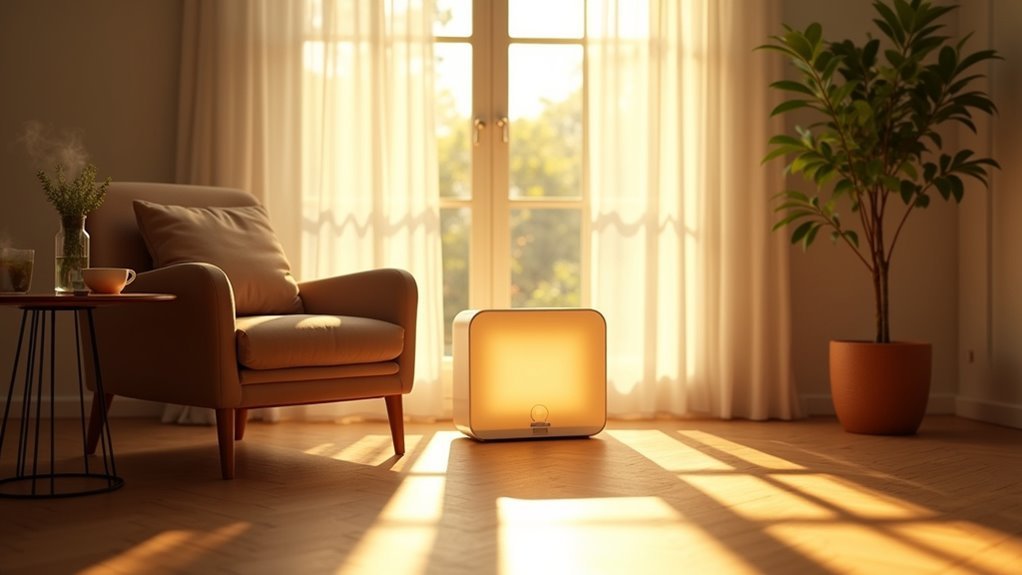
When you’re struggling with SAD symptoms, timing your light therapy box sessions for early morning creates the most powerful impact on your circadian rhythm.
Morning light exposure between 6 and 9 a.m., ideally before 8 a.m., represents the ideal time for maximizing therapeutic benefits. Your body’s natural hormone production responds best during this window, effectively regulating melatonin and serotonin levels.
Early morning light therapy between 6-8 a.m. optimizes your body’s natural hormone balance for maximum SAD relief.
Daily sessions of 20 to 30 minutes will reset your sleep-wake cycle and provide significant mood enhancement.
Consistency proves essential for Seasonal Affective Disorder treatment—you’ll typically notice improvements within 10 to 14 days of regular morning exposure.
This strategic timing counteracts winter’s reduced sunlight, boosting your energy levels and overall alertness throughout the day while effectively managing SAD symptoms.
Consistent Daily Scheduling for Maximum Benefits
Beyond choosing the right morning window, maintaining the same daily schedule amplifies your light therapy’s effectiveness dramatically.
Consistent use at identical times strengthens your circadian rhythms’ reset mechanism, making mood improvement more predictable and sustainable.
You’ll need 20 to 30 minutes of exposure timing between 6-9 a.m. daily to achieve ideal benefits.
Don’t expect instant results—your body requires 10-14 days of unwavering commitment before noticeable changes emerge.
Tracking your daily schedule helps maintain this essential consistency.
For enhanced Seasonal Affective Disorder (SAD) relief, combine your light therapy routine with structured activities like cognitive behavioral therapy or exercise.
This multi-pronged approach creates powerful synergies that boost energy levels and stabilize mood throughout challenging fall and winter months when natural sunlight becomes scarce.
Seasonal Timing Adjustments for Year-Round Effectiveness

As seasons shift and daylight hours fluctuate, you’ll need to adjust your light therapy timing to maintain year-round effectiveness against SAD symptoms.
Strategic seasonal timing adjustments guarantee your Seasonal affective disorder (SAD) treatment remains enhanced throughout changing light exposure patterns.
Start your light therapy regimen in early fall when natural daylight begins diminishing. During winter months, extend session duration to 1-2 hours when sunlight is most scarce. As spring arrives, gradually reduce frequency and duration as natural light returns.
- Begin sessions between 6-9 a.m. consistently to support circadian rhythm regulation
- Increase winter session duration to maximize therapeutic benefits during minimal daylight
- Monitor mood fluctuations regularly to fine-tune timing adjustments
- Gradually taper spring sessions as natural sunlight becomes abundant
This adaptive approach maintains peak mental health year-round.
Frequently Asked Questions
When Is the Best Time to Use a Sad Lamp?
You should use your SAD lamp in the morning between 6 and 9 a.m. for 20-30 minutes daily. Don’t use it near bedtime since it’ll disrupt your sleep patterns.
When Is the Best Time to Use a Light Box?
You’ll get the best results using your light box in the morning between 6 and 9 a.m. for 20-30 minutes daily. This timing aligns with your natural circadian rhythms and won’t disrupt sleep.
Is 10 Minutes of Using a Sad Lamp Effective?
You’ll get some benefits from 10 minutes, but it’s not ideal. Start there if you’re new, then increase to 20-30 minutes daily for effective SAD relief and mood improvement.
How Long Should You Sit Under a SAD Light?
You should sit under a SAD light for 20 to 30 minutes daily, preferably in the morning. Start with 10 to 15 minutes if you’re new to light therapy, then gradually increase duration.


Leave a Reply