
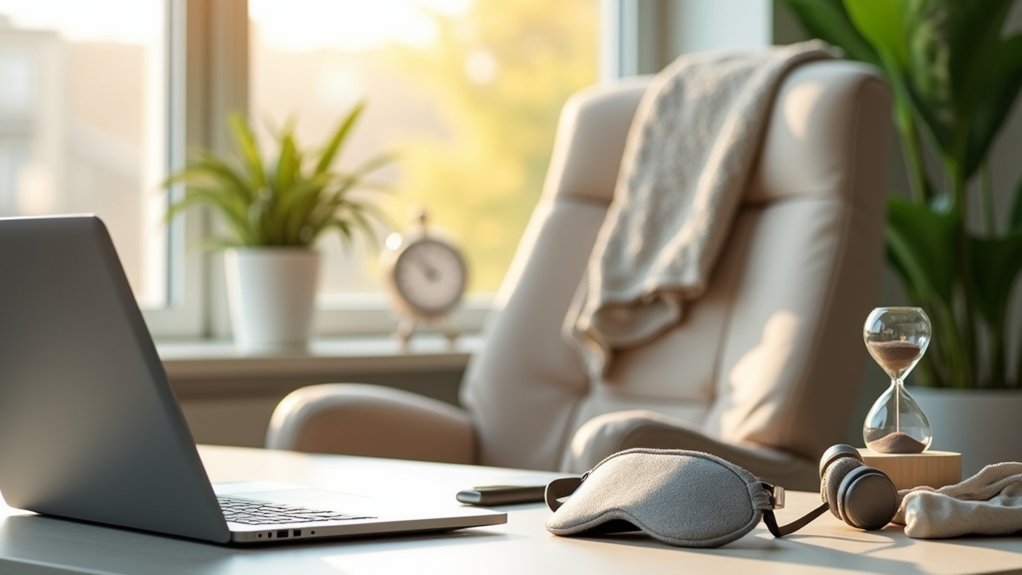
You’ll maximize your power nap benefits by keeping them between 10-30 minutes during your natural 1-3 PM energy dip. Create an ideal environment with darkness, comfortable temperature around 65°F, and minimal noise. Set a strategic alarm to prevent oversleeping and practice quick relaxation techniques like deep breathing before napping. Track your energy levels and productivity metrics to personalize your approach, and gradually introduce workplace napping by starting in private spaces. These foundational strategies reveal even deeper enhancement techniques.
Find Your Optimal Power Nap Duration

How long should you nap to maximize productivity without feeling groggy afterward? The ideal duration for power naps ranges from 10 to 30 minutes. This timeframe delivers significant benefits of napping while avoiding deep sleep stages that trigger sleep inertia—that sluggish feeling you experience after longer rest periods.
Power naps of 10-30 minutes maximize productivity benefits while preventing the grogginess caused by deeper sleep stages.
NASA research proves a 26-minute afternoon nap boosts alertness by 54% and improves performance by 34%. For maximum productivity gains, keep your power naps under 20 minutes to enhance focus and energy levels effectively.
If you’re targeting memory enhancement and creativity, consider 60 to 90-minute naps that complete full sleep cycles. However, these longer sessions risk sleep inertia if poorly timed.
For busy professionals, shorter power naps provide immediate energy restoration without compromising nighttime sleep quality.
Schedule Naps During Natural Energy Dips
When your energy naturally dips between 1 PM and 3 PM, you’re experiencing the perfect window for a strategic power nap. This post-lunch period aligns with your body’s natural circadian rhythm, making it ideal for recharging without disrupting nighttime sleep.
| Benefit | Impact |
|---|---|
| Enhanced alertness | Lasts several hours |
| Improved cognitive performance | Better focus and decision-making |
| Increased productivity | Higher work output quality |
| Sleep deprivation mitigation | Particularly helpful for chronic sleep issues |
Scheduling your daytime nap during these natural energy dips offers maximum benefits. You’ll experience boosted problem-solving skills, improved mood, and sustained performance throughout your afternoon. Since one-third of American adults face chronic sleep issues, incorporating strategic power naps during this window can greatly enhance your professional effectiveness.
Create the Perfect Napping Environment

While timing your nap perfectly matters, you won’t reap the full benefits unless you create an environment that promotes quick, restorative sleep.
To create the perfect napping environment, start by finding a quiet location away from distractions and interruptions. Control lighting by using blackout curtains or an eye mask to establish a dark environment that triggers melatonin production.
Maintain a comfortable temperature around 65°F to prevent overheating and enhance relaxation. Block disruptive sounds with white noise machines or earplugs to mask background noise.
Most importantly, set an alarm for 20-30 minutes to avoid oversleeping. This duration guarantees you’ll wake up refreshed rather than experiencing sleep inertia from longer naps that can leave you groggy.
Set Strategic Alarms to Avoid Oversleeping
Setting your alarm strategically transforms a potentially counterproductive long sleep into an energizing power nap that enhances your afternoon performance. When you set strategic alarms for 20 to 30 minutes, you’ll maximize alertness while avoiding the grogginess that comes from oversleeping.
Choose gentle sounds or vibrations to wake up smoothly, reducing sleep inertia that makes you feel worse than before napping. Consistency in nap timing delivers ideal results, so schedule your alarm for the same time daily.
Smart alarm apps can track your sleep cycles, waking you during lighter stages for better refreshment. Place your alarm across the room to resist snoozing temptations. This power napping help guarantees you’ll wake up energized and ready to tackle your remaining work tasks efficiently.
Master Quick Relaxation Techniques
Since your ability to fall asleep quickly determines your power nap’s effectiveness, mastering swift relaxation techniques becomes essential for busy professionals.
Start with deep breathing exercises: inhale through your nose for four counts, hold for four, then exhale through your mouth for four counts. This pattern quickly induces relaxation.
Try progressive muscle relaxation by tensing and releasing each muscle group from head to toe, reducing physical tension that prevents sleep onset.
Create a soothing environment with calming music or nature sounds to promote faster sleep.
Implement visualization techniques by picturing peaceful scenes like beaches or forests to distract your mind from work stress.
Finally, practice mindfulness meditation, focusing on your breath for just minutes to clear mental clutter and prepare for revitalizing rest.
Try the Coffee Nap Method
Once you’ve developed your quick relaxation skills, you can amplify your power nap results with an innovative technique that combines caffeine with strategic rest.
The Coffee Nap Method involves drinking espresso just before napping, capitalizing on caffeine’s 20-minute activation window. Research shows this approach enhances cognitive performance considerably more than traditional napping alone.
Here’s how to execute this technique effectively:
- Time it right – Schedule your coffee nap during early afternoon (1-3 PM) when energy naturally dips.
- Drink quickly – Consume your espresso shot immediately before lying down.
- Limit duration – Keep your power nap to 15-20 minutes maximum.
Build Consistent Napping Habits
While the Coffee Nap Method can boost your energy in the moment, transforming power napping into a reliable productivity tool requires establishing consistent daily habits.
Create a consistent daily nap schedule between 1 to 3 PM when your body naturally experiences energy dips. Keep your short naps between 10 to 30 minutes to maximize alertness without grogginess. Set an alarm to prevent oversleeping, which can cause sleep inertia and negatively impact your sleep health.
Design an ideal napping environment with dark curtains and cool temperatures to help you fall asleep faster. Regular practice builds this skill over time, improving your ability to quickly recharge energy levels.
Consistency is key—the more you practice power naps, the more effective they’ll become at enhancing your daily performance.
Navigate Workplace Napping Culture
Building solid napping habits at home is one thing, but implementing them in your workplace presents unique challenges that require careful navigation.
Workplace napping requires strategic implementation and cultural awareness to overcome professional barriers and maximize productivity benefits.
Cultural perceptions of workplace napping vary dramatically—while Americans often view naps as laziness, European cultures embrace their health benefits for cognitive functioning and employee well-being.
Here’s how to successfully integrate workplace napping:
- Research your company’s stance on naps and identify progressive organizations like Google that provide designated nap areas.
- Present data-driven arguments showing how naps boost productivity and reduce workplace mishaps by six times.
- Start small by taking brief naps in private spaces like your car or unused conference rooms.
You’ll need to demonstrate that strategic napping enhances rather than hinders your professional performance.
Distinguish Power Naps From Regular Sleep
Before you can master workplace napping, you need to understand the fundamental differences between power naps and regular sleep. These two forms of rest serve distinct purposes in your daily routine and affect your cognitive function differently.
| Aspect | Power Naps | Regular Sleep |
|---|---|---|
| Duration | 10-30 minutes | 7-9 hours |
| Sleep Stages | Light sleep only | All stages including REM |
| Purpose | Quick energy boost | Full restoration |
| Impact on Productivity | Immediate alertness | Long-term maintenance |
| Health Benefits | Short-term mental well-being | Essential for overall health |
Power naps provide a short period of sleep that enhances productivity without causing grogginess. However, they can’t replace regular sleep’s restorative benefits, which remain vital for your long-term cognitive function and mental well-being.
Track and Adjust Your Napping Success
You’ll need to monitor your nap quality daily by recording how refreshed you feel after each session.
Adjust your timing and duration based on these observations, experimenting with different 15-30 minute windows during your natural energy dips.
Measure your productivity impact by tracking your focus levels and work output before and after implementing your napping routine.
Monitor Sleep Quality Daily
How can you guarantee your power napping strategy delivers consistent results? Monitor your sleep quality daily to maximize the effectiveness of your power naps. By tracking sleep patterns, you’ll identify what works best for your productivity levels and overall well-being.
Here’s how to implement effective daily monitoring:
- Use sleep tracking apps or devices to record nap durations and analyze their impact on nighttime sleep, allowing you to make necessary adjustments to your routine.
- Maintain a detailed sleep diary to correlate your napping habits with mood fluctuations and productivity outcomes throughout the day.
- Assess sleep quality regularly to personalize your napping schedule and make sure you take power naps at ideal times for enhanced energy and focus.
Adjust Timing and Duration
Since each person’s circadian rhythm and energy patterns differ, finding your ideal nap timing and duration requires deliberate experimentation and careful tracking.
Start by testing different nap duration options between 10-30 minutes during the 1-3 PM window when your body naturally experiences energy dips. Use an alarm to prevent oversleeping and avoid grogginess from sleep inertia.
Track how various timing combinations affect your alertness and productivity throughout the day. Shorter power naps of 10-20 minutes typically boost immediate alertness, while 60-90 minute naps aid memory consolidation but may cause temporary drowsiness.
Monitor your energy levels and mood after each session to identify patterns. Adjust your approach based on daily workload demands and personal responses to optimize your napping strategy.
Measure Productivity Impact
While establishing your ideal nap routine is essential, measuring its actual impact on your work performance determines whether you’re gaining real benefits.
Research shows power naps can boost alertness by 54% and performance by 34%, but tracking your personal results helps optimize your strategy.
To measure your productivity gains effectively:
- Log daily metrics – Record nap duration, timing, and subsequent task completion rates to identify patterns between your power naps and enhanced performance.
- Track mood and stress levels – Document your psychological state before and after naps to gauge mental benefits alongside productivity improvements.
- Use productivity apps – Leverage digital tools to assess daily output and highlight correlations between napping habits and work performance over time.
Frequently Asked Questions
What Is the 30 90 Rule for Naps?
The 30-90 rule suggests you nap for either 30 minutes to boost alertness without grogginess, or 90 minutes to complete a full sleep cycle for enhanced memory consolidation and creativity.
Does the Navy SEAL Nap Trick Work?
Yes, the Navy SEAL nap trick works effectively. You’ll experience enhanced alertness and cognitive performance through this 20-minute power nap technique, which research shows can boost your alertness by 54% and performance by 34%.
How Can People Take the Most Effective Naps According to the Expert?
You’ll take effective naps by limiting them to 10-30 minutes, scheduling between 1-3 PM, creating cool, dark environments, using breathing techniques, and setting alarms to prevent oversleeping and grogginess.
What Is the Best Power Nap Strategy?
You’ll maximize your power nap by keeping it 10-30 minutes, napping between 1-3 PM, creating a dark quiet environment, setting an alarm, and using breathing techniques to fall asleep quickly.


