
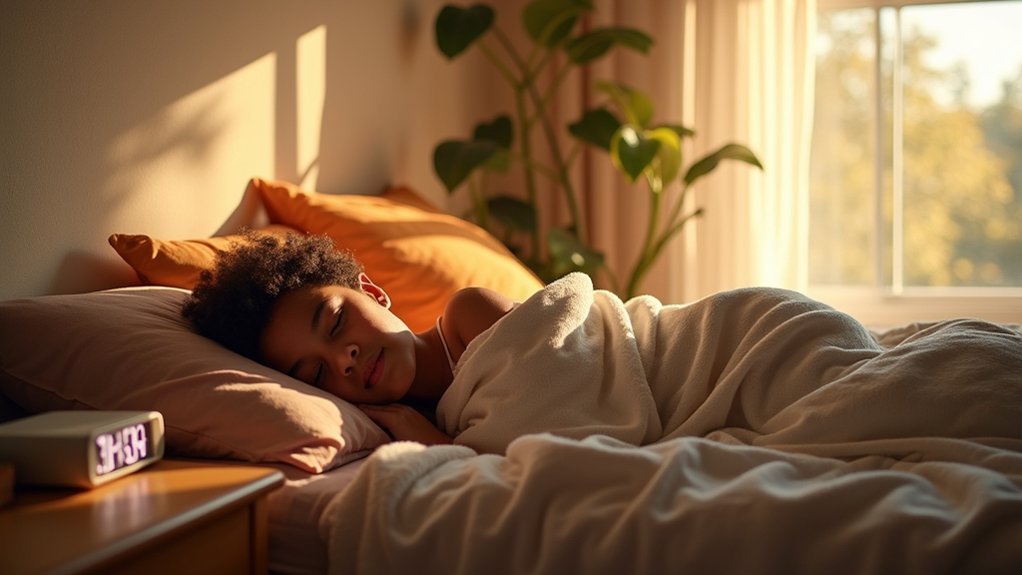
You’ll want to time your naps between 1-3 p.m. when your energy naturally dips, keeping them short at 10-30 minutes for maximum alertness without grogginess. This window aligns with your teen circadian rhythm and won’t interfere with nighttime sleep. Avoid napping after 3 p.m. since it can disrupt your ability to fall asleep later. Create a cool, dark environment around 65°F and track how different nap times affect your sleep quality to optimize your personal schedule.
Understanding Teen Sleep Patterns and Circadian Rhythms

While younger children naturally fall asleep earlier in the evening, your teen’s body operates on a fundamentally different schedule due to biological changes during adolescence.
Teen circadian rhythms shift dramatically, causing melatonin production to begin around 10:30-11 p.m., which naturally delays sleep onset. This biological shift means your teenager isn’t being difficult—they’re literally programmed to stay awake later.
Unfortunately, early school start times create a perfect storm for sleep deprivation. When 70% of high school students don’t get adequate sleep each night, afternoon sleepiness becomes inevitable.
Academic pressures, extracurricular activities, and electronic devices further disrupt these already-challenged sleep patterns. Understanding this biological reality helps explain why your teen struggles with morning wake-ups and experiences energy crashes during the day.
Benefits of Strategic Napping for Teenage Development
Given your teen’s disrupted sleep schedule, strategic napping becomes a powerful tool for supporting their developing brain and body. The benefits of napping extend far beyond simple rest – they’re essential for thriving during the teen years.
Short 10-30 minute naps combat daytime sleepiness while boosting memory retention and focus. You’ll notice improved academic success as strategic napping enhances cognitive performance during classes and study sessions.
Strategic napping for just 10-30 minutes delivers powerful cognitive benefits, enhancing memory retention and academic performance when your teen needs it most.
These brief rest periods also regulate emotions and reduce stress levels, helping your teenager navigate daily challenges more effectively.
The health benefits multiply when napping mitigates sleep deprivation from early school schedules. Your teen’s mood improves, physical performance in sports increases, and overall well-being flourishes.
Strategic napping doesn’t replace good sleep – it complements healthy sleep patterns for ideal teenage development.
Optimal Nap Duration for Maximum Alertness

You’ll want to aim for that sweet spot of 10 to 30 minutes when napping, as this duration boosts your alertness without leaving you groggy.
Longer naps can trigger sleep inertia, making you feel sluggish and disoriented when you wake up.
As a teenager, your brain responds differently to nap lengths than adults, so understanding these age-specific needs will help you maximize the benefits while avoiding the pitfalls.
Sweet Spot Duration
Finding the perfect nap duration can make the difference between waking up refreshed or feeling like you’ve been hit by a truck. As a teen, your ideal nap length falls between 10 to 30 minutes. This sweet spot allows you to enter lighter sleep stages without diving too deep, preventing that groggy, sluggish feeling that ruins your afternoon productivity.
If you sleep longer than 30 minutes, you’ll likely experience sleep inertia – that heavy, disoriented sensation that makes you wish you’d never napped at all.
However, if you’re severely sleep-deprived, a 90-minute nap can work since it completes a full sleep cycle. For most situations though, stick to the 20-minute mark for maximum alertness and energy restoration.
Avoiding Sleep Inertia
When you wake up from a nap feeling worse than before you slept, you’ve likely encountered sleep inertia – that foggy, disoriented state that can last anywhere from a few minutes to several hours.
To avoid sleep inertia, stick to naps lasting 10-20 minutes maximum. Once your nap extends longer than 30 minutes, you’ll enter deeper sleep stages that trigger grogginess upon waking.
Napping during the day should provide a boost in alertness, not leave you more tired. Timing matters too – avoid napping after 3 p.m., as late naps interfere with nighttime sleep.
If you do experience post-nap grogginess, try a post-nap stretch or light movement to shake off the sluggishness and restore your energy levels quickly.
Age-Specific Nap Needs
Since teenagers’ sleep cycles differ from adults, your nap duration needs adjustment to match your unique biological rhythms. Teens need specific nap lengths to optimize alertness without disrupting nighttime sleep. A strategic midday nap can enhance cognitive performance when timed correctly.
| Nap Duration | Benefits |
|---|---|
| 10-20 minutes | Quick energy boost, minimal grogginess |
| 20-30 minutes | Enhanced alertness, improved focus |
| 60 minutes | Memory consolidation, creativity boost |
| 90 minutes | Full sleep cycle completion |
| 2+ hours | Recovery from severe sleep deprivation |
Your body’s internal clock naturally dips in early afternoon, making this ideal for napping. Naps longer than 30 minutes risk sleep inertia unless you complete the full 90-minute cycle. Implementing short naps on a regular basis helps maintain consistent energy levels throughout your day.
Best Times of Day for Teen Napping

Timing your nap correctly can make the difference between feeling refreshed or groggy for the rest of your day. The best time to take a nap is during early afternoon, specifically between 1 to 3 p.m. This window aligns with your body’s natural energy dip and helps combat post-lunch fatigue.
Strategic afternoon napping between 1-3 p.m. works with your body’s natural rhythms to maximize energy restoration and minimize grogginess.
Keep your naps to 20-30 minutes for ideal alertness without grogginess. This duration prevents you from entering deep sleep phases that cause drowsiness upon waking.
Avoid napping after 3 p.m., as late naps can disrupt nighttime sleep and reduce overall sleep quality.
If you’re severely sleep-deprived, consider a 90-minute nap for restorative benefits. This allows for a full sleep cycle, providing deeper recovery while minimizing interference with your regular bedtime schedule.
Creating the Ideal Nap Environment
While proper timing sets the foundation for effective napping, your physical environment plays an equally essential role in determining nap quality.
You’ll want to keep your room around 65°F to optimize sleep conditions. Darken the space using blackout curtains or shades to signal your body it’s time to rest.
Combat noise disruptions with earplugs or white noise machines that create a calm atmosphere. Make your bed exclusively for sleep to strengthen the mental association between this space and relaxation.
Keep your nap area clutter-free to eliminate distractions that might prevent you from settling into deep rest. These environmental adjustments work together to help you fall asleep faster and wake up refreshed.
Avoiding Sleep Inertia and Grogginess
Although creating the ideal nap environment matters, you’ll undermine all that effort if you wake up feeling worse than before you slept.
Sleep inertia—that groggy, disoriented feeling after waking—happens when you nap too long and enter deeper sleep stages. To avoid this, limit your naps to 10-30 minutes, with 20 minutes being the sweet spot for enhanced alertness without grogginess.
Timing matters just as much as duration. Avoid napping after 3 p.m., which can disrupt your nighttime sleep and worsen next-day grogginess.
Set an alarm to maintain your best nap length—this prevents oversleeping into deep sleep phases. Remember, if you’re already sleep-deprived, you’re more susceptible to severe sleep inertia, making proper nap timing absolutely essential.
Balancing Naps With Nighttime Sleep Schedules
Strategic nap timing protects your nighttime sleep just as much as it enhances your daytime alertness.
You’ll need to establish a consistent schedule that works with your natural circadian rhythm. Monitor your daily energy patterns to find the sweet spot—typically before 3 p.m.—that boosts afternoon focus without sabotaging bedtime.
Don’t use naps as a band-aid for chronic sleep deprivation. If you’re regularly relying on long or late naps, you’re likely creating a cycle that fragments your nighttime sleep.
Instead, treat naps as supplements to adequate evening rest, not replacements. Track how different nap times affect your ability to fall asleep at night.
Adjust your schedule based on these observations, ensuring your brief afternoon rest enhances rather than competes with your primary sleep period.
Managing Academic Pressure Through Power Naps
When you’re drowning in assignments and cramming for exams, a strategically timed power nap can be your secret weapon for cutting through brain fog and boosting academic performance.
Research proves that 10-20 minute naps enhance alertness and cognitive function, giving you the mental edge needed for demanding coursework. You’ll find your memory retention and learning capabilities improve dramatically, helping you absorb information more effectively for tests.
Time your nap during the natural post-lunch energy dip in early afternoon to combat fatigue levels without disrupting nighttime rest. Keep naps consistent and before 3 p.m. to maintain your regular sleep schedule.
This strategy helps mitigate sleep deprivation’s negative effects while supporting emotional regulation and stress management. Remember, getting enough sleep remains vital, but strategic napping provides essential academic support.
Warning Signs of Excessive Napping
While naps can boost your academic performance, they shouldn’t become a daily crutch that masks deeper sleep problems. If you’re consistently struggling to wake up or falling asleep in class, you might not be getting the recommended 8-10 hours of sleep nightly. Excessive napping often indicates an underlying condition affecting your rest quality.
| Warning Sign | What It Means |
|---|---|
| Persistent grogginess after naps | Poor timing or duration |
| Daily classroom sleepiness | Insufficient nighttime sleep |
| Mood changes/irritability | Over-reliance on naps |
| Headaches after napping | Inappropriate nap length |
Pay attention to these red flags among teenagers. If you experience low mood, weight changes, or can’t stay awake despite regular naps, consulting a healthcare provider becomes essential to rule out sleep disorders.
Alternatives to Napping for Energy Restoration
Although naps can restore energy effectively, several quick alternatives can boost your alertness without interfering with nighttime sleep.
When you’re feeling sluggish, try these evidence-based strategies to restore your energy levels naturally:
- Move your body – Engage in short bursts of physical activity like a 10-minute walk or stretching session. This increases circulation and mental focus more effectively than sleeping.
- Fuel strategically – Choose a small snack combining complex carbohydrates and protein, such as whole grain crackers with cheese. This provides sustained energy without sugar crashes.
- Reset mentally – Try practicing mindfulness or deep breathing exercises for 5-10 minutes to restore mental clarity and reduce fatigue.
Additionally, prioritize staying hydrated throughout your day and taking breaks during study sessions to shift focus and rest your eyes.
When to Seek Professional Sleep Guidance
Sometimes sleep challenges persist despite your best efforts with napping strategies and energy-boosting alternatives.
When sleep difficulties continue despite implementing proper sleep hygiene and healthy habits, professional medical guidance becomes necessary.
Here’s what you need to know about seeking professional sleep guidance.
If you’re experiencing excessive daytime sleepiness that disrupts your daily activities, it’s time for professional evaluation. Persistent trouble falling asleep or staying asleep, even with good sleep hygiene, warrants consultation with a sleep specialist.
Frequently dozing off during class or activities might indicate sleep disorders like narcolepsy requiring assessment.
Pay attention to mood changes—increased irritability or sadness connected to sleep problems—as these signal the need for healthcare provider discussion.
When recommended strategies don’t deliver that good night’s sleep you’re seeking, don’t hesitate to contact your pediatrician or sleep specialist for potential medical interventions.
Frequently Asked Questions
What Is the Best Nap Time for a Teenager?
You’ll get the best results napping between 1 to 3 p.m. when your energy naturally dips. Keep it short—10 to 30 minutes—so you won’t feel groggy or disrupt tonight’s sleep.
What Is the Ideal Sleep Schedule for a Teenager?
You should sleep 8-10 hours nightly with a consistent schedule. Aim for a 10:30-11 p.m. bedtime and wake up within a two-hour window daily. Avoid electronics before bed to maintain your body’s natural rhythm.
Is It Normal for a 14-Year-Old to Take Naps Every Day?
Yes, it’s completely normal for you to nap daily at 14. You’re experiencing natural circadian rhythm shifts and increased sleep needs. About 70% of teens don’t get adequate nighttime sleep, making naps necessary.
What Should a 14 Year Old’s Bed Time Be?
You should aim for a bedtime between 9:30 and 11:00 p.m. This’ll give you 8-10 hours of sleep before waking at 6:30 a.m., supporting your growth and academic performance.


