

Meditation improves your sleep quality by triggering a powerful relaxation response that shifts your nervous system from stress to calm. When you meditate, your brain waves slow from beta to alpha and theta frequencies, mirroring natural pre-sleep patterns while increasing melatonin production. This practice reduces cortisol levels and activates your parasympathetic nervous system, helping you fall asleep faster. Regular meditation also breaks the cycle of racing thoughts that typically keep you awake, and you’ll discover additional techniques that amplify these benefits.
The Science Behind Meditation’s Impact on Sleep Physiology
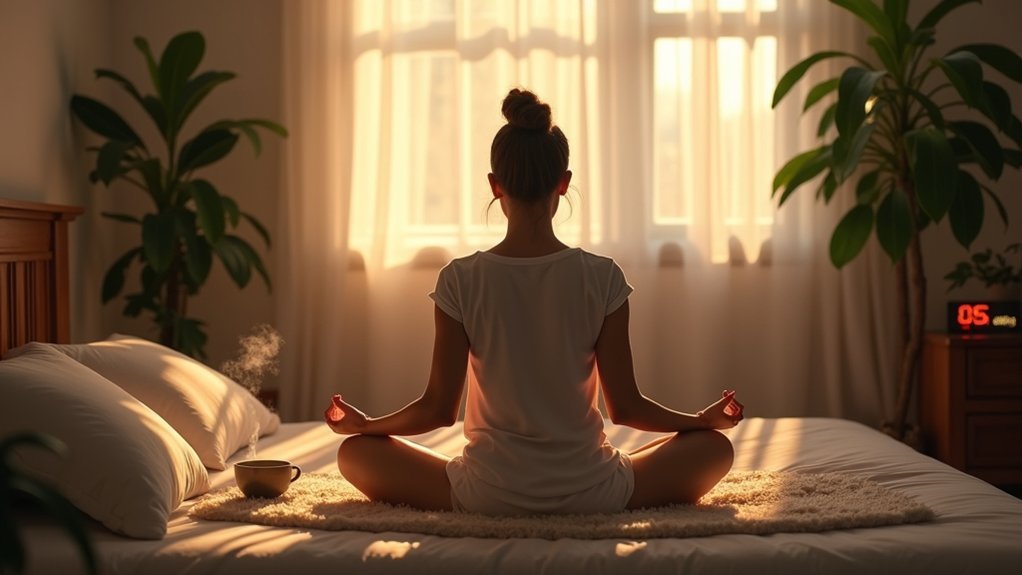
When you settle into a meditation session before bedtime, you’re triggering a cascade of physiological changes that directly support better sleep. Your body activates the relaxation response, shifting from stress mode to a calm state that prepares you for rest.
Through mindfulness meditation, your heart rate decreases and blood pressure drops, creating ideal conditions for sleep quality improvement.
Your brain enters theta wave states during meditation, mirroring the early stages of natural sleep cycles. This neurological shift helps ease your shift into deeper rest.
Additionally, meditation boosts melatonin and serotonin production—hormones vital for regulating sleep patterns. By practicing regularly, you’re fundamentally training your nervous system to access these beneficial physiological states more easily, making restful sleep a natural outcome rather than an elusive goal.
How Meditation Activates the Relaxation Response for Better Rest
When you practice meditation, you’re actively reversing your body’s physiological stress response by triggering Dr. Herbert Benson’s relaxation response.
This process slows your brain waves from the rapid beta state to the calmer alpha and theta frequencies, creating ideal conditions for sleep preparation.
As you focus on your breath or mindfulness techniques, you’re simultaneously calming your nervous system by shifting from sympathetic dominance to parasympathetic activation.
Physiological Stress Response Reversal
As stress floods your system with cortisol and adrenaline throughout the day, your body remains locked in a heightened state that makes quality sleep nearly impossible.
When you practice meditation, you’re fundamentally hitting your body’s reset button, activating the relaxation response that directly counteracts this stress hormone buildup.
This physiological reversal creates powerful changes in your system:
- Your heart rate decreases and blood pressure drops considerably
- Cortisol levels plummet while melatonin and serotonin production increases
- Your sympathetic nervous system calms, reducing overall bodily tension
- Theta brainwaves emerge, naturally guiding you toward deeper relaxation states
Brain Wave Slowing
Brain waves naturally slow during meditation, creating the perfect bridge between your alert daytime consciousness and the deep rest your body craves.
When you practice meditation techniques, your brain shifts from its typical beta state into slower patterns that mirror pre-sleep conditions.
You’ll experience increased theta brainwaves during meditation sessions, which closely resemble the brain activity that occurs when moving into sleep. This neurological shift activates your relaxation response, preparing your mind for restorative rest.
Your heart rate decreases and blood pressure drops, mimicking natural sleep preparation processes.
This brain wave slowing doesn’t just happen during meditation—it trains your nervous system to access these calmer states more easily.
Regular practice strengthens your ability to shift into relaxation mode, greatly improving sleep quality and making sleep onset faster and more natural.
Nervous System Calming
Through consistent meditation practice, your nervous system learns to activate its built-in relaxation response—a powerful physiological shift that directly counters stress and primes your body for deep, restorative sleep.
When you engage in mindfulness meditation, you’re fundamentally switching off your sympathetic nervous system’s stress signals and engaging the parasympathetic system responsible for rest and recovery.
This neurological shift creates measurable changes in your body:
- Your heart rate decreases notably, allowing cardiovascular relaxation
- Cortisol levels drop considerably, reducing stress hormone interference with sleep
- Blood pressure lowers naturally, promoting physical calmness
- Melatonin and serotonin production increases, optimizing sleep cycle regulation
Reducing Cortisol Levels Through Mindful Breathing Practices
Your body’s cortisol levels directly impact how well you’ll sleep at night, making stress hormone regulation essential for quality rest.
When you’re stressed or anxious, elevated cortisol keeps your mind racing and your body alert, preventing the natural wind-down process needed for sleep.
Fortunately, specific mindful breathing techniques can effectively lower these cortisol levels and create the calm internal environment your body needs to shift into restorative sleep.
Cortisol and Sleep Connection
When cortisol floods your system during evening hours, it acts like an unwelcome alarm clock that keeps your mind buzzing long after you’ve laid your head on the pillow.
This stress hormone directly disrupts your natural sleep-wake cycle, making it nearly impossible to drift off peacefully or maintain deep sleep throughout the night.
Mindfulness meditation effectively breaks this destructive cycle by lowering cortisol production.
When you practice mindful breathing techniques regularly, you’re creating a physiological shift that promotes relaxation and sleep quality improvements.
Consider these cortisol-busting benefits:
- Deep breathing exercises trigger your body’s relaxation response, naturally reducing stress hormones
- Lower evening cortisol levels allow melatonin production to increase properly
- Consistent practice creates lasting changes in your stress response system
- Reduced anxiety leads to faster sleep onset and fewer nighttime awakenings
Breathing Techniques That Work
As cortisol continues to sabotage your sleep night after night, specific breathing techniques can serve as your most powerful weapon against this hormonal disruption. Mindful breathing practices trigger your body’s relaxation response, creating physiological changes that directly combat stress-induced sleep problems.
The 4-7-8 breathing method stands out as particularly effective, markedly lowering cortisol levels while decreasing heart rate and blood pressure. These breathing techniques induce theta brainwaves that mirror your brain’s natural sleep shift state, facilitating faster sleep onset.
| Technique | Pattern | Duration | Primary Benefit | Best Time |
|---|---|---|---|---|
| 4-7-8 Breathing | Inhale 4, Hold 7, Exhale 8 | 5-10 minutes | Stress reduction | Before bed |
| Box Breathing | 4-4-4-4 count | 10 minutes | Anxiety relief | Evening routine |
| Deep Belly | Slow diaphragmatic | 15 minutes | Cortisol reduction | Wind-down period |
| Progressive | Gradual lengthening | 8 minutes | Sleep quality enhancement | Bedtime ritual |
| Counted Breath | Simple counting | 5 minutes | Mind calming | Sleep preparation |
Regular practice enhances your body’s stress management capabilities while establishing calming bedtime rituals.
The Role of Theta Brainwaves in Sleep-Inducing Meditation

While you drift between wakefulness and sleep each night, your brain naturally produces theta brainwaves—electrical patterns oscillating at 4-8 Hz that create the perfect neurological bridge into restful slumber.
When you practice specific meditation techniques, you’re fundamentally training your brain to access this theta state on command, transforming your ability to fall asleep naturally.
By consistently practicing theta meditation techniques, you develop the remarkable ability to guide your brain into sleep-ready states whenever needed.
These theta-inducing meditation techniques offer profound benefits for your sleep quality by reducing anxiety and stress that typically keep your mind racing at bedtime.
As you regularly engage in these practices, you’ll notice enhanced relaxation and improved emotional processing.
- Stress reduction: Theta meditation dissolves daily tension and worry
- Faster sleep onset: Your brain learns to shift quickly into sleep mode
- Enhanced creativity: Deep relaxation opens up subconscious problem-solving abilities
- Improved sleep consistency: Regular practice creates reliable sleep patterns
Breaking the Cycle of Racing Thoughts That Prevent Sleep
Despite your best efforts to wind down at bedtime, persistent thoughts about tomorrow’s presentation, unfinished tasks, or unresolved conversations can hijack your mind’s natural shift into sleep.
These racing thoughts create a mental loop that keeps you alert when you should be drifting off. Mindfulness meditation breaks this destructive cycle by cultivating present-moment awareness, allowing you to observe your thoughts without getting caught in their emotional pull.
When you practice meditation regularly, you’ll trigger the relaxation response that directly counteracts stress-induced mental chatter.
Research shows participants experienced significant improvements in sleep quality after just six meditation sessions. You’ll develop the skill to redirect your focus from anxious spiraling back to calming techniques, creating the mental space necessary for restorative sleep.
Mindfulness Meditation Vs Sleep Education: Research Findings

You’ll find compelling evidence when examining a JAMA Internal Medicine study that directly compared mindfulness meditation against traditional sleep education methods.
The researchers structured their study with participants divided into two groups over six sessions, measuring outcomes like insomnia, fatigue, and depression levels.
You can see clear differences in treatment effectiveness when comparing how each group’s sleep quality improved after completing their respective interventions.
Study Design Methods
When researchers at JAMA Internal Medicine designed their groundbreaking study, they recruited 49 middle-aged and older adults to compare two distinct approaches to improving sleep quality. The study design randomly divided participants into two groups for six intensive sessions.
One group received mindfulness meditation training focused on present-moment awareness and relaxation techniques, while the control group learned practical sleep education methods.
The researchers measured key outcomes including insomnia severity, fatigue levels, and depression symptoms. This controlled approach allowed scientists to isolate the specific effects of mindfulness meditation on sleep disturbances.
Study Components:
- Six-week intervention period with structured sessions
- Randomized controlled trial methodology comparing two approaches
- Standardized measurement tools for sleep quality assessment
- Middle-aged and older adult participant demographics
Comparative Treatment Outcomes
The rigorous methodology produced compelling results that revealed clear differences between the two interventions. If you participated in the mindfulness meditation group, you’d experience notably less insomnia, fatigue, and depression compared to those receiving sleep education.
The present-moment awareness exercises you’d practice help quiet racing thoughts and reduce stress that disrupts your sleep patterns. While sleep education participants focused on improving habits, they didn’t achieve the same sleep quality improvements you’d see with meditation.
These treatment outcomes demonstrate that mindfulness meditation performs as effectively as cognitive behavioral therapy for insomnia. The research suggests you’d benefit from meditation’s holistic approach, which addresses underlying stress and mental patterns rather than just surface-level sleep behaviors.
Progressive Muscle Relaxation for Physical Tension Release
Millions of people struggle with physical tension that keeps them awake at night, but Progressive Muscle Relaxation (PMR) offers a scientifically-backed solution that systematically releases stress from your body.
This relaxation technique involves tensing and releasing different muscle groups, helping you identify where you hold stress while promoting deeper awareness of physical sensations.
Research shows PMR considerably improves sleep quality by lowering cortisol levels and calming both mind and body before bedtime.
Studies demonstrate that Progressive Muscle Relaxation significantly reduces stress hormones and creates the ideal physiological conditions for restorative sleep.
You’ll find this technique doesn’t just help you fall asleep faster—it enhances sleep throughout the night.
- Systematically tense and relax muscle groups from toes to head
- Practice for 10-15 minutes before bedtime for best results
- Focus on the contrast between tension and relaxation states
- Use guided audio recordings when starting your PMR practice
Guided Meditation Techniques for Sleep Preparation
Although your mind might race with tomorrow’s worries as you lie in bed, guided meditation techniques offer a gentle pathway to mental stillness that prepares your body and brain for restorative sleep.
These audio-led sessions help you focus on relaxation while moving away from daily stressors. Studies show that incorporating guided meditation into your nightly routine greatly reduces insomnia symptoms and improves sleep quality.
You’ll find these resources readily available through apps, websites, and local libraries, making them perfect for beginners. Regular practice creates physiological changes including reduced heart rate and lower cortisol levels.
The 4-7-8 Breathing Method for Rapid Sleep Onset
When restless nights leave you tossing and turning, the 4-7-8 breathing method offers a scientifically-backed solution that can help you fall asleep in minutes rather than hours.
This 4-7-8 breathing technique works by calming your nervous system and slowing your heart rate, creating the perfect conditions for rapid sleep onset.
Here’s how this method transforms your bedtime routine:
- Inhale through your nose for 4 seconds to activate relaxation
- Hold your breath for 7 seconds to slow your heart rate
- Exhale through your mouth for 8 seconds to release tension
- Focus on the rhythmic pattern to quiet racing thoughts
How Yoga Nidra Creates a Sleep-Like Conscious State
While most meditation practices keep you fully awake, Yoga Nidra guides you into a unique twilight state that’s neither sleep nor complete wakefulness. This yogic sleep technique maintains your consciousness while inducing deep relaxation that mimics actual sleep processes.
When you practice Yoga Nidra, you’ll experience physiological changes similar to natural sleep—your heart rate decreases and cortisol levels drop. The guided visualization and body awareness exercises help you release stress while staying mentally alert.
This conscious sleep-like state allows your body to access restorative benefits without losing awareness. Research shows this practice considerably improves sleep quality, especially for chronic insomnia sufferers.
Managing Bedtime Anxiety Through Present-Moment Awareness
When you’re lying in bed with thoughts spinning out of control, present-moment awareness can interrupt this cycle by teaching you to observe your mental chatter without getting caught up in it.
You’ll learn to redirect those racing thoughts away from tomorrow’s worries or today’s regrets and anchor your attention to immediate sensations like your breath or body.
This mindful redirection naturally activates your body’s relaxation response, slowing your heart rate and lowering stress hormones that keep you wired and alert.
Redirecting Racing Thoughts
As bedtime approaches, your mind often shifts into overdrive, cycling through tomorrow’s meetings, unfinished tasks, or lingering worries that seemed manageable during the day.
These racing thoughts create a mental loop that keeps you alert when you should be winding down. Meditation helps by training you to observe these thoughts without getting caught in their spiral.
By redirecting attention to your breath or a calming focus point, you can interrupt the stress response that fuels nighttime anxiety.
This present-moment awareness technique allows you to acknowledge worries without judgment, then gently guide your focus elsewhere.
- Focus on breathing patterns to anchor your attention
- Practice observing thoughts without engaging them emotionally
- Use body scan techniques to shift focus from mental to physical sensations
- Develop a relaxation reflex through consistent daily practice
Relaxation Response Activation
Since your nervous system can’t differentiate between real and imagined threats, bedtime worries about tomorrow’s presentation trigger the same fight-or-flight response as an actual emergency.
Dr. Herbert Benson’s relaxation response directly counteracts this stress reaction, promoting the physiological shift you need for better sleep quality.
Mindfulness meditation activates this relaxation response through present moment awareness, helping you manage racing thoughts that fuel anxiety.
When you focus on breathing and redirect attention to the now, you’re creating a relaxation reflex that enhances your ability to fall asleep and stay asleep.
Regular practice decreases stress hormones like cortisol, making anxiety management more effective.
This physiological transformation explains why mindfulness meditation consistently improves sleep quality and reduces insomnia symptoms.
Building a Consistent Meditation Practice for Long-Term Sleep Benefits
Although meditation offers immediate relaxation benefits, you’ll reveal its most powerful sleep-enhancing effects by committing to a daily 20-minute practice that creates what researchers call a “relaxation reflex.”
This consistent routine literally rewires your nervous system, making it progressively easier to shift into the calm, restful state your body needs for quality sleep.
Building your meditation practice requires strategic timing and commitment. When you incorporate mindfulness techniques into your nightly routine, you’re creating a powerful signal that tells your body it’s time to wind down.
This relaxation response becomes stronger with repetition, allowing you to improve sleep quality through:
- Reduced cortisol levels and slower heart rate
- Decreased insomnia and fatigue symptoms
- Enhanced self-awareness that quiets racing thoughts
- Faster sleep onset through established calming rituals
Combining Meditation With Other Sleep Hygiene Practices
While establishing a daily meditation routine forms the foundation for better sleep, you’ll amplify these benefits by weaving your practice into a thorough sleep hygiene strategy.
Combining meditation techniques with consistent sleep schedules and calming bedtime environments creates powerful synergy that enhances overall sleep quality.
Regular mindfulness meditation complements traditional sleep hygiene practices by signaling your body it’s time to wind down. Deep breathing exercises lower your heart rate and reduce cortisol levels, improving sleep onset.
Guided meditations maintain present-moment awareness while minimizing sleep-disrupting distractions.
Research confirms that pairing mindfulness meditation with other sleep hygiene practices considerably reduces insomnia symptoms better than using either approach alone.
This integrated strategy promotes deeper relaxation and creates sustainable improvements in your nightly rest patterns.
Understanding When Meditation May Not Be Enough for Sleep Disorders
Despite meditation’s proven benefits for sleep improvement, certain sleep disorders require more thorough medical intervention than mindfulness practices alone can provide.
You’ll find that meditation may help enhance sleep quality, but it won’t cure chronic insomnia or sleep apnea, which need specialized treatment.
If you’re experiencing severe sleep disturbances, you should consult healthcare professionals for extensive care.
Those with mental health histories might find meditation increases anxiety rather than promoting rest. While mindfulness practices can support better sleep, they’re most effective when combined with healthy sleep habits and professional guidance.
- Chronic insomnia and sleep apnea require medical diagnosis and specialized treatment beyond meditation
- Individuals with mental health conditions may experience increased anxiety during meditation sessions
- Cognitive behavioral therapy for insomnia (CBT-I) offers evidence-based treatment for serious sleep disorders
- Combining meditation with consistent sleep schedules and proper sleep environments maximizes effectiveness
Frequently Asked Questions
How Does Meditation Improve Sleep Quality?
Meditation triggers your body’s relaxation response, reducing stress hormones while increasing melatonin and serotonin. You’ll experience slower heart rate, decreased blood pressure, and calmed racing thoughts, making it easier to fall asleep naturally.
How Does Meditation Replace Sleep?
Meditation doesn’t replace sleep – you still need your full hours of rest. However, you’ll find meditation enhances your sleep quality by reducing stress and promoting relaxation that helps you fall asleep faster.
Why Does Meditation Lead to Sleep?
When you meditate, you’re triggering your body’s relaxation response, which lowers your heart rate and cortisol levels. This calms your nervous system and reduces racing thoughts, naturally preparing you for sleep.
Why Is Meditation More Restful Than Sleep?
You’ll find meditation more restful than sleep because you’re actively reducing stress while enhancing melatonin production. Your brain enters theta waves, promoting deeper emotional processing and cognitive clarity that typical sleep can’t achieve.


