
When racing thoughts keep you awake, you can regain control with five proven meditation techniques. Start with body scan meditation to systematically release physical tension from head to toe. Try the 4-7-8 breathing technique—inhale for 4 seconds, hold for 7, exhale for 8—to activate your body’s relaxation response. Progressive muscle relaxation helps you tense and release muscle groups while building mind-body awareness. Loving-kindness meditation shifts negative thought patterns through compassionate self-talk. Visualization meditation creates mental sanctuaries that quiet your mind and prepare you for deeper, more restorative sleep ahead.
Body Scan Meditation for Deep Physical Relaxation
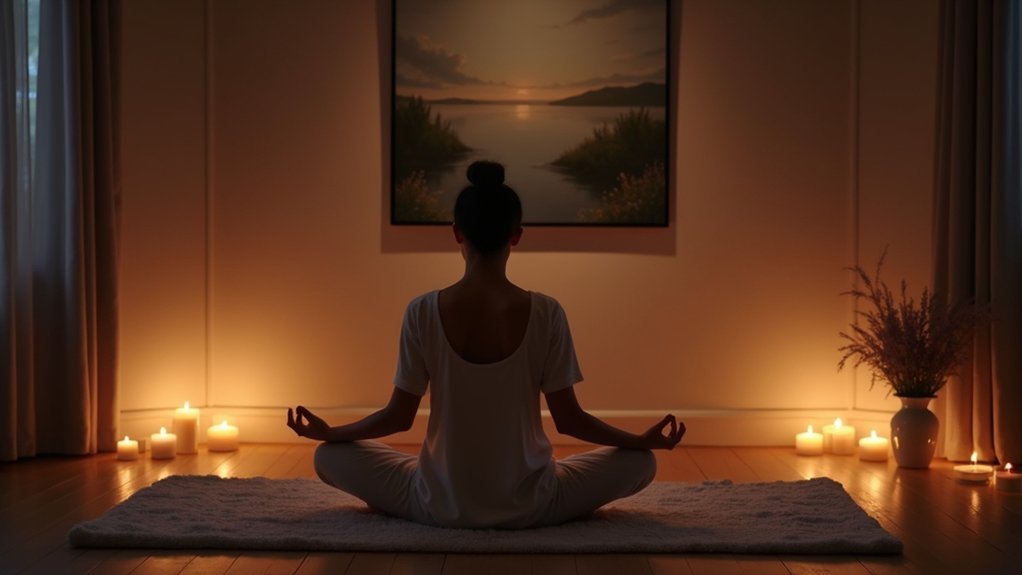
When racing thoughts keep you tossing and turning at night, body scan meditation offers a powerful solution that grounds your mind in the present moment. This technique involves systematically focusing attention on different body parts from head to toe, helping you release tension and achieve deep physical relaxation.
You’ll notice how physical tension melts away as you breathe deeply and scan each area. Even brief three-minute sessions can effectively calm racing thoughts at night. Guided meditations with calming music make this practice accessible through apps and online resources.
As you regularly incorporate body scan meditation into your nightly routine, you’ll experience improved overall quality of sleep and enhanced mindfulness, creating a smoother shift into restful slumber.
4-7-8 Breathing Technique to Calm Mental Chatter
The 4-7-8 breathing technique offers another effective approach to quiet mental chatter that disrupts your sleep. This free meditation method involves inhaling for 4 seconds, holding your breath for 7 seconds, and exhaling slowly for 8 seconds.
You can practice this breath-focused meditation anywhere without special equipment. The structured rhythm activates your body’s relaxation response, helping calm racing thoughts that keep you awake.
This accessible meditation technique requires no equipment and naturally triggers your body’s relaxation response to quiet an overactive mind.
Research shows this technique decreases cortisol levels, reducing stress and anxiety that contribute to nighttime mental chatter. Regular practice considerably reduces the time you need to fall asleep while enhancing the quality of your sleep.
This simple approach benefits both mind and body, improving your overall mental health and daily stress management.
Progressive Muscle Relaxation for Tension Release

Progressive Muscle Relaxation (PMR) systematically targets physical tension that amplifies racing thoughts during nighttime hours. This technique works by tensing and releasing each muscle group from your toes upward, creating awareness between your mind and body connection.
When you practice PMR as nighttime meditation, you’ll notice how physical relaxation directly calms mental chatter. The process takes 10-20 minutes and effectively reduces anxiety while preparing your body for deeper sleep. Regular practice helps you fall asleep faster by releasing accumulated tension.
- Start with your toes and systematically work upward through each muscle group
- Tense each area for 5 seconds, then release completely
- Focus on the contrast between tension and relaxation
- Incorporate deep breathing throughout the process
- Practice consistently as part of your bedtime routine
Loving-Kindness Meditation to Ease Anxious Thoughts
Loving-kindness meditation offers a powerful antidote to anxious racing thoughts by redirecting your mental energy toward compassion and positivity. This practice involves silently repeating phrases like “May I be happy, may I be healthy” to cultivate compassionate feelings toward yourself and others.
When you’re caught in nighttime anxiety, these gentle affirmations help shift negative thought patterns and reduce anxiety levels. The technique creates a mental buffer against stressors while promoting self-acceptance, which diminishes the emotional charge of racing thoughts.
Regular practice generates positive emotions that naturally relax the mind and body. As you develop this habit, you’ll find it easier to shift into a restful state, ultimately improving your sleep quality through increased inner peace and emotional regulation.
Visualization Meditation for Peaceful Mind Transitions

While loving-kindness meditation works through compassionate affirmations, visualization meditation harnesses your imagination to create mental sanctuaries that naturally quiet racing thoughts.
This technique transforms your peaceful mind by engaging serene landscapes or comforting memories, activating your parasympathetic nervous system to lower heart rate and promote muscle relaxation.
- Picture yourself walking through a tranquil forest with sunlight filtering through leaves
- Visualize floating on calm water while feeling weightless and completely safe
- Imagine a cozy cabin with warm light where all worries dissolve away
- Create mental scenes of your most peaceful, happy memories
- Focus on detailed sensory experiences like gentle breezes or soft textures
Regular practice helps you fall asleep faster and achieve better sleep.
Consistent visualization meditation practice naturally accelerates sleep onset and enhances overall sleep quality for deeper, more restorative rest.
Guided sleep visualizations particularly reduce the time needed for sleep onset, making this technique invaluable for managing nighttime anxiety.
Frequently Asked Questions
How to Stop Your Mind From Racing Thoughts at Night?
You can stop racing thoughts by creating a wind-down ritual, journaling worries before bed, practicing 4-7-8 breathing, using guided mindfulness meditations, and trying physical grounding techniques like pressing your palms against walls.
How to Stop Racing Thoughts While Meditating?
When racing thoughts arise during meditation, don’t fight them. Acknowledge each thought, then gently return focus to your breath. Use counting breaths or repeat a simple mantra to anchor your wandering mind back.
How to Stop Overthinking at Night Meditation?
You’ll stop overthinking at night by practicing the 4-7-8 breathing technique, doing body scans, or trying progressive muscle relaxation. These methods redirect your mind’s focus and activate your body’s natural relaxation response.
What Is the Best Therapy for Racing Thoughts?
You’ll find Cognitive Behavioral Therapy most effective for racing thoughts. It helps you identify and reframe negative patterns while reducing anxiety. Mindfulness-Based Stress Reduction also works well by combining meditation with cognitive techniques.


