
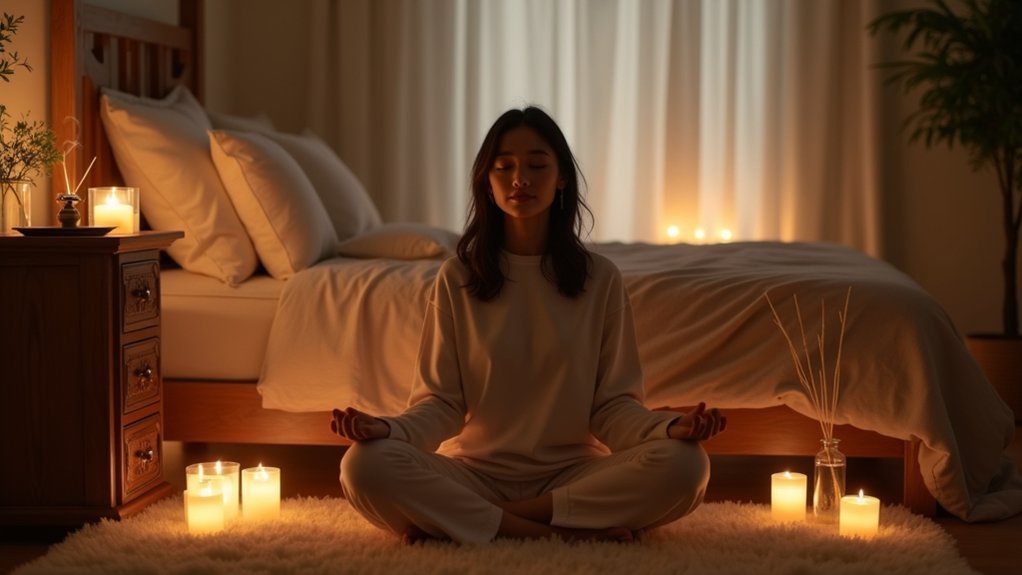
You can calm bedtime anxiety through proven mindfulness exercises that target both your racing mind and tense body. Start with the 4-7-8 breathing technique to activate your relaxation response, then practice a body scan meditation to systematically release physical stress from each muscle group. Progressive muscle relaxation involves tensing and releasing muscles to mirror mental calm, while guided visualization redirects anxious thoughts to peaceful imagery. These techniques strengthen your nervous system’s ability to shift into sleep mode naturally.
Understanding How Bedtime Anxiety Disrupts Sleep Quality
When you settle into bed each night, your mind might begin racing with tomorrow’s worries or replaying the day’s events, creating a perfect storm for bedtime anxiety. This mental turbulence affects your sleep quality by preventing the natural shift into restful sleep.
Racing thoughts trigger elevated cortisol levels, which disrupt your circadian rhythm and keep your nervous system in an alert state when it should be winding down.
The stress from bedtime anxiety creates a vicious cycle—poor sleep increases anxiety, which further compromises sleep quality. Your body can’t achieve the deep relaxation necessary for restorative rest.
However, mindfulness practices offer an effective solution. Regular mindfulness exercises help you manage anxious thoughts by redirecting focus to the present moment, breaking the cycle of worry that prevents peaceful sleep.
Body Scan Meditation for Physical Tension Release
As you lie in bed with tension gripping your shoulders and jaw, a body scan meditation can systematically guide you through releasing the physical stress you’ve accumulated throughout the day.
Body scan meditation systematically releases physical stress accumulated throughout the day by guiding you through each tense area.
This practice involves systematically focusing on each body part, noticing physical sensations without judgment, and consciously letting go of tightness.
Starting from your toes and moving upward, you’ll identify areas holding stress and breathe into them to release tension.
Just 10-20 minutes of this mindfulness exercise can calm the nervous system and improve sleep quality considerably.
Regular practice strengthens your mindfulness skills, helping you manage anxiety more effectively.
Research shows body scan meditation can reduce stress by lowering cortisol levels, creating ideal conditions for restful sleep.
Deep Breathing Techniques to Activate Relaxation Response
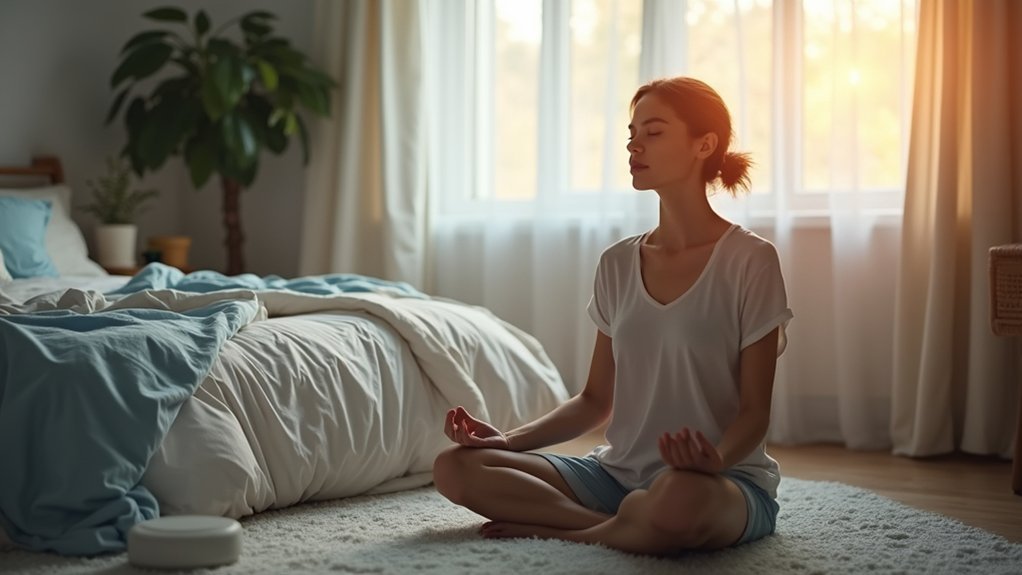
While your mind races with anxious thoughts, your breath holds the key to releasing immediate calm through your body’s built-in relaxation response.
Deep breathing activates this natural system, making it essential for bedtime anxiety relief.
Start with diaphragmatic breathing by placing one hand on your chest, another on your belly. Breathe so only your lower hand moves, engaging your diaphragm for maximum efficiency.
Try the 4-7-8 breathing technique: inhale for four counts, hold for seven, exhale for eight. This pattern controls your breath speed and triggers relaxation.
Practice ten slow deep breaths to ease anxiety feelings.
These breathing exercises become more effective with gradual practice. Incorporating them into your calming bedtime routine signals your body to shift into sleep naturally.
Progressive Muscle Relaxation for Mind-Body Calm
Physical tension often mirrors mental anxiety, creating a cycle where tight muscles fuel worried thoughts that keep you awake. Progressive muscle relaxation breaks this pattern by systematically tensing and releasing muscle groups, creating profound mind-body calm that prepares you for deep rest.
| Muscle Group | Technique |
|---|---|
| Toes & Feet | Curl toes tightly for 5 seconds, then release completely |
| Legs & Thighs | Tense leg muscles while breathing deeply, then let go |
| Stomach & Core | Contract abdominal muscles, hold, then relax fully |
| Shoulders & Arms | Raise shoulders to ears, clench fists, then drop |
This meditation practice reduces physiological symptoms of anxiety while enhancing sleep quality. Spend 10-20 minutes moving through each body region, combining controlled breathing with intentional relaxation to achieve lasting calm.
Guided Visualization to Quiet Racing Thoughts

When racing thoughts cycle endlessly through your mind at bedtime, guided visualization offers a gentle redirect that transforms mental chaos into peaceful imagery.
Guided visualization gently redirects restless minds from bedtime chaos toward tranquil mental imagery that promotes peaceful sleep.
This mindfulness exercise involves creating detailed mental scenes—like walking through a tranquil forest or lounging on a serene beach—that capture your attention and quiet anxious thinking.
As you immerse yourself in calming imagery, your mind shifts away from bedtime worries toward peaceful scenarios. This focused attention triggers your body’s relaxation response, reducing anxiety and stress hormones that keep you alert.
Regular practice of guided visualization retrains your brain to associate bedtime with tranquility rather than tension.
Research shows this technique markedly improves sleep quality by helping you shift from mental agitation to restful calm, making it an invaluable tool for managing nighttime anxiety.
Mindful Movement and Gentle Stretching Before Bed
As tension accumulates in your muscles throughout the day, mindful movement and gentle stretching before bed creates a powerful bridge between your active hours and restorative sleep. This daily mindfulness practice helps relax the body while signaling it’s time to shift into sleep.
Gentle stretching increases blood flow and flexibility, alleviating discomfort that interferes with rest. When you combine mindful movement with sleep meditation techniques, you’ll calm the mind and reduce symptoms of anxiety and depression. Research demonstrates these exercises enhance relaxation and improve quality of sleep by reducing insomnia.
| Practice | Benefits |
|---|---|
| Gentle yoga poses | Releases muscle tension, promotes flexibility |
| Tai chi movements | Calms nervous system, reduces racing thoughts |
| Simple stretches | Improves circulation, signals bedtime routine |
Present-Moment Awareness to Stop Worry Cycles
Racing thoughts about tomorrow’s presentation or replaying today’s mistakes can trap your mind in exhausting worry cycles that make sleep feel impossible. Present-moment awareness breaks this pattern by helping you recognize anxious thoughts without getting caught in them.
Try focused breathing to anchor yourself in the now. When insomnia-inducing thoughts arise, acknowledge them and gently return attention to your breath. This simple shift stops worry spirals before they intensify your bedtime anxiety.
Body scan meditation enhances this practice by directing awareness through your body systematically. You’ll identify where stress accumulates and consciously release physical tension.
Regular mindfulness practices throughout your day build non-reactivity skills, creating a calm mindset that naturally lets go of stressors when bedtime arrives.
Creating a Consistent Mindful Evening Ritual
You’ll find that establishing the same mindful activities each night creates a powerful signal to your body that it’s time to prepare for sleep.
The key isn’t just what you do, but when you do it—starting your ritual at the same time every evening helps your internal clock recognize this shift period.
Whether you choose meditation, gentle stretching, or breathing exercises, consistency in both timing and practice transforms these activities into reliable anchors that guide you from the day’s stress into peaceful rest.
Establishing Nightly Routines
When your mind churns with anxious thoughts at bedtime, establishing a consistent mindful evening ritual becomes your most powerful tool for reclaiming peaceful sleep.
Creating nightly routines that incorporate mindfulness exercises transforms your body’s natural response to anxiety, signaling it’s time to release tension and embrace relaxation.
Start with deep breathing techniques thirty minutes before bed, allowing your nervous system to shift from alertness to calm.
Follow this with gentle body scan meditation, systematically releasing physical stress from each muscle group.
Consistency strengthens these neurological pathways, making sleep preparation automatic over time.
Your mindful routine becomes a sanctuary where worries dissolve, replaced by present-moment awareness that guides you effortlessly toward restorative rest.
Timing Your Practice
The exact timing of your mindfulness practice can make or break its effectiveness in calming bedtime anxiety. Starting your evening routine 30-60 minutes before your consistent bedtime creates the ideal window for mindfulness exercises to work their magic.
Picture this ideal timing sequence:
- 9:00 PM – Begin deep breathing exercises to signal your body it’s winding down.
- 9:15 PM – Practice body scan meditation to release physical tension.
- 9:45 PM – Engage in gentle stretching while maintaining mindful awareness.
When you practice these techniques at the same time nightly, you’ll train your nervous system to anticipate relaxation. This consistency helps you shift into sleep more naturally and manage anxiety effectively.
Your body learns to recognize these cues, making bedtime less stressful.
Managing Sleep-Related Thoughts Without Judgment
As night approaches and your mind begins racing with worries about falling asleep, practicing non-judgmental observation of these thoughts becomes essential for breaking the cycle of bedtime anxiety. Mindfulness encourages you to acknowledge sleep-related thoughts without becoming entangled in them, creating mental space for relaxation.
| Technique | Action | Benefit |
|---|---|---|
| Focused Breathing | Observe thoughts while maintaining breath awareness | Reduces anxiety intensity |
| Guided Meditation | Follow structured practice to release worries | Enhances present-moment awareness |
| Visualization | Imagine concerns floating away like clouds | Redirects focus from stress to calm |
| Non-judgmental Observation | Notice thoughts without criticism or resistance | Strengthens ability to let go |
Regular mindfulness practices at bedtime help you recognize insomnia-inducing thoughts and approach sleep with tranquility, ultimately improving your sleep quality.
Frequently Asked Questions
How Do You Practice Mindfulness Before Bed?
You’ll practice mindfulness before bed by doing deep breathing exercises, body scan meditations, or visualization techniques. Create a consistent evening ritual with guided meditation, gentle stretching, or journaling to signal your body it’s time to rest.
How to Calm Anxiety With Mindfulness?
You’ll calm anxiety by practicing 4-7-8 breathing, body scan meditation, and visualization exercises. Don’t suppress worrisome thoughts—acknowledge them instead. Focus on physical sensations, picture worries floating away, and you’ll create peaceful mental space for relaxation.
How Do You Meditate for Sleep Anxiety?
You’ll start with deep breathing exercises like the 4-7-8 technique to activate relaxation. Practice body scan meditation to release tension, then use visualization to imagine worries floating away, creating peaceful mental space for sleep.
How to Practice Mindfulness in the Bedroom?
You’ll transform your bedroom into a mindful sanctuary by dimming lights, removing electronic devices, and practicing gentle breathing exercises. Focus on body sensations, visualize peaceful scenes, and establish consistent relaxation rituals.


