

You’ll maintain healthy spinal alignment during travel by following five key positions. In airplane seats, sit straight with lumbar support and recline slightly while keeping feet flat. For car travel, position hips higher than knees and add back cushions. Sleep on your side with a pillow between knees in hotel beds. Stand with weight evenly distributed and take walking breaks every hour. When handling luggage, bend your knees and engage core muscles. These techniques will transform your travel comfort experience.
Optimal Airplane Seat Positioning for Spine Support
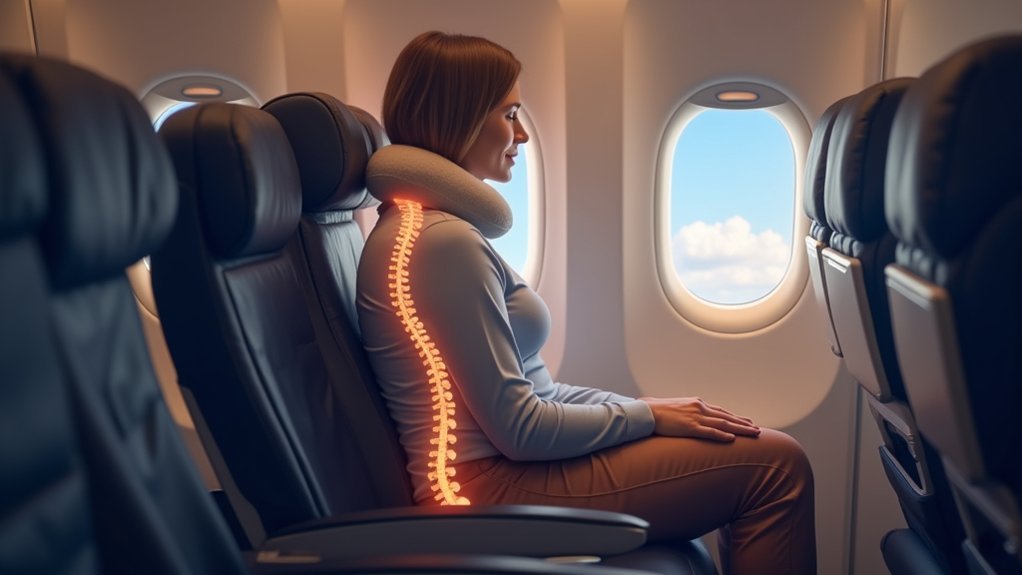
When you’re settling into your airplane seat for a long flight, proper spinal positioning becomes essential for preventing discomfort and maintaining your back’s health.
Start by sitting with your back straight against the seat, ensuring adequate lumbar support. Use a rolled towel or specialized cushion to support your lower back if needed. Keep your feet flat on the floor with knees at 90 degrees to promote proper posture and spinal alignment.
Related guide: Best Travel Pillows That Actually Help You Sleep on Planes (Finally!)
Recline your seat slightly to reduce pressure while maintaining ear-to-shoulder alignment. A travel pillow helps prevent neck strain during long periods of sitting.
Remember to stand and stretch hourly to alleviate tension and promote circulation. These simple adjustments considerably impact your spinal health throughout your journey.
Car Travel Posture Techniques for Long Drives
How can you maintain proper spinal alignment during those marathon road trips that stretch for hours? Proper posture during extended periods of car travel requires strategic positioning to prevent back pain and reduce tension throughout your spine.
Related guide: Best Portable Travel Humidifiers That Keep Hotel Air From Drying You Out
Position your seat so your hips sit slightly higher than your knees, promoting natural spinal curves. Add lumbar support using an ergonomic cushion or rolled towel to maintain your lower back’s arch and prevent slouching. Your headrest should support the middle of your head without pushing it forward.
| Body Part | Position | Benefit |
|---|---|---|
| Hips | Slightly higher than knees | Promotes spinal alignment |
| Lumbar | Supported with cushion/towel | Maintains natural curve |
| Head | Centered on headrest | Reduces neck strain |
| Feet | Flat on floor | Improves circulation |
Take breaks every two hours to stretch and walk, keeping your back healthy during long-distance travel.
Hotel Bed Sleep Positions to Maintain Alignment

After hours of maintaining proper posture on the road, you’ll need to continue protecting your spine once you reach your hotel destination.
Your hotel bed sleep position directly impacts spinal alignment throughout the night. When sleeping on your side, place a lumbar pillow between your knees to keep hips aligned and reduce strain on your lower back.
For back sleepers, use a supportive pillow that maintains neutral neck positioning and consider placing a cushion under your knees.
Avoid stomach sleeping, as it causes neck pain and spinal misalignment. Choose a firm mattress when possible, as soft surfaces create sinking and poor alignment.
Practice gentle stretches before bed and upon waking to maintain healthy spinal flexibility and minimize stiffness from unfamiliar surfaces.
Standing and Walking Positions During Travel Breaks
Those essential travel breaks provide crucial opportunities to counteract the spinal compression and muscle tension accumulated during long periods of sitting.
When standing during these breaks, distribute your weight evenly between both feet to promote proper posture and reduce lower back strain. Keep your knees slightly bent rather than locked to maintain flexibility and prevent stiffness.
Engage your core muscles while standing to support your spine and maintain neutral pelvis positioning, which helps alleviate tension throughout your back.
Core muscle activation during standing breaks creates essential spinal support and promotes proper pelvic alignment to reduce back tension.
Take short walks lasting 5-10 minutes every hour to boost circulation and combat muscle tension buildup.
Incorporate gentle stretches like overhead reaches or side bends during your standing breaks. These movements improve flexibility and provide significant spine care by relieving accumulated tension in your back and shoulders.
Luggage Handling Positions to Prevent Back Strain

Beyond maintaining proper posture during breaks, your approach to handling luggage greatly impacts spinal health throughout your journey. When lifting heavy bags, bend at your knees and keep loads close to your body. This technique will help alleviate tension in your lower back while maintaining spinal alignment.
Always engage your core muscles to provide additional spine support and prevent back strain. Use both hands to distribute weight evenly across your body, avoiding muscular imbalances that cause pain.
Push rather than pull wheeled luggage whenever possible – this maintains better body mechanics and keeps your spine in neutral position. Remember that proper posture is essential even during brief luggage handling moments.
Consider using a lumbar pillow to support your back when sitting after lifting, and take regular breaks to reset your alignment.
Frequently Asked Questions
Which Position Helps Improve Spinal Alignment?
You’ll improve spinal alignment by sitting with both feet flat on the ground, using lumbar support, keeping your head over shoulders, and ensuring your knees and hips bend at ninety degrees.
How to Travel With Spinal Stenosis?
Choose seats with adjustable lumbar support and use ergonomic pillows. Take frequent breaks to walk and stretch. Stay hydrated throughout your journey. Consult your healthcare provider beforehand for personalized travel recommendations and pain management strategies.
How Do I Naturally Realign My Spine?
You can naturally realign your spine through gentle stretching like cat-cow poses, practicing good posture, strengthening core muscles with isometric exercises, and taking regular movement breaks to reduce stiffness.
How to Train for Proper Spinal Alignment?
You’ll build proper spinal alignment by practicing core-strengthening exercises like planks daily, stretching your back and hips regularly, and incorporating yoga or Pilates to develop muscle memory for maintaining correct posture consistently.


