
White noise volume directly impacts your sleep quality because the wrong level can either fail to mask disruptive sounds or become a distraction itself. You’ll fall asleep 40% faster when your white noise stays between 50-60 decibels for adults or 40-45 decibels for children. Volumes exceeding 65 decibels actually increase stress and can worsen conditions like tinnitus, while too-quiet settings won’t effectively block household noises. Understanding these precise volume guidelines will transform your nightly rest experience.
The Science Behind White Noise Volume and Sleep Quality
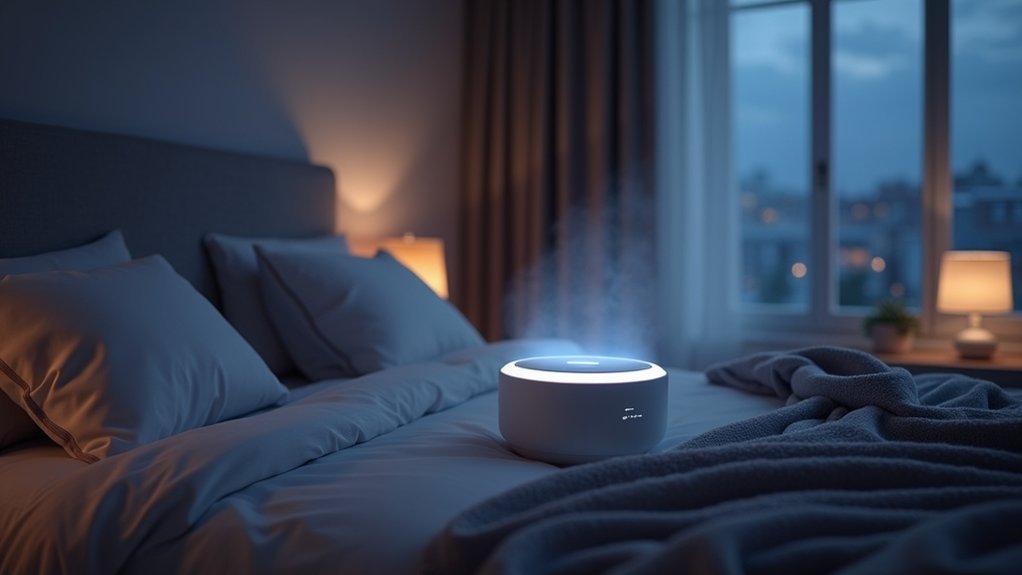
Although white noise has gained popularity as a sleep aid, the volume at which you play it determines whether it’ll enhance or hinder your rest.
Research shows you’ll fall asleep 40% faster when white noise is set at a suitable level between 50–60 decibels for adults. This volume effectively masks disruptive sounds while blending into background noise, improving your sleep efficiency without becoming distracting.
For infants, you should use lower volumes around 40–45 decibels to protect their sensitive hearing.
When you exceed 65 decibels, white noise can increase stress levels and worsen tinnitus symptoms, undermining sleep quality.
The key lies in finding that sweet spot where masking sounds work effectively while remaining unobtrusive throughout your sleep cycle.
How Volume Levels Impact Sleep Onset and Duration
While finding the ideal white noise volume creates the foundation for better sleep, understanding how different volume levels directly affect when you fall asleep and how long you stay asleep reveals the practical impact on your nightly rest. Research shows you’ll fall asleep 40% faster using suitable volume levels that effectively mask disruptive sounds without becoming intrusive background noise.
| Volume Range | Sleep Impact |
|---|---|
| 50-60 dB (adults) | Faster sleep onset, improved quality |
| 40-45 dB (children) | Calming environment, reduced discomfort |
| Over 65 dB | Increased stress levels, hearing damage |
When white noise blends seamlessly into your environment rather than demanding attention, you’ll experience longer sleep duration with fewer disturbances. However, prolonged exposure to excessive volume levels creates the opposite effect, elevating stress and compromising both sleep quality and overall rest.
Finding Your Personal White Noise Sweet Spot
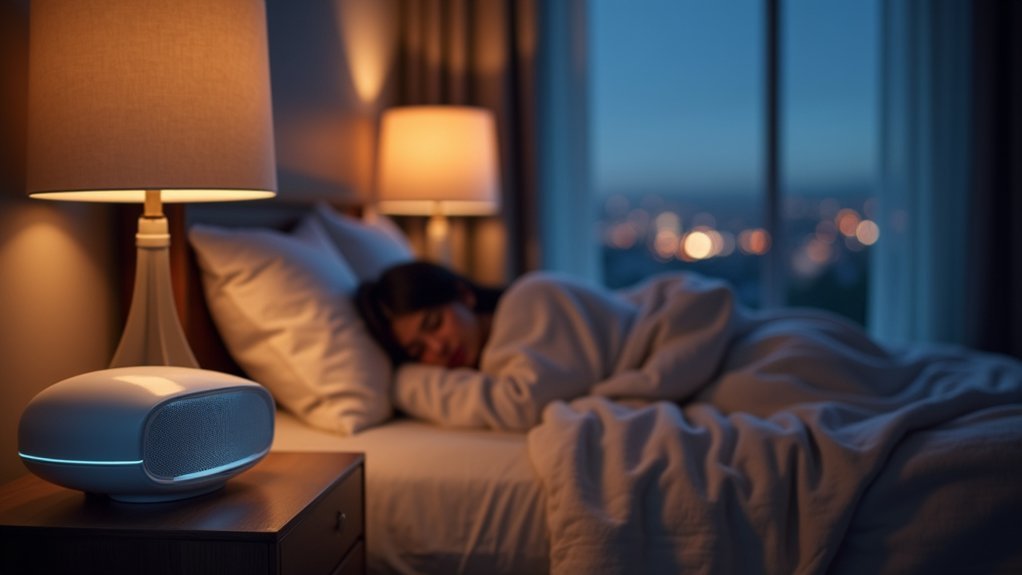
How do you discover the precise white noise volume that transforms your sleep experience from restless to restorative? Start at 46 decibels—comparable to a quiet conversation—then adjust based on your personal preferences and environment.
Adults should maintain ideal levels between 50-60 decibels for effective masking sounds, while keeping children’s white noise at 40-45 decibels to protect developing hearing.
Test different volume settings to find your comfortable level that blocks disruptive noises without causing strain. Remember that individual tolerance varies considerably, so what works for others mightn’t suit you.
Position your machine at least seven feet from infants’ beds for safety. Monitor your sleep quality over several nights, adjusting incrementally until you achieve consistent, restorative rest.
Decibel Guidelines for Safe Nighttime Sound Levels
Understanding proper decibel limits guarantees you’re protecting your hearing while achieving better sleep quality.
For adults, safe white noise volume levels range from 40 to 60 decibels during nighttime hours. You’ll want to aim for 50-60 dB, which sounds like a quiet conversation.
Children require lower settings—keep their white noise between 40-45 decibels, resembling a refrigerator’s hum.
For babies, you must maintain volume under 45 dB and position the noise source at least seven feet away to ascertain hearing safety.
Never exceed 70 decibels for prolonged exposure, as this causes hearing damage and increased stress.
NIOSH specifically warns against extended exposure above 85 decibels. These guidelines protect your auditory health while maximizing sleep benefits.
Common Volume Mistakes That Disrupt Sleep
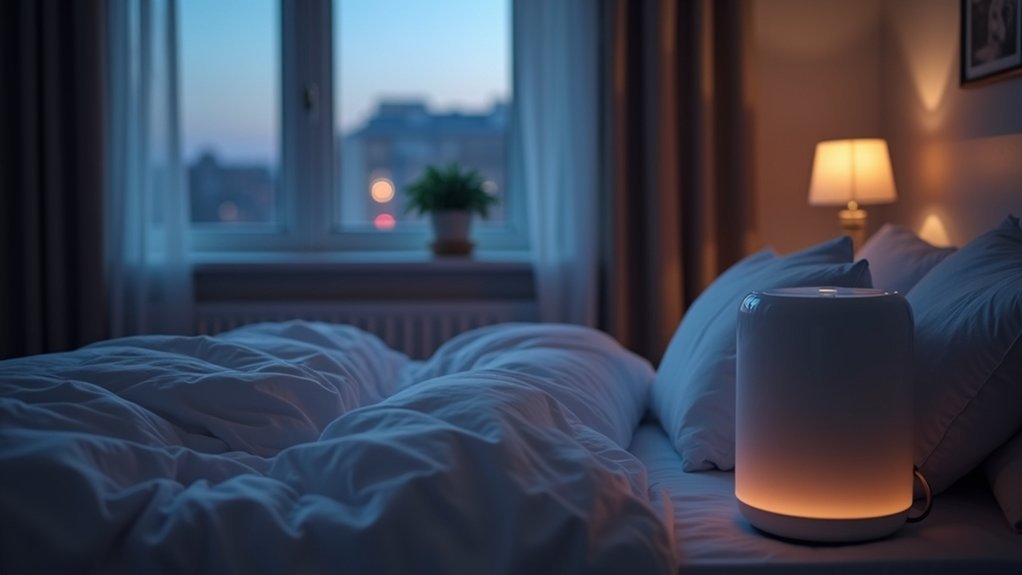
You might think cranking up your white noise machine will block out more disturbances, but volumes above 70 decibels actually increase stress levels and disrupt the very sleep you’re trying to protect.
Another common error is placing the device too close to your bed, which amplifies the sound beyond safe levels and can worsen conditions like tinnitus.
These positioning mistakes often turn a helpful sleep aid into a source of potential hearing damage.
Too Loud Causes Stress
Although white noise can enhance sleep quality, cranking up the volume beyond 65 decibels transforms this helpful tool into a stress-inducing disruption.
When you exceed this threshold, your body responds with elevated stress levels, increasing heart rate and blood pressure that sabotage restful sleep. The ideal white noise volume should blend seamlessly as background noise around 50-60 decibels for adults, maintaining comfort without overstimulation.
For children, you’ll want even lower levels at 40-45 decibels to protect their developing auditory systems. Prolonged exposure to volumes above 85 decibels risks permanent hearing damage.
Positioning Mistakes Amplify Sound
Smart placement of your white noise machine matters just as much as selecting the right volume level. Positioning your device too close to the bed creates direct impact from sound exposure, often pushing volume levels beyond the safe range of 40-60 decibels. This excessive volume disrupts sleep quality rather than enhancing it.
You’ll achieve better results by placing your white noise machine in a corner, which diffuses sound evenly throughout the room. This positioning creates a soothing environment without overwhelming your ears with concentrated noise.
When you position the device correctly, you can maintain lower volume levels while still masking external disturbances. Proper positioning helps establish a calming atmosphere that promotes restful sleep without the stress of overpowering sound.
Adjusting White Noise Volume for Different Sleep Environments
While your bedroom might feel like a controlled environment, different sleep spaces require thoughtful volume adjustments to maximize white noise’s benefits.
You’ll want to maintain white noise volume around 50–60 dB for adults—similar to quiet conversation—ensuring comfort levels without risking hearing damage.
When adjusting volume for children, keep it between 40–45 dB, like a refrigerator’s hum, protecting their developing auditory systems.
For infants, position the sound source at least seven feet away with volume under 45 dB.
Elderly individuals may need slightly higher volumes but shouldn’t exceed 65 dB to protect their health.
Different sleep environments affect how background noise travels, so continuously monitor and adjust based on your specific space to achieve ideal sleep quality.
Age-Specific Volume Recommendations for Better Rest
Because your age greatly impacts how your auditory system processes and tolerates sound, you’ll need to adjust white noise volume recommendations according to specific developmental and physiological needs.
For better rest as an adult, maintain levels between 50-60 decibels—similar to quiet conversation.
Children require more careful age-specific considerations, with volumes set at 40-45 decibels to protect developing hearing.
If you’re caring for babies under six months, keep white noise at maximum 45 decibels and position devices seven feet away for safety.
Elderly individuals may need slightly higher volumes but shouldn’t exceed 65 decibels to prevent hearing damage.
Volume Settings for Light vs. Heavy Sleepers
Your sleep sensitivity directly impacts the white noise volume that’ll work best for you.
If you’re a light sleeper, you’ll want to keep volumes around 40–45 dB—roughly the sound of a refrigerator hum—to mask disturbances without overstimulating your sensitive hearing.
Heavy sleepers can handle slightly higher volumes of 50–60 dB, similar to a quiet conversation, which provides more effective sound masking while remaining comfortable.
Light Sleeper Needs
Since light sleepers wake more easily from environmental disturbances, they require carefully calibrated white noise volumes that won’t overstimulate their sensitive sleep systems.
You’ll find ideal volume settings between 40-45 dB—comparable to a refrigerator’s hum—create a soothing environment without overwhelming your heightened auditory sensitivity. This appropriate volume helps you fall asleep 40% faster while maintaining sleep efficiency throughout the night.
Your white noise should feel almost invisible yet provide consistent sound that masks disruptive noises.
Avoid exceeding 65 dB, as prolonged exposure increases stress levels and actually disrupts your sleep quality. The key is finding that sweet spot where the sound remains present enough to block sudden disturbances but gentle enough to promote restful sleep without causing additional stimulation to your already sensitive system.
Heavy Sleeper Requirements
Heavy sleepers face the opposite challenge—they need more substantial white noise volume to penetrate their natural resistance to auditory disturbances.
You’ll typically require 50-60 decibels, equivalent to quiet conversation levels, to effectively mask disruptive sounds that could interrupt your sleep. Unlike light sleepers who need gentler background volume, your threshold demands higher settings to create a preferable environment for restful sleep.
However, don’t exceed 70 decibels during prolonged exposure, as this poses hearing risks.
Finding your comfortable volume requires experimentation—start at 50 decibels and gradually increase until environmental disturbances fade.
Remember that your ideal setting differs greatly from light sleepers’ requirements.
Position your white noise machine strategically to achieve consistent background volume throughout your bedroom, ensuring uninterrupted sleep cycles.
Positioning Your White Noise Machine for Optimal Volume Distribution
While volume settings matter greatly, where you place your white noise machine can make or break your sleep experience.
Ideal placement creates an immersive environment that transforms disruptive noises into effective sound masking without overwhelming your senses.
Your white noise machine’s positioning directly affects how background noise distributes throughout your space.
Room acoustics play a vital role—hard surfaces reflect sound while soft furnishings absorb it, influencing your perception of the volume setting.
For best results:
- Position your machine in a corner to distribute sound evenly
- Maintain at least 7 feet distance from your bed
- Set volume to quiet conversation levels (50-60 dB)
- Experiment with different locations based on your room’s layout
This strategic approach creates a soothing backdrop that accommodates individual preferences while maximizing sleep quality.
Measuring and Monitoring Your White Noise Volume Levels
Even with perfect placement, you’ll need to confirm your white noise machine operates at safe, effective volume levels. Monitoring decibels confirms you’re within the safe range while maximizing sleep benefits without risking hearing damage.
| Age Group | Recommended Volume |
|---|---|
| Adults | 50-60 decibels |
| Children | 40-45 decibels |
| Starting Level | 46 decibels |
Sound level monitoring apps or dedicated devices help track your white noise exposure accurately. Adults should maintain volume levels similar to quiet conversation, while children need softer settings resembling refrigerator hums. Consistently check that levels don’t exceed 65 decibels, as prolonged exposure above this threshold can increase stress and cause auditory issues. Regular monitoring protects your hearing while preserving the restorative effects of white noise.
Frequently Asked Questions
Does the Volume of White Noise Matter?
Yes, white noise volume notably matters for your sleep quality and safety. You’ll want to keep it around 50-60 decibels for adults, as louder volumes can damage your hearing and increase stress levels.
What Decibel Should White Noise Be for Sleep?
You should set white noise between 50-60 decibels for adults, similar to quiet conversation levels. For children, keep it at 40-45 decibels, and place infant sources seven feet away for safety.
Why Do I Need Loud White Noise to Sleep?
You need loud white noise because you’re likely in a noisy environment where softer sounds can’t effectively mask disruptive noises that wake you up or prevent deep sleep.
What Volume Should You Listen to White Noise?
You should set white noise at 50-60 decibels for adults and 40-45 decibels for children. Start around 46 decibels, then adjust for comfort while keeping it as background noise, not distraction.


