

You can enhance your sleep quality using three specific binaural beat frequencies. Delta waves (1-4 Hz) synchronize your brainwaves for deeper NREM sleep stages while reducing cortisol by 70% and boosting melatonin production by 73%. Theta waves (4-8 Hz) optimize REM cycles, improving dream quality and emotional processing. Alpha waves (8-13 Hz) calm mental chatter and reduce pre-sleep anxiety, creating smoother shifts from wakefulness to sleep. These scientifically-backed frequencies offer thorough sleep improvement when properly integrated into your evening routine.
Delta Wave Binaural Beats for Deep Sleep Enhancement
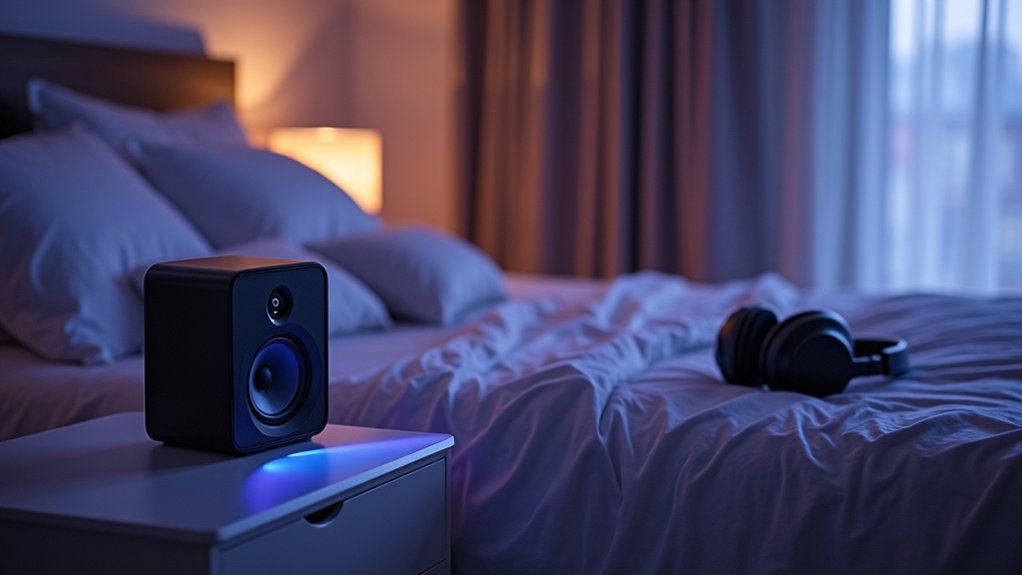
When you’re struggling to achieve the deep, restorative sleep your body craves, delta wave binaural beats offer a scientifically-backed solution that works by synchronizing your brainwave activity to frequencies between 1 and 4 Hz.
Research shows that listening to 3 Hz binaural beats greatly increases delta brainwave activity, enhancing deeper NREM sleep stages and overall sleep quality.
Related guide: Best Sound Therapy Machines for Binaural Beats
Studies demonstrate that 3 Hz binaural beats significantly boost delta brainwave activity, promoting deeper NREM sleep phases and improved sleep quality.
The benefits extend beyond relaxation. Studies reveal that 68% of participants experienced increased DHEA levels, while 70% showed reduced cortisol levels after delta wave exposure.
Additionally, 73% demonstrated enhanced melatonin production, facilitating natural sleep onset. By incorporating delta wave binaural beats into your routine, you’ll not only improve deep sleep but also optimize recovery and rejuvenation through enhanced restorative sleep cycles.
Theta Wave Frequencies for REM Sleep and Dream Quality
While delta waves target deep sleep restoration, theta wave frequencies (4-8 Hz) access a different dimension of sleep enhancement by optimizing your REM cycles and greatly improving dream quality.
These binaural beats facilitate deep relaxation, helping you shift smoothly into lighter sleep stages where vivid dreams flourish.
Research shows theta frequencies can greatly boost your REM sleep duration, leading to enhanced cognitive benefits including:
- Improved emotional processing during dream states
- Increased creativity through enhanced neural connectivity
- More memorable and vivid dreams with greater intensity
- Better overall sleep quality with longer REM periods
Incorporating theta wave frequencies into your bedtime routine creates an effective auditory aid that transforms your sleep experience, making each night’s rest more restorative and mentally enriching.
Alpha Wave Patterns for Pre-Sleep Relaxation and Anxiety Reduction

Alpha wave patterns (8-13 Hz) create the perfect bridge between your busy day and restful night, targeting that sweet spot where your mind remains alert yet deeply relaxed.
When you listen to binaural beats designed for alpha waves, you’re actively promoting relaxation and anxiety reduction before bedtime. This exposure to sound helps establish an ideal pre-sleep environment.
Research shows that incorporating alpha wave binaural beats into your nightly routine can greatly enhance sleep quality. You’ll notice improved mood enhancement and increased creativity as these frequencies work to calm your mental chatter.
Alpha wave binaural beats effectively calm mental chatter while enhancing mood and creativity for improved nightly sleep quality.
The gentle shift from wakefulness becomes smoother when you consistently use these therapeutic sounds. By making alpha wave binaural beats part of your evening ritual, you’re setting yourself up for deeper, more restorative sleep.
Frequently Asked Questions
Do Binaural Beats Actually Work for Sleep?
Yes, you’ll likely experience better sleep with binaural beats. They’ll reduce your cortisol levels, increase melatonin production, and promote deeper sleep stages. You’ll fall asleep faster and feel less anxious at bedtime.
What Is the Most Beneficial Sound Frequency to Help Sleep?
You’ll find delta frequencies between 1.5-4 Hz most beneficial for deep sleep, particularly 3 Hz binaural beats. These frequencies sync your brainwaves with natural sleep patterns, enhancing relaxation and improving overall sleep quality.
Which Binaural Beat Is Best for Sleep?
You’ll find 3 Hz binaural beats work best for deep sleep since they boost delta brain waves. For falling asleep easier, try 4-8 Hz theta frequencies that help you shift smoothly into restful slumber.
Who Should Not Listen to Binaural Beats?
You shouldn’t listen to binaural beats if you’ve got epilepsy, auditory processing disorders, sound sensitivity, hyperacusis, or severe mental health issues. Pregnant women should consult healthcare professionals first before trying them.


