
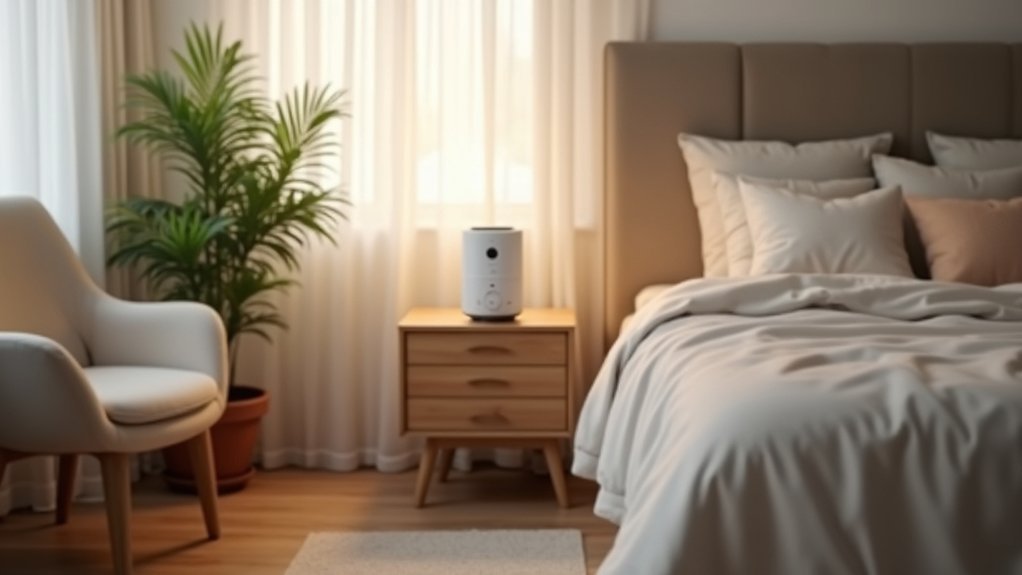
Position your white noise machine 3-6 feet from your bed at a 45-degree angle to create ideal sound dispersion without overwhelming volume. Place it between you and noise sources like windows or doors, using bedside tables for easy access to controls. Keep the device unobstructed by furniture and on stable surfaces to prevent vibration. In larger rooms, consider multiple machines for even coverage, adjusting height and volume based on your room’s acoustics and specific sleep needs for maximum effectiveness.
Position Your Machine 3-6 Feet Away From Your Bed
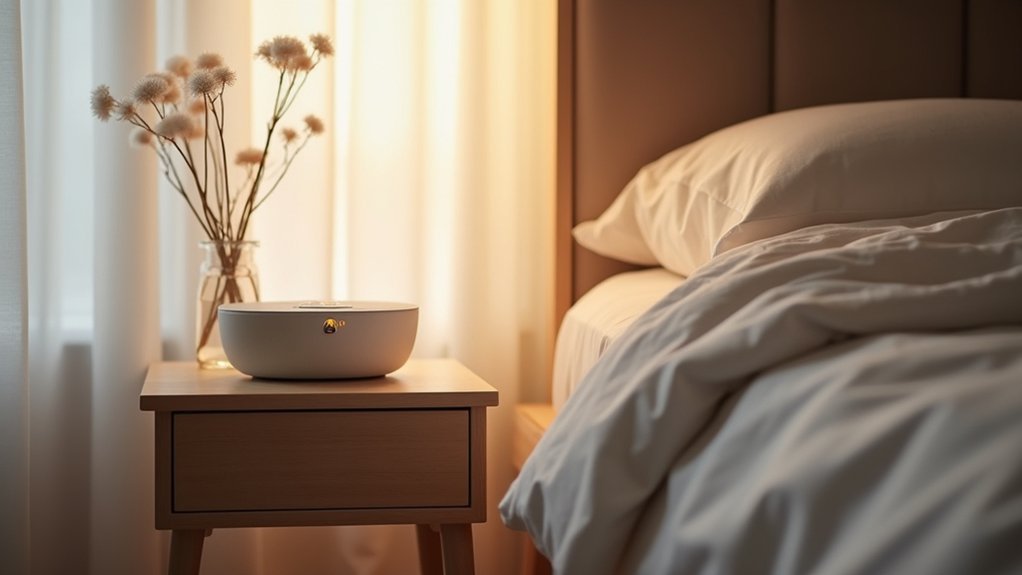
When you’re setting up your white noise machine, positioning it 3-6 feet from your bed creates the perfect sound environment for quality sleep. This distance guarantees even sound distribution throughout your bedroom, effectively masking disruptive noises without becoming overpowering or intrusive.
Keeping white noise machines at least 3 feet away prevents the sound from overwhelming you while maintaining ideal volume levels around 50 decibels. You’ll create a soothing atmosphere rather than an uncomfortable noise source that disrupts rest.
Proper distance creates a soothing sleep atmosphere while preventing overwhelming noise that could disrupt your rest instead of enhancing it.
This strategic placement offers practical benefits too. You can easily adjust volume and settings without leaving your bed, making quick modifications when needed.
The proper spacing allows white noise to blend seamlessly into the background, transforming potential distractions into beneficial sleep aids.
Place Between You and External Noise Sources
You’ll maximize your white noise machine’s effectiveness by positioning it strategically between your bed and the primary sources of disruptive sounds.
Place the device within a few feet of windows, doors, or walls where external noise enters your room to create an acoustic barrier that intercepts unwanted sounds before they reach you.
Consider the machine’s angle and your distance from common noise sources like traffic, neighbors, or outdoor activity to guarantee ideal sound masking throughout your sleep space.
Strategic Barrier Positioning
Since external noise sources like traffic, neighbors, and street activity can considerably disrupt your sleep, positioning your white noise machine as a strategic sound barrier becomes crucial for creating a peaceful bedroom environment.
To maximize your machine’s effectiveness against disruptive noises, follow these strategic positioning guidelines:
- Position between bed and noise source – Place your machine near windows or walls facing traffic, neighbors, or other disturbances to intercept unwanted sounds before they reach your ears.
- Experiment with angles – Adjust the machine’s direction to guarantee sound effectively reaches areas where noise infiltration is most noticeable, enhancing masking capabilities.
- Maintain ideal distance – Keep the device 3–6 feet from your bed so the sound blends naturally without becoming intrusive while still providing effective noise masking.
Distance and Angle
Beyond simply creating a barrier, the precise distance and angle of your white noise machine directly impact how effectively it masks unwanted sounds.
Position your machine 3-6 feet away from your bed to achieve ideal sound distribution without creating intrusive effects that might disrupt your sleep.
The angle matters just as much as distance. Experiment with tilting your machine slightly toward your bed, allowing the white noise to disperse naturally throughout the room rather than directing it straight at you.
This creates more even coverage and prevents the sound from becoming overwhelming.
Adjust both distance and angle based on your room’s layout and the specific noises you’re targeting, ensuring the machine operates within an effective range for neutralizing disturbances.
Common Noise Sources
Strategic placement acts as your first line of defense against disruptive sounds. Position your white noise machine between your bed and the primary noise sources in your environment. This creates an effective sound barrier that intercepts unwanted disturbances before they reach your ears.
Consider these common placement strategies:
- Windows – Place the machine near windows to neutralize traffic noise, barking dogs, or construction sounds from outside.
- Doors – Position it between your bed and bedroom doors to block hallway conversations or household activities.
- Partner’s side – If snoring is an issue, place the white noise machine on your partner’s side of the bed to mask the sound at its source.
Keep the machine a few feet from your head while maintaining proximity to the noise source for ideal effectiveness.
Avoid Direct Placement Next to Your Ear
Tempting as it might be to place your white noise machine right on your nightstand, positioning it too close to your ear can backfire and disrupt your sleep instead of enhancing it.
When the machine’s directly beside your head, the sound becomes intrusive rather than soothing, creating distraction instead of relaxation.
For ideal placement, position your device at least 3-6 feet away from your bed. This distance allows the white noise to blend naturally throughout the room, creating an immersive yet non-overwhelming experience.
You’ll want to angle the machine slightly away from your bed rather than pointing it directly at you.
This strategic positioning enhances sound dispersion and maintains comfortable volume levels that promote restful sleep without becoming bothersome.
Angle Your Device for Natural Sound Dispersion
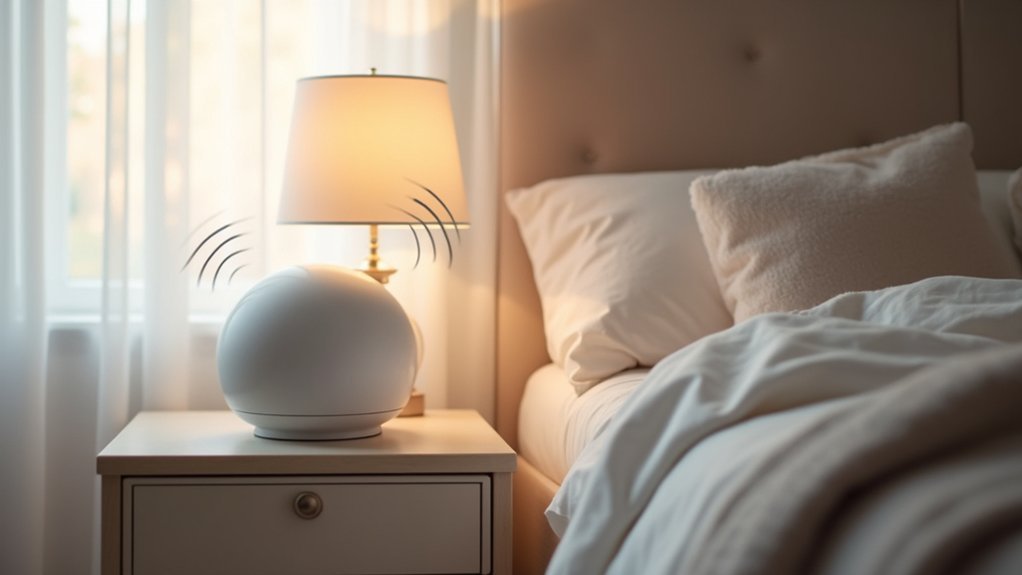
Finding the right distance sets the foundation, but the angle of your white noise machine makes an equally significant impact on sound quality.
You’ll want to position your device strategically to disperse sound waves naturally throughout your bedroom rather than directing them straight at your ears.
Consider these key positioning strategies:
- Tilt at 45 degrees – This angle creates ideal sound coverage while reducing direct intensity on your hearing.
- Use walls and furniture – Let these surfaces help redirect sound waves toward your sleeping area for maximum effectiveness.
- Experiment with direction – Test different angles to find what works best for your room’s unique layout and existing noise sources.
The right angle transforms harsh, concentrated sound into gentle, ambient coverage that seamlessly blends into your sleep environment.
Consider Room Size When Determining Placement
Your room’s size directly impacts where you’ll position your white noise machine for ideal performance.
In smaller bedrooms, you can place the device closer to your bed at lower volumes since sound doesn’t need to travel far to create effective masking.
Larger rooms require different strategies, including greater distances from your bed and potentially higher volume settings to guarantee consistent sound coverage throughout the space.
Small Room Placement
When you’re working with a small bedroom, the compact space actually works in your favor for white noise machine placement. Since sound travels shorter distances in small rooms, you’ll need less volume to achieve effective sound masking throughout the space.
Here are three key placement strategies for small rooms:
- Distance: Position your white noise machine 3–6 feet from your bed for ideal sound blending without overwhelming your sleep environment.
- Volume: Set the machine around 50 decibels, as the shorter sound travel distances allow for effective masking at lower volumes.
- Surface placement: Use a bedside table or nearby surface for easy volume adjustments while maintaining immersive coverage.
Experiment with different heights to enhance sound dispersion and consider adding soft furnishings to prevent echoes.
Large Room Coverage
Large bedrooms present unique challenges since sound disperses differently across expansive spaces, often creating dead zones where disruptive noises can slip through unmasked. You’ll need multiple white noise machines to achieve consistent coverage throughout your large room.
| Placement Strategy | Distance from Bed | Volume Setting |
|---|---|---|
| Multiple units | 3-6 feet each | Medium-high |
| Higher positioning | 4-8 feet | Medium |
| Corner placement | 6+ feet | High |
Position each machine at least 3–6 feet from your sleeping area for ideal sound distribution. Experiment with height and angles—elevated placements disperse white noise more broadly across large rooms. You’ll likely need higher volume settings compared to smaller spaces. Consider your room’s acoustics carefully, as hard surfaces create echoes that require strategic machine placement to minimize distortion.
Use Multiple Machines for Larger Bedrooms
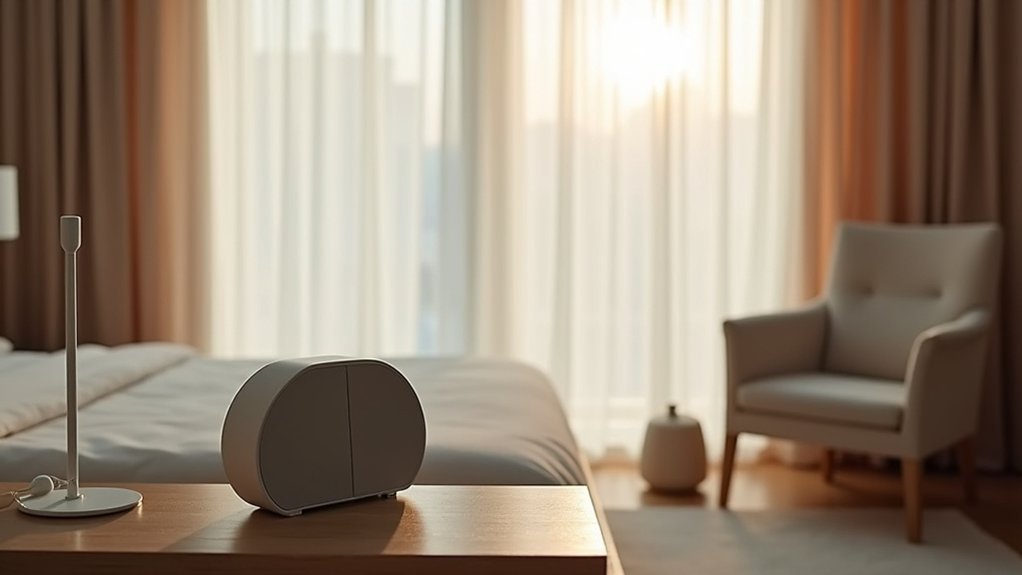
If you have a spacious bedroom, a single white noise machine mightn’t provide adequate sound coverage throughout the entire room.
Using multiple machines guarantees consistent white noise distribution, effectively masking disruptive sounds in all areas of your bedroom.
Here’s how to strategically position multiple machines:
- Place one machine on each side of your bed to create a balanced sound environment and eliminate gaps where external noise could penetrate.
- Position a machine near noise sources like windows or doors to block specific disturbances more effectively.
- Experiment with different placements to find the ideal configuration that covers your entire bedroom space.
Multiple machines also allow you to adjust volume levels for different areas, accommodating your personal preferences while providing the best sound masking throughout your sleeping space.
Adjust Height Based on Sound Frequency Needs
Finding the ideal height for your white noise machine directly impacts its effectiveness at masking specific types of disruptive sounds. For blocking low-frequency noises like traffic or thunder, place your machine lower since these sound waves travel more effectively at ground level.
Position white noise machines lower to effectively block low-frequency sounds like traffic since these waves travel better at ground level.
If you’re dealing with various disruptive sounds, position it higher for broader dispersion throughout your room. A height of 3-4 feet typically provides the best balance between sound coverage and preventing direct ear exposure that might cause distractions.
You’ll need to experiment with different positions since room acoustics vary considerably. Consider your furniture placement too, as surfaces affect how sound travels and gets absorbed.
Test various heights to determine what works best for your specific sound masking needs.
Keep Your Machine Unobstructed by Furniture
After determining the right height for your white noise machine, you’ll need to guarantee nothing blocks its sound output.
Furniture and other obstructions can muffle sound waves, considerably reducing your machine’s effectiveness in masking disruptive noises.
Here are three essential steps to keep your machine unobstructed:
- Position on stable, open surfaces – Place your machine where furniture won’t block sound dispersion, allowing waves to travel freely throughout the room.
- Clear surrounding areas regularly – Remove items that might interfere with sound distribution, as even small objects can diminish performance.
- Check for dust accumulation – Regularly inspect vents and speakers, since dust buildup can affect sound quality and block proper airflow.
Consider your room’s acoustics when you use these placement strategies for ideal sleep enhancement.
Choose Stable Surfaces That Won’t Amplify Vibration
Opt for heavy wooden bedside tables or sturdy shelves to reduce the transmission of unwanted vibrations.
These stable surfaces provide the foundation your machine needs for peak performance. Avoid lightweight plastic or metal furniture that amplifies vibrations and creates noise interference.
Position your machine on flat, level surfaces to guarantee stability and prevent rattling during operation.
Consider using sound-dampening mats underneath to absorb vibrations and enhance clarity.
Regularly check your machine’s placement to maintain secure positioning, as any movement affects performance and sound masking effectiveness.
Ensure Easy Access for Volume and Setting Adjustments
Your white noise machine’s placement should prioritize convenience alongside stability.
Position your white noise machine where comfort meets function, balancing easy reach with secure, stable placement for uninterrupted sleep.
You’ll want your sound machine positioned where you can effortlessly make volume adjustments without disrupting your sleep routine or leaving your bed.
Strategic placement considerations for ideal accessibility:
- Position at bedside table height – Place your device at or near ear level on your nightstand, ensuring the controls remain within arm’s reach for quick volume adjustments during nighttime hours.
- Maintain clear sightlines – Arrange your bedroom layout to avoid obstructions between you and the machine, allowing easy visibility of display screens and control buttons.
- Minimize cable clutter – Keep power outlets nearby to reduce cord length, preventing tangled wires that could impede access to your sound machine’s essential functions and settings.
Frequently Asked Questions
Where to Place a White Noise Machine in a Bedroom?
Place your white noise machine 3-6 feet from your bed on a bedside table. Position it between you and noise sources like windows or doors. Angle it slightly for better sound dispersion throughout your room.
Where Should White Noise Speakers Be Placed?
You should position white noise speakers 3-6 feet from your bed, between you and noise sources like windows. Angle them slightly for better sound dispersion and avoid placing them directly near your ears.
How Far Away Should a White Noise Machine Be Placed?
You should place your white noise machine 3-6 feet from your bed for ideal sound blending. Keep it at least 7 feet from babies’ heads and closer to noise sources like windows.
Is It Okay to Sleep With White Noise All Night?
You can safely sleep with white noise all night. It’ll mask disruptive sounds and maintain consistent audio levels, preventing sudden awakenings. Just keep the volume at 50 decibels or lower.


