

Sunset simulation gradually dims your lights over 30 minutes to mimic nature’s change from day to night, signaling your body to prepare for sleep. This technology triggers your suprachiasmatic nucleus—your body’s master clock—to start producing melatonin naturally. You’ll experience easier sleep onset as the warm, dimming light reduces alertness and strengthens your circadian rhythms. The gradual shift from bright to warm yellow tones creates a powerful cue that enhances your overall sleep quality and establishes consistent bedtime routines.
How Sunset Simulation Mimics Natural Light Patterns
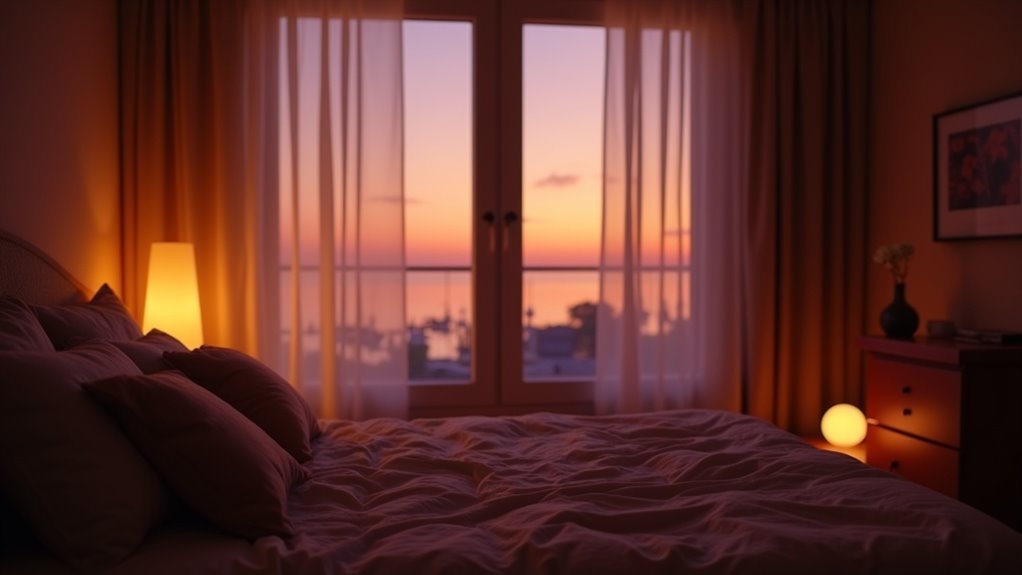
When evening approaches naturally, the sun’s light intensity gradually dims over the course of hours, signaling your body to begin its preparation for sleep.
Sunset simulation replicates this natural process by slowly reducing artificial light over approximately 30 minutes. This controlled dimming triggers your body’s internal clock, helping regulate your circadian rhythms just as nature intended.
As the light fades, your brain receives the signal to increase melatonin production, the hormone that makes you feel drowsy.
Unlike abrupt darkness from switching off lights, sunset simulation creates a smooth shift that supports your natural bedtime routine. This gentle approach considerably improves sleep quality by working with your body’s biological preferences rather than against them, making it easier to fall asleep naturally.
The Science Behind Light and Circadian Rhythm Regulation
Light exposure directly controls your body’s master clock, a cluster of neurons called the suprachiasmatic nucleus located in your brain’s hypothalamus. This master clock regulates your circadian rhythm by responding to light signals throughout the day. When evening arrives, reduced light triggers melatonin production, preparing you for sleep.
| Light Type | Effect on Circadian Rhythm | Sleep Impact |
|---|---|---|
| Blue light (evening) | Disrupts natural signals | Delays sleep onset |
| Warm yellow light | Supports melatonin release | Improves sleep onset latency |
| Sunset simulation | Reinforces natural patterns | Enhances sleep quality |
| Artificial bright light | Suppresses melatonin | Reduces sleepiness |
Sunset simulation works by gradually shifting from bright to warm yellow tones, mimicking nature’s pattern. This progression signals your brain to begin winding down, promoting faster sleep initiation and better overall rest.
Benefits of Gradual Light Reduction for Sleep Quality
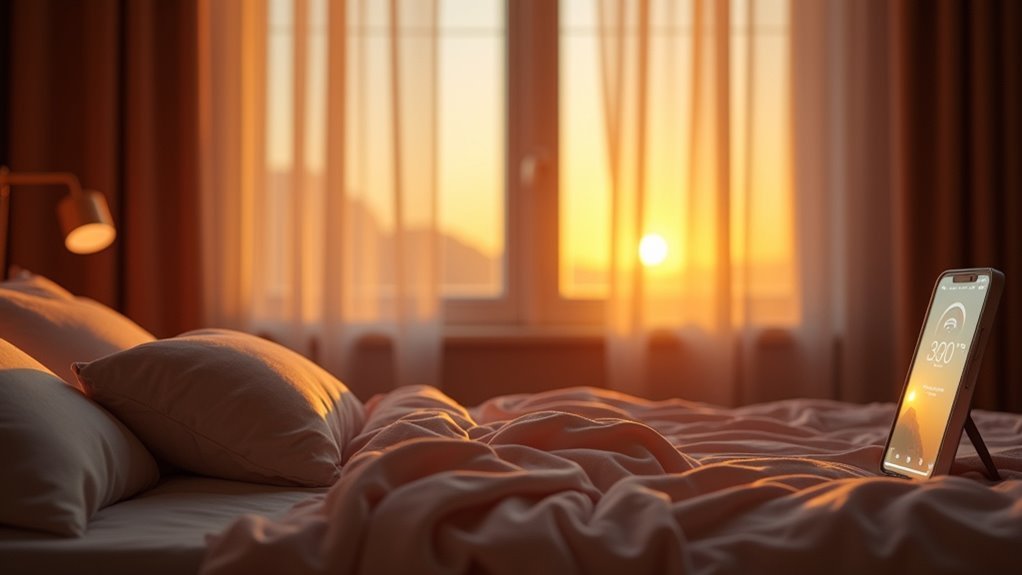
As evening approaches naturally, your body craves the gentle change that gradual light reduction provides. Sunset simulation delivers this by slowly decreasing light intensity, creating a powerful signal that tells your brain it’s time to prepare for rest.
You’ll find it becomes notably easier to fall asleep as this dimming process naturally lowers your alertness and helps regulate melatonin levels.
The benefits extend beyond just falling asleep faster. Regular use of sunset simulation greatly improves your overall sleep quality while reducing troublesome insomnia symptoms.
Most importantly, this consistent light pattern strengthens your circadian rhythms, establishing a more predictable sleep schedule.
You’ll experience enhanced well-being as your body learns to anticipate and embrace this natural change to nighttime rest.
Types of Sunset Simulation Devices and Technology
To achieve these sleep-enhancing benefits, you’ll need the right technology working for you. Sunset simulation devices like Lumie lamps gradually reduce light intensity over 30 minutes, mimicking natural sunsets to promote relaxation.
Sunset simulation devices gradually dim over 30 minutes, replicating natural sunsets to help your body naturally prepare for restful sleep.
You can choose from various options with customizable settings that let you adjust duration and brightness based on your preferences.
The Philips Wake-Up Light stands out by incorporating soothing sounds that fade alongside dimming lights, creating an ideal sleep environment. Advanced models integrate with smart home systems, automating your sunset routines according to your sleep schedule.
These technologies particularly benefit those struggling with insomnia or disrupted circadian rhythms. Research confirms that sunset simulation devices effectively improve sleep quality by supporting your body’s natural wind-down process.
Setting Up Your Evening Light Routine for Optimal Results
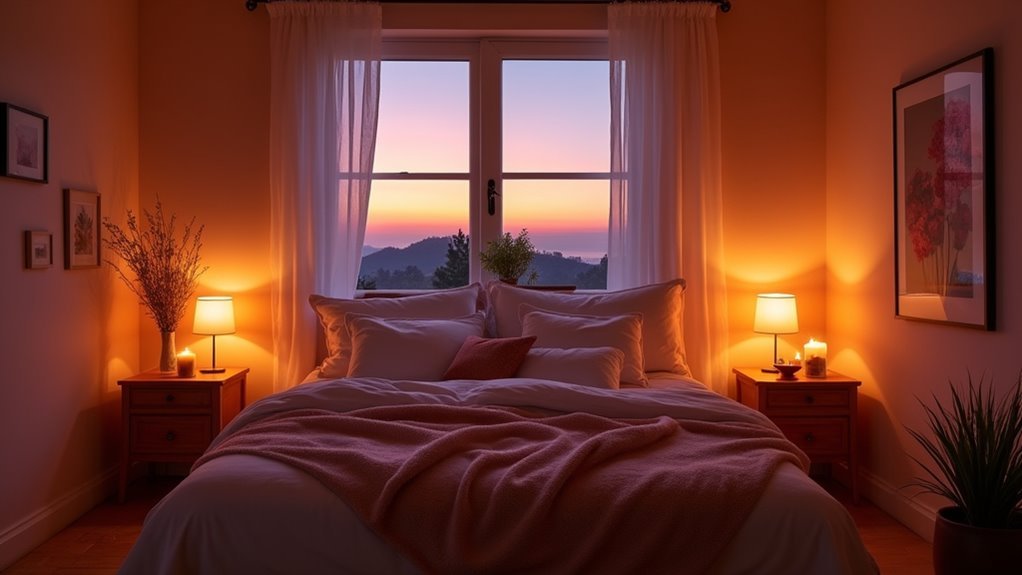
Once you’ve selected your sunset simulation device, creating an effective evening routine requires strategic timing and environmental considerations. Start your sunset simulation 30 minutes before your desired bedtime to gradually dim the light and signal your body to prepare for sleep. This consistent evening light routine helps regulate your circadian rhythms naturally.
| Time | Activity |
|---|---|
| 30 min before bed | Begin sunset simulation |
| 25 min before bed | Add aromatherapy (lavender) |
| 20 min before bed | Start meditation practice |
| 15 min before bed | Continue dimming process |
| Bedtime | Complete darkness |
Combining sunset simulation with aromatherapy and meditation optimizes your wind-down process. Regular use improves sleep quality and establishes healthier sleep habits, reducing sleep onset times considerably while enhancing overall rest.
Real User Experiences and Sleep Improvement Stories
Sleep struggles transformed into restful nights for countless users who’ve integrated sunset simulation into their bedtime routines.
You’ll find remarkable improvements similar to those experienced by others who’ve adopted this technology. Users report dramatic reductions in time needed to fall asleep, dropping from four hours to just 40 minutes within the first month. After six months of consistent use, some achieve sleep onset in 5-10 minutes.
The gradual light dimming creates an ideal environment for managing insomnia symptoms while establishing calming nighttime rituals.
You’ll likely experience enhanced sleep quality, reduced daytime napping, and improved morning alertness. This technology signals your body to wind down naturally, transforming chaotic sleep patterns into predictable, restorative rest cycles.
Combining Sunset Simulation With Other Sleep Optimization Strategies
While sunset simulation alone delivers impressive results, you’ll maximize your sleep benefits by combining it with complementary enhancement strategies.
Creating a thorough approach to sleep optimization enhances how your circadian rhythms respond to evening light changes.
Consider these powerful combinations for better sleep quality:
- Environmental Control: Pair sunset simulation with heavy-duty sleep masks and earplugs to eliminate remaining light and noise disruptions after your session ends.
- Aromatherapy Integration: Add calming lavender scents during your sunset simulation to deepen relaxation and signal your body it’s time for rest.
- Sleep Pattern Monitoring: Track your sleep data alongside your bedtime routine to identify which combinations work best for your individual needs and adjust accordingly.
This multi-layered approach creates ideal conditions for restorative sleep.
Frequently Asked Questions
Does Seeing the Sunset Help You Sleep?
Seeing real sunsets can help you sleep by naturally signaling your body to wind down, but artificial sunset simulation devices offer more consistent, controlled light reduction that’s specifically designed to optimize melatonin production.
What Is the Sun Therapy for Sleep?
Sun therapy for sleep involves exposing yourself to bright light during morning hours to regulate your circadian rhythm, then using sunset simulation devices that gradually dim light in the evening to prepare your body for restful sleep.
Do Sunset Lamps Help You Sleep?
Yes, sunset lamps help you sleep by gradually dimming light to mimic natural sunsets. You’ll fall asleep faster as they lower cortisol levels, boost melatonin production, and establish consistent bedtime routines.
What Is the Best Sleep Schedule for Circadian Rhythm?
You’ll optimize your circadian rhythm by maintaining consistent bedtimes and wake times, ideally sleeping between 10 PM and 7 AM daily. Get morning sunlight exposure and avoid evening screen light for best results.


