

You can treat obstructive sleep apnea effectively with three proven approaches. CPAP therapy provides pressurized air through masks to keep your airways open, considerably reducing sleep interruptions. Oral appliances reposition your jaw or tongue to prevent airway blockage, offering a 50% or greater reduction in breathing episodes for mild to moderate cases. Surgical interventions like uvulopalatopharyngoplasty or hypoglossal nerve stimulation provide permanent solutions when other treatments fail. Each option requires proper fitting and regular monitoring to maximize your treatment success and restore quality sleep.
Continuous Positive Airway Pressure (CPAP) Therapy
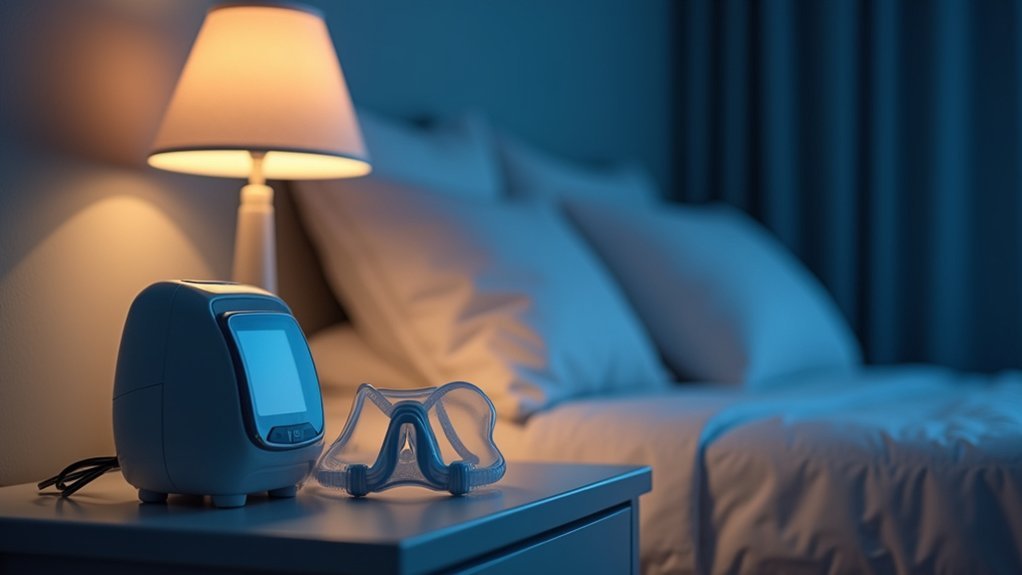
Millions of people with obstructive sleep apnea find relief through Continuous Positive Airway Pressure (CPAP) therapy, the gold standard treatment that delivers a steady stream of pressurized air to keep your airway open while you sleep.
You’ll choose from nasal masks, full-face masks, or nasal pillows, with proper mask fit being vital for comfort and treatment effectiveness.
CPAP greatly reduces your apnea-hypopnea index (AHI), improving sleep quality and reducing daytime sleepiness.
However, adherence is important for success. Your commitment to nightly use directly impacts results, with factors like mask comfort affecting compliance rates.
Regular follow-up appointments with healthcare providers help monitor your progress and adjust settings.
These check-ins guarantee you’re receiving ideal treatment for your obstructive sleep apnea (OSA), maximizing therapy benefits.
Oral Appliances and Dental Devices
While CPAP therapy works well for many patients, oral appliances offer an effective alternative for treating mild to moderate obstructive sleep apnea. These dental devices reposition your jaw or tongue to prevent airway obstruction during sleep.
| Device Type | Function | Best For |
|---|---|---|
| Mandibular Advancement Devices | Move jaw forward | Retrognathia patients |
| Tongue-Retaining Devices | Hold tongue position | High arched palate |
| Custom-fitted appliances | Personalized fit | Maximum comfort |
| Over-the-counter options | Basic repositioning | Mild cases |
| Combination devices | Multiple mechanisms | Complex anatomy |
Custom-fitted options greatly enhance comfort compared to generic alternatives. Studies show these devices can reduce your apnea-hypopnea index by 50% or more, improving sleep quality and reducing daytime sleepiness. Regular follow-up guarantees ideal treatment outcomes through proper adjustments and effectiveness monitoring.
Surgical Interventions and Advanced Procedures
When conservative treatments like CPAP therapy and oral appliances don’t provide adequate relief, surgical interventions offer definitive solutions for obstructive sleep apnea.
You’ll find several surgical options available depending on your specific airway obstruction pattern.
Uvulopalatopharyngoplasty reshapes your soft palate to improve airflow, particularly effective when you have excess throat tissue.
Uvulopalatopharyngoplasty targets soft palate tissue, creating more space for unobstructed breathing during sleep by removing excess throat tissue.
If enlarged tonsils or adenoids cause your obstruction, tonsillectomy and adenoidectomy can provide immediate relief for both children and adults.
For complex anatomical issues, maxillomandibular advancement surgery repositions your jaw to enlarge the airway.
Hypoglossal nerve stimulation offers an innovative solution, implanting a device that prevents airway collapse during sleep.
Careful patient selection guarantees ideal outcomes, as these procedures are typically reserved when non-surgical treatments have failed.
Frequently Asked Questions
What Is the Most Effective Treatment for Obstructive Sleep Apnea?
CPAP therapy is your most effective treatment for obstructive sleep apnea. You’ll considerably reduce apnea events and prevent airway collapse during sleep. If you can’t tolerate CPAP, you’ll find oral appliances effective alternatives.
Which of the Following Is Most Effective in Treating Obstructive Sleep Apnea?
You’ll find CPAP therapy’s the most effective treatment for obstructive sleep apnea. It’s considered the gold standard because it prevents airway collapse during sleep in most adults with this condition.
What Is the Gold Standard Treatment for Obstructive Sleep Apnea?
You’ll find CPAP therapy is the gold standard treatment for obstructive sleep apnea. It delivers continuous pressurized air through a mask, keeping your airway open while you’re sleeping and preventing breathing interruptions.
What Is the First Choice Therapy for Obstructive Sleep Apnea?
You’ll find that CPAP therapy is your first choice treatment for obstructive sleep apnea. It’s considered the gold standard because it effectively keeps your airways open during sleep.


