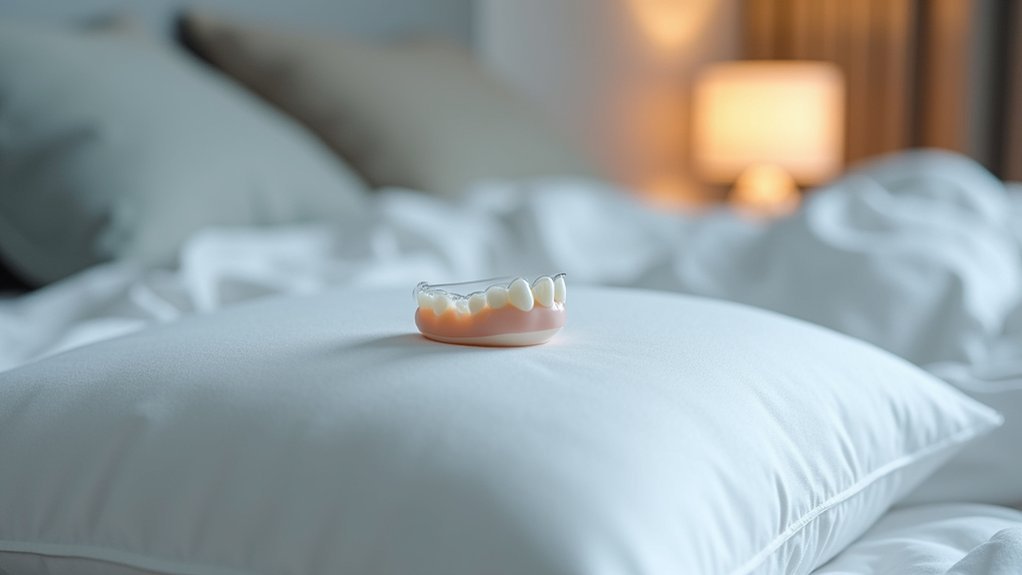
Oral appliance therapy is a non-invasive treatment that uses a custom-fitted device to keep your airway open during sleep. You’ll wear a mouthguard-like appliance that repositions your lower jaw or tongue forward, preventing airway collapse that causes sleep apnea. It’s particularly effective for mild to moderate OSA, with about 70% of users experiencing reduced symptoms. You’ll enjoy better compliance rates than CPAP machines while discovering all-encompassing solutions for your sleep apnea management needs.
Understanding Oral Appliance Therapy for Sleep Apnea
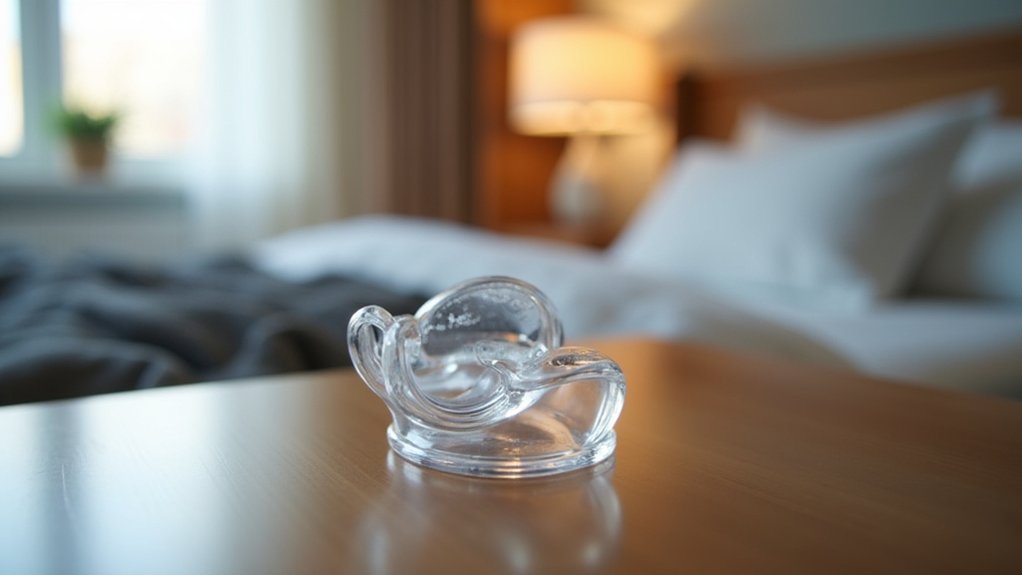
While CPAP machines remain the gold standard for sleep apnea treatment, oral appliance therapy offers a compelling alternative that’s transforming how we approach obstructive sleep apnea (OSA).
This non-invasive treatment works by repositioning your jaw or tongue during sleep, keeping your airway open throughout the night.
The most effective devices are mandibular advancement devices, which pull your lower jaw forward to create more throat space.
Custom-made oral appliances prove considerably more effective than store-bought alternatives, successfully reducing OSA symptoms in approximately 70% of users.
You’ll find this therapy particularly beneficial if you have mild to moderate OSA and struggle with CPAP tolerance.
Types of Oral Appliances Available
The landscape of oral appliances offers two primary categories designed to address your sleep apnea needs.
Mandibular advancement devices (MADs) represent the most common option, repositioning your lower jaw forward to keep your airway open during sleep. You’ll find MADs available in one-piece or two-piece designs, with two-piece versions offering greater adjustability and comfort.
Custom-made appliances greatly outperform over-the-counter “boil and bite” alternatives in both effectiveness and comfort.
Custom-made oral appliances deliver superior effectiveness and comfort compared to generic over-the-counter options for sleep apnea treatment.
Tongue retaining devices (TRDs) provide an alternative approach, using suction to hold your tongue forward. While less common, TRDs work well if you’re missing teeth or have specific jaw alignments.
Professional studies show custom-made oral appliance therapy can reduce or eliminate obstructive sleep apnea (OSA) severity by over 50% for approximately 70% of users.
Mandibular Advancement Devices Explained
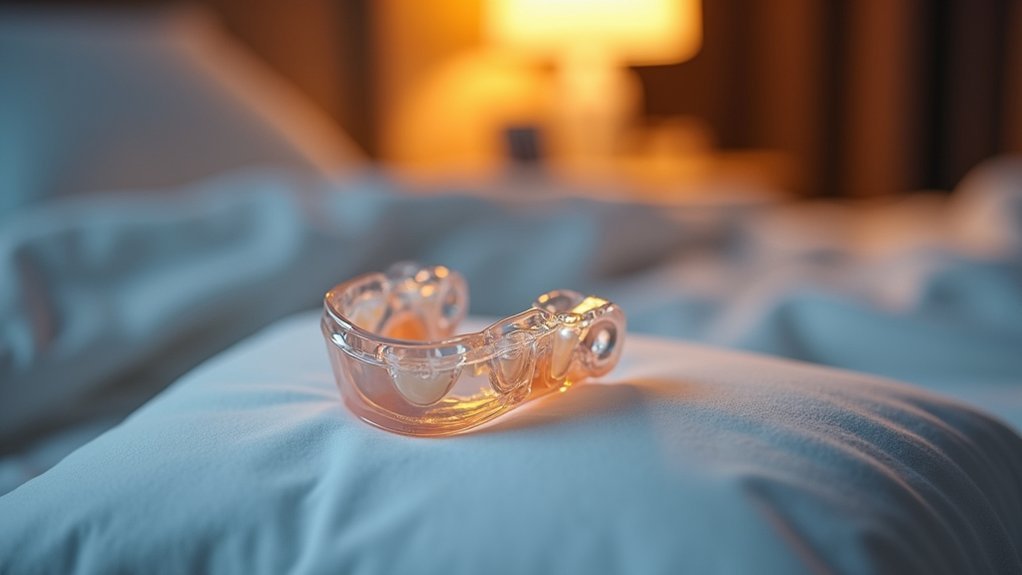
As mandibular advancement devices represent the gold standard in oral appliance therapy, understanding how they work becomes essential for your treatment success.
MADs effectively treat obstructive sleep apnea (OSA) by repositioning your lower jaw forward, keeping your airway open during sleep.
Your dentist will custom-make your device for ideal fit and effectiveness, with studies showing MADs reduce OSA severity by over 50% in approximately 70% of users.
You can choose between one-piece or two-piece designs:
- One-piece models offer simplicity and durability
- Two-piece designs provide greater adjustability
- Both designs maintain airway patency effectively
- Custom fitting guarantees maximum comfort
While side effects like jaw pain and increased salivation may occur initially, they’re typically mild and resolve within weeks.
Regular dental follow-ups guarantee your device maintains effectiveness while protecting your dental health.
Tongue Retaining Devices and Their Function
Beyond mandibular advancement devices, tongue-retaining devices (TRDs) offer an alternative approach that focuses directly on your tongue’s position during sleep. These oral appliances use a suction bulb mechanism to hold your tongue forward, preventing airway obstruction that causes obstructive sleep apnea (OSA).
TRDs are custom-fitted to accommodate your unique mouth structure, making them particularly beneficial if you have missing teeth or jaw alignment issues. While they effectively reduce breathing pauses, they’re less commonly used than mandibular advancement devices (MADs).
| Aspect | Details |
|---|---|
| Mechanism | Suction bulb holds tongue forward |
| Customization | Fitted to individual anatomy |
| Best Candidates | Missing teeth, jaw misalignment |
| Common Issues | Dry mouth, soreness |
| Compliance | Lower than MADs due to discomfort |
How Oral Appliances Work to Treat Sleep Apnea
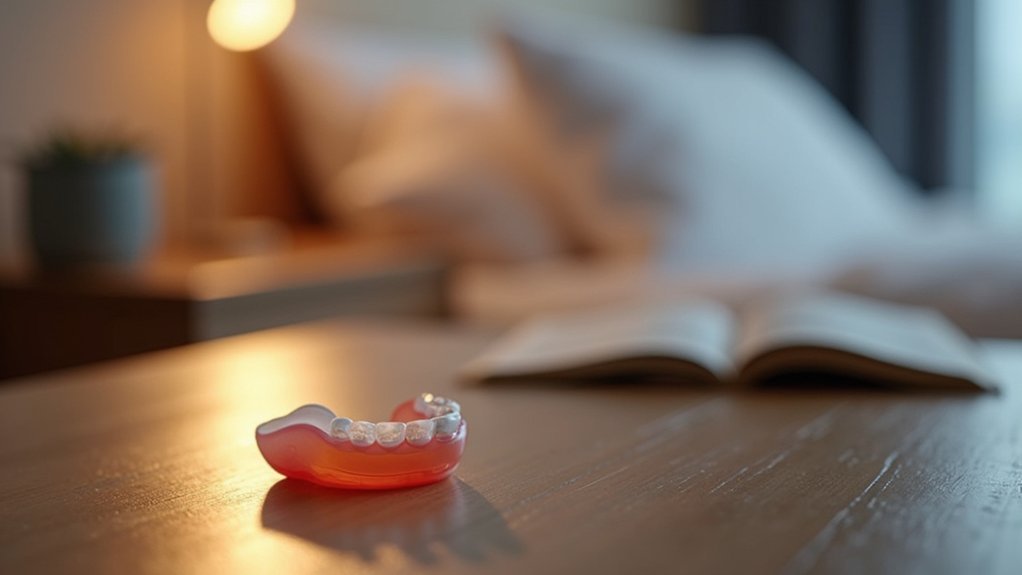
When you wear an oral appliance, it works by physically repositioning key structures in your mouth and throat to prevent airway collapse during sleep.
The device moves your lower jaw forward or holds your tongue in place, which directly increases the space available for air to flow through your upper airway.
This repositioning stops the soft tissues from blocking your breathing passages, allowing you to maintain steady airflow throughout the night.
Airway Opening Mechanisms
Oral appliances combat sleep apnea by physically repositioning key structures in your mouth and throat to keep your airway opening throughout the night.
Two primary mechanisms achieve this critical function.
Mandibular advancement devices move your lower jaw forward, creating additional space in your throat. This forward positioning prevents your airway from collapsing during sleep.
Tongue-stabilizing devices use suction to hold your tongue forward, stopping it from falling backward and blocking airflow.
The effectiveness depends on your appliance type:
- Custom-made oral appliances provide superior fit and results
- Over-the-counter options offer convenience but less precision
- MAD therapy reduces obstructive sleep apnea severity by 50% in 70% of users
- Proper positioning is essential for ideal airway maintenance
Custom-fitted devices consistently outperform generic alternatives.
Jaw and Tongue Repositioning
Since your airway naturally narrows during sleep, oral appliances work by strategically repositioning your jaw and tongue to counteract this collapse.
Mandibular advancement devices (MADs) move your lower jaw forward, which pulls your tongue and soft tissues away from your throat’s back wall. This repositioning creates more space in your airway, allowing air to flow freely.
Alternatively, tongue-retaining devices use gentle suction to hold your tongue in a forward position, preventing it from falling backward and blocking your breathing passage.
Both approaches target the root cause of obstructive sleep apnea (OSA) by maintaining proper anatomical positioning throughout the night.
Studies demonstrate that MADs can reduce OSA severity by over 50% in approximately 70% of users, making repositioning an effective treatment strategy.
Getting Fitted for a Custom Oral Appliance
Getting fitted for a custom oral appliance starts with an initial consultation where you’ll discuss your sleep apnea diagnosis and treatment goals with a qualified dentist.
The custom fitting process involves taking detailed impressions or digital scans of your teeth and jaw to guarantee a precise, comfortable fit.
You’ll then return for a follow-up appointment to receive your appliance and make any necessary adjustments for maximum comfort and effectiveness.
Initial Consultation Process
Before you can receive a custom oral appliance, your doctor must first confirm an obstructive sleep apnea diagnosis through a thorough sleep study. This extensive evaluation typically involves polysomnography testing or home sleep apnea testing to assess your breathing patterns during sleep.
Once you’re diagnosed with OSA, you’ll be referred to a dentist specializing in dental sleep medicine for your initial consultation. During oral appliance therapy evaluation, your dentist will assess your oral health and determine if you’re a suitable candidate for treatment.
The initial consultation process includes:
- Assessment of your jaw mobility and bite alignment
- Evaluation of your teeth and gum health
- Discussion of treatment goals and expectations
- Planning for your custom oral appliance fitting
Your dentist will then create impressions or 3D scans to design your personalized mandibular advancement device.
Custom Fitting Steps
Once your dentist confirms you’re a suitable candidate for oral appliance therapy, the custom fitting steps begin with creating precise dental impressions or digital scans of your upper and lower teeth.
Following your sleep study diagnosis, these impressions guarantee your mandibular advancement device fits perfectly to your unique mouth structure.
The fitting process typically requires multiple appointments. During your first visit, your dentist takes detailed impressions or 3D scans.
At the second appointment, you’ll receive your custom oral appliance and assess its initial fit. Your dentist will make necessary adjustments to confirm it’s comfortable and effective.
You’ll need periodic follow-up visits to monitor the device’s effectiveness and make additional adjustments, assuring ideal airway alignment and treatment success.
Effectiveness of Oral Appliance Therapy
When you’re considering oral appliance therapy for sleep apnea, you’ll find it offers impressive effectiveness rates that often surpass traditional CPAP treatment.
Studies demonstrate that mandibular advancement devices (MADs) reduce obstructive sleep apnea (OSA) severity by over 50% in approximately 70% of users, while completely resolving symptoms in one-third of patients.
Mandibular advancement devices successfully reduce sleep apnea severity by over 50% in approximately 70% of patients while completely eliminating symptoms in one-third.
The treatment’s superior 90% compliance rate greatly outperforms CPAP therapy’s 50% rate, making it particularly valuable for patients who can’t tolerate traditional machines.
You’ll experience notable improvements in:
- Daytime sleepiness and fatigue reduction
- Enhanced cognitive function and mental clarity
- Better oxygen levels during sleep
- Fewer breathing interruptions throughout the night
For mild to moderate OSA, oral appliance therapy provides a comfortable, portable alternative that consistently improves your overall quality of life.
Benefits of Choosing Oral Appliance Treatment
When you choose oral appliance therapy, you’ll experience considerably improved sleep quality as the device maintains your airway open throughout the night.
You’ll notice enhanced daily functioning with reduced fatigue and better concentration since you’re getting more restorative sleep.
The treatment offers you a convenient option that’s portable, quiet, and much easier to use consistently compared to bulky CPAP machines.
Improved Sleep Quality
Although restful sleep might seem like an elusive goal when you’re struggling with obstructive sleep apnea, oral appliance therapy can dramatically transform your nightly rest by reducing or eliminating the apneas and snoring that fragment your sleep cycles.
This improved sleep quality creates a cascade of benefits that’ll enhance your daily life.
About one-third of users experience complete symptom resolution with this effective treatment option.
You’ll likely notice:
- Enhanced daytime alertness and reduced fatigue
- Improved mental clarity and cognitive function
- Better mood and emotional well-being
- Decreased risk of developing chronic health conditions
With oral appliance therapy’s 90% compliance rate compared to CPAP’s 50%, you’re more likely to stick with treatment consistently.
Better sleep quality also reduces your risk of high blood pressure and heart disease.
Enhanced Daily Functioning
Beyond the restorative effects of better sleep, oral appliance therapy transforms how you function during your waking hours by eliminating the cognitive fog and fatigue that sleep apnea creates.
You’ll experience sharper mental clarity and enhanced focus, allowing you to perform better at work and handle daily tasks more efficiently. The improved sleep quality translates directly into increased energy levels, enabling you to participate more actively in physical activities and social interactions.
Your reduced excessive snoring benefits not only your rest but also your partner’s sleep experience. The comfort and convenience of oral appliances promote consistent nightly use, ensuring sustained improvements in your daily functioning and overall quality of life.
Convenient Treatment Option
Since oral appliance therapy offers a streamlined approach to sleep apnea treatment, you’ll find it’s one of the most convenient options available for managing your condition.
Unlike bulky CPAP machines, mandibular advancement devices provide a portable solution that fits easily in your travel bag.
This convenient and effective treatment for obstructive sleep apnea offers several practical advantages:
- Portability – Take your device anywhere without electrical requirements
- Easy maintenance – Simple cleaning routine with no filters or tubing
- Quiet operation – Silent treatment won’t disturb your partner’s sleep
- Immediate use – No setup time or mask adjustments needed
You’ll improve breathing patterns and sleep quality without the hassle of traditional machines, making oral appliance therapy an ideal choice for busy lifestyles.
Potential Side Effects and Risks
While oral appliance therapy offers an effective alternative to CPAP machines for treating sleep apnea, you should understand the potential side effects and risks before beginning treatment.
You might initially experience increased salivation, jaw pain, dry mouth, and gum irritation, though these typically improve over time.
More concerning are rare long-term effects like bite alignment changes and tooth movement, making regular dental check-ups essential.
If you have TMJ disorders, oral appliances could worsen your symptoms.
Bruxism can damage your appliance and create additional dental problems, requiring professional monitoring.
Compliance rates vary considerably, with approximately one in three users not experiencing meaningful improvement in their sleep apnea symptoms.
Oral Appliances Vs CPAP Machines
Despite these considerations, you’ll still need to weigh oral appliances against CPAP machines when choosing your sleep apnea treatment.
CPAP machines remain the most effective treatment for severe obstructive sleep apnea (OSA), using pressurized air to prevent airway collapse. However, oral appliances often win on user comfort and convenience.
While CPAP machines offer superior effectiveness for severe sleep apnea, oral appliances typically provide better comfort and convenience for users.
Key differences include:
- Compliance rates: Oral appliances achieve 90% compliance versus CPAP’s 50%
- Portability: Oral appliances are quieter and more travel-friendly
- Comfort: Less skin irritation and claustrophobia compared to CPAP masks
- Effectiveness: CPAP works better for severe cases, oral appliances for mild-moderate OSA
Your choice depends on your OSA severity, lifestyle preferences, and comfort priorities.
Many find oral appliances easier to adapt to long-term.
Who Is a Good Candidate for Oral Appliance Therapy
Who makes an ideal candidate for oral appliance therapy?
You’re best suited for this treatment if you have mild to moderate sleep apnea and can’t tolerate CPAP machines. You’ll need sufficient healthy teeth to support the dental device effectively.
Before starting treatment, you must obtain a formal diagnosis of obstructive sleep apnea through a sleep study.
However, you should consult a qualified dentist if you have jaw issues like TMJ disorders or bruxism, as these conditions may complicate treatment.
If you have structural problems in your jaw or airway, oral appliance therapy mightn’t work for you, and you’ll need to explore alternative treatments.
The key is working with healthcare providers to determine the most effective approach for your specific situation.
Maintaining and Caring for Your Oral Appliance
Once you’ve determined that oral appliance therapy is right for you and received your custom device, proper maintenance becomes your next priority.
Taking care of your oral appliance guarantees it remains effective and comfortable for managing your sleep apnea.
Daily care involves simple yet essential steps:
- Clean your device daily with a soft toothbrush and mild soap
- Store it in a protective case when not in use
- Keep the appliance in a cool, dry place
- Schedule regular dental visits for monitoring
If you experience discomfort or notice changes in your bite, contact your dentist immediately for adjustments.
Don’t ignore these warning signs, as they can indicate fitting issues that affect treatment effectiveness.
You’ll need to replace your oral appliance every 1-2 years as recommended by your dentist to maintain peak performance.
Frequently Asked Questions
What Is the Most Effective Oral Appliance for Sleep Apnea?
You’ll find the mandibular advancement device (MAD) is the most effective oral appliance for sleep apnea. It reduces severity by over 50% in 70% of users and completely resolves symptoms in one-third.
How Long Does an Oral Appliance for Sleep Apnea Last?
Your custom oral appliance typically lasts three to five years with proper care. If you grind your teeth, you’ll likely need replacements sooner. Over-the-counter options usually last under a year.
Is Oral Appliance Therapy Better Than CPAP?
You’ll find oral appliance therapy isn’t necessarily better than CPAP, but it’s more comfortable and convenient. If you can’t tolerate CPAP or have mild-to-moderate sleep apnea, oral appliances offer excellent compliance rates.
Does Insurance Cover Oral Appliances for Sleep Apnea?
Yes, insurance typically covers oral appliances for sleep apnea when you’ve received a formal OSA diagnosis and prescription. You’ll need prior authorization and should verify your specific policy’s coverage details beforehand.


