

You can effectively manage sleep apnea using tennis ball therapy sewn into pajamas, commercial positional devices that reduce AHI from 14.5 to 5.9 events per hour, or wearable monitors providing vibrotactile feedback. Wedge pillows elevate your upper body 30-45 degrees, while body pillows and side sleep bolsters create physical barriers preventing back sleeping. These methods achieve up to 84% reduction in supine sleep time and 68% success rates in symptom improvement. Discover how combining these techniques maximizes your therapeutic results.
Side Sleeping Position Techniques

One of the most effective non-invasive treatments for positional obstructive sleep apnea involves training yourself to sleep consistently on your side.
Side sleeping considerably reduces airway obstruction, improving your sleep quality and dramatically lowering your apnea-hypopnea index scores. You’ll experience greater than 50% reduction in AHI compared to sleeping on your back.
Side sleeping dramatically improves sleep quality while reducing apnea-hypopnea index scores by more than 50% compared to back sleeping.
Specialized positional therapy devices like supportive pillows or positioning belts can prevent you from rolling onto your back during sleep.
These tools work alongside behavioral techniques, including training exercises and sleep position reminders, to reinforce consistent side sleeping habits.
When you maintain this position long-term, you’ll notice substantial improvements in symptoms, including reduced daytime sleepiness as measured by the Epworth Sleepiness Scale.
Tennis Ball Method for Back Sleep Prevention
Among the simplest yet most effective positional therapy techniques, the tennis ball method provides a practical solution that prevents you from rolling onto your back during sleep.
You’ll sew a tennis ball into your pajama shirt’s back or attach it to a belt, creating discomfort when lying supine. This tennis ball technique specifically targets positional obstructive sleep apnea by encouraging side sleeping positions throughout the night.
Studies demonstrate significant reductions in your apnea-hypopnea index when using this method consistently. You’ll likely notice decreased snoring and fewer breathing interruptions, leading to improved sleep quality.
The approach costs minimal investment compared to expensive sleep apnea devices, making it accessible for most patients. However, you’ll need adaptation time, and some individuals find the initial discomfort challenging before experiencing benefits.
Wedge Pillows and Body Positioning
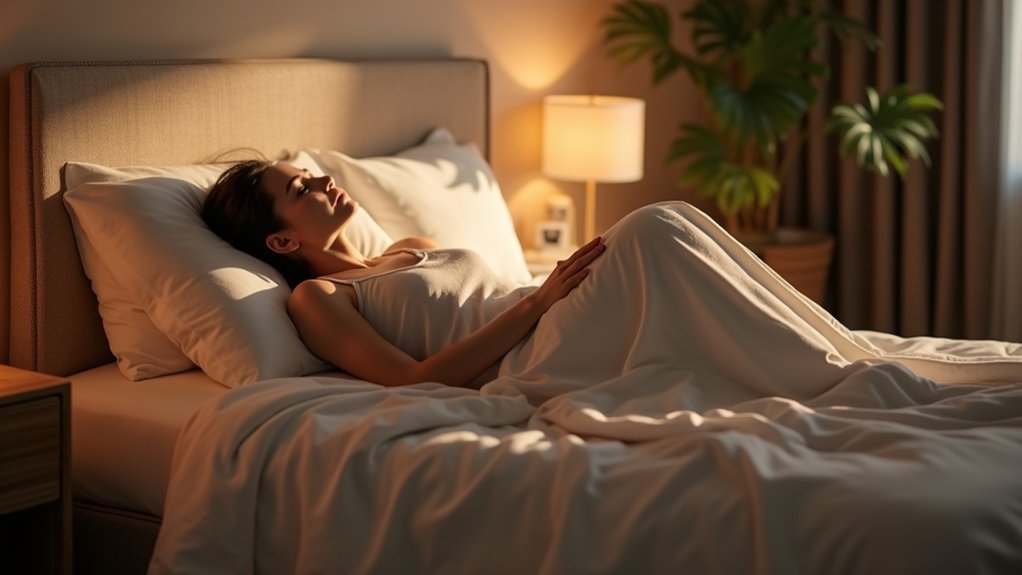
While the tennis ball method works by creating discomfort to discourage back sleeping, wedge pillows offer a more comfortable approach to positional therapy for sleep apnea.
These specialized pillows elevate your upper body, reducing airway obstruction and promoting side-sleeping positions that improve obstructive sleep apnea symptoms.
Wedge pillows provide several benefits for positional therapy:
- Reduced supine sleeping time – You’ll spend less time on your back, lowering your Apnea-Hypopnea Index.
- Enhanced airflow – Left-side sleeping particularly improves breathing for positional obstructive sleep apnea.
- Improved sleep quality – Better positioning leads to fewer apnea events throughout the night.
- Combination therapy potential – You can pair wedge pillows with positioning belts or alarms for better adherence.
Studies show these positioning aids greatly reduce sleep apnea severity and daytime sleepiness.
Commercial Positional Therapy Devices
Beyond simple wedge pillows, sophisticated commercial positional therapy devices offer advanced features that make maintaining proper sleep position easier and more effective. These specialized belts and pillows are specifically designed to prevent you from sleeping on your back, which markedly reduces obstructive sleep apnea (OSA) severity.
Commercial Device Performance
| Metric | Result |
|---|---|
| AHI Reduction | 14.5 to 5.9 events/hour |
| Success Rate | 68% effectiveness |
| Supine Time Reduction | 155.3 to 33.5 minutes |
| Nightly Usage | 7.2 hours average |
| Compliance | Higher than traditional methods |
Clinical studies show these devices achieve a remarkable 68% success rate in managing positional OSA. You’ll experience decreased daytime sleepiness and improved sleep quality as your Apnea-Hypopnea Index (AHI) drops markedly. Commercial devices perform comparably to self-made alternatives while offering superior comfort and durability.
Sleep Position Training Exercises

You can train your body to maintain side sleeping positions through targeted exercises that build lasting habits and reduce your reliance on external devices.
These training methods focus on two key areas: developing techniques that actively discourage supine sleeping and establishing progressive routines that gradually strengthen your natural tendency to sleep on your side.
With consistent practice, you’ll find that proper positioning becomes automatic, leading to significant reductions in sleep apnea episodes and improved overall sleep quality.
Side Sleeping Habit Formation
Since developing consistent side sleeping habits requires deliberate practice and reinforcement, you’ll need to incorporate specific training exercises into your daily routine to make this position feel natural and automatic.
Effective positional therapy can reduce your apnea-hypopnea index (AHI) by up to 54%, making side sleeping training essential for managing sleep apnea.
Here are four proven methods to establish lasting side sleeping habits:
- Practice during daytime naps – Train your body to prefer lateral positions when you’re naturally drowsy.
- Use specialized positional devices – Employ belts or pillows that prevent rolling onto your back.
- Set gentle reminder alarms – Program soft alerts to redirect you when you drift toward supine positions.
- Track your progress consistently – Monitor sleep positions using apps or diaries to maintain motivation and accountability.
Supine Position Avoidance Techniques
Training your body to avoid the supine position requires targeted exercises that actively discourage back sleeping while reinforcing lateral positioning throughout the night.
You’ll want to practice side sleeping during afternoon naps to build muscle memory for ideal positioning. Set gentle alarms throughout your sleep to redirect yourself when you naturally roll onto your back, as the supine position increases airway obstruction risks.
Incorporate behavioral reminders like placing tennis balls in your pajama back pocket or using specialized positional therapy devices that vibrate when you’re supine.
Practice shifting from back to side positions while awake, focusing on comfortable lateral alignments. These consistent training exercises help reduce your apnea-hypopnea index noticeably, with studies showing improvements from 14.5 to 5.9 events per hour through dedicated positional therapy adherence.
Progressive Training Methods
When implementing progressive sleep position training exercises, you’ll develop lasting habits through a structured approach that gradually builds your comfort and consistency with side sleeping.
This systematic method helps your body adapt naturally to ideal sleeping positions for managing sleep apnea.
Here’s how progressive training enhances your positional therapy success:
- Start with short practice sessions during daytime naps to build familiarity with side-sleeping positions without disrupting your full night’s rest.
- Use specialized body pillows that provide support and prevent rolling onto your back during sleep shifts.
- Apply behavioral reinforcement techniques like position-reminder alarms to maintain proper alignment throughout the night.
- Track your progress with sleep monitoring devices to measure compliance and effectiveness of your positional therapy routine.
This methodical approach creates muscle memory for sustained side-sleeping.
Adjustable Bed Solutions
Innovation in bedroom furniture has transformed how you can manage sleep apnea through positional therapy.
Adjustable beds offer a sophisticated solution by allowing you to elevate your head and upper body, directly reducing airway obstruction that causes apnea events.
You’ll find customizable settings that let you discover your best sleeping angle for improved airflow.
Research demonstrates that elevating your head 30 to 45 degrees considerably decreases apnea frequency compared to sleeping flat.
Many models include massage functions and sleep tracking features that enhance your overall sleep quality.
When you combine adjustable beds with other positional therapy methods, you’ll improve adherence to recommended sleep positions, especially if you struggle maintaining side sleeping throughout the night.
Body Pillows and Support Systems
You’ll find that body pillows and support systems offer practical, non-invasive solutions for maintaining proper sleep positioning throughout the night.
These specialized tools work by encouraging side sleeping, elevating your upper body, and providing targeted support to prevent you from rolling onto your back where airway obstruction typically worsens.
Whether you choose full body pillows, wedge positioning aids, or dedicated side sleep bolsters, each option addresses specific aspects of positional sleep apnea management.
Full Body Pillow Benefits
Full body pillows serve as extensive support systems that naturally guide your body into side-sleeping positions, offering a simple yet effective solution for managing positional sleep apnea.
These specialized pillows work as thorough positional therapy tools that can dramatically improve your obstructive sleep apnea symptoms through targeted support:
- Reduced supine sleeping – You’ll spend considerably less time on your back, preventing airway collapse that worsens sleep apnea episodes.
- Improved spinal alignment – Your spine stays properly positioned throughout the night, reducing pressure points and enhancing comfort.
- Decreased AHI scores – Studies show you can achieve up to 53.6% reduction in your Apnea-Hypopnea Index when using these pillows consistently.
- Cost-effective management – You’ll gain non-invasive sleep apnea relief without expensive equipment or complex medical procedures.
Wedge Pillow Positioning
While full body pillows excel at maintaining side-sleeping positions, wedge pillows tackle sleep apnea from a different angle by elevating your upper body to prevent airway collapse.
You’ll find these triangular cushions create an inclined sleeping surface that reduces airway obstruction by keeping your head and chest raised.
Research shows wedge pillows can notably decrease your apnea-hypopnea index while improving overall sleep quality.
They’re particularly effective for positional therapy because they minimize time spent sleeping on your back, where airway blockages occur most frequently.
For maximum effectiveness, you can combine wedge pillows with specialized positioning devices that maintain ideal sleep postures throughout the night.
This thorough approach enhances treatment compliance by providing comfort and stability while promoting healthier sleeping habits.
Side Sleep Bolsters
Side sleep bolsters transform your sleeping posture by creating a physical barrier that keeps you positioned on your side throughout the night.
These body pillows and specialized support systems serve as effective positional therapy tools for managing obstructive sleep apnea by preventing the airway obstruction that occurs when you sleep on your back.
Research demonstrates impressive results when you incorporate side sleep bolsters into your sleep routine:
- Reduced supine time – You’ll spend 84% less time sleeping on your back
- Lower AHI scores – Your Apnea-Hypopnea Index decreases markedly with consistent side sleeping
- Enhanced comfort – Proper spinal alignment improves your overall sleep quality
- Cost-effective alternative – You’ll avoid expensive CPAP equipment while treating mild to moderate positional OSA
These non-invasive support systems provide an accessible solution for improving your sleep apnea symptoms.
Wearable Sleep Position Monitors
Modern technology has revolutionized positional therapy through wearable sleep position monitors that track your sleeping position throughout the night. These devices use sensors to detect when you’re lying on your back and provide vibrotactile feedback to encourage side sleeping, specifically targeting positional obstructive sleep apnea.
You’ll experience significant improvements with these monitors, as studies show they reduce the apnea-hypopnea index by an average of 11.3 events per hour during short-term follow-up. The lightweight, comfortable design won’t disrupt your sleep while effectively promoting better positioning.
With compliance rates reaching 75.9%, wearable sleep position monitors offer superior acceptance compared to traditional methods. They enhance your engagement with positional therapy, leading to improved sleep quality and increased daytime alertness through continuous monitoring.
Elevation Therapy for Upper Body
Beyond wearable monitors, elevation therapy offers another effective approach to managing positional sleep apnea by raising your upper body during sleep. This method prevents airway obstruction by leveraging gravity’s natural effects on your breathing passages.
You can implement elevation therapy using:
- Wedge pillows – specialized foam pillows that maintain consistent upper body elevation
- Adjustable beds – electric beds allowing precise positioning throughout the night
- Multiple stacked pillows – budget-friendly option using regular pillows for elevation
- Specialized sleeping devices – purpose-built equipment designed for positional therapy
Studies demonstrate that elevation therapy markedly reduces your apnea-hypopnea index while improving sleep quality.
You’ll likely experience decreased daytime sleepiness and better Epworth Sleepiness Scale scores. This approach works especially well when you combine it with other positional therapy methods.
DIY Positional Therapy Modifications
When medical devices aren’t accessible or affordable, you can create effective positional therapy solutions using common household items.
DIY positional therapy starts with the classic tennis ball method—sew one into your shirt’s back pocket to discourage supine sleeping and improve airway stability.
You can craft a wedge-shaped pillow using towels or foam to elevate your upper body, reducing airway obstruction risks.
Arrange multiple pillows as barriers to maintain side sleeping throughout the night. Alternatively, strap a padded belt around your waist with a firm object like a water bottle to deter back sleeping.
Enhance your success by using sleep apps or alarms that remind you to maintain proper positioning, increasing adherence to these cost-effective modifications.
Frequently Asked Questions
What Is the Best Positional Therapy for Sleep Apnea?
You’ll find vibratory feedback belts most effective, achieving 75.9% compliance rates compared to traditional methods’ 42.3%. These devices prevent supine sleeping, reducing your AHI by up to 54% while maintaining comfort better than CPAP machines.
What Is the Best Position to Lay in if You Have Sleep Apnea?
You should sleep on your side, preferably your left side, if you have sleep apnea. This position keeps your airway open and considerably reduces breathing interruptions compared to sleeping on your back.
What Is the Most Successful Treatment for Sleep Apnea?
CPAP therapy is your most successful sleep apnea treatment, maintaining a 90% effectiveness rate. It keeps your airways open through steady air pressure, though you’ll need consistent nightly use for ideal results.
Does Positional Therapy Work for Sleep Apnea?
Yes, positional therapy can effectively treat your sleep apnea, with studies showing 68% success rates and significant AHI reductions. You’ll likely see best results if you have mild to moderate positional OSA.


