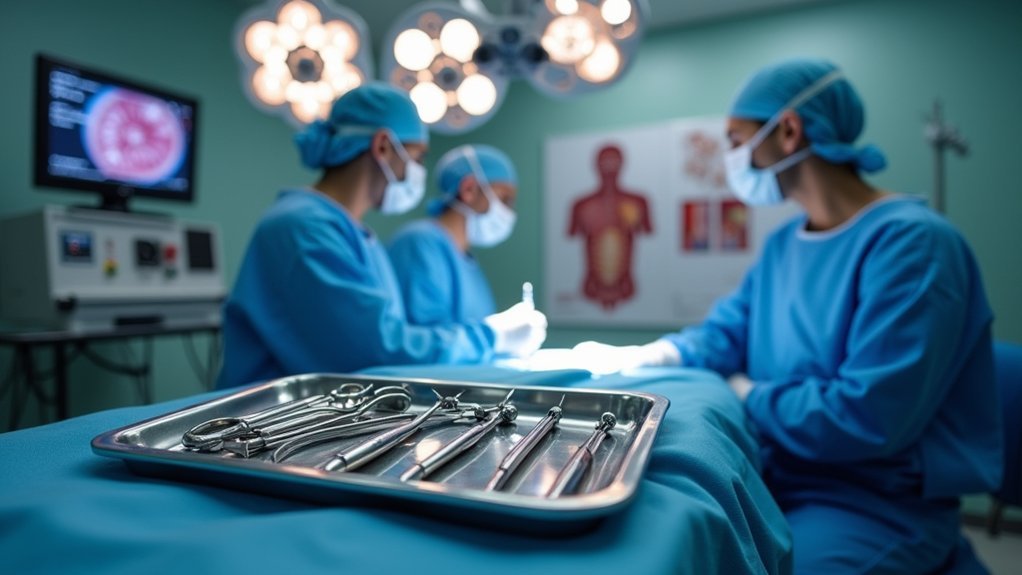
When CPAP therapy fails to control your severe sleep apnea, you’ve got seven proven surgical options to restore restful breathing. UPPP removes throat tissue blocking your airway, while maxillomandibular advancement repositions your jaw forward. Hypoglossal nerve stimulation controls tongue movement, and TORS uses robotic precision for tissue removal. Genioglossus advancement repositions your tongue muscle, nasal surgery corrects obstructions, and Inspire therapy stimulates your upper airway. Each procedure offers unique benefits tailored to your specific anatomy and sleep apnea severity.
Uvulopalatopharyngoplasty (UPPP) for Throat Tissue Removal
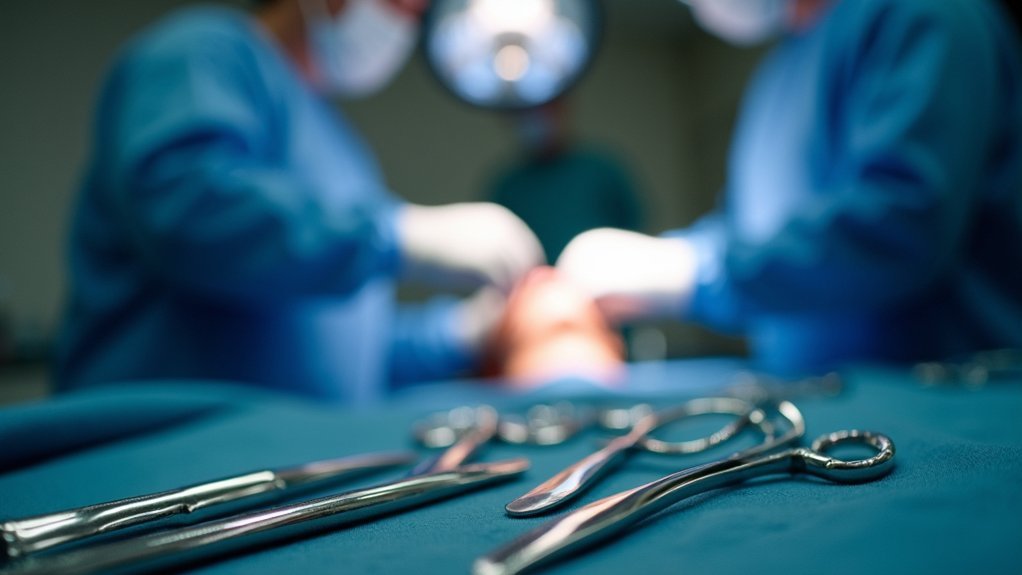
When conservative treatments like CPAP therapy aren’t effective or tolerable, uvulopalatopharyngoplasty (UPPP) offers a surgical alternative for managing obstructive sleep apnea.
This procedure removes your uvula, soft palate sections, and often tonsils to increase airway size in your throat. You’ll undergo general anesthesia during the one-to-three-hour surgery, with recovery time spanning one to six weeks.
UPPP targets excess throat tissue removal, showing 40-70% success rates in improving apnea symptoms. However, you might still need CPAP therapy post-surgery, as complete cures aren’t guaranteed.
UPPP improves sleep apnea symptoms in 40-70% of patients, though CPAP therapy may still be required afterward.
While complications like pain, swallowing difficulties, and voice changes can occur, serious risks remain relatively low with experienced surgeons. This surgical option works best when throat tissue obstruction causes your sleep apnea symptoms.
Maxillomandibular Advancement Surgery for Jaw Repositioning
For severe obstructive sleep apnea cases where throat tissue removal isn’t sufficient, maxillomandibular advancement (MMA) surgery repositions both your upper and lower jaws forward to create markedly more airway space.
This jaw repositioning procedure boasts an impressive 86% success rate, making it highly effective for treating obstructive sleep apnea.
You’ll benefit most from MMA surgery if you have:
- Narrow jaw structure or receded chin anatomy
- Failed CPAP therapy or other conservative treatments
- Severe OSA requiring definitive surgical intervention
- Good overall health for general anesthesia tolerance
The surgery requires general anesthesia and hospital admission.
Your recovery period typically spans one to six weeks, depending on individual healing rates.
Unlike other treatments, MMA surgery significantly enlarges your airway by advancing jaw bones forward, dramatically improving nighttime breathing patterns.
Hypoglossal Nerve Stimulation for Tongue Control
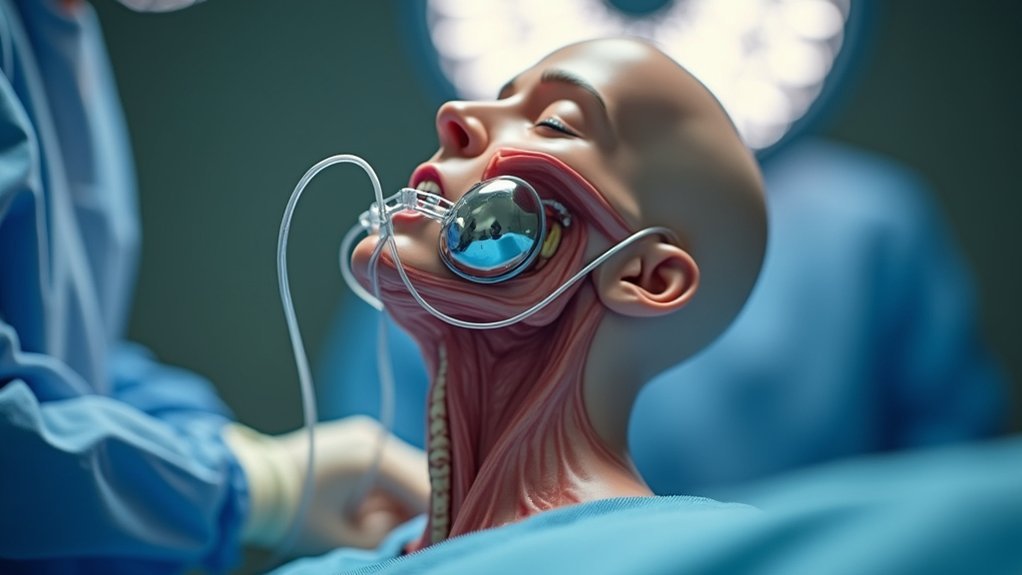
If you’re struggling with sleep apnea and can’t tolerate CPAP therapy, hypoglossal nerve stimulation offers an innovative surgical alternative that targets the root cause of airway obstruction.
The HNS device works by delivering mild electrical pulses to your hypoglossal nerve, which controls tongue movement, preventing your tongue from collapsing backward and blocking your airway during sleep.
You’ll need to meet specific candidacy requirements to qualify for this procedure, including having moderate to severe OSA and demonstrating CPAP intolerance or failure.
How HNS Works
Although traditional CPAP therapy remains the gold standard for treating obstructive sleep apnea, Hypoglossal Nerve Stimulation (HNS) offers a revolutionary surgical alternative that works by directly controlling your tongue’s position during sleep.
The HNS system operates through a sophisticated mechanism that prevents airway obstruction:
- Breath Detection: A breathing sensor monitors your respiratory patterns and detects when you begin to inhale.
- Electrical Stimulation: The device delivers mild electrical stimulation to your hypoglossal nerve, which controls tongue movement.
- Airway Maintenance: This stimulation pushes your tongue forward, keeping your airway open throughout the night.
- Customizable Settings: You can adjust the stimulation levels for ideal comfort and effectiveness.
This adjustable device greatly reduces your apnea-hypopnea index, improving sleep quality for patients with moderate to severe OSA who can’t tolerate continuous positive airway pressure therapy.
Treatment Candidacy Requirements
While HNS technology offers remarkable results, not everyone qualifies for this innovative treatment option.
Candidacy requirements for hypoglossal nerve stimulation (HNS) surgery are specific and must be carefully evaluated. You’ll need moderate to severe obstructive sleep apnea (OSA) with documented CPAP intolerance to be considered for this treatment. Your BMI must be under 32, as excess weight can compromise the surgery’s effectiveness.
A thorough evaluation including extensive sleep study confirms your OSA diagnosis and determines procedural suitability. These strict candidacy requirements guarantee ideal outcomes for qualified patients.
Success rates exceed 80% for those who meet criteria, delivering significant breathing improvements and reduced daytime sleepiness. Meeting these treatment options prerequisites maximizes your chances of surgical success.
Trans Oral Robotic Surgery (TORS) for Precision Tissue Removal
When traditional sleep apnea surgeries fall short of providing adequate relief, Trans Oral Robotic Surgery (TORS) emerges as a cutting-edge solution that’s revolutionizing how surgeons address airway obstructions.
This minimally invasive approach combines robotic assistance with advanced imaging to achieve precision tissue removal behind your tongue base.
TORS offers several advantages for treating obstructive sleep apnea:
TORS delivers multiple benefits for sleep apnea patients, including superior visualization, faster recovery, better outcomes, and versatile combination treatment options.
- Enhanced visualization – 3-D robotic technology provides surgeons unprecedented access to critical structures
- Reduced recovery time – You’ll experience less postoperative pain compared to traditional surgical methods
- Improved outcomes – Studies demonstrate significant improvements in apnea-hypopnea indices following the procedure
- Combination potential – TORS can work alongside other surgeries to address multiple airway obstruction sites simultaneously
This innovative technique helps improve patient outcomes while preserving essential anatomical structures.
Genioglossus Advancement for Forward Tongue Positioning
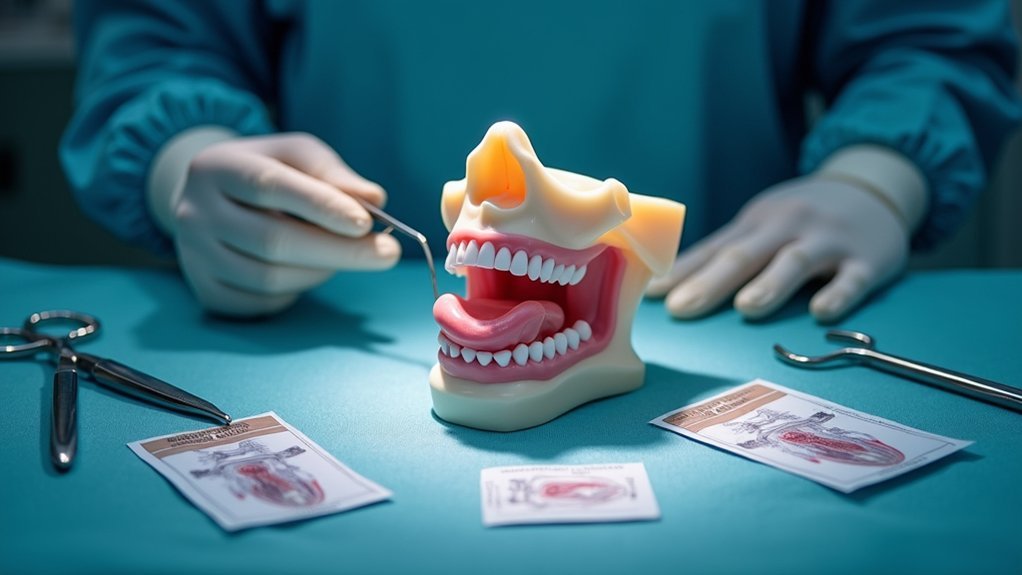
You’ll find genioglossus advancement surgery targets the root cause of tongue-based airway obstruction by repositioning your genioglossus muscle attachment to pull your tongue forward during sleep.
The surgical technique involves making precise modifications to your mandible under general anesthesia, often combined with other procedures like UPPP or maxillomandibular advancement for enhanced results.
You can expect several weeks of recovery with success rates ranging from 39% to 78% in reducing your sleep apnea symptoms.
Surgical Technique Overview
Since genioglossus advancement targets the root cause of many sleep apnea cases—tongue-based airway obstruction—this surgical technique offers a direct solution for patients struggling with breathing interruptions during sleep.
During this sleep apnea surgery, your surgeon repositions the tongue muscle attachment forward, preventing it from collapsing into your airway.
The procedure involves several key steps:
- Moving the genioglossus muscle attachment forward through precise bone cuts
- Combining with other surgeries like maxillomandibular advancement when needed
- Performing under general anesthesia for patient comfort
- Targeting patients with retrognathic jaw for ideal results
Success rates for genioglossus advancement range from 39% to 78%, depending on your anatomical characteristics.
Post-operative recovery requires several weeks of soft diet, and you might still need CPAP therapy alongside surgery for treating obstructive sleep apnea effectively.
Recovery and Outcomes
Recovery from genioglossus advancement requires patience as your body heals from this precision procedure. The healing period typically spans several weeks, during which you’ll experience swelling and discomfort. Following post-operative care instructions meticulously optimizes your outcomes and prevents complications.
| Recovery Phase | Timeline | Expected Changes |
|---|---|---|
| Initial healing | 1-2 weeks | Swelling, discomfort, soft diet |
| Intermediate | 3-6 weeks | Gradual return to normal activities |
| Long-term | 3-6 months | Improved sleep quality, reduced symptoms |
Your genioglossus advancement success rate ranges from 39% to 78% for alleviating obstructive sleep apnea symptoms. You’ll likely notice improved sleep quality, reduced daytime fatigue, and decreased airway obstruction. Many patients experience reduced reliance on CPAP therapy, though complete elimination isn’t guaranteed for everyone.
Nasal Surgery for Airway Obstruction Correction
When nasal obstructions like polyps or a deviated septum block your airways, nasal surgery offers a targeted solution to restore proper breathing and reduce sleep apnea symptoms.
These procedures target airway obstruction by removing or shrinking blockages in your nasal passages. You’ll find several surgical options available:
- Septoplasty – Corrects your deviated septum to improve airflow
- Endoscopic sinus surgery – Enhances overall nasal function and reduces OSA symptoms
- Polyp removal – Eliminates growths that block breathing passages
- Turbinate reduction – Shrinks enlarged nasal structures
Recovery typically spans several weeks, during which you’ll likely notice improved sleep quality.
While studies show mixed results regarding direct breathing lapse reduction, nasal surgery notably enhances CPAP therapy effectiveness. You’ll breathe better through clearer nasal passages, making your existing obstructive sleep apnea treatments more comfortable and successful.
Inspire Upper Airway Stimulation Therapy
The Inspire Upper Airway Stimulation Therapy offers a groundbreaking alternative for patients who can’t tolerate CPAP machines. This innovative treatment involves implanting a device that stimulates your hypoglossal nerve, preventing airway collapse during sleep and dramatically reducing obstructive sleep apnea (OSA) symptoms.
| Aspect | Details |
|---|---|
| Candidates | Adults with moderate to severe OSA, body mass index (BMI) under 32 |
| Procedure | Minimally invasive outpatient surgery lasting 1-2 hours |
| Results | Over 50% reduction in apnea-hypopnea index (AHI) for 80%+ patients |
You’ll control the device with a remote, activating it before sleep. Clinical studies demonstrate significant improvements in sleep quality and daytime alertness, with favorable safety profiles and low complication risks.
Frequently Asked Questions
What Is the Best Surgery for Severe Sleep Apnea?
You’ll find maxillomandibular advancement surgery most effective for severe sleep apnea, with an 86% success rate. However, you should consider hypoglossal nerve stimulation if you can’t tolerate CPAP therapy.
What Is the Best Treatment for Severe Sleep Apnea?
You’ll find CPAP therapy works best initially, but if that fails, you should consider maxillomandibular advancement surgery with its 86% success rate or hypoglossal nerve stimulation exceeding 80% effectiveness.
What Is the New Surgical Procedure for Sleep Apnea?
You’ll find hypoglossal nerve stimulation (HNS) is the newest surgical option, where doctors implant a device that stimulates your tongue muscles to prevent airway blockage during sleep with impressive results.
Is It Worth Getting Sleep Apnea Surgery?
You should consider sleep apnea surgery if you’ve tried CPAP without success and have severe OSA. Surgery can greatly improve symptoms and reduce health risks, though it’s not guaranteed to cure your condition completely.


