

Mandibular advancement devices reduce your apnea symptoms by repositioning your lower jaw forward during sleep, which increases your airway space and prevents throat tissues from collapsing. This physical expansion of your airway diameter allows unrestricted airflow, preventing apneas and hypopneas while maintaining proper oxygen levels. You’ll experience reduced snoring and improved sleep quality as tissue vibrations decrease. Clinical studies show 50% of users see significant improvement, with 70-80% experiencing better breathing patterns. Understanding the complete picture will help you make informed decisions about this treatment option.
What Are Mandibular Advancement Devices and How Do They Work
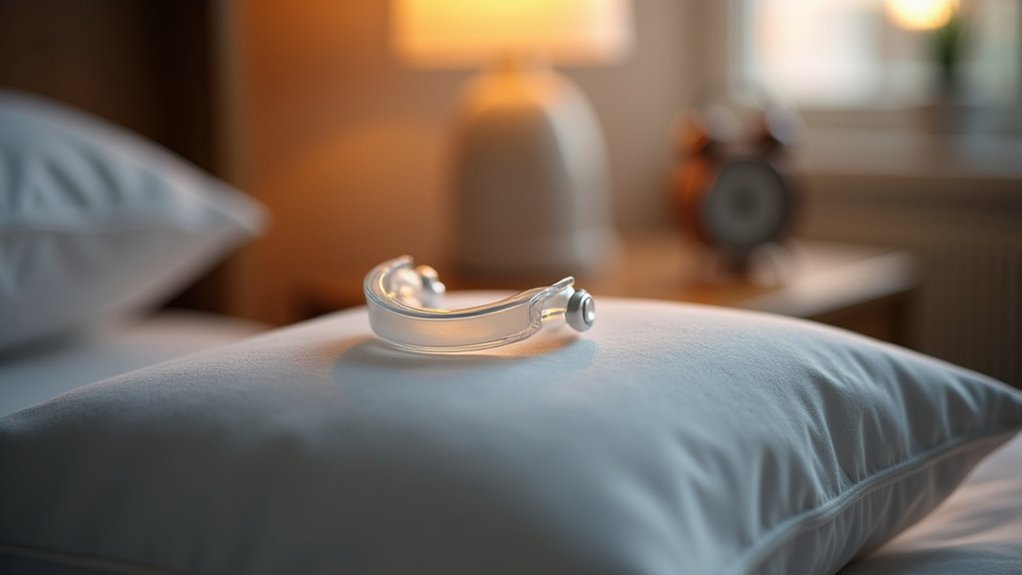
If you’re struggling with sleep apnea but find CPAP machines uncomfortable, mandibular advancement devices (MADs) offer an effective alternative treatment option.
These custom-fit dental appliances work by repositioning your lower jaw forward during sleep, which increases your airway space and prevents throat tissues from collapsing.
Related guide: Best Anti-Snoring Devices That Actually Work, According to Sleep Experts
MADs consist of two components that fit over your upper and lower teeth, with adjustable jaw positioning mechanisms to optimize airway opening.
They’re particularly effective for mild to moderate obstructive sleep apnea (OSA), helping reduce snoring and breathing pauses throughout the night.
The Science Behind Airway Opening and Breathing Improvement
Understanding how MADs improve breathing starts with examining the anatomical changes they create in your upper respiratory tract. When you wear mandibular advancement devices (MADs), they reposition your jaw forward, physically expanding your airway space.
Related guide: Best Anti-Snoring Devices
This increased airway diameter prevents the tissue collapse that triggers obstructive sleep apnea (OSA) episodes. The breathing improvement occurs because your enlarged airway allows unrestricted airflow during sleep. This prevents apneas and hypopneas, maintaining proper oxygen saturation levels throughout the night.
You’ll experience reduced health complications since your body receives consistent oxygen supply. Additionally, MADs eliminate the tissue vibrations that cause snoring by keeping your throat tissues properly positioned.
This leads to enhanced sleep quality and decreased daytime sleepiness, greatly improving your overall well-being.
Effectiveness of MADs for Mild to Moderate Sleep Apnea

If you’re dealing with mild to moderate sleep apnea, you’ll find that MADs show impressive results in clinical studies.
Research demonstrates that about 50% of users experience significant symptom improvement, with measurable reductions in apnea and hypopnea episodes throughout the night.
You can expect these devices to enhance your sleep quality while reducing the daytime fatigue that’s been dragging you down.
Clinical Research Results
When researchers examined the effectiveness of mandibular advancement devices for mild to moderate obstructive sleep apnea, they discovered compelling evidence supporting their clinical use. Clinical studies demonstrate that you’ll experience considerable apnea symptoms reduction, with MADs decreasing apneas and hypopneas by an average of 50%. These devices improve your AHI in 70-80% of cases, while considerably reducing daytime sleepiness and enhancing your quality of life.
| Clinical Outcome | Success Rate |
|---|---|
| AHI Improvement | 70-80% |
| Snoring Reduction | 85%+ |
| Partner Sleep Quality | Considerably Improved |
| Long-term Adherence | 60%+ |
You’ll find that snoring reduction occurs in over 85% of cases, with bed partners reporting markedly improved sleep quality. Long-term follow-up studies confirm sustained treatment effectiveness, showing consistent symptom relief with adherence rates exceeding 60% over multiple years.
Symptom Improvement Rates
Beyond these general clinical outcomes, specific symptom improvement rates reveal the true therapeutic potential of mandibular advancement devices for mild to moderate sleep apnea.
You’ll find that MADs improve symptoms in 50-85% of users with obstructive sleep apnea (OSA), making them effective treatment options. These devices greatly reduce your apnea-hypopnea index (AHI) scores, decreasing breathing interruptions during sleep.
You can expect enhanced daytime alertness with 30-40% improvement in sleepiness scores, while fatigue levels drop considerably. MADs reduce snoring intensity by over 50%, benefiting both you and your partner’s sleep quality.
Patient satisfaction rates remain high, with many users preferring MADs over CPAP therapy for their convenience and comfort in treating mild to moderate cases.
Benefits and Limitations Compared to CPAP Therapy
Although CPAP therapy remains the gold standard for treating obstructive sleep apnea, mandibular advancement devices offer compelling advantages that make them an attractive alternative for many patients.
When you’re considering this treatment option, you’ll find MADs provide unique benefits despite certain limitations.
Key advantages of Mandibular Advancement Devices (MADs):
- Enhanced compliance rates compared to CPAP therapy’s 50% abandonment rate
- Portable alternative requiring no power source for convenient travel
- Quieter operation without mask pressure discomfort
- Improved sleep satisfaction and quality of life
- Milder side effects like jaw discomfort versus CPAP-related issues
However, you should know MADs aren’t as effective as CPAP for severe obstructive sleep apnea cases.
While your symptoms improve considerably with reduced snoring and daytime sleepiness, apnea episode reduction may be less dramatic than CPAP results.
Getting Fitted for a Custom Mandibular Advancement Device
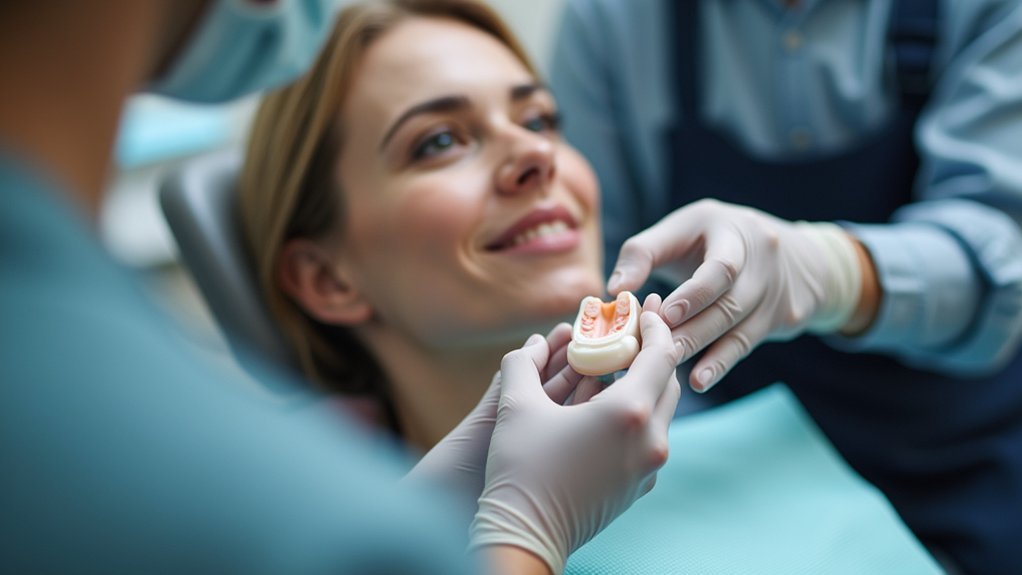
You’ll need a formal OSA diagnosis before your dentist can begin the fitting process for a custom mandibular advancement device.
During your initial consultation, they’ll take detailed dental impressions and possibly a 3D scan to capture your exact jaw structure.
These measurements become the foundation for creating your personalized device that’ll fit comfortably and work effectively.
Initial Dental Consultation Process
When you’re considering a custom mandibular advancement device for sleep apnea, the initial dental consultation serves as the foundation for your entire treatment journey. Your dentist will conduct a detailed evaluation that sets the stage for effective obstructive sleep apnea treatment.
During this appointment, your dentist will:
- Assess your sleep apnea severity and review your complete medical history
- Evaluate your dental health to confirm you’re a suitable candidate
- Take precise dental impressions of your teeth and jaw structure
- Record bite registrations to determine ideal jaw positioning
- Discuss treatment expectations and timeline for your custom-fitted device
This thorough process guarantees your mandibular advancement device will maintain an open airway effectively.
Following the consultation, you’ll schedule follow-up visits to monitor comfort levels and enhance symptom management throughout your treatment.
Custom Device Creation Steps
Once your dentist completes the initial consultation, the custom device creation process begins with capturing precise measurements of your oral anatomy.
Your dentist will take detailed dental impressions or 3D scans to guarantee your mandibular advancement device (MAD) fits perfectly. Using these measurements, they’ll fabricate a device specifically tailored to your unique mouth structure, allowing precise adjustments in jaw position to enhance airway opening.
After creation, you’ll schedule a fitting appointment where your dentist confirms proper alignment and comfort.
They’ll provide instructions on usage and maintenance. Follow-up visits are essential for monitoring progress and making necessary adjustments to your MAD. This fine-tuning process may take several weeks or months to achieve ideal positioning for effective symptom management.
Managing Side Effects and Long-Term Success With MADS
While mandibular advancement devices offer significant benefits for sleep apnea treatment, you’ll likely experience some initial side effects that require proper management for long-term success.
Managing side effects effectively guarantees your mandibular advancement devices remain comfortable and functional.
Common initial symptoms you’ll encounter include:
- Increased salivation and dry mouth during adjustment periods
- Jaw pain and gum irritation that typically resolves within weeks
- Temporary discomfort requiring gradual adaptation to wearing schedules
- Minor bite sensations that diminish with consistent use
- Initial sleep disruption while adapting to the device
Regular dental check-ups are essential for monitoring oral health and preventing long-term complications like tooth movement.
Proper care, including daily cleaning and protective storage, maintains comfort effectiveness.
With consistent use, you’ll experience reduced snoring, improved daytime sleepiness, and significant relief from apnea symptoms.
Frequently Asked Questions
Do Mandibular Advancement Devices Help Sleep Apnea?
Yes, mandibular advancement devices can help your sleep apnea by repositioning your lower jaw forward. They’ll increase your airway space, reducing apneas and improving your sleep quality, especially if you’ve got mild to moderate OSA.
Does Using a Jaw Exerciser Help Sleep Apnea?
You can’t rely on jaw exercisers alone for sleep apnea treatment. While they might strengthen jaw muscles and reduce mild snoring, they’re not proven effective substitutes for CPAP or mandibular advancement devices.
What Is the Effect of Mandibular Advancement on the Airway?
When you advance your mandible forward, you’re enlarging your airway space and stabilizing your tongue and soft throat tissues, which prevents them from collapsing and blocking your breathing passage during sleep.
How Does Jaw Surgery Help With Sleep Apnea?
Jaw surgery repositions your upper and lower jaws forward, permanently enlarging your airway space. This reduces obstructions that cause sleep apnea, improving your breathing during sleep and providing long-term symptom relief.


