
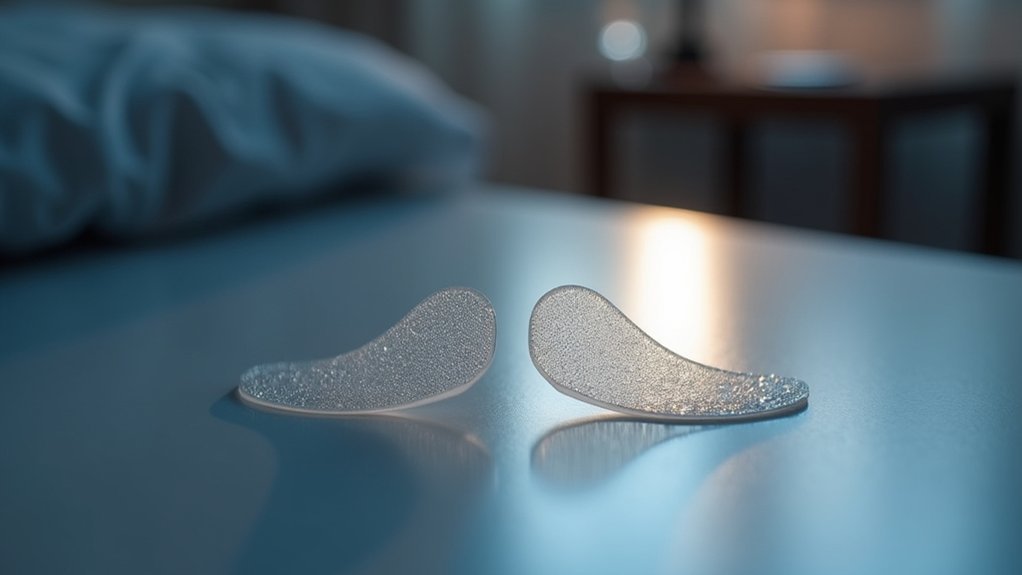
Nasal strips can provide modest relief for mild sleep apnea by mechanically lifting your nasal passages and reducing airflow resistance. They’re most effective when you have nasal congestion or physical narrowing that contributes to snoring, but they won’t address the soft tissue collapse that causes severe obstructive sleep apnea. You’ll get better results combining them with lifestyle changes or CPAP therapy rather than relying on strips alone. Understanding their limitations helps you make informed treatment decisions.
Understanding How Nasal Strips Function
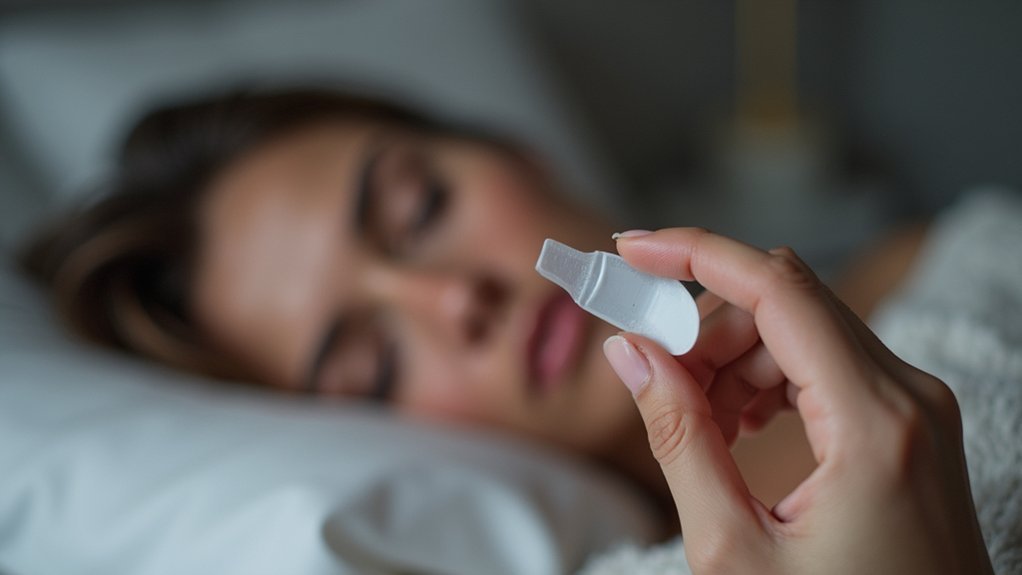
When you apply a nasal strip to your nose, you’re fundamentally creating a mechanical lift that opens your nasal passages wider. The adhesive band uses small springs that gently pull your nostrils outward, similar to propping open a door.
This widening effect reduces air resistance in your nasal passages, allowing air to flow more freely during breathing.
Nasal strips for snoring work by addressing the physical narrowing that often causes breathing difficulties. When your nasal passages are constricted, air must work harder to pass through, creating the vibrations that produce snoring sounds.
The Science Behind Nasal Strip Technology
While the concept of mechanically opening nasal passages seems straightforward, the engineering behind nasal strips involves sophisticated materials science and biomechanical principles.
Nasal strips may appear simple, but they represent a complex fusion of advanced materials engineering and human respiratory biomechanics.
These nasal dilators use spring-loaded materials that create gentle, consistent tension when applied to your nose’s exterior surface.
The technology works through four key mechanisms:
- Adhesive bonding – Medical-grade adhesives guarantee secure attachment to your skin
- Spring tension – Flexible materials generate outward force to pull nostrils apart
- Structural support – Rigid elements maintain consistent pressure throughout the night
- Airflow optimization – Increased nasal cavity space reduces breathing resistance
Research shows this mechanical approach can enhance oxygen intake and improve sleep quality by addressing nasal congestion.
However, while effective for mild breathing difficulties, these strips aren’t designed to treat serious conditions like obstructive sleep apnea.
Nasal Strips Vs Traditional Sleep Apnea Treatments
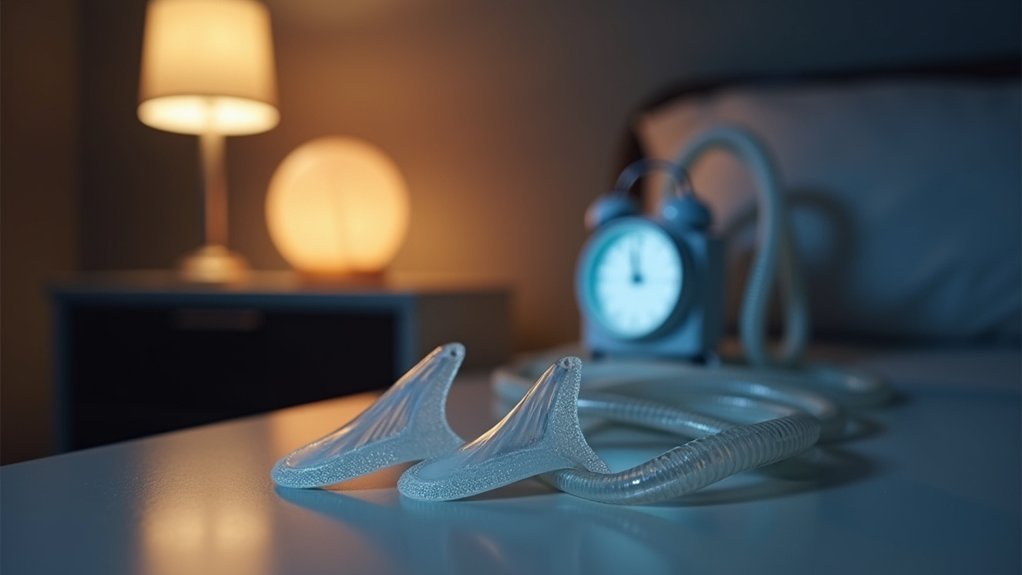
Three distinct categories of sleep apnea treatments exist, each targeting different severity levels and underlying causes.
While nasal strips offer temporary relief by increasing nasal airflow, they don’t address the fundamental issues of obstructive sleep apnea. You’ll find that CPAP machines maintain open airways throughout sleep, providing more thorough treatment than nasal strips can deliver.
If you’re dealing with nasal congestion or structural problems like a deviated septum, nasal strips might help with snoring. However, they won’t tackle soft tissue collapse that causes airway obstruction in sleep apnea patients.
Research shows nasal strips don’t notably improve sleep quality or reduce apnea events compared to traditional treatments. You’ll need to consult your healthcare provider for proper OSA management.
Clinical Research on Nasal Strip Effectiveness
You’ll find that clinical studies on nasal strip effectiveness face significant methodology limitations, including small sample sizes and inconsistent research approaches.
When you examine sleep study findings, you’ll notice a clear disconnect between participants’ subjective reports of improved sleep and the objective measurements collected during monitored sessions.
Research shows you can’t rely on these mixed results to determine whether nasal strips will actually reduce your airflow restrictions or address underlying sleep apnea causes.
Research Methodology Limitations
Although nasal strips show promise as a non-invasive treatment option, the research methodology supporting their effectiveness suffers from significant methodological flaws that undermine confidence in the results.
When you’re evaluating nasal strips as an effective treatment, you’ll encounter several critical limitations:
- Small sample sizes – Most studies include too few participants to draw meaningful conclusions about broader populations.
- Subjective reporting bias – Research relies heavily on participants’ personal accounts rather than objective sleep measurements.
- Inconsistent results – Studies produce conflicting findings, indicating weak evidence for effectiveness claims.
- Poor variable control – Researchers often fail to account for sleep apnea and other conditions affecting snoring.
These methodology issues make it difficult to determine whether nasal strips truly provide reliable apnea relief.
Sleep Study Findings
When researchers conduct clinical sleep studies on nasal strip effectiveness, they’ve discovered a troubling disconnect between what users report and what objective measurements actually show. You’ll find that sleep study data reveals inconsistent results regarding nasal strips’ actual impact on sleep disorders, particularly sleep apnea.
| Study Type | Subjective Results | Objective Results |
|---|---|---|
| User Reports | Reduced snoring intensity | No significant sleep study changes |
| Nasal Airflow Tests | Improved breathing sensation | Mixed airflow measurements |
| Sleep Quality Surveys | Better sleep perception | Inconsistent polysomnography data |
You’re dealing with individual variations that make definitive conclusions challenging. While nasal strips might help with congestion-related snoring, they’re ineffective for obstructive sleep apnea. Larger sample sizes and rigorous methodologies are needed to establish clear effectiveness patterns for your specific sleep issues.
When Nasal Strips Work Best for Sleep Apnea

You’ll find nasal strips most effective if you’re dealing with mild sleep apnea rather than severe cases.
They work particularly well when you’re already using CPAP therapy, as the strips can enhance airflow and reduce mask leaks.
Your best results occur when nasal congestion contributes considerably to your sleep-disordered breathing patterns.
Mild Sleep Apnea Cases
Why might nasal strips offer the most promise for certain sleep apnea sufferers? If you have mild sleep apnea, you’re in the best position to benefit from nasal strips.
These simple devices can widen your nasal passages and improve airflow during sleep, potentially reducing your symptoms.
For mild sleep apnea cases, nasal strips work most effectively when you:
- Combine them with lifestyle changes like weight loss and side sleeping
- Use them consistently every night for ideal results
- Have primarily nasal congestion issues contributing to your sleep disruption
- Experience mild snoring alongside your sleep apnea symptoms
Combined CPAP Therapy
Although CPAP machines remain the gold standard for moderate to severe sleep apnea, nasal strips can greatly enhance your therapy experience. When you combine nasal strips with your CPAP machine, you’ll likely notice improved airflow through your nasal passages, making breathing easier throughout the night.
The strips help reduce nasal congestion and inflammation, leading to better comfort and increased therapy adherence.
You’ll find that nasal strips minimize snoring and airflow turbulence, potentially improving your overall sleep quality.
However, proper application is essential – incorrect placement can interfere with your CPAP mask fit, causing air leaks that reduce therapy effectiveness.
Limitations of Nasal Strips for Severe Sleep Apnea
While nasal strips can provide modest improvements in airflow and reduce snoring for some users, they fall short as a definitive solution for severe sleep apnea.
Nasal strips offer limited relief for mild snoring but cannot effectively treat the underlying causes of severe sleep apnea.
You’ll find they don’t address the underlying airway obstruction that characterizes obstructive sleep apnea.
Key limitations include:
- Temporary relief only – They’re considered a short-term measure rather than long-term treatment.
- Variable effectiveness – Results differ greatly between individuals.
- Surface-level treatment – They help with nasal congestion but don’t tackle deeper airway issues.
- Inadequate for severe cases – They can’t replace thorough therapies like CPAP.
If you’re among people with sleep apnea experiencing severe symptoms, nasal strips won’t provide sufficient relief.
You’ll need professional evaluation and prescribed interventions to address considerable health risks properly.
Combining Nasal Strips With CPAP Therapy
You can enhance your CPAP therapy’s effectiveness by adding nasal strips to your sleep routine, but you’ll need to verify they’re compatible with your specific mask type.
While this combination often leads to better sleep quality and reduced snoring, you must position the strips carefully to avoid creating air leaks that could compromise your treatment.
Testing different strip sizes and monitoring your mask’s seal will help you find the right balance between improved nasal airflow and maintaining ideal CPAP pressure.
CPAP Mask Compatibility
Here’s how to optimize compatibility:
- Position strips precisely – Place them below your mask’s nasal bridge to prevent air leaks that compromise therapy effectiveness.
- Test adhesive sensitivity – Try different strip materials on your skin before committing to nightly use with your CPAP setup.
- Choose appropriate sizes – Select strips that complement your mask’s dimensions without creating gaps or interference.
- Monitor seal integrity – Check that strips don’t disrupt your mask’s air seal, which could reduce treatment pressure.
This combination can greatly improve airflow and reduce nasal resistance while maintaining proper CPAP pressure delivery.
Enhanced Sleep Quality
Beyond achieving proper mask compatibility, combining nasal strips with CPAP therapy delivers measurable improvements in your overall sleep experience.
You’ll notice reduced nasal congestion and enhanced airflow, which directly translates to more restful nights. The strips work synergistically with your CPAP machine to minimize air leaks, ensuring ideal therapeutic pressure throughout the night.
When you use nasal strips alongside CPAP therapy, you’re likely to experience decreased discomfort and irritation from congestion. This combination approach helps enhance sleep quality by addressing multiple breathing obstacles simultaneously.
Studies show this pairing considerably reduces snoring intensity, benefiting both you and your partner. The improved airflow and reduced resistance mean your CPAP machine operates more efficiently, delivering consistent therapeutic benefits that result in deeper, more rejuvenating sleep cycles.
Potential Air Leak Issues
While nasal strips can greatly improve your CPAP experience, improper placement creates air leak complications that undermine your therapy’s effectiveness.
When positioning nasal strips incorrectly, they’ll interfere with your mask’s seal around the nose bridge and sides. These air leaks reduce the prescribed pressure delivery, making your treatment less effective and potentially triggering your machine’s leak compensation features.
To prevent air leaks when using nasal strips with CPAP therapy:
- Test strip placement before sleep to guarantee your mask maintains proper contact.
- Choose compatible strips that work with your specific mask design and size.
- Monitor leak readings on your CPAP machine to identify seal problems.
- Adjust strip position if you notice increased leak rates during therapy.
Always prioritize maintaining your mask’s seal integrity over nasal strip placement for maximum treatment results.
Side Effects and Safety Considerations
Most people who use nasal strips experience only mild side effects that are easily manageable. You might notice skin irritation or redness where the strip adheres, but these effects typically aren’t severe.
Some users feel mild discomfort or an urge to sneeze while wearing strips, which often indicates sensitivity issues or incorrect sizing.
Mild discomfort or sneezing while wearing nasal strips typically signals sensitivity reactions or improper strip sizing.
If you use a CPAP machine, proper positioning is essential to prevent air leaks and skin irritation. Before regular use, test for sensitivity if you’re allergic to adhesives.
While nasal strips are generally safe and effective for most users, they shouldn’t replace medical treatment for conditions like obstructive sleep apnea.
Long-term use is considered safe, making nasal strips a reliable option for managing your breathing concerns.
Choosing the Right Nasal Strip Type and Size
How do you find the nasal strip that works best for your specific needs? Selecting effective nasal strips requires careful consideration of several key factors to guarantee ideal comfort and breathing improvement.
To choose the right size and type for maximum effectiveness:
- Measure your nasal bridge – Different nose shapes require specific strip sizes for proper adhesion and airflow enhancement.
- Consider material sensitivity – If you experience irritation, switch to hypoallergenic or different adhesive materials.
- Evaluate breathing needs – Two-part nasal dilator systems offer increased airflow capacity for severe congestion issues.
- Consult healthcare professionals – They’ll help determine the most suitable option for structural concerns or chronic conditions.
Remember to place strips above your nostril flares for maximum benefit, and don’t hesitate to try different sizes until you find your perfect fit.
Alternative Nasal Breathing Aids
If you’re finding nasal strips aren’t providing enough relief, you’ve got other breathing aids to examine.
Internal nasal dilators work from inside your nostrils to keep airways open, offering a different approach than external strips.
You can also explore oral appliances that reposition your jaw and tongue during sleep to maintain clear breathing passages.
Internal Nasal Dilators
Innovation in nasal breathing aids extends beyond external strips to include internal nasal dilators—small devices you insert directly into your nostrils to physically hold them open.
These discreet alternatives work invisibly inside your nose, making them perfect when you don’t want visible external solutions.
Internal nasal dilators can greatly reduce snoring and improve your breathing quality through several key benefits:
- Enhanced Airflow: Studies show they increase airflow by 30% to 50%
- Complete Discretion: Unlike strips, they’re completely invisible to others
- Drug-Free Relief: Ideal for chronic congestion from allergies or structural issues
- Minimal Side Effects: Generally well-tolerated with comfortable, long-term use
You’ll find these devices particularly effective for addressing sleep apnea symptoms while providing consistent breathing improvement during both sleep and daily activities.
Oral Appliance Options
While nasal strips and internal dilators focus on improving airflow through your nose, oral appliances take a different approach by repositioning your jaw or tongue to prevent airway obstruction during sleep.
These custom-made devices effectively reduce snoring frequency and severity, making them valuable alternatives to nasal strips for many users.
You’ll find oral appliances particularly beneficial if you have mild to moderate obstructive sleep apnea. They’re designed to improve airflow by maintaining an open airway throughout the night.
However, you might experience initial discomfort, including dry mouth, chewing difficulties, and drooling. Most users adapt over time.
Consulting with a dentist or sleep specialist is essential for proper selection and fitting, ensuring ideal function and comfort for your specific needs.
Lifestyle Changes to Enhance Nasal Strip Benefits
Although nasal strips can provide immediate relief from nasal congestion and snoring, you’ll achieve better results when you combine them with strategic lifestyle modifications.
Maximize nasal strip effectiveness by pairing them with smart lifestyle changes for dramatically improved breathing and sleep quality.
These lifestyle changes work synergistically with nasal strips to improve your night’s rest and breathing quality.
Consider implementing these complementary strategies:
- Sleep positioning – Switch to side sleeping and elevate your head 30 degrees to minimize airway obstruction and enhance airflow naturally.
- Weight management – Maintain a healthy weight through regular exercise and balanced nutrition to reduce snoring likelihood.
- Evening habits – Avoid alcohol and sedatives before bedtime to prevent throat muscle relaxation that counteracts nasal strip benefits.
- Nasal hygiene – Use regular saline rinses or decongestants to keep passages clear, reducing airflow resistance for peak strip effectiveness.
Cost Comparison of Sleep Apnea Treatment Options
When shopping for sleep apnea relief, you’ll find treatment costs vary dramatically across different approaches. Budget-friendly nasal strips and mouth tapes offer starting points, while specialized mouthpieces represent higher investments.
| Treatment Option | Price | Target Issue |
|---|---|---|
| SnoreLessNow Nasal Dilator | $17.99 | Airflow improvement |
| Somnifix Mouth Strips | $24.99 | Mouth breathing |
| Intake Breathing Nasal Strip Kit | $59.98 | Snoring/congestion |
| ApneaRx Sleep Apnea Mouthpiece | $199.00 | Airway positioning |
You’ll notice nasal strips provide the most affordable entry point for addressing breathing issues during sleep. However, it’s important to understand that while these strips help with snoring, they aren’t substitutes for advanced sleep apnea treatments. Severe cases may require CPAP machines, which involve considerably higher costs beyond these basic options.
Expert Recommendations for Nasal Strip Use
Sleep specialists consistently recommend nasal strips as a first-line approach for addressing mild snoring issues, particularly if you don’t have diagnosed obstructive sleep apnea.
Healthcare providers emphasize proper evaluation before suggesting these adhesive devices as temporary solutions.
Experts recommend following these guidelines for best nasal strips effectiveness:
- Get screened first – Have a healthcare provider assess you for obstructive sleep apnea before relying on nasal strips.
- Position correctly – Place strips above your nostril flares to properly open nasal passages.
- Test different options – Experiment with various sizes and materials until you find comfortable fit.
- Monitor results – Track improvements in snoring intensity and sleep quality over time.
Making an Informed Decision About Your Sleep Health
Understanding these expert guidelines helps you approach nasal strips with realistic expectations, but your broader sleep health deserves careful consideration beyond any single device.
| Sleep Issue | Nasal Strip Effectiveness |
|---|---|
| Simple snoring | May provide temporary relief |
| Sleep apnea symptoms | Inadequate as primary treatment |
| Loud snoring + fatigue | Requires medical evaluation |
| Mild airflow issues | Complementary benefit possible |
You shouldn’t rely on nasal strips if you’re experiencing sleep apnea symptoms like loud snoring and daytime sleepiness. These signs warrant professional medical evaluation for proper diagnosis and treatment options, including CPAP machines.
Instead, combine lifestyle changes with any nasal strip use. Weight loss, avoiding alcohol, and side-sleeping can greatly improve your sleep quality. Remember, nasal strips work best as part of a thorough approach rather than a standalone solution for serious sleep disorders.
Frequently Asked Questions
Do Nose Strips Work for Apnea?
You’ll find that nose strips don’t effectively treat sleep apnea. They might reduce snoring by opening your nostrils, but they won’t address the deeper airway obstructions causing apnea episodes during sleep.
What Are the Negatives of Nasal Strips?
You’ll face skin irritation from adhesives, mild discomfort while wearing them, potential sneezing, and possible dependency on external aids. They’re ineffective for sleep apnea and won’t work equally well for everyone.
What Works Better Than Nasal Strips?
You’ll find internal nasal dilators, oral appliances, and CPAP machines work better than nasal strips. Lifestyle changes like weight loss and side sleeping, plus nasal decongestants, provide more effective, lasting relief.
Do Nasal Sticks Help With Sleep Apnea?
Nasal sticks won’t effectively treat your sleep apnea, though they might reduce snoring slightly. You’ll need proven treatments like CPAP machines to address breathing interruptions. Consult your doctor for proper evaluation and treatment.


