

You can stop sleep apnea partner disruption by encouraging professional medical evaluation and sleep studies, supporting CPAP therapy compliance, and optimizing your bedroom environment with temperature control between 60-67°F, blackout curtains, and white noise machines. Maintain open communication about sleep quality, develop flexible bedtime routines, and don’t hesitate to use temporary separate sleeping arrangements when necessary. Connect with support communities for practical strategies while prioritizing your own sleep health through consistent schedules and protective measures that’ll transform your nightly experience.
Recognize Sleep Apnea Warning Signs and Symptoms
Your partner’s loud, persistent snoring might signal more than just a noisy night – it could indicate sleep apnea, a serious condition that disrupts both of your sleep cycles.
You’ll need to recognize sleep apnea warning signs beyond loud snoring alone. Watch for gasping episodes during sleep, where your partner suddenly stops breathing then jolts awake.
Notice if they experience excessive daytime sleepiness, struggling to stay alert despite seemingly adequate sleep time. Other red flags include morning headaches, night sweats, and waking with a dry mouth or sore throat.
Consider risk factors like obesity, high blood pressure, or wide neck circumference. If your partner has sleep apnea symptoms, prompt medical evaluation prevents serious complications like heart disease.
Encourage Professional Medical Evaluation and Sleep Study
Once you’ve identified potential sleep apnea symptoms in your partner, scheduling a professional medical evaluation becomes the critical next step for obtaining an accurate diagnosis.
A doctor can properly assess the signs of sleep apnea and determine if further testing is necessary.
A sleep study, or polysomnography, provides the most thorough analysis by recording brain waves, oxygen levels, and heart rhythm throughout the night.
While home sleep tests offer convenience, sleep clinics remain the gold standard for accurate diagnosis.
Sleep clinics provide the most comprehensive and reliable diagnosis compared to at-home testing options.
Before scheduling, check your health insurance coverage, as most providers cover sleep studies.
Early professional medical evaluation and proper sleep apnea treatment can prevent serious complications like heart disease and high blood pressure while restoring peaceful nights for both partners.
Create a Sleep-Optimized Bedroom Environment
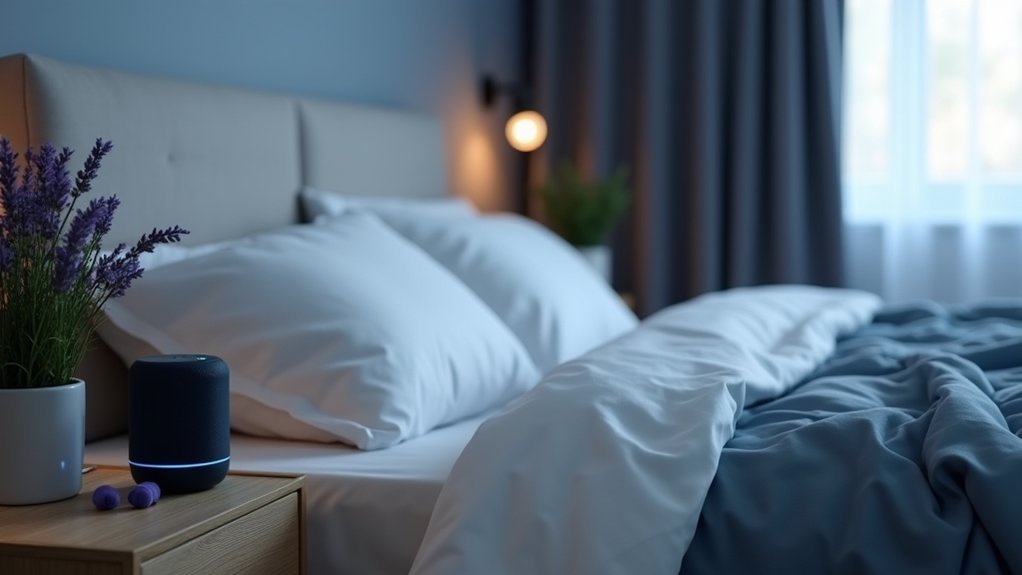
You can greatly improve your sleep quality and reduce apnea-related disruptions by optimizing your bedroom’s physical environment.
Start by controlling temperature and lighting, as these factors directly impact both your body’s natural sleep processes and your partner’s apnea symptoms.
Focus next on implementing effective noise reduction solutions that’ll help mask disruptive sounds while creating a more peaceful sleep sanctuary for both of you.
Temperature and Lighting Control
While sleep apnea creates enough challenges on its own, an improperly configured bedroom environment can amplify disruptions for both you and your partner.
Temperature control plays a vital role in minimizing sleep disturbances. Set your thermostat between 60-67°F to help lower your body temperature and promote deeper, more restful sleep for both of you.
Lighting management is equally important for ideal sleep quality. Install blackout curtains to eliminate external light sources that can fragment your sleep cycles.
During evening hours, dim your bedroom lights to trigger natural melatonin production. Consider smart lighting systems that gradually adjust color temperature as bedtime approaches, creating a calming atmosphere.
This combination of proper temperature and lighting control greatly reduces apnea-related disruptions.
Noise Reduction Solutions
Because noise disruptions can greatly impact both partners’ sleep quality, implementing effective sound management strategies becomes essential for creating a harmonious bedroom environment.
White noise machines provide consistent ambient sound that masks disruptive noises from snoring or CPAP equipment, creating a more peaceful atmosphere for both partners.
You’ll want to take into account soundproofing measures like heavy curtains, rugs, or acoustic panels to minimize external disturbances and enhance your bedroom’s sound insulation.
Earplugs offer an immediate solution for the non-apnea partner, considerably reducing snoring sounds and allowing uninterrupted sleep.
Establish a “no screens” rule thirty minutes before bedtime to maintain calm quietness and promote relaxation.
These noise reduction solutions work together to create an ideal sleep environment despite potential disruptions.
Support CPAP Therapy Compliance and Usage
You’ll play an essential role in helping your partner stick to their CPAP therapy by offering gentle reminders and celebrating their progress.
Creating a supportive atmosphere where you assist with equipment maintenance shows your commitment to their health and makes compliance easier.
Your encouragement can transform what feels like a burdensome treatment into a shared journey toward better sleep and improved well-being.
Encourage Daily CPAP Use
When your partner consistently uses their CPAP machine every night, you’ll notice dramatic improvements in both your sleep quality and relationship dynamics. CPAP (continuous positive airway pressure) therapy eliminates the disruptive breathing interruptions that previously affected both of you.
You can encourage your partner by celebrating small victories and tracking their progress together using the machine’s built-in data features.
If your partner’s snoring keeps returning, gently remind them about their therapy without being confrontational. Create supportive bedtime routines that make CPAP use feel natural rather than burdensome.
Consider scheduling follow-ups with their sleep medicine specialist to address any equipment issues or comfort concerns. When you encourage your partner consistently while maintaining patience, you’re investing in better health outcomes and stronger relationship satisfaction for both of you.
Create Supportive Sleep Environment
Creating an ideal sleep environment greatly boosts your partner’s CPAP compliance while improving rest quality for both of you.
Keep your bedroom cool, dark, and quiet to enhance CPAP therapy effectiveness and minimize external disruptions. Establish regular sleep schedules that help synchronize your patterns, making adaptation easier for everyone.
Use white noise machines to mask CPAP sounds, creating a peaceful atmosphere that supports consistent usage. Before bedtime, practice relaxation techniques like meditation or gentle stretching together—this helps you both unwind and adjust more comfortably to the therapy routine.
Designate your bedroom as a “no screens” zone to eliminate distractions and encourage restfulness.
This supportive sleep environment promotes better CPAP adherence while considerably improving your overall quality of life as a couple.
Learn to Operate and Maintain Sleep Apnea Equipment
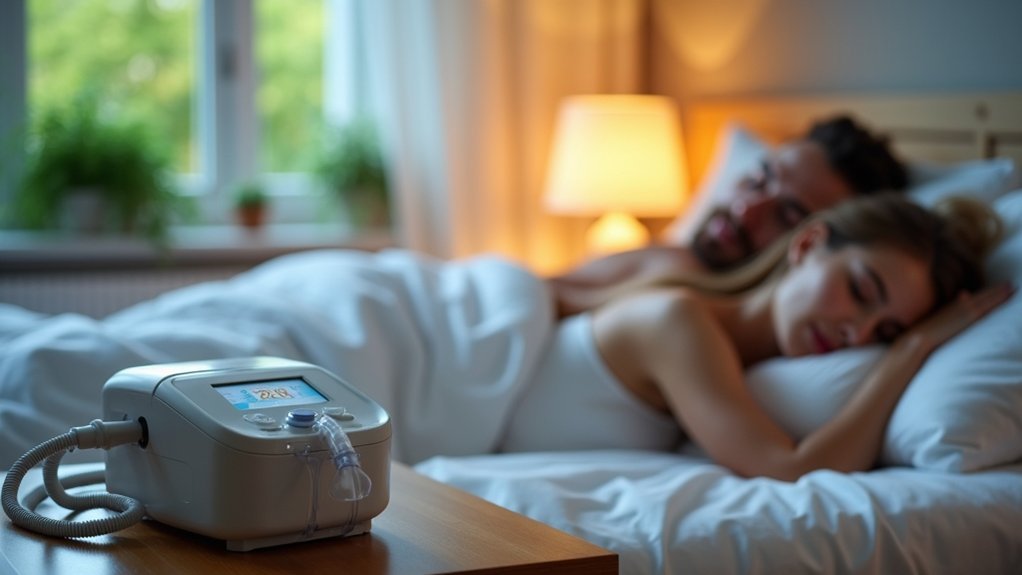
Proper operation and maintenance of your CPAP equipment forms the foundation of successful sleep apnea treatment and peaceful nights for both you and your partner.
Start by familiarizing yourself with your machine’s components—motor, tubing, and CPAP mask—to guarantee correct setup and ideal function for your health.
Clean your CPAP mask, tubing, and water chamber daily with mild soap and warm water to prevent bacterial growth.
Adjust your mask for a secure fit that minimizes air leaks, which can disrupt treatment effectiveness and cause uncomfortable sleeping.
Monitor your machine’s pressure settings and consult your healthcare provider about necessary adjustments.
Use built-in data tracking features to review your sleep patterns and therapy adherence, helping you enhance your sleep apnea treatment outcomes.
Implement Healthy Lifestyle Changes Together
Although sleep apnea equipment provides essential treatment, you’ll achieve the best results by making healthy lifestyle changes together with your partner. These modifications can greatly reduce sleep disruptions and improve your overall health.
Working as a team makes implementing these changes easier and more sustainable:
- Adopt a heart-healthy diet rich in fruits, vegetables, whole grains, and lean proteins to support weight loss and manage sleep apnea symptoms.
- Exercise regularly with at least 150 minutes of brisk walking or cycling weekly to improve fitness and reduce disruptions.
- Limit alcohol and sedatives before bedtime to decrease episode severity and promote regular sleep patterns.
- Practice stress-reduction techniques like yoga, meditation, or mindfulness to enhance sleep quality and well-being.
These healthy lifestyle changes create a supportive environment where both partners benefit from improved sleep and reduced apnea-related disruptions.
Practice Open and Respectful Communication
Honesty forms the foundation of successfully managing sleep apnea as a couple. Open and respectful communication helps you both understand sleep apnea’s impact on your relationship. Discussing sleep-related concerns calmly allows you to identify specific problems like snoring or gasping together.
Record instances of sleep disruptions to provide concrete evidence during conversations with your partner with sleep apnea. This approach makes addressing issues constructively easier during the adjustment period.
| Communication Strategy | Purpose | Outcome |
|---|---|---|
| Regular sleep quality check-ins | Share feelings and frustrations | Both partners stay informed |
| Patient, understanding approach | Minimize relationship conflicts | Supportive treatment environment |
| Collaborative problem-solving | Address specific sleep issues | Stronger partnership |
| Evidence-based discussions | Present tangible sleep data | More productive conversations |
Establish these communication patterns to encourage treatment adherence while maintaining relationship harmony.
Develop Flexible Bedtime Routines and Arrangements
When sleep apnea disrupts your nightly routine, developing flexible bedtime arrangements becomes essential for both partners’ rest and relationship harmony.
You’ll need to accommodate individual sleep needs while minimizing disruptions that affect your partner’s quality of rest.
Creating adaptable sleep schedules helps reduce conflicts and promotes better sleep for everyone involved:
- Establish consistent wind-down periods that signal your body to prepare for rest
- Create a “no-screens” bedroom zone to enhance sleep hygiene for both partners
- Use white noise machines to mask CPAP device sounds or snoring
- Allow bedtime adjustments based on comfort levels and energy patterns
These flexible bedtime routines let you address sleep apnea symptoms while maintaining your relationship’s stability.
Connect With Sleep Apnea Support Communities
Beyond creating better bedtime arrangements, finding others who understand your sleep apnea journey can greatly reduce the isolation and frustration that both you and your partner experience.
Support communities offer invaluable connections with people facing similar challenges, providing practical coping strategies and insights about the latest treatment options.
Connecting with others who share your sleep apnea experience provides essential support and practical treatment insights.
You’ll discover proven tips for managing CPAP therapy, learn from others’ successes and setbacks, and gain access to educational resources like webinars and expert sessions.
These groups create accountability that helps you stick to your treatment plan while your partner benefits from understanding they’re not alone in this struggle.
Regular participation considerably improves emotional well-being as you openly discuss challenges and celebrate victories together, strengthening both your relationship and sleep health outcomes.
Prioritize Your Own Sleep Health and Well-being
Self-preservation isn’t selfish when you’re supporting a partner with sleep apnea—it’s crucial for both of your well-being. Your sleep health directly affects your ability to provide support while maintaining your own physical and mental wellness.
Sleep deprivation increases your risk of cardiovascular disease, obesity, and diabetes. Chronic exhaustion also leads to daytime sleepiness, irritability, and heightened stress levels that compromise your effectiveness as a supportive partner.
Consider these strategies to protect your sleep health:
- Use earplugs or white noise machines to minimize snoring disruptions
- Implement temporary separate sleeping arrangements when necessary
- Maintain consistent sleep schedules despite your partner’s symptoms
- Monitor your own energy levels and mood changes
Consulting with a healthcare professional about your sleep concerns guarantees you receive personalized guidance for maintaining ideal rest while supporting your partner’s treatment journey.
Frequently Asked Questions
How to Support a Partner With Sleep Apnea?
You’ll support your partner by encouraging consistent CPAP use, creating a sleep-friendly bedroom environment, communicating openly about challenges, suggesting healthy lifestyle changes, and accompanying them to medical appointments.
What Is the 3% Rule for Sleep Apnea?
The 3% rule means you’re at risk for health complications if you spend 3% or more of your sleep time in apnea events, typically corresponding to an AHI of 5 or higher.
How to Block Out Your Partner’s Snoring?
You can block out your partner’s snoring by using earplugs or noise-canceling headphones. Try a white noise machine to mask sounds, or consider sleeping in separate rooms for better rest.
Why Do I Wake up After 4 Hours on My CPAP Machine?
You’re likely waking up due to mask discomfort, air leaks, or incorrect pressure settings. Your CPAP mask might not fit properly, causing anxiety or pressure sores that disrupt your sleep cycle after four hours.


