
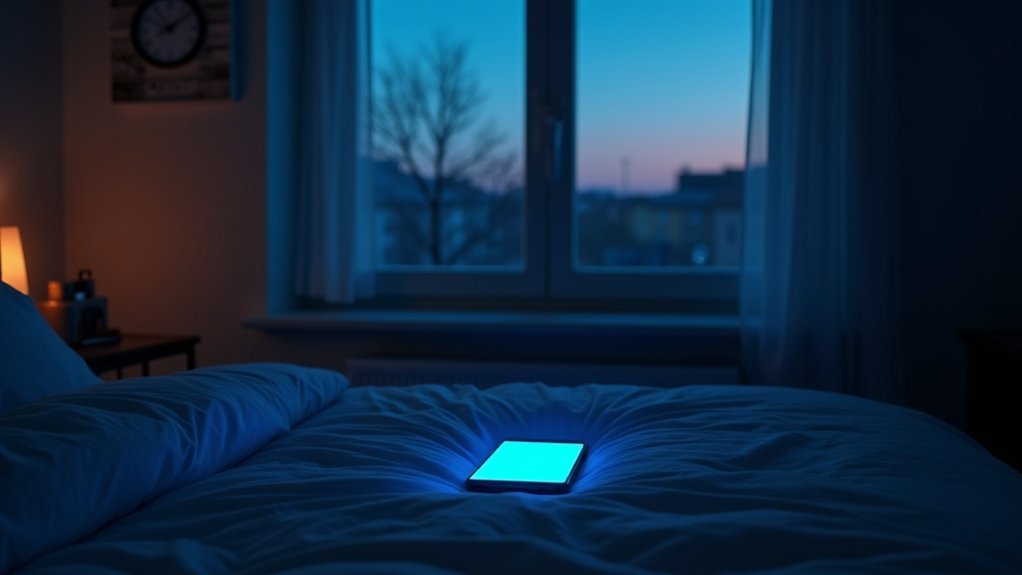
Blue light directly controls your circadian rhythms by signaling specialized cells in your eyes that communicate with your brain’s master clock. When you’re exposed to blue light from sunlight during the day, it keeps you alert and suppresses melatonin production. However, evening exposure from smartphones and computers tricks your body into thinking it’s still daytime, delaying sleep onset and disrupting your natural sleep-wake cycle. Understanding these mechanisms will help you optimize your daily light exposure patterns.
Understanding Blue Light and Its Natural Sources

When you step outside on a sunny day, you’re exposed to blue light—a powerful component of the visible light spectrum that spans wavelengths from 380 to 500 nanometers. This natural light makes up roughly one-third of all visible light and serves as your body’s primary timekeeper.
Your exposure to light from the sun helps synchronize your internal clock, signaling when you should feel alert and energized. Throughout evolution, your circadian rhythms have relied on natural sources like sunlight to regulate essential functions.
During daylight hours, blue light suppresses melatonin production, keeping you awake and focused. However, modern artificial sources—including smartphones, computers, and LED lighting—now extend your blue light exposure well into evening hours, potentially disrupting your sleep quality and overall health.
How Blue Light Regulates Your Internal Body Clock
Your eyes contain specialized ganglion cells that detect blue light and send powerful signals to your brain’s master clock, fundamentally telling it whether it’s day or night.
These blue light mechanisms trigger a cascade of physiological responses that elevate your body temperature and heart rate while suppressing melatonin production.
When you’re exposed to blue light at the wrong times, particularly in the evening, you’ll experience circadian phase shifts that can delay your natural sleep onset and disrupt your entire sleep-wake cycle.
Blue Light Mechanisms
Although light exposure affects your body clock throughout the day, blue light operates through a remarkably specific biological pathway that directly controls your circadian rhythms. Short-wavelength light around 490 nanometers activates specialized ganglion cells in your retina, which send signals directly to your internal clock. This exposure during daytime promotes alertness and synchronizes healthy sleep patterns.
However, when you’re exposed to blue light at night—particularly from electronic devices—it powerfully suppresses your melatonin levels. Even dim blue light can interfere with melatonin production more effectively than other light types, causing sleep delays and poor sleep quality.
Chronic nighttime exposure disrupts circadian alignment, potentially leading to metabolic disorders and compromising your overall health.
Circadian Phase Shifts
Since your internal body clock operates on a roughly 24-hour cycle, any disruption to this natural rhythm creates what scientists call circadian phase shifts—essentially moving your sleep-wake schedule forward or backward from its ideal timing.
Blue light exposure, particularly around 490 nanometers, triggers these phase shifts by activating specialized retinal cells that directly communicate with your internal body clock.
When you’re exposed to blue light during evening hours, it delays your circadian rhythms and suppresses melatonin secretion, pushing your sleep schedule later.
Even dim blue light from electronic devices can cause significant shifts, increasing your risk of sleep disorders and associated health issues.
This disruption is especially problematic for shift workers and frequent device users before bedtime.
Digital Devices and Artificial Light Exposure After Dark
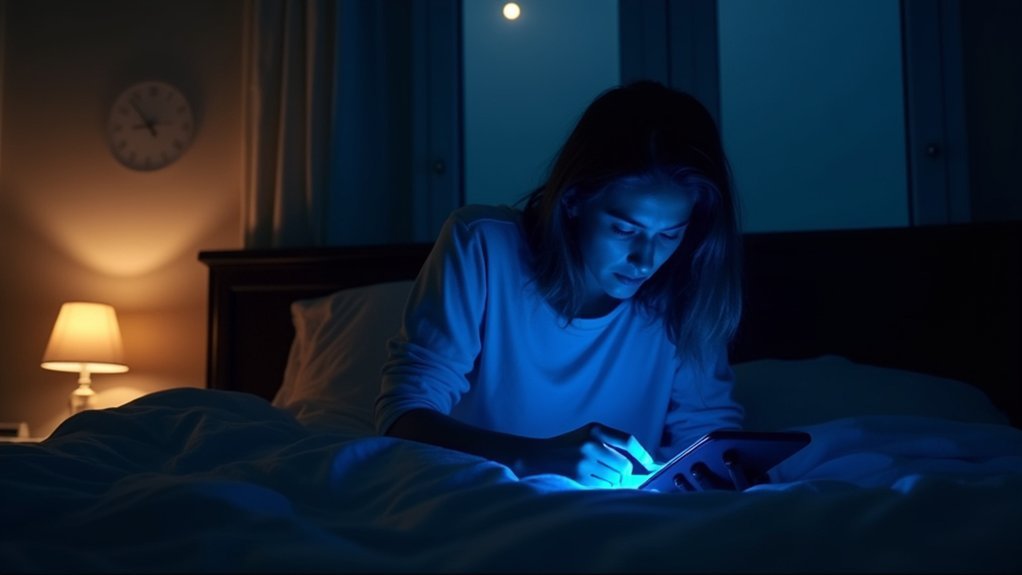
When evening arrives and you reach for your smartphone, tablet, or computer, you’re exposing yourself to powerful blue light emissions that can greatly disrupt your body’s natural sleep-wake cycle.
These digital devices flood your eyes with artificial light that suppresses melatonin production, making it considerably harder to fall asleep and maintain quality rest.
Research shows 80% of American adults use their devices for over two hours daily, often within an hour of bedtime.
This exposure interferes with your circadian rhythms and increases health risks like obesity and diabetes. Even dim screen light can throw off your body’s natural timing.
You can protect your sleep quality by using blue light filters or specialized apps that reduce harmful wavelengths after dark.
The Science Behind Melatonin Suppression and Sleep Disruption
When you’re exposed to blue light, especially in the evening, it directly interferes with your pineal gland’s ability to produce melatonin, the hormone that signals your body it’s time to sleep.
This suppression doesn’t just delay when you fall asleep—it fundamentally disrupts your entire sleep architecture, making your rest less restorative and pushing your circadian clock out of sync with natural day-night cycles.
The science shows that even small amounts of blue light can trigger these cascading effects, creating a domino effect that impacts everything from your sleep quality to your overall health.
Melatonin Production Mechanisms
Although your body naturally winds down as darkness falls, the blue light streaming from your devices disrupts this ancient biological process by interfering with melatonin production. Your pineal gland typically responds to darkness by releasing this vital sleep hormone, but blue light exposure can suppress these levels more intensely than other wavelengths.
Understanding how your circadian rhythms become disrupted involves recognizing three key mechanisms:
- Light Detection: Your eyes detect blue light and signal your brain to halt melatonin release.
- Hormonal Suppression: Even dim screen light can considerably reduce melatonin levels throughout the night.
- Extended Impact: Blue light’s suppression effects last longer than other light types, compromising your sleep quality.
This disruption explains why evening screen time makes falling asleep difficult and reduces overall rest effectiveness.
Blue Light Suppression Effects
Research reveals that blue light’s suppression of melatonin isn’t just temporary—it creates a cascade of biological disruptions that can persist for hours after exposure ends.
When you’re exposed to blue light at night, your body dramatically reduces melatonin production more than other light wavelengths. Even dim exposure can suppress this vital sleep hormone, disrupting your circadian rhythms and compromising sleep quality.
The effects extend beyond immediate sleep problems. Chronic exposure to blue light during nighttime hours shifts your natural biological clock, making it increasingly difficult to fall asleep and maintain restful sleep.
These disruptions don’t just affect your rest—they’re linked to serious health outcomes including metabolic disorders and mental health issues, demonstrating how deeply blue light impacts your body’s fundamental regulatory systems.
Sleep Cycle Disruption
Understanding exactly how blue light disrupts your sleep requires examining the intricate relationship between light exposure and melatonin production.
When you’re exposed to blue light before bedtime, your brain markedly reduces melatonin secretion, making it difficult to fall asleep naturally. This creates a cascade of sleep cycle disruption that affects your internal clock’s timing.
Health professionals identify three primary ways blue light damages your circadian rhythms:
- Delayed sleep onset – Your body struggles to initiate sleep when melatonin levels remain suppressed.
- Shifted timing patterns – Your internal clock becomes misaligned with natural day-night cycles.
- Reduced sleep quality – Even low blue light levels interfere with deep, restorative sleep phases.
Chronic disruption can lead to serious metabolic disorders, including diabetes and heart disease.
Individual Differences in Light Sensitivity and Circadian Response
When you’re exposed to blue light in the evening, your body’s response isn’t identical to everyone else’s—individual differences in light sensitivity create a spectrum of circadian reactions that can dramatically affect sleep quality. Your genetic factors play a significant role, particularly variations in the melanopsin gene that influence how your eyes detect blue light exposure and signal your brain.
| Factor | Impact on Light Sensitivity |
|---|---|
| Chronotype | Night owls experience greater circadian disruption from evening blue light |
| Age | Older adults show reduced blue light processing compared to younger individuals |
| Genetics | Melanopsin gene variations affect individual photoreception responses |
Environmental factors like light intensity and exposure duration interact with your unique biology, making your circadian rhythms more or less vulnerable to blue light’s disruptive effects.
Evidence-Based Strategies for Managing Evening Light Exposure
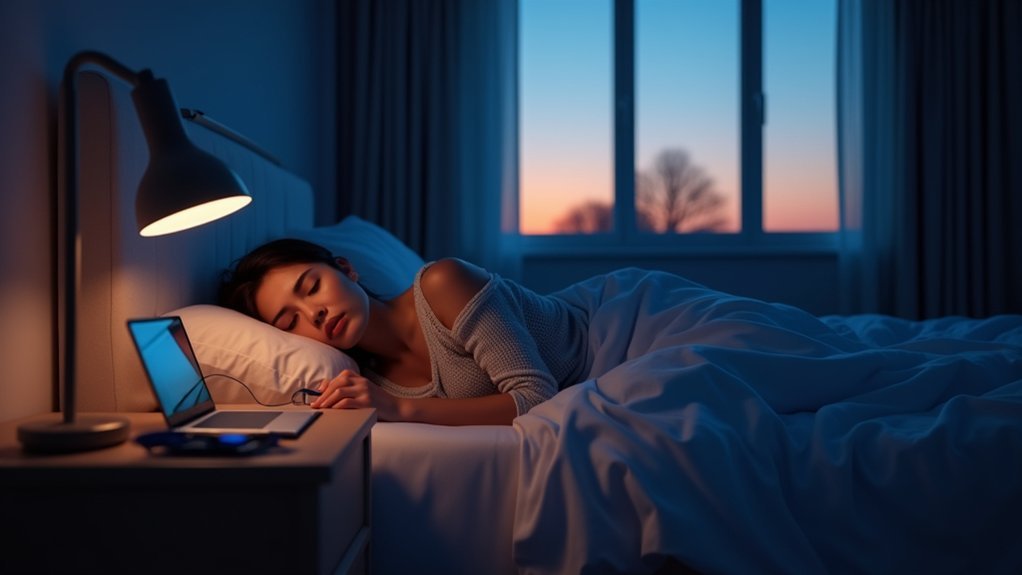
Since you’ve learned how individual differences affect your light sensitivity, implementing targeted strategies becomes essential for protecting your circadian rhythms from evening blue light disruption.
Research shows that reducing blue light exposure markedly improves melatonin production and sleep quality.
Limiting blue light exposure in the evening significantly enhances your body’s natural melatonin production and overall sleep quality.
Here are three evidence-based approaches for managing evening light exposure:
- Use protective eyewear and device settings – Blue-light blocking glasses or amber-tinted lenses filter harmful wavelengths, while activating night mode on devices reduces blue light emission from screens.
- Follow the 20-20-20 rule – During screen time, look at something 20 feet away for 20 seconds every 20 minutes to minimize digital eye strain.
- Establish consistent evening routine boundaries – Turn off bright screens 2-3 hours before bedtime to support your body’s natural circadian rhythm alignment.
Frequently Asked Questions
How Does Blue Light Affect Circadian Rhythms?
You’ll experience disrupted sleep when blue light suppresses your melatonin production, especially during evening hours. It delays your sleep onset, reduces sleep quality, and shifts your natural circadian rhythm timing considerably.
What Does Blue Light Do to Affect Sleep?
Blue light suppresses your body’s melatonin production, making it harder for you to fall asleep. It also elevates your heart rate and body temperature, preventing your body from relaxing and preparing for restful sleep.
How Does Light Impact Our Circadian Rhythm?
Light directly controls your circadian rhythm by signaling your brain when to be alert or sleepy. Bright daytime light keeps you awake, while darkness triggers melatonin production for sleep.
Do LEDS Disrupt Circadian Rhythm?
Yes, LEDs disrupt your circadian rhythm by emitting high amounts of blue light that suppresses melatonin production. You’ll experience sleep difficulties and shifted sleep-wake cycles when you’re exposed to LEDs, especially during evening hours.


