

You’ll find researchers using specialized polysomnography software like Compumedics Profusion, Natus SleepWorks, and ResMed Nox for thorough sleep architecture analysis. Many also integrate open-source platforms such as EEGLAB, MNE-Python, and LUNA for processing multi-channel EEG, EMG, and EOG recordings. Statistical tools like R, Python, and SPSS help extract meaningful patterns from complex physiological data, while automated scoring algorithms achieve over 90% agreement with expert scorers. Understanding these platforms’ specific capabilities can transform your research approach.
Understanding Sleep Architecture and Its Research Applications
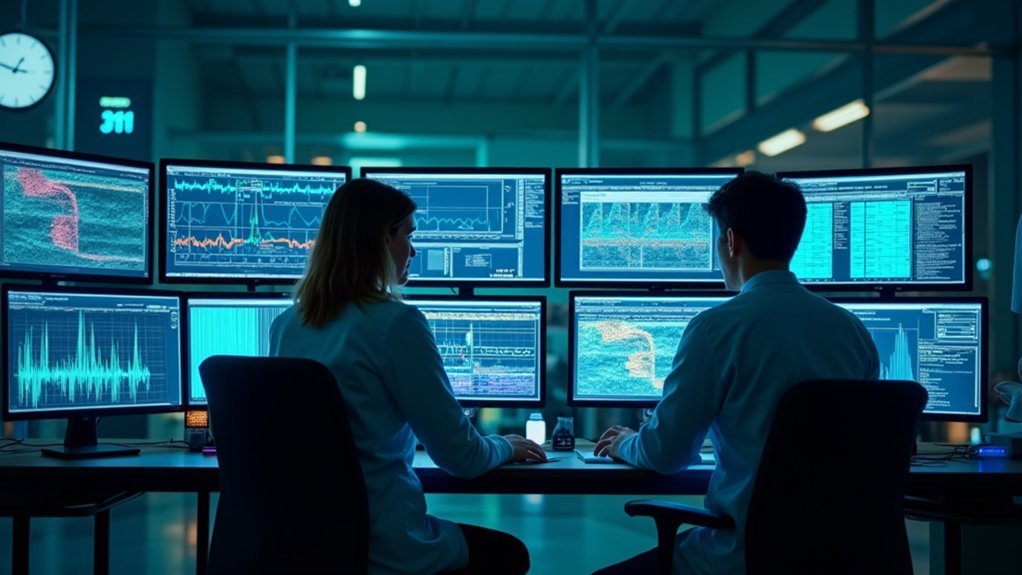
When you examine sleep patterns in research, you’re analyzing what scientists call sleep architecture—the intricate structure of sleep cycles that governs how your body shifts through different restorative stages each night.
This complex framework encompasses 4 to 6 ninety-minute cycles, each containing non-REM stages 1 through 4 followed by REM sleep.
You’ll find that researchers rely on polysomnography to capture these biophysiological changes, making critical design decisions about data collection methods.
Modern software architecture tools have revolutionized this field, enabling scientists to process vast amounts of sleep data efficiently.
Advanced computational systems have transformed sleep research by streamlining the analysis of complex nocturnal data patterns.
These advanced systems help identify disruptions like reduced REM sleep or prolonged awakenings, which signal disorders such as insomnia or sleep apnea that greatly impact cognitive function and physical health.
Core Components of Sleep Stage Analysis
As you dive deeper into sleep research, you’ll discover that effective sleep stage analysis relies on three fundamental monitoring components that work together to paint a complete picture of sleep patterns.
EEG recordings capture brain wave activity, enabling you to distinguish between REM and NREM stages. Eye movement sensors track rapid eye movements that characterize REM sleep, while electromyography measures muscle tone changes throughout the night.
Modern software systems integrate these data streams through sophisticated design and analysis algorithms that automatically classify sleep stages. However, researchers must consider technical debt when selecting platforms, as outdated classification methods can compromise accuracy.
Advanced machine learning approaches now enhance detection precision, helping you identify N1, N2, and N3 stages more reliably for thorough sleep architecture assessment.
Polysomnography Data Processing Requirements

Polysomnography data processing demands robust software architecture that can handle the massive volume and complexity of multi-channel recordings collected throughout entire sleep sessions.
You’ll need specialized tools that simultaneously analyze EEG, EMG, and EOG signals while accurately scoring sleep stages and detecting apnea events. Your software design must incorporate automated algorithms that follow AASM standards to guarantee consistent interpretation across studies.
Popular research platforms like SleepSign, Compumedics, and Somnologica provide the visualization and scoring capabilities you require for efficient analysis.
Additionally, you’ll want to integrate machine learning techniques into your processing workflow to identify subtle sleep disorders that traditional scoring methods might miss, enhancing both accuracy and research outcomes.
Open Source Sleep Analysis Platforms
You’ll find several open source sleep analysis platforms that can transform your research workflow when processing polysomnography data.
These platforms offer distinct advantages and limitations that you’ll need to evaluate against your specific research requirements.
Let’s examine the most popular research platforms and compare their key features to help you select the right tool for your sleep studies.
Popular Research Platforms
When researchers need cost-effective solutions for sleep data analysis, open-source platforms deliver powerful capabilities without licensing fees. These tools that help analyze complex sleep data patterns have revolutionized research accessibility.
Through collaborative software development, platforms like Sleepyhead and OpenScore enable thorough analysis of CPAP machine data, visualizing apnea events and sleep quality metrics.
You’ll find these essential platforms particularly valuable:
- Sleepyhead – Specializes in CPAP data visualization and sleep disorder analysis
- OpenScore – Imports multi-source data for thorough sleep stage scoring
- Python libraries (MNE-Python, NeuroKit2) – Advanced EEG preprocessing and interpretation tools
These platforms foster collaboration and documentation among researchers worldwide, enhancing study reproducibility while providing sophisticated analysis capabilities for sleep research without financial barriers.
Platform Feature Comparison
Understanding which platform best suits your research needs requires comparing core features across available options.
SleepyHead and ActiLife both function as thorough diagramming tools that visualize sleep data through customizable dashboards. You’ll find that software architects can leverage these platforms’ multi-format support, enabling seamless data import from various tracking devices and wearables.
Key differentiators emerge in specialized metrics focusing. While both platforms track sleep stages and duration, their approaches to disturbance analysis vary considerably.
The collaboration features distinguish these tools further—some enable real-time data sharing with colleagues, while others focus on individual analysis workflows.
Community-driven development guarantees regular updates based on user feedback, but update frequencies and feature priorities differ between platforms.
You should evaluate each platform’s specific visualization capabilities against your research requirements.
Commercial Sleep Research Software Solutions

When you’re evaluating commercial sleep research software solutions, you’ll encounter enterprise-grade analysis platforms that offer robust features beyond what open source alternatives typically provide.
You’ll need to understand various licensing models—from subscription-based to perpetual licenses—that directly impact your research budget and long-term costs.
While these commercial solutions require significant upfront investment, you’ll often find the ROI justifies the expense through enhanced accuracy, regulatory compliance, and time savings in your research workflow.
Enterprise-Grade Analysis Platforms
As software systems grow increasingly complex, you’ll find that enterprise-grade analysis platforms offer the sophisticated capabilities needed to evaluate architectural integrity at scale.
These commercial solutions provide thorough analysis for enterprise architecture, identifying structural flaws, design anti-patterns, and technical debt that can compromise your software projects.
Key Enterprise-Grade Platform Benefits:
- Real-time Integration – Seamlessly connects with your SDLC processes for continuous architectural monitoring and team collaboration
- AI-Driven Modernization – Tools like vFunction leverage artificial intelligence to optimize legacy applications and enhance cloud architecture design
- Thorough Support – Extensive training, documentation, and professional resources guarantee effective implementation across your organization
Popular platforms like CAST Software deliver detailed dashboards and reports, enabling you to track architectural quality metrics over time and make informed decisions about your development processes.
Licensing Models Overview
Commercial sleep research software providers typically structure their licensing agreements around subscription-based models, though you’ll encounter various pricing approaches depending on your research needs and institutional requirements.
These subscription-based systems charge recurring fees for software access and updates, making them ideal for ongoing research projects requiring continuous support.
You’ll also find one-time purchase options offering lifetime access without recurring costs.
Most providers implement tiered pricing structures accommodating different team sizes and feature requirements. User limits vary markedly across licensing models – some allow multiple researchers under single licenses while others require individual user agreements.
Technical support and regular updates are standard inclusions in most commercial licenses, ensuring you’ll receive assistance and access to latest analytical capabilities throughout your subscription period.
ROI and Cost Benefits
Beyond understanding licensing structures, you’ll want to evaluate the financial impact these software investments bring to your research operations.
Commercial sleep research software delivers substantial ROI through improved data accuracy and reduced manual analysis time, creating significant cost savings for your facility.
Key cost benefits include:
- Streamlined data collection – You’ll analyze larger datasets more efficiently, expanding your study scope while reducing labor costs.
- Advanced analytics capabilities – Precise interpretation of sleep patterns leads to better patient outcomes and increased funding opportunities.
- Equipment preservation – Automated systems minimize manual handling, reducing wear and tear on expensive research tools.
Subscription models make these solutions accessible to smaller institutions, lowering initial costs while providing access to cutting-edge technology that drives innovation.
EEG Signal Processing Tools for Sleep Studies
Sleep research depends heavily on sophisticated EEG signal processing tools that can decode the complex electrical patterns your brain generates throughout the night.
These tools help you analyze brain activity across different sleep stages, distinguishing between REM and non-REM phases with remarkable precision.
EEGLAB offers you a user-friendly interface for processing and visualizing EEG data, while MATLAB provides advanced algorithm development capabilities for complex analysis.
You’ll find power spectral density analysis particularly valuable for quantifying frequency components of brain waves, helping identify sleep disorders and disturbances.
Tools like NeuroPy and BrainVision Analyzer guarantee you’re working with clean, reliable data through effective artifact removal and filtering.
Machine learning integration increasingly enhances sleep stage classification accuracy, improving your research outcomes considerably.
Automated Sleep Scoring Algorithms
While manual sleep scoring requires hours of expert analysis, automated sleep scoring algorithms can process your entire night’s data in minutes by analyzing EEG, EOG, and EMG signals simultaneously.
These machine learning-powered systems learn from labeled datasets to distinguish between REM and non-REM sleep stages with remarkable precision.
Modern automated sleep scoring algorithms deliver three key advantages:
- Clinical-grade accuracy – Validated systems achieve over 90% agreement with expert human scorers
- Real-time processing – Spectral analysis and time-domain features enable instant sleep stage classification
- Consumer accessibility – Wearable technology brings professional-level insights to everyday users
You’ll find these automated sleep scoring algorithms increasingly integrated into polysomnography equipment and consumer devices, allowing users to work with extensive sleep data that was previously only available in specialized laboratories.
Real-Time Sleep Monitoring Systems
Modern wearable devices transform how you monitor sleep by delivering continuous, real-time insights throughout the night. Real-time sleep monitoring systems leverage sophisticated software architectures that integrate accelerometers and heart rate sensors to track sleep stages and disturbances. These systems employ advanced algorithms for automated code generation, enabling personalized recommendations through mobile applications.
| Feature | Capability |
|---|---|
| Sleep Stage Detection | Light, deep, REM analysis |
| Health Monitoring | Sleep apnea identification |
| Smart Alarms | Light sleep phase awakening |
| Data Integration | Mobile app connectivity |
You’ll benefit from breathing pattern analysis that identifies potential sleep disorders like sleep apnea. The smart alarm functionality wakes you during ideal light sleep phases, ensuring you feel more refreshed. These real-time sleep monitoring systems provide thorough sleep behavior understanding through seamless data visualization.
Machine Learning Applications in Sleep Research
As researchers explore deeper into sleep science, machine learning algorithms revolutionize how you can analyze complex sleep data and predict disorders with unprecedented accuracy.
You’ll find these applications replacing legacy systems with sophisticated architectures that transform sleep research methodologies.
Key machine learning applications transforming sleep research include:
- EEG Signal Classification – CNNs achieve over 90% accuracy in automated sleep stage identification, requiring robust modeling and diagramming frameworks for implementation.
- Predictive Sleep Apnea Detection – Advanced algorithms analyze breathing patterns and movement data to enable early intervention strategies.
- Personalized Sleep Optimization – Reinforcement learning models process individual behavioral patterns to deliver tailored sleep hygiene recommendations.
These applications leverage NLP techniques on sleep diaries and questionnaires, extracting valuable insights connecting sleep quality with mental health outcomes through thorough data analysis.
Integration With Wearable Device Data
When you integrate wearable device data with architecture analysis software, you’ll reveal powerful insights into how users actually interact with physical spaces in real-time. This integration transforms how you evaluate architectural designs by providing concrete behavioral data rather than assumptions.
Your architecture analysis software can process location tracking and biometric information from wearables, visualizing movement patterns and physiological responses within spaces.
You’ll identify how environmental factors like lighting and acoustics affect user well-being and productivity through measurable data points.
This approach enables iterative design improvements based on actual user experience feedback. You can analyze large datasets to uncover trends that inform better design decisions, making your architectural evaluations more precise and user-centered than traditional methods allow.
Statistical Analysis Tools for Sleep Metrics
Statistical analysis tools for sleep metrics enable you to extract meaningful patterns from the complex physiological data that wearable devices collect during users’ sleep cycles within architectural environments.
As architects increasingly incorporate sleep quality considerations into building design, you’ll need robust analytical capabilities to process and interpret this data effectively.
The best tools for statistical analysis of sleep metrics include:
- R and Python – Offer advanced libraries like Pandas and SciPy for complex data manipulations and statistical testing.
- SPSS and SAS – Provide thorough regression analysis and ANOVA capabilities for understanding sleep pattern correlations.
- ActiLife – Delivers specialized accelerometer data analysis for sleep duration, quality, and movement insights.
You can also leverage accessible options like Excel for preliminary analysis or user-friendly platforms like JASP for Bayesian statistical approaches.
Visualization Software for Sleep Architecture
You’ll need robust visualization software to transform raw sleep data into meaningful graphical representations that reveal sleep architecture patterns.
These tools let you analyze polysomnography recordings through interactive charts and real-time monitoring displays that make complex sleep stages accessible.
Whether you’re examining REM cycles or tracking sleep shifts, the right visualization platform turns overwhelming datasets into clear, actionable insights.
Sleep Stage Visualization Tools
Several specialized software platforms transform raw polysomnography data into clear, interpretable visual displays that reveal the intricate architecture of human sleep.
You’ll find these tools translate complex electrical signals from your brain, eyes, and muscles into hypnograms that illustrate sleep stage progression over time. Following best practices, these platforms help you create diagrams that make identifying sleep disorders straightforward.
Modern sleep visualization tools offer three key advantages:
- Machine Learning Integration – Enhanced accuracy in detecting abnormalities and predicting sleep quality through advanced algorithms
- Customizable Visual Outputs – Detailed comparisons between different sleep studies and individual patterns over time
- Cloud Platforms – Seamless data sharing and collaborative analysis across research teams
You’ll discover these tools essential for understanding REM, light, and deep sleep patterns in your research.
Polysomnography Data Analysis Software
When processing complex polysomnography recordings, specialized data analysis software transforms raw EEG, EOG, and EMG signals into thorough visual representations of sleep architecture.
You’ll find the best proprietary solutions like Compumedics Profusion deliver detailed hypnograms that illustrate sleep stage progression over time. If you’re seeking flexibility, open source options such as SleepPy allow customized analysis workflows.
These tools automatically generate graphical outputs showing REM, NREM, and wakefulness patterns, enabling you to identify sleep disorders efficiently. Advanced features integrate additional physiological data, revealing correlations between sleep architecture and health metrics.
Automated scoring algorithms reduce manual analysis time while maintaining classification accuracy, streamlining your research workflow considerably.
Real-Time Sleep Monitoring
While traditional polysomnography requires post-hoc analysis, real-time sleep monitoring software displays sleep architecture as it unfolds throughout the night.
You’ll find these advanced tools utilize wearable devices to collect biometric data, enabling immediate visualization of REM, light, and deep sleep stages through sophisticated diagram types.
Modern real-time sleep monitoring applications transform raw physiological data into thorough architectural design representations that you can interpret instantly.
Machine learning algorithms enhance detection accuracy, providing reliable assessments of sleep quality and disturbances as they occur.
Key features you’ll encounter include:
- Live visualization dashboards showing sleep stage changes through dynamic charts and graphs
- Personalized recommendations based on real-time analysis of your sleep patterns and environmental factors
- Trend analysis tools that track sleep architecture changes over time for research purposes
Cloud-Based Sleep Research Platforms
As researchers increasingly embrace digital solutions, cloud-based sleep research platforms have revolutionized how you can study sleep patterns across global populations. These tools make it possible to collect data remotely from diverse participants without geographical limitations, effectively modernizing legacy research methodologies that once required lab-based studies.
You’ll find these platforms integrate seamlessly with wearable devices, capturing physiological metrics like heart rate, respiration, and movement patterns. Machine learning algorithms analyze your collected datasets, revealing correlations between sleep variables and health outcomes that might otherwise remain hidden.
The collaborative features enable you to share findings with researchers worldwide in real-time, enhancing study validity. Your participant data remains secure through compliant storage systems, allowing for thorough longitudinal studies while maintaining confidentiality standards.
Validation and Accuracy Assessment Methods
Three fundamental approaches form the backbone of validation and accuracy assessment in architectural research software.
Robust validation methodologies serve as the cornerstone for ensuring precision and reliability in contemporary architectural research applications.
You’ll find these methods essential for ensuring reliable results in your architecture analysis projects.
- Digital comparison techniques – Compare hand-drawn sketches with digital scans to assess precision and consistency in design representation, establishing baseline accuracy for your architectural documentation.
- Software-integrated validation – Utilize ATLAS.ti for creating concept networks from document fragments, enabling systematic validation processes that strengthen your qualitative analysis framework.
- Visual data verification – Employ Adobe Lightroom’s keyword tagging capabilities for cataloging images and Corel’s bitmap management tools for detailed manipulation, ensuring accuracy assessment of architectural drawings and visual documentation.
These validation methods, combined with GIS systems for enhanced data association, create thorough accuracy assessment protocols for your architecture analysis workflow.
Frequently Asked Questions
What Software Do Researchers Use?
You’ll find researchers use AutoCAD, SketchUp, Revit, and Archicad for architectural modeling. They’re also adopting NVivo for qualitative analysis, Adobe Lightroom for image cataloging, and GIS systems for enhanced data association in studies.
What Software Do Most Architects Use?
You’ll find most architects use AutoCAD for drafting, SketchUp for quick 3D modeling, and Revit for BIM projects. You’ll also encounter ArchiCAD for collaboration and Rhino for complex geometries.
What Is Software Architecture Analysis?
You’ll evaluate your software system’s structure and behavior to guarantee it meets functional and nonfunctional requirements. You’re analyzing performance, scalability, security, identifying vulnerabilities, architectural drift, complexity, and technical debt throughout development.
What Are the Three Types of Software Architecture?
You’ll encounter three main types of software architecture: Microservices Architecture breaks applications into loosely coupled services, Monolithic Architecture interconnects all components as one unit, and Serverless Architecture eliminates server management.


