

You’ll want to track these five key metrics for ideal rest quality: sleep duration and efficiency percentage (aiming for 7-9 hours at 85-90% efficiency), REM and deep sleep distribution (targeting 20-25% REM across 3-5 cycles), sleep onset latency and wake frequency (10-20 minutes to fall asleep with fewer than five awakenings), heart rate variability during rest (higher HRV indicates better recovery), and morning recovery scores that combine multiple data points. These metrics reveal whether you’re truly recovering and help you enhance your sleep patterns for peak performance.
Sleep Duration and Efficiency Percentage
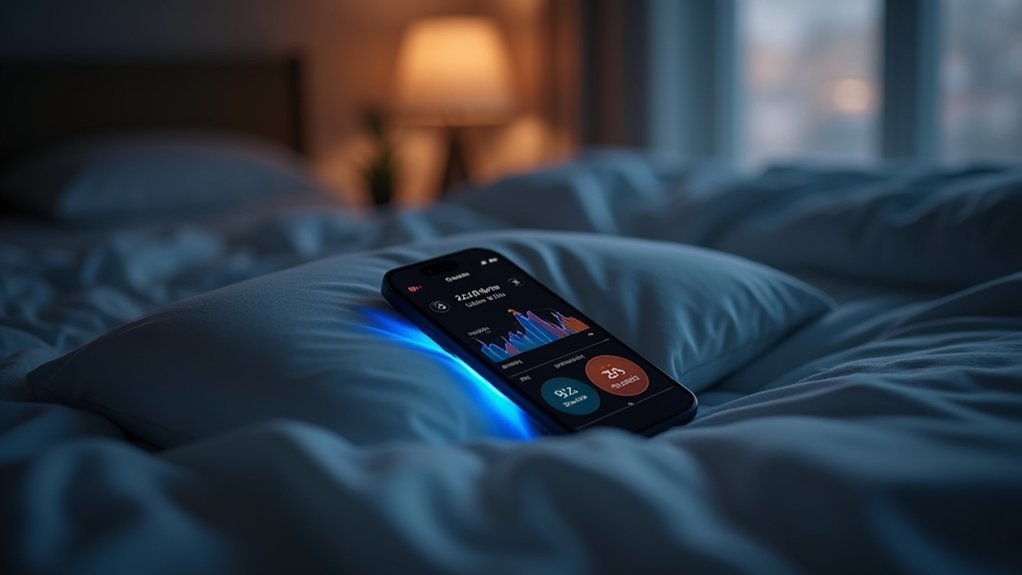
When you’re evaluating your rest quality, sleep duration and efficiency percentage serve as fundamental metrics that reveal how well your body recovers each night.
You’ll want to aim for 7-9 hours of sleep duration while maintaining 85-90% sleep efficiency. Tracking sleep patterns helps you identify factors affecting your rest, from lifestyle factors to potential sleep disorders.
Optimal sleep requires 7-9 hours duration with 85-90% efficiency while monitoring patterns to identify disruptive lifestyle factors.
Your sleep efficiency percentage divides actual sleep time by total bed time, revealing disruptions that compromise sleep quality.
When you consistently hit these targets, you’ll notice improvements in cognitive performance, mood regulation, and immune function.
Poor metrics often signal underlying issues requiring targeted interventions. By monitoring both duration and efficiency, you can pinpoint specific problems and make informed adjustments to optimize your nightly recovery.
REM and Deep Sleep Stage Distribution
While total sleep duration matters, understanding your REM and deep sleep stage distribution provides deeper insights into rest quality.
You’ll want REM sleep comprising 20-25% of your total sleep, occurring across 3-5 cycles nightly. Deep sleep should dominate your first third of sleep, then gradually decrease through subsequent cycles.
This distribution directly impacts your health. Deep sleep drives physical recovery and memory consolidation, while REM sleep handles emotional regulation and cognitive performance.
When these stages don’t distribute properly, you’ll face health issues including impaired mental function and elevated stress levels.
Track your sleep cycles to identify distribution patterns. Poor REM or deep sleep distribution signals underlying sleep quality problems that affect your overall recovery and daytime functioning.
Sleep Onset Latency and Wake Frequency

Beyond sleep stage distribution, your sleep onset latency and wake frequency reveal critical patterns about your rest quality.
Sleep onset latency measures how long you take to fall asleep, with 10-20 minutes being normal for adults. If you’re consistently taking longer than 30 minutes, you might be experiencing insomnia or other sleep disorders affecting your health issues.
Taking more than 30 minutes to fall asleep consistently may indicate insomnia or underlying sleep disorders requiring attention.
Wake frequency tracks how often you wake during the night. More than five awakenings typically signals poor sleep quality and leads to increased daytime sleepiness. These sleep disturbances disrupt your natural sleep patterns, leaving you feeling fatigued and unrefreshed.
Monitoring both metrics provides valuable insights into potential sleep problems. You’ll identify specific areas where your rest quality suffers, enabling targeted improvements to your overall sleep experience.
Heart Rate Variability During Rest
Although traditional sleep metrics focus on duration and stages, heart rate variability during rest reveals deeper insights into your body’s recovery processes. HRV measures the variation between heartbeats, indicating how well your autonomic nervous system regulates cardiovascular health. Higher HRV typically signals better recovery, improved stress levels, and enhanced mental health outcomes.
Your HRV during rest reflects multiple factors affecting sleep quality and physical fitness. When your parasympathetic nervous system functions at its best, you’ll experience greater relaxation and more effective recovery.
Athletes particularly benefit from monitoring HRV to enhance training regimens and assess readiness for upcoming workouts.
- Higher HRV indicates better cardiovascular resilience and recovery capacity
- Stress and poor sleep quality notably reduce HRV measurements
- Athletes use HRV to prevent overtraining and enhance performance
- Improved HRV correlates with better mental health and stress management
- Regular HRV monitoring helps identify ideal rest and training balance
Morning Recovery and Restoration Scores

Understanding your HRV patterns sets the foundation for interpreting morning recovery and restoration scores, which provide a thorough snapshot of how well your body bounced back from the previous day’s stress and fatigue.
These scores combine heart rate variability and resting heart rate data to evaluate your sleep quality and overall restoration. High recovery scores typically indicate you’re ready for intense physical performance with peak mental clarity.
You can use these metrics to refine stress management techniques and adjust training regimens based on your fatigue levels. Consistently tracking these scores reveals patterns that help you enhance your wellness routine, ensuring you’re making data-driven decisions about when to push harder or prioritize recovery.
Frequently Asked Questions
What Are the 4 Quality Metrics?
You’ll measure REST API quality using four key metrics: availability (uptime percentage), performance (requests per minute and latency), error rate (frequency of non-200 status codes), and response time (TTFB and total delivery speed).
How to Measure Rest API Performance?
You’ll measure REST API performance by tracking response time, monitoring uptime percentages, calculating requests per minute capacity, evaluating error rates from non-200 status codes, and analyzing average plus maximum latency metrics.
Which Are the Best Metrics to Measure Visit Quality?
You’ll want to track average time on site, bounce rate, conversion rate, and page load speed. Don’t overlook user satisfaction scores from surveys—they’ll give you valuable insights into your visitors’ actual experience.
What Is the KPI for Quality?
You’ll measure quality KPIs through response time under 200ms, error rates below industry standards, 99.9% uptime, thorough documentation scores, and developer onboarding time to first successful API call.


