

You can stop sleep apnea morning headaches by treating the underlying breathing disruptions that cause oxygen deprivation during sleep. CPAP therapy is the most effective solution, with 90% of patients experiencing complete headache relief through consistent use. You’ll also benefit from lifestyle changes like weight management, eliminating alcohol and smoking, and regular exercise, which can reduce sleep apnea severity by up to 25%. Discover extensive strategies below for lasting relief.
Understanding Sleep Apnea Morning Headaches

When obstructive sleep apnea disrupts your breathing throughout the night, you’ll often wake up with a distinctive type of headache that affects both sides of your head.
Disrupted breathing from sleep apnea creates distinctive bilateral morning headaches that signal your body’s nighttime oxygen struggles.
These morning headaches create a pressing sensation that can last up to four hours without the nausea or light sensitivity you’d experience with migraines.
If you have sleep apnea, there’s a 50% chance you’ll develop these headaches regularly. They occur when your oxygen levels drop during disrupted sleep episodes, causing oxygen deprivation and carbon dioxide retention in your brain.
To receive a proper diagnosis, you’ll need at least 15 headache episodes monthly and an apnea-hypopnea index of 5 or higher.
Fortunately, treatment options like CPAP therapy effectively reduce these headaches’ frequency and severity.
Recognizing the Signs and Symptoms
You’ll need to identify specific warning signs that distinguish sleep apnea headaches from other types of head pain.
These morning headaches create a pressing sensation on both sides of your head and can persist for up to four hours after waking.
Watch for accompanying symptoms like loud snoring, gasping during sleep, and excessive daytime fatigue that signal underlying sleep disruption.
Morning Headache Characteristics
Recognition starts with understanding the distinctive pattern of sleep apnea-related morning headaches.
You’ll experience a pressing sensation on both sides of your head upon waking, lasting up to four hours. These headaches differ greatly from migraines—they won’t cause nausea or sensitivity to light and sound.
If you have sleep apnea, there’s a 50% chance you’ll experience morning headaches at least 15 days monthly.
Watch for accompanying symptoms like excessive daytime sleepiness and loud snoring, which signal underlying sleep disorders. Your headaches stem from reduced oxygen levels during sleep, creating this characteristic morning pain pattern.
Understanding these specific symptoms helps you identify when morning headaches aren’t just occasional discomfort but indicators requiring proper treatment for sleep apnea.
Sleep Disruption Indicators
Beyond morning headaches, sleep apnea creates a cascade of disruptive symptoms that extend throughout your entire day.
You’ll likely notice excessive daytime sleepiness that makes staying alert challenging, regardless of how much time you spent in bed. Loud snoring often accompanies episodes of gasping or choking during sleep, fragmenting your rest cycles.
Sleep disruption manifests through difficulty concentrating at work or home, leaving you mentally foggy. You might experience significant mood changes, including irritability and anxiety that strain relationships. An overwhelming urge for naps becomes your constant companion.
These sleep apnea symptoms collectively indicate your body isn’t receiving restorative rest. If morning headaches persist alongside these indicators and interfere with daily activities, seeking prompt medical evaluation is essential for proper diagnosis and treatment.
Physical Warning Signs
While these behavioral symptoms provide important clues, your body also displays specific physical warning signs that point directly to sleep apnea-related headaches.
These morning headaches present distinct characteristics that differentiate them from other headache types.
You’ll experience these key physical warning signs:
- Bilateral pressing sensation – Pain affects both sides of your head with a squeezing feeling rather than pulsating
- Post-wake timing – Headaches begin immediately after waking and persist up to four hours
- Loud snoring patterns – Persistent, disruptive snoring throughout the night
- Choking episodes – Gasping or choking sensations that interrupt your sleep
- Excessive daytime sleepiness – Overwhelming fatigue despite adequate sleep time
When you’re experiencing headaches at least 15 days monthly alongside these symptoms, medical evaluation becomes essential for proper treatment for sleep apnea.
Primary Causes Behind Morning Headaches
When you experience morning headaches from sleep apnea, you’re likely feeling the effects of oxygen deprivation that occurs during repeated breathing interruptions throughout the night.
Your body can’t expel carbon dioxide properly during these episodes, causing a toxic buildup that triggers pain receptors in your head.
These constant disruptions prevent you from reaching deep, restorative sleep stages, leaving your brain vulnerable to headache-inducing chemical imbalances upon waking.
Oxygen Deprivation Effects
As you sleep, each breathing interruption triggers a cascade of physiological changes that directly contribute to your morning headaches.
When oxygen deprivation occurs, your blood oxygen levels plummet while carbon dioxide accumulates in your bloodstream. This toxic combination forces your brain’s blood vessels to dilate, creating the throbbing pain you experience upon waking.
Research shows that obstructive sleep apnea sufferers face three times more morning headaches due to recurrent hypoxemia.
Your body’s response to these episodes creates multiple pathways to headache pain:
- Decreased blood oxygen levels trigger brain vessel dilation
- Carbon dioxide buildup increases cranial pressure
- Disrupted hormone production alters your pain thresholds
- Oxygen deprivation causes increased muscle tension in your neck
- Sleep fragmentation compounds your brain’s sensitivity to pain
Carbon Dioxide Buildup
During each apnea episode, carbon dioxide rapidly accumulates in your bloodstream because your breathing stops or becomes severely restricted. This carbon dioxide buildup creates a toxic environment that triggers headaches upon waking.
When you can’t exhale properly, carbon dioxide retention reaches dangerous levels while hypoxemia simultaneously occurs. Your brain’s blood vessels dilate in response to these elevated carbon dioxide concentrations, causing intense morning headaches.
The severity of your obstructive sleep apnea directly correlates with headache frequency. Higher apnea-hypopnea index scores typically mean more carbon dioxide buildup and worse morning symptoms.
Your body struggles to eliminate this excess gas throughout the night, creating a cycle of vascular inflammation.
CPAP therapy effectively prevents carbon dioxide retention by maintaining continuous airflow, dramatically reducing morning headaches in most patients.
Sleep Pattern Disruption
Sleep apnea doesn’t just stop your breathing—it demolishes your natural sleep architecture. When you have obstructive sleep apnea, your fragmented sleep cycles trigger a cascade of problems that directly cause morning headaches.
Each breathing interruption prevents you from reaching restorative sleep stages, while disrupted sleep patterns create the perfect storm for head pain.
Your apnea-hypopnea index measures how severely these interruptions affect your night. Higher scores mean more frequent awakenings and worse morning headaches. The constant cycle of gasping and choking prevents deep sleep, while decreased oxygen levels stress your body throughout the night.
- Frequent breathing interruptions fragment your sleep cycles
- Muscle tension builds in your neck and head during apnea episodes
- Multiple awakenings prevent restorative sleep phases
- Sleep apnea creates chronic sleep deprivation patterns
- Disrupted sleep architecture amplifies headache intensity
Risk Factors That Increase Your Likelihood
Understanding your personal risk factors can help you identify whether you’re more susceptible to developing sleep apnea headaches. Several key factors remarkably increase your likelihood of experiencing morning headaches due to airway obstruction.
| Risk Factor | Impact on Sleep Apnea |
|---|---|
| Age | Older adults face higher risk of airway collapse |
| Obesity | Excess neck fat deposits block airways |
| Anatomical features | Thick neck, large tonsils obstruct airflow |
| Lifestyle choices | Smoking inflames airways; alcohol relaxes throat muscles |
| Family history | Genetic predisposition affects facial/airway structures |
Age naturally increases your vulnerability as throat muscles weaken over time. Obesity creates physical barriers through fatty deposits around your neck. Your anatomical features—like tongue size or tonsil enlargement—can predispose you to blockages. Lifestyle choices such as smoking and drinking worsen conditions, while family history suggests inherited structural vulnerabilities.
Getting Properly Diagnosed Through Sleep Studies
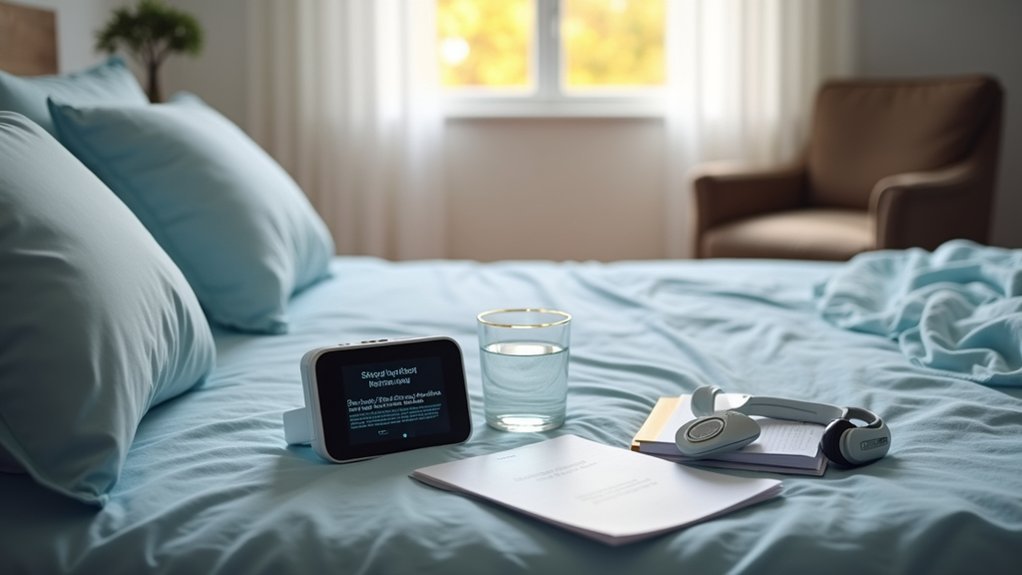
Getting an accurate sleep apnea diagnosis requires undergoing a sleep study, which measures your breathing patterns, brain activity, and oxygen levels throughout the night.
You’ll have two main options: spending a night at a sleep laboratory with thorough monitoring or using a portable device at home for convenience.
Once your study’s complete, you’ll receive results that include your apnea-hypopnea index (AHI), which determines whether you have sleep apnea and how severe it is.
Sleep Study Types
When you’re experiencing persistent morning headaches that could be linked to sleep apnea, getting an accurate diagnosis through a sleep study becomes essential for finding the right treatment.
Sleep studies, also known as polysomnography, monitor your brain activity, breathing patterns, and heart rate to detect sleep disorders precisely.
You’ll encounter two main options for diagnosis:
- In-lab sleep studies – Thorough overnight monitoring at sleep clinics for complex cases
- Home sleep apnea tests (HSAT) – Portable equipment for testing obstructive sleep apnea at home
- Apnea-hypopnea index calculation – Measures breathing interruptions per hour to determine severity
- Physiological parameter tracking – Monitors eye movement, heart rate, and brain activity simultaneously
- Treatment guidance – Results directly inform your personalized therapy approach
Your doctor will recommend the most appropriate study type based on your symptoms and medical history.
What to Expect
Sleep studies provide a thorough diagnostic experience that involves more preparation and monitoring than you might expect.
You’ll have sensors attached to monitor your brain activity, oxygen levels, heart rate, and breathing patterns throughout the night. This extensive sleep study allows doctors to calculate your apnea-hypopnea index, which determines sleep apnea severity with scores of 5 or higher indicating the condition’s presence.
Before your study, you’ll complete questionnaires about symptoms like excessive daytime sleepiness, loud snoring, and gasping episodes. These details help create a complete picture of your sleep patterns and their connection to morning headaches.
Accurate diagnosis through sleep studies is essential because it guides appropriate treatment options and prevents serious health complications like cardiovascular diseases that untreated sleep apnea can cause.
Understanding Your Results
Once your sleep study is complete, your doctor will analyze the data to determine if you have sleep apnea and how severe it might be.
The polysomnography results will reveal your apnea-hypopnea index (AHI), which measures breathing interruptions per hour. Understanding these results is essential for obtaining an accurate diagnosis and exploring appropriate treatment options.
Your sleep study results will include:
- AHI score – 5 or higher typically indicates obstructive sleep apnea
- Oxygen saturation levels – Shows how well you’re breathing during sleep
- Sleep stage analysis – Reveals disruptions in your sleep patterns
- Heart rate variations – Indicates cardiovascular stress from breathing interruptions
- Movement patterns – Tracks restlessness and sleep fragmentation
With proper diagnosis, you’ll understand why you’re experiencing morning headaches and excessive daytime sleepiness, leading to targeted treatments that can greatly improve your quality of life.
CPAP Therapy for Effective Relief

Relief from sleep apnea headaches often comes through Continuous Positive Airway Pressure (CPAP) therapy, the gold standard treatment that’s proven remarkably effective for obstructive sleep apnea sufferers.
CPAP therapy delivers a steady airstream that keeps your airways open during sleep, preventing the breathing interruptions that trigger morning headaches. Studies show approximately 90% of patients experience complete headache relief with consistent use.
When you’re compliant with nightly CPAP use, your apnea-hypopnea index drops below five events per hour, dramatically improving sleep quality.
This reduction directly translates to fewer morning headaches and better overall rest. Regular follow-ups with healthcare providers maintain ideal machine settings and address any concerns.
Proper headache management requires commitment to wearing your device every night, but the results speak for themselves in improved sleep and eliminated morning pain.
Alternative Medical Treatment Options
While CPAP therapy remains the gold standard, you’ll find several alternative medical treatments that can effectively reduce sleep apnea headaches when traditional methods aren’t suitable.
Alternative medical treatments include:
- Oral appliances that reposition your jaw and tongue to prevent airway collapse during sleep.
- Positional therapy training you to sleep on your side instead of your back, reducing apnea episodes.
- Surgical interventions like uvulopalatopharyngoplasty (UPPP) or tonsillectomy to remove obstructive tissue and improve airflow.
- Weight loss programs that remarkably reduce sleep apnea severity and morning headaches.
- Combined approaches using multiple therapies for enhanced effectiveness.
- Sleep on your left side – This position prevents airway obstruction and reduces sleep apnea episodes that trigger morning headaches.
- Elevate your head 30 degrees – Head elevation improves airflow and decreases sleep apnea symptoms.
- Use a firm pillow – Proper neck alignment prevents muscle strain that contributes to headaches.
- Keep your bedroom cool, dark, and quiet – A comfortable environment enhances sleep quality and reduces headache frequency.
- Avoid sleeping on your back – This position worsens airway obstruction and increases sleep apnea risk.
- CPAP therapy – Consistent use resolves headaches in approximately 90% of patients by maintaining open airways throughout sleep
- Weight loss – Reduces OSA severity by decreasing pressure on airways and minimizing apneic episodes
- Positional therapy – Avoiding back sleeping prevents airway obstruction and reduces headache frequency
- Regular exercise – Decreases OSA severity by up to 25%, directly improving morning symptoms
- Lifestyle changes – Eliminating alcohol and smoking improves airway health and reduces sleep apnea headaches
These lifestyle modifications, including avoiding alcohol before bed, can dramatically enhance any treatment’s success.
Your doctor will evaluate which alternatives best suit your specific condition and tolerance levels.
Lifestyle Changes That Make a Difference
Maintaining a healthy weight through diet and regular physical activity can decrease OSA severity by 25%.
Sleeping on your side prevents airway obstruction, while avoiding alcohol before bedtime stops throat muscle relaxation that blocks airways.
Establishing a consistent sleep routine creates the foundation for better rest.
You’ll improve sleep quality by maintaining regular bedtimes, ensuring adequate sleep duration, and optimizing your sleep environment.
These combined lifestyle changes work synergistically to reduce morning headaches considerably.
Sleep Position and Environmental Modifications
Three simple adjustments to your sleep position and bedroom environment can dramatically reduce sleep apnea headaches.
Your sleep position directly impacts airway obstruction, making these environmental modifications essential for better sleep quality.
Sleeping on your side with these modifications creates ideal conditions for uninterrupted breathing.
When to Seek Immediate Medical Attention
Although sleep position adjustments can markedly improve sleep apnea headaches, certain warning signs require immediate medical attention rather than home remedies.
You should contact a healthcare professional immediately if you experience sudden severe headaches accompanied by weakness, numbness, confusion, or difficulty speaking, as these symptoms may indicate a stroke or aneurysm.
Seek medical evaluation if your headaches occur frequently and interfere with daily activities, as this could signal underlying conditions like untreated sleep apnea.
Frequent headaches that disrupt your daily routine may indicate untreated sleep apnea requiring professional medical evaluation.
Additionally, you’ll need professional assessment if you notice significant changes in your headache patterns or intensity.
Persistent headaches that don’t respond to over-the-counter medications require immediate evaluation to determine appropriate treatment and rule out serious health concerns.
Long-Term Management and Prevention Strategies
While immediate symptom relief provides temporary comfort, establishing a thorough long-term strategy is essential for preventing sleep apnea headaches from recurring.
These prevention strategies address root causes and create lasting improvements in your sleep quality.
Effective long-term management includes:
These extensive approaches work together to minimize future episodes.
Frequently Asked Questions
How to Get Rid of Morning Headaches From Sleep Apnea?
You’ll eliminate morning headaches by using CPAP therapy nightly, maintaining healthy weight, sleeping on your side, exercising regularly, avoiding alcohol, and consulting your healthcare provider for proper sleep apnea treatment.
Why Do I Wake up With a Headache When I Use My CPAP?
You’re likely experiencing headaches because your CPAP mask doesn’t fit properly, pressure settings need adjustment, you’re dehydrated from airflow, or you have sinus congestion from the device.
Does Sleep Apnea Cause Daily Headaches?
Yes, sleep apnea can cause daily headaches. You’ll likely experience pressing sensations across both sides of your head, especially in the morning. Severe cases often lead to more frequent headaches throughout the day.
Why Am I Waking up With a Headache Every Morning?
You’re likely experiencing morning headaches due to poor sleep quality, dehydration, teeth grinding, or sleep apnea. Sleep apnea causes oxygen drops and carbon dioxide buildup, triggering headaches that can last hours.


