

You have three effective treatment options for obstructive sleep apnea. CPAP therapy delivers constant airflow through a mask to prevent airway collapse and is considered the most effective treatment. Oral appliances, like mandibular advancement devices, reposition your jaw to keep airways open and work well for mild to moderate cases. Surgical interventions, including uvulopalatopharyngoplasty or hypoglossal nerve stimulation, address structural issues when conservative treatments aren’t sufficient. Each option offers distinct benefits depending on your specific condition and severity.
Continuous Positive Airway Pressure (CPAP) Therapy
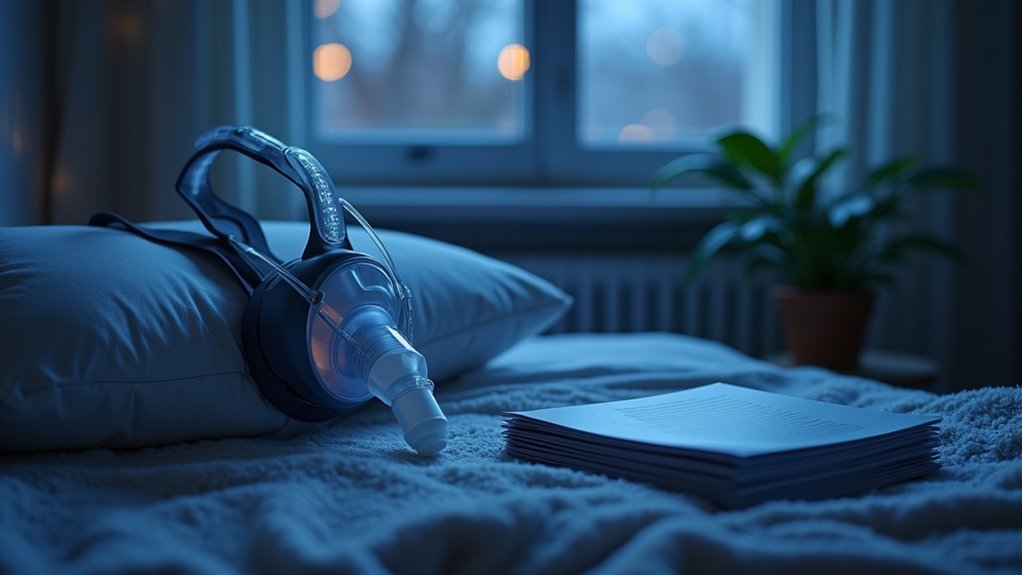
When you’re diagnosed with obstructive sleep apnea, your doctor will likely recommend Continuous Positive Airway Pressure (CPAP) therapy as the most effective treatment option. This gold standard treatment prevents airway collapse by delivering constant air through a mask, considerably reducing your apnea-hypopnea index (AHI) scores and eliminating daytime sleepiness.
You’ll choose from standard CPAP, Auto-CPAP (APAP), or BiLevel machines based on your specific needs. Proper mask fitting guarantees comfort and maximizes adherence to therapy, which directly impacts treatment outcomes.
Your healthcare team will provide regular monitoring and follow-up appointments to optimize your settings. Success depends heavily on your adherence to nightly use, making proper equipment selection and ongoing support essential for managing your obstructive sleep apnea effectively.
Oral Appliances and Dental Devices
If CPAP therapy isn’t suitable for your lifestyle or comfort preferences, oral appliances offer an effective alternative treatment for mild to moderate obstructive sleep apnea.
These devices, including mandibular advancement devices and tongue-retaining devices, work through jaw positioning to prevent airway collapse during sleep.
Custom-fitted oral appliances enhance comfort and effectiveness compared to over-the-counter options.
Studies demonstrate these devices considerably reduce your apnea-hypopnea index while improving sleep quality.
The American Academy of Sleep Medicine recognizes oral appliances as a first-line treatment for patients who prefer them over CPAP or have milder cases.
Regular follow-up appointments guarantee proper fit and monitor treatment effectiveness.
You’ll likely experience reduced snoring and better overall sleep quality, making oral appliances an excellent solution for managing your obstructive sleep apnea.
Surgical Interventions and Upper Airway Procedures
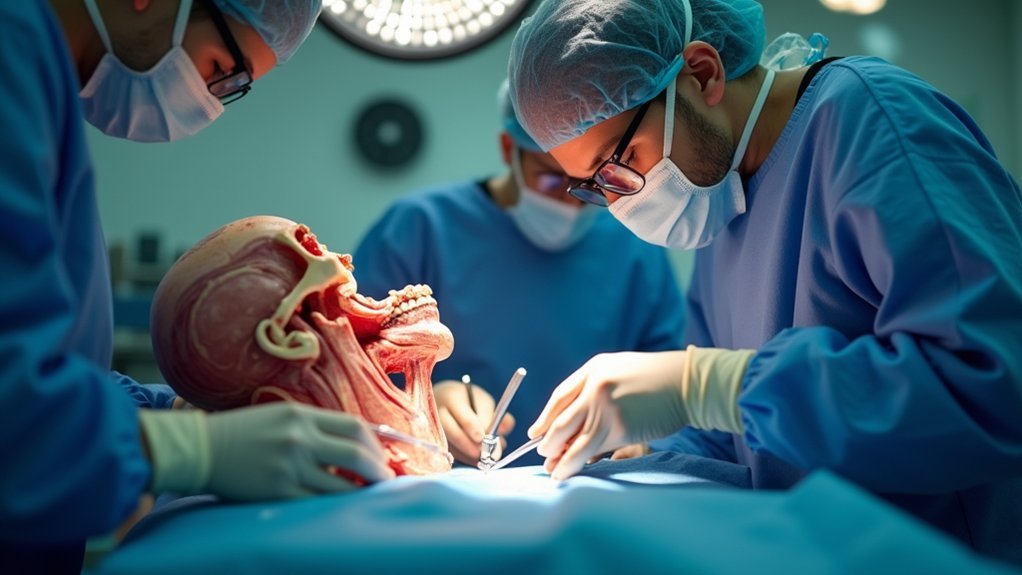
While oral appliances and CPAP therapy work effectively for many patients, surgical interventions become necessary when conservative treatments fail to control moderate to severe obstructive sleep apnea.
You’ll find several upper airway procedures available depending on your specific anatomy and obstruction location.
Uvulopalatopharyngoplasty reshapes your soft palate by removing excess tissue that blocks airflow.
For children, tonsillectomy and adenoidectomy address enlarged tonsils or adenoids causing airway obstruction.
If you can’t tolerate CPAP, hypoglossal nerve stimulation offers an innovative solution by implanting a device that prevents airway collapse during sleep.
Maxillomandibular advancement surgery repositions your jaw bones to enlarge airway size, particularly effective for anatomical abnormalities contributing to moderate to severe OSA.
Frequently Asked Questions
What Is the Most Effective Treatment for Obstructive Sleep Apnea?
You’ll find CPAP therapy’s the most effective treatment for obstructive sleep apnea. It’ll reduce your apnea-hypopnea index by over 50%, greatly improving your sleep quality and reducing daytime sleepiness better than other options.
Which of the Following Is Most Effective in Treating Obstructive Sleep Apnea?
You’ll find CPAP therapy’s the most effective treatment for obstructive sleep apnea. It’s considered the gold standard because it consistently keeps your airway open during sleep by delivering continuous pressurized air.
What Is the Gold Standard Treatment for Obstructive Sleep Apnea?
You’ll find that CPAP therapy is the gold standard treatment for obstructive sleep apnea. It delivers pressurized air through a mask, keeping your upper airway open during sleep and effectively reducing symptoms.
What Is the First Choice Therapy for Obstructive Sleep Apnea?
You’ll find CPAP therapy is the first choice treatment for obstructive sleep apnea. It’s consistently recommended because it effectively keeps your airway open during sleep, greatly reducing symptoms and improving your overall sleep quality.


