If you have sleep apnea, you’re likely experiencing dangerous blood pressure spikes throughout the night. Your breathing interruptions trigger repeated oxygen drops, activating your sympathetic nervous system and preventing the natural 10-20% blood pressure dip that should occur during sleep. This creates a nondipping pattern that greatly increases your cardiovascular risk. With 30-40% of hypertensive individuals also having sleep apnea, addressing both conditions together through CPAP therapy and lifestyle changes can transform your health outcomes.
Understanding the Link Between Sleep Apnea and Hypertension

While you sleep peacefully at night, your body should naturally lower its blood pressure by 10-20%, giving your cardiovascular system a much-needed break.
However, if you have obstructive sleep apnea, this doesn’t happen. Instead, your blood pressure remains elevated, creating a dangerous nondipping pattern that greatly increases your cardiovascular risk.
Sleep apnea prevents the natural nighttime blood pressure drop, creating a dangerous nondipping pattern that significantly elevates cardiovascular risk.
Sleep apnea disrupts this crucial process through several mechanisms. Sleep fragmentation prevents restorative rest, while repeated oxygen drops trigger your sympathetic nervous system into overdrive.
This constant activation strains your cardiovascular system throughout the night.
The connection between sleep apnea and hypertension is strikingly common—30-40% of people with high blood pressure also have OSA.
Fortunately, CPAP therapy treatment can effectively lower blood pressure levels, especially in severe cases.
How Sleep Apnea Disrupts Normal Blood Pressure Patterns
When you have sleep apnea, your body’s natural blood pressure regulation becomes severely disrupted, creating a cascade of cardiovascular problems that persist throughout the night and into the next day.
Normally, your blood pressure dips 10-20% during sleep, but obstructive sleep apnea creates a dangerous nondipping pattern that increases cardiovascular risk considerably.
Each time your breathing during sleep stops and restarts, your blood pressure spikes rapidly, straining your heart repeatedly.
This fragmented sleep triggers stress hormone release, elevating your heart rate and overall blood pressure.
You’ll experience morning surges upon waking, contributing to sustained hypertension that worsens with sleep apnea severity.
Fortunately, CPAP therapy can restore normal blood pressure patterns, particularly benefiting those with severe hypertension linked to their sleep disorder.
CPAP Therapy and Blood Pressure Management
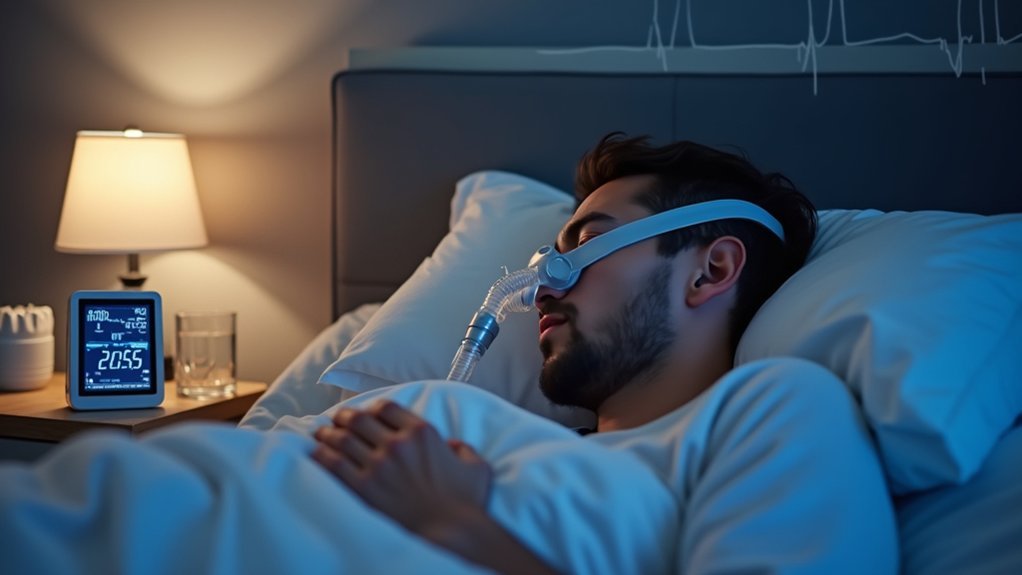
Because CPAP therapy directly addresses the root cause of sleep apnea-related blood pressure spikes, it’s become your most powerful tool for managing both conditions simultaneously.
This treatment effectively eliminates breathing interruptions that trigger dangerous cardiovascular responses during sleep. Studies demonstrate that consistent CPAP use greatly reduces blood pressure levels, particularly if you have severe hypertension or treatment-resistant hypertension.
Your nighttime and daytime blood pressure readings will likely improve with regular therapy, and CPAP can even prevent hypertension from developing if you’re at risk.
Since up to 71% of treatment-resistant hypertension cases involve underlying obstructive sleep apnea, addressing your sleep disorder becomes essential for blood pressure management.
Combining CPAP therapy with lifestyle interventions like weight loss maximizes your protection against cardiovascular disease.
Lifestyle Changes to Address Both Conditions
Although CPAP therapy provides excellent medical intervention, you’ll achieve the strongest results by combining it with targeted lifestyle changes that address both sleep apnea and high blood pressure simultaneously.
Maintaining a healthy body weight becomes your top priority, as obesity greatly contributes to both conditions and increases cardiovascular disease risk.
Weight management stands as the most critical factor since obesity directly worsens both sleep apnea and hypertension while elevating heart disease risk.
You’ll want to incorporate at least 150 minutes of physical activity weekly to improve sleep quality and lower blood pressure naturally.
Sleep positioning matters too—sleeping on your side enhances airflow and reduces apnea severity. Limiting evening alcohol consumption prevents symptom exacerbation while supporting better blood pressure management.
Additionally, implementing stress management techniques like mindfulness or yoga can dramatically improve your sleep quality while helping control high blood pressure effectively.
When to Seek Medical Evaluation for Sleep and Blood Pressure Issues

How do you know when casual snoring becomes a serious health threat requiring medical attention? If you’re experiencing loud snoring, gasping for air during sleep, excessive daytime sleepiness, or morning headaches, you should seek medical evaluation immediately—these symptoms often indicate Sleep Apnea, which greatly impacts your cardiovascular system and contributes to High Blood Pressure.
You need annual blood pressure monitoring, especially if you have risk factors like obesity or age over 40.
If you have resistant hypertension that won’t respond to treatment, consult your healthcare provider about potential undiagnosed Sleep Apnea. Bed partners should encourage evaluation if they notice breathing interruptions during sleep.
When concentration problems and irritability accompany elevated blood pressure readings, medical assessment becomes essential.
Frequently Asked Questions
Is There a Link Between Sleep Apnea and High Blood Pressure?
Yes, there’s a strong link between sleep apnea and high blood pressure. If you have sleep apnea, you’re at increased risk for developing hypertension due to oxygen drops and increased stress on your cardiovascular system.
What Is the Average Age of Death for Sleep Apnea?
You’re facing markedly reduced life expectancy with untreated sleep apnea – studies show you could lose up to 10 years, with severe cases having triple the mortality rate of healthy individuals.
What Comes First, Sleep Apnea or High Blood Pressure?
Sleep apnea typically develops first. You’ll often develop high blood pressure as a consequence of untreated sleep apnea, since the condition causes increased sympathetic nervous system activity and inflammation that leads to hypertension.
Will CPAP Lower Blood Pressure?
CPAP can lower your blood pressure, especially if you’ve got severe hypertension or treatment-resistant high blood pressure. You’ll likely see the biggest improvements in nighttime readings with consistent use.


