

Nasal strips can improve your airflow and reduce snoring, but they won’t effectively treat sleep apnea. While they physically widen your nostrils to help with nasal congestion, research shows they provide minimal relief for obstructive sleep apnea since they don’t address the underlying throat and airway obstructions. You’ll likely experience better breathing and less snoring, but strips can’t replace medical treatments like CPAP machines for managing sleep apnea’s repeated breathing interruptions during sleep. Understanding thorough treatment approaches reveals more effective solutions.
How Nasal Strips Work for Sleep Apnea
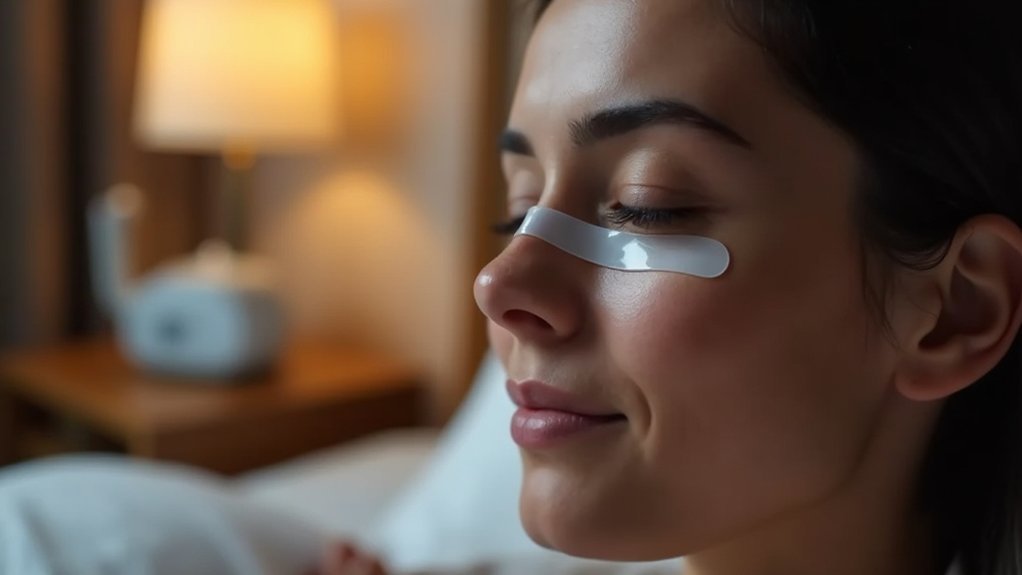
Although nasal strips won’t cure your sleep apnea, they work by physically widening your nostrils to increase airflow through your nasal passages. When you apply these adhesive strips to your nose bridge, they gently pull your nostrils outward, creating more space for air to flow.
For obstructive sleep apnea sufferers experiencing nasal congestion, nasal strips for snoring can provide temporary relief by helping improve breathing during sleep. The increased airflow may reduce snoring intensity and make breathing easier throughout the night.
However, nasal strips don’t address the underlying throat and airway obstructions that cause sleep apnea. While they can reduce snoring and improve nasal airflow, they’re not an effective treatment for the condition’s root causes.
You’ll still need thorough medical treatment for proper sleep apnea management.
Research on Nasal Strip Effectiveness for Apnea Symptoms
While many people turn to nasal strips hoping for sleep apnea relief, scientific research reveals mixed results about their actual effectiveness.
Studies examining nasal strips for obstructive sleep apnea show inconsistent findings, primarily due to small sample sizes and subjective measurements.
Research findings reveal:
Sleep studies demonstrate nasal strips provide minimal relief for obstructive sleep apnea despite reducing some snoring symptoms.
- Limited OSA impact – Sleep study measurements show no significant breathing pattern improvements for OSA patients.
- Snoring reduction – Some individuals experience decreased snoring through enhanced airflow.
- Inconsistent sleep quality – Studies fail to demonstrate reliable sleep quality improvements.
- Symptom masking – Strips may address nasal congestion without treating underlying apnea.
Objective sleep study data consistently shows nasal strips don’t effectively manage obstructive sleep apnea.
If you’re experiencing breathing interruptions or excessive daytime sleepiness, you should consult a healthcare professional rather than relying solely on nasal strips for treatment.
Benefits and Limitations of Using Nasal Strips

You’ll find that nasal strips can effectively reduce snoring by widening your nostrils and improving airflow, especially when nasal congestion is the primary culprit.
However, they won’t address the root causes of obstructive sleep apnea, which involves airway collapse deeper in your throat during sleep.
While you might experience some symptom relief, nasal strips can’t replace proper sleep apnea treatments like CPAP therapy for managing this serious condition.
Snoring Reduction Benefits
When you’re dealing with snoring that disrupts your sleep and bothers your partner, nasal strips can provide a straightforward solution by increasing airflow through your nasal passages.
These adhesive strips work by gently lifting your nostrils open, reducing turbulence during breathing and creating smoother airflow.
Here’s how nasal strips can help reduce your snoring:
- Increase nasal airflow – They physically open your nasal passages for better breathing.
- Improve sleep quality – Both you and your partner benefit from reduced snoring frequency.
- Effective for nasal congestion – Particularly helpful if structural issues contribute to your snoring.
- Minimal side effects – Generally safe with only mild skin irritation possible.
Remember that nasal strips work differently for everyone, so you’ll need to experiment with sizes to find what’s most effective for your specific needs.
Sleep Apnea Limitations
Although nasal strips can improve airflow and reduce some snoring symptoms, they don’t address the root causes of sleep apnea and shouldn’t be considered a primary treatment for this serious condition.
While these strips effectively widen your nostrils and enhance nasal airflow, they can’t prevent the repeated breathing interruptions that characterize obstructive sleep apnea. Clinical evidence doesn’t support their effectiveness in considerably reducing sleep apnea events, making them inadequate for managing this complex disorder.
You’ll find nasal strips have considerable limitations when dealing with sleep apnea’s underlying mechanisms. They won’t replace necessary medical interventions like CPAP machines, which directly address airway obstruction.
If you’re experiencing sleep apnea symptoms, you should consult a doctor rather than relying solely on nasal strips for relief.
Side Effects and Safety Considerations
While nasal strips offer a non-invasive approach to breathing improvement, you should understand their potential side effects before incorporating them into your sleep routine. Most users experience minimal issues, making nasal strips a safe and effective option for better sleep.
Common side effects include:
- Skin irritation and redness where you’ve applied the strip
- Mild discomfort during wear, especially when first adjusting to the sensation
- Reflexive sneezing as your nasal passages adapt to increased airflow
- Adhesive sensitivity reactions in individuals with sensitive skin
If you experience significant discomfort, you’ll likely need different sizes or materials to achieve proper fit.
Testing for adhesive sensitivity before regular use helps prevent adverse reactions. Overall, side effects remain manageable and non-severe.
Alternative Sleep Apnea Treatment Options
While nasal strips can provide relief, you’ll find several other effective treatments for sleep apnea worth considering.
Oral appliances offer a comfortable alternative that custom-fits your mouth to keep airways open during sleep, often reducing both snoring and apnea episodes.
You can also make lifestyle changes like losing weight and exercising regularly, which greatly improve symptoms by reducing airway obstruction and enhancing your overall respiratory function.
Oral Appliances Benefits
Freedom from bulky CPAP machines becomes possible with oral appliances, customized devices that offer a comfortable alternative for treating obstructive sleep apnea.
These appliances work by repositioning your jaw or tongue to prevent airway obstruction, effectively reducing snoring and OSA symptoms.
Key benefits of oral appliances include:
- Non-invasive treatment – Unlike nasal dilators or surgery, they’re completely external
- Improved sleep quality – Studies show significant reduction in daytime sleepiness
- Easy adaptation – Most users adjust within weeks despite initial discomfort
- Comprehensive care – They’re part of complete treatment plans with regular monitoring
While you might experience temporary side effects like drooling or dry mouth, these typically become manageable as you adapt to your device.
Lifestyle Modification Strategies
Though medical devices offer effective solutions, simple lifestyle changes can markedly reduce your sleep apnea symptoms without requiring any equipment at all.
Losing weight greatly decreases airway obstruction, while avoiding sleeping on your back prevents gravity from collapsing your throat muscles. Instead, sleep on your side to keep airways open naturally.
Regular exercise strengthens respiratory muscles and improves overall sleep quality.
You’ll also want to limit alcohol consumption before bedtime, as it relaxes throat tissues and worsens breathing problems. Quitting smoking enhances lung capacity and reduces inflammation.
For additional support, consider using a nasal decongestant or external nasal dilator to open nasal passages.
These modifications work together to reduce snoring and improve sleep without expensive equipment or medical interventions.
When to Consult a Doctor About Sleep Apnea
How can you determine when snoring crosses the line from a minor annoyance to a serious health concern requiring medical attention?
You should consult a doctor about potential sleep apnea when specific warning signs appear.
While nasal strips might help with simple snoring, they won’t address underlying sleep disorders that need professional evaluation.
Consider seeking medical advice if you experience:
- Loud snoring with gasping or choking – This combination often indicates obstructive sleep apnea requiring immediate attention.
- Excessive daytime sleepiness – Feeling tired despite full nights of sleep suggests poor sleep quality.
- Breathing interruptions – Partners reporting pauses in your breathing during sleep.
- High-risk profile – Being over 50, obese, or having family history of apnea.
Formal diagnosis typically requires overnight sleep studies or home tests to determine severity.
Frequently Asked Questions
Do Nose Strips Work for Apnea?
Nose strips won’t cure your sleep apnea, though they might reduce snoring temporarily. They can’t address the breathing interruptions that define apnea. You’ll need proper medical treatment like CPAP therapy for effective management.
What Are the Negatives of Nasal Strips?
You’ll experience skin irritation and redness with nasal strips, especially if you’ve got sensitive skin. They don’t stay adhered well during sleep, won’t help sleep apnea, and may cause sneezing discomfort.
What Works Better Than Nasal Strips?
You’ll find oral appliances, CPAP machines, and internal nasal dilators work better than nasal strips. Additionally, you can improve results through weight loss, side sleeping, and using nasal decongestants or steroid sprays.
Do Nasal Sticks Help With Sleep Apnea?
Nasal sticks won’t effectively treat your sleep apnea since they don’t address underlying airway blockages. While they might reduce snoring temporarily, you’ll need proper medical treatment like CPAP therapy for actual apnea relief.


