

You can reduce sleep apnea disruptions by encouraging your partner to seek professional medical evaluation and undergo a sleep study for proper diagnosis. Support their CPAP therapy compliance through positive reinforcement and open communication about challenges. Create flexible bedtime routines that accommodate equipment setup, use white noise machines to mask device sounds, and consider temporary sleeping arrangements when needed. Promote healthy lifestyle changes together like weight reduction, regular exercise, and limiting evening alcohol consumption. Building a support network with other couples facing similar challenges will provide valuable coping strategies and mutual encouragement for better sleep quality.
Recognize the Warning Signs and Symptoms Early

When does a simple snore become a serious health concern? You’ll know when that loud, chronic snoring transforms into gasping episodes that jolt you both awake.
If your partner has sleep apnea, you’re witnessing more than just noisy nights—you’re seeing breathing interruptions that signal serious health risks.
Watch for these critical signs of sleep apnea: frequent tossing and turning, night sweats, and morning complaints of headaches or dry mouth.
Your partner might struggle with insomnia despite appearing exhausted. During the day, excessive sleepiness and unexplained irritability become telltale symptoms.
Don’t ignore these warning signs. Early recognition of sleep apnea symptoms protects both your partner’s health and your relationship’s quality, making medical intervention possible before complications worsen.
Encourage Professional Medical Evaluation and Sleep Studies
Once you’ve identified concerning symptoms, your next step involves guiding your partner toward professional medical evaluation.
After recognizing sleep apnea warning signs, the crucial next step is encouraging your partner to seek professional medical evaluation.
You’ll need to encourage professional medical evaluation by discussing the serious health risks associated with untreated sleep apnea, including cardiovascular disease and persistent daytime fatigue.
A sleep study represents the gold standard for accurate diagnosis. This evaluation can occur at a certified sleep clinic or through home-based monitoring, tracking brain waves, oxygen levels, and heart rhythms throughout the night.
Before scheduling, verify your health insurance coverage, as most plans cover these essential diagnostic tests.
Following diagnosis, your partner may receive referrals to specialists like pulmonologists who’ll discuss effective sleep apnea treatment options, including CPAP therapy or oral appliances, ensuring improved health outcomes.
Create a Sleep-Friendly Bedroom Environment

While medical intervention remains essential, transforming your bedroom into an ideal sleep-friendly bedroom environment can considerably reduce apnea-related disruptions for both you and your partner.
Keep your room cool and dark, maintaining temperatures between 60-67°F to promote optimal rest. Install blackout curtains to eliminate outside light that might worsen sleep interruptions.
You’ll want to establish consistent bedtimes and wake times to regulate your body’s internal clock. Turn off electronic devices at least 30 minutes before bed, as blue light interferes with melatonin production.
Consider investing in white noise machines or fans to mask disruptive sounds from breathing interruptions. These environmental changes work together to enhance sleep quality while minimizing apnea-related disturbances.
Support CPAP Therapy Compliance and Usage
Beyond optimizing your bedroom setup, partnering with your loved one’s CPAP therapy represents one of the most impactful steps you can take to eliminate nighttime breathing disruptions.
CPAP therapy serves as the gold standard for treating obstructive sleep apnea, effectively stopping your partner’s snoring while improving sleep quality for both of you.
CPAP therapy eliminates snoring at its source, delivering better sleep for both partners through proven medical treatment.
To encourage CPAP adherence successfully:
- Maintain positivity – Focus on the benefits rather than the inconvenience of the device
- Celebrate progress – Acknowledge small victories and improvements in their sleep patterns
- Communicate openly – Discuss any discomfort or challenges they’re experiencing without judgment
- Share responsibilities – Help with equipment maintenance and cleaning routines
Regular check-ins about their comfort level and treatment progress create a supportive environment that promotes long-term success with CPAP therapy.
Learn How Sleep Apnea Equipment Functions
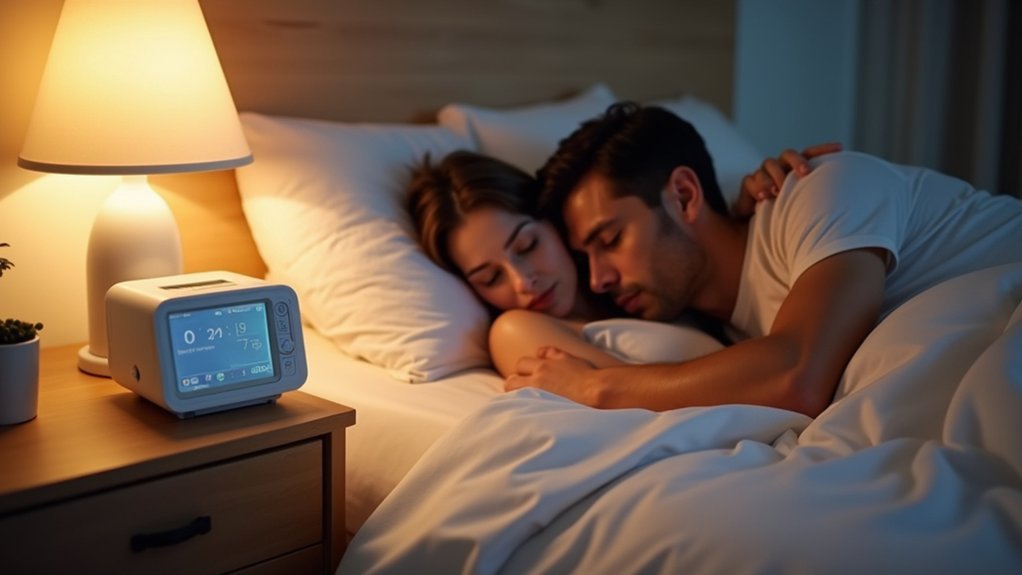
Understanding how your partner’s CPAP equipment works empowers you to provide better support and troubleshoot minor issues that might otherwise disrupt their therapy. CPAP (continuous positive airway pressure) machines treat obstructive sleep apnea by delivering steady airflow through a mask, keeping airways open during sleep.
| Component | Function |
|---|---|
| Motor | Generates continuous airflow at prescribed pressure |
| Hose | Connects motor to mask, delivering pressurized air |
| Mask | Fits over nose/mouth to deliver air directly |
| Humidifier | Adds moisture to prevent airway dryness |
| Data Tracking | Monitors compliance and treatment effectiveness |
Regular maintenance includes cleaning the mask, hose, and water chamber to prevent infections. Many devices connect to smartphone apps for monitoring sleep patterns. When issues arise, consult your sleep medicine specialist for adjustments or troubleshooting guidance.
Implement Strategic Communication Techniques
You’ll find that timing your conversations about CPAP concerns during calm, neutral moments creates space for productive dialogue rather than defensive reactions.
When you focus discussions on the health benefits and improved sleep quality for both partners, you’re building shared investment in finding solutions together.
Using supportive language patterns that emphasize “we” instead of “you” helps frame CPAP management as a team effort rather than a personal criticism.
Choose Neutral Discussion Times
When sleep apnea affects your relationship, timing your conversations strategically can make the difference between productive dialogue and heated arguments.
You’ll find that choosing the right moment for discussions about CPAP equipment or sleep disruptions creates an environment where both partners feel heard and respected.
Consider these ideal timing strategies:
- Schedule talks during relaxed weekend mornings when you’re both well-rested and free from work stress
- Avoid late-night conversations when fatigue amplifies emotions and reduces patience
- Choose neutral locations like the kitchen table rather than the bedroom where sleep frustrations occur
- Plan regular monthly check-ins to address sleep quality concerns before they escalate
This thoughtful approach encourages cooperation and transforms potentially contentious conversations into collaborative problem-solving sessions that strengthen your relationship.
Focus on Health Benefits
Since conversations about CPAP therapy often focus on problems and frustrations, shifting your dialogue to emphasize the positive health outcomes can transform your partner’s perspective on treatment.
Highlight how CPAP (continuous positive airway) therapy dramatically reduces their risk of heart disease and diabetes while improving daily energy levels and mood.
When you discuss sleep apnea treatment, emphasize tangible benefits they’ve already experienced—better concentration, reduced morning headaches, or improved work performance.
Frame CPAP compliance as an investment in their long-term health rather than a burden.
Share how their improved sleep quality benefits your relationship and family life.
This positive approach creates motivation and reinforces their commitment to consistent therapy use.
Use Supportive Language Patterns
Beyond highlighting health benefits, the specific words and phrases you choose shape how your partner receives and responds to conversations about their sleep apnea treatment. Supportive language patterns create an environment where your partner feels understood rather than criticized.
Effective communication strategies include:
- Using “I” statements like “I feel concerned when you snore loudly” to express feelings without blame
- Framing conversations around shared goals to improve sleep quality for both partners
- Choosing calm, neutral settings and avoiding emotionally charged late-night discussions
- Emphasizing CPAP (continuous positive airway) benefits through positive reinforcement rather than pressure
Regular check-ins about sleep challenges maintain ongoing dialogue and mutual understanding.
When you approach CPAP adherence discussions by highlighting improved mood and daytime functioning, you’re motivating through encouragement rather than confrontation.
Promote Healthy Lifestyle Changes Together
Although sleep apnea primarily affects one partner, making lifestyle changes together creates a supportive environment that benefits both of you.
These healthy lifestyle changes become easier when you’re both committed to improving your overall health and sleep quality.
When partners work together toward better health, positive lifestyle changes become more sustainable and mutually beneficial.
Start by adopting a heart-healthy diet rich in fruits, vegetables, whole grains, and lean proteins.
Weight reduction markedly improves sleep apnea symptoms.
Engage in regular physical activity together—aim for 150 minutes of moderate aerobic exercise weekly.
This enhances sleep quality for both partners.
Limit alcohol and sedatives, especially in evenings, as they worsen throat muscle relaxation.
Stay hydrated throughout the day but reduce fluids before bedtime to minimize bathroom trips.
Incorporate stress-reduction techniques like yoga, meditation, or mindfulness into your daily routines together.
Establish Flexible Bedtime Routines and Arrangements
You’ll need to work together on coordinated sleep schedule planning that accommodates both your natural rhythms and CPAP therapy requirements.
Sometimes temporary sleeping arrangement options, like separate beds or staggered bedtimes, can provide relief while you’re adjusting to treatment.
These flexible approaches aren’t permanent solutions but strategic ways to maintain your relationship while managing sleep apnea’s challenges.
Coordinated Sleep Schedule Planning
When sleep apnea disrupts your household, creating a coordinated sleep schedule becomes crucial for both partners’ well-being.
You’ll need to synchronize your routine while accommodating CPAP (continuous positive airway pressure) equipment needs and other sleep disorders considerations.
Effective coordination strategies include:
- Establish synchronized bedtimes – Both partners commit to consistent sleep and wake times to maintain regular sleep patterns.
- Create equipment preparation time – Allow extra minutes for CPAP setup and adjustments before lights-out.
- Plan staggered routines – One partner completes their bedtime routine while the other manages device settings.
- Schedule weekly check-ins – Discuss what’s working and adjust timing based on comfort levels.
This structured approach guarantees you’re both getting quality rest while minimizing disruptions from medical equipment and treatment requirements.
Temporary Sleeping Arrangement Options
Sometimes disrupted sleep patterns require creative solutions that prioritize both partners’ rest over traditional sleeping arrangements. You can explore temporary sleeping arrangements where one partner sleeps in another room when disruptions become overwhelming.
This doesn’t signal relationship problems—it’s a practical approach to managing sleep apnea challenges while maintaining closeness during waking hours.
Consider using white noise machines to mask disruptive sounds from CPAP devices or snoring, creating a more peaceful environment for both partners. Comfortable sleep aids like earplugs or sleeping masks can help the non-apnea partner cope with nighttime disturbances.
Regularly reassess these arrangements through open communication, discussing what’s working and what isn’t.
This ongoing dialogue guarantees you’ll find mutually agreeable solutions that support both partners’ sleep needs effectively.
Build a Support Network With Other Couples
Although sleep apnea affects millions of couples, many feel isolated in their struggle to manage its disruptive effects on their relationship and sleep quality.
Building a support network with other couples facing similar challenges can transform your journey from lonely frustration to shared understanding and practical solutions.
Connecting with others who understand your experience offers invaluable benefits:
- Share coping strategies and treatment tips that work in real relationships
- Improve CPAP therapy adherence through mutual encouragement and accountability
- Exchange sleep environment ideas that minimize disruptions for both partners
- Reduce isolation by joining couples who truly understand your daily challenges
You’ll discover practical advice about creating sleep-friendly routines and maintaining intimacy despite treatment equipment.
This support network reinforces your commitment to better sleep quality while strengthening your relationship through shared experiences and proven solutions.
Prioritize Your Own Sleep Health and Well-Being
You can’t effectively support your partner with sleep apnea if you’re constantly exhausted and suffering from poor sleep yourself.
Protecting your own sleep quality isn’t selfish—it’s essential for maintaining your physical health, emotional stability, and ability to be a caring partner.
Making your sleep needs a priority will actually strengthen your relationship and improve your capacity to handle the challenges that come with sleep apnea disruption.
Protect Personal Sleep Quality
When living with a partner who’s sleep apnea, safeguarding your own sleep quality becomes essential for maintaining your physical health and mental well-being.
Sleep deprivation weakens your immune system, increases stress levels, and impairs cognitive performance.
You can protect your rest through these practical strategies:
- Use earplugs to reduce disturbances from snoring or apnea-related noises
- Create temporary sleeping arrangements in a different room when necessary
- Maintain healthy lifestyle habits including proper nutrition, hydration, and regular exercise
- Consult healthcare professionals if disruptions considerably impact your health
These approaches allow you to support your partner’s treatment journey while ensuring you’re getting the restorative sleep your body needs.
Maintain Your Health Needs
Building on these protective measures, maintaining your health needs requires a proactive approach that goes beyond temporary solutions.
When your partner’s snoring keeps you awake regularly, chronic sleep deprivation becomes a serious concern affecting your sleep and health. You’ll need to establish firm boundaries around your rest schedule and seek professional guidance when necessary.
Practicing stress management through yoga and mindfulness helps counteract the frustration of disrupted nights.
Don’t hesitate to consult healthcare professionals who can help diagnose underlying issues affecting your sleep quality. Sometimes sleeping in separate rooms temporarily protects your physical and mental well-being while your partner pursues treatment.
Frequently Asked Questions
How to Support a Partner With Sleep Apnea?
You’ll support your partner by encouraging consistent CPAP use, creating a comfortable sleep environment, communicating openly about challenges, promoting healthy lifestyle changes, and actively participating in their medical appointments and treatment decisions.
What Is the 3% Rule for Sleep Apnea?
The 3% rule means you’re experiencing significant sleep disruption if apneas and hypopneas occur during more than 3% of your total sleep time, indicating you need further medical evaluation.
How to Block Out Your Partner’s Snoring?
You can use earplugs or white noise machines to mask snoring sounds. Try sleeping in separate rooms, add soundproofing like heavy curtains, or encourage your partner to use nasal strips.
Why Do I Wake up After 4 Hours on My CPAP Machine?
You’re likely waking up because your CPAP mask doesn’t fit properly, causing air leaks, or your pressure settings aren’t right. Check for mask adjustments or consult your sleep specialist.


