

Your chronic insomnia likely stems from five key root causes that work together to sabotage your sleep. Stress and psychological factors trigger hyperarousal, while mental health conditions like anxiety and depression alter your brain chemistry. Medical conditions and physical pain create discomfort that prevents restorative sleep, and irregular schedules disrupt your natural circadian rhythms. Additionally, medications and substances interfere with your sleep cycles. Understanding these interconnected causes will help you identify targeted solutions for lasting relief.
Stress and Psychological Factors That Disrupt Sleep Patterns
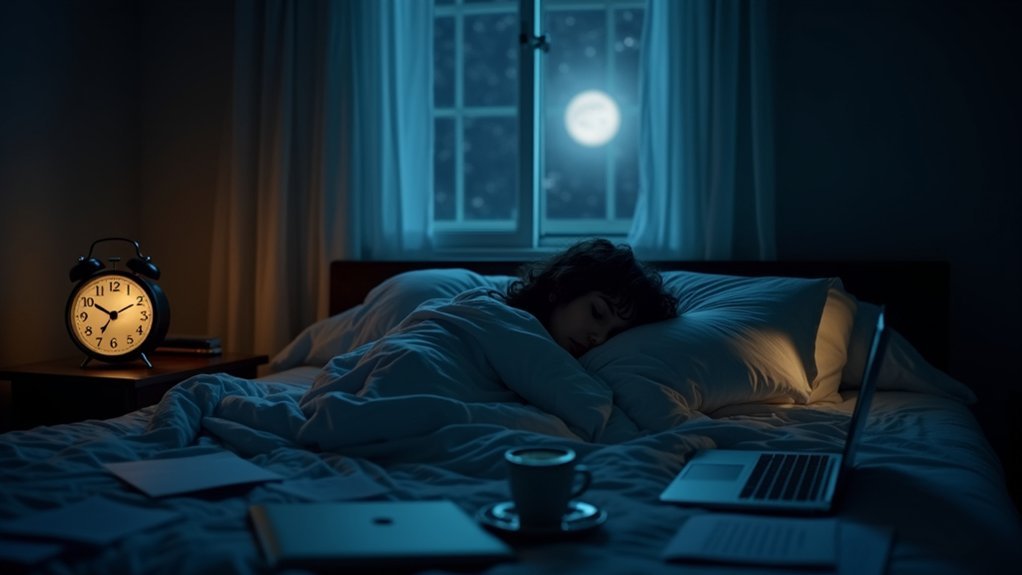
When stress infiltrates your daily life through work pressures, health concerns, or financial worries, it triggers a state of hyperarousal that directly sabotages your ability to fall asleep and maintain restful sleep throughout the night.
This psychological turmoil creates chronic insomnia patterns that devastate your mental health.
You’re trapped in a destructive cycle where negative thoughts fuel sleep disturbances, which then amplify your stress levels.
Research shows 40% of people with insomnia struggle with mental health disorders, particularly anxiety disorder and depression.
Nearly half of insomnia sufferers battle anxiety and depression, revealing the deep connection between sleep disorders and mental health.
These psychological factors don’t just disrupt sleep—they actively worsen your quality of life.
Fortunately, cognitive behavioral therapy specifically targets these root causes.
CBT-I helps you manage racing thoughts and develop healthier sleep habits, breaking the vicious cycle between stress and insomnia.
Mental Health Conditions and Their Impact on Sleep Quality
Mental health conditions don’t just accompany insomnia—they actively create and perpetuate sleep disturbances that can destroy your nightly rest for months or years. When you’re dealing with anxiety or depression, your brain experiences hyperarousal that makes falling asleep nearly impossible. This creates a vicious cycle where chronic insomnia worsens your mental health symptoms.
| Mental Health Impact | Sleep Quality Effect |
|---|---|
| Anxiety disorders trigger hyperarousal | Racing thoughts prevent sleep onset |
| Depression alters brain chemistry | Early morning awakening becomes common |
| Hyperarousal increases stress hormones | Deep sleep stages become disrupted |
| Cognitive distortions worsen at night | Sleep anxiety develops and intensifies |
| Suicidal thoughts increase with sleep loss | Sleep becomes associated with danger |
Cognitive behavioral therapy offers integrated treatment that addresses both your sleep disturbances and underlying mental health conditions simultaneously.
Medical Conditions and Physical Pain Contributing to Sleep Disturbances

Physical ailments create a relentless assault on your ability to sleep, turning what should be restorative hours into battles against discomfort and physical pain. These medical conditions trigger chronic insomnia through various mechanisms that fragment your sleep patterns.
Sleep apnea affects 20% of the population, causing breathing interruptions that destroy sleep quality and increase daytime fatigue. Chronic pain from arthritis or fibromyalgia makes finding comfortable positions nearly impossible, while gastroesophageal reflux creates nighttime burning sensations.
Consider how these conditions interconnect:
- Hormonal changes during menopause disrupt sleep cycles and trigger frequent awakenings
- Gastrointestinal disorders cause physical discomfort that prevents deep sleep
- Chronic pain conditions often worsen mental health, creating compound sleep disturbances
Breaking this cycle requires addressing underlying medical conditions alongside insomnia treatment.
Irregular Sleep Schedules and Circadian Rhythm Disruptions
Your body’s internal clock operates on a precise 24-hour cycle, but modern life constantly throws this delicate timing system into chaos. Irregular sleep schedules from shift work or frequent travel disrupt your circadian rhythm, creating a cascade of sleep problems.
When your internal clock can’t adapt to changing sleep patterns, you’ll experience difficulty falling asleep and frequent nighttime awakenings.
Artificial light exposure, especially from screens before bedtime, compounds these issues by suppressing melatonin production. This hormone regulates your natural sleep-wake cycle, and without adequate levels, insomnia becomes inevitable.
Older adults face particular challenges, with 30-48% experiencing sleep disturbances due to age-related circadian changes. Left unchecked, these disruptions lead to chronic insomnia and serious health issues including depression, anxiety, and cardiovascular disease.
Medications and Substances That Interfere With Natural Sleep Cycles

While lifestyle factors play a major role in sleep disruption, the medications and substances you consume daily can be equally destructive to your natural sleep cycles. Prescription drugs like antidepressants and antihistamines alter neurotransmitter levels, creating persistent insomnia. Your hypertension and asthma medications might also trigger unexpected sleep disturbances that require medical consultation.
Daily medications including antidepressants, antihistamines, and blood pressure drugs can disrupt sleep cycles as much as poor lifestyle habits.
Common substances wreaking havoc on your sleep patterns include:
- Stimulants – Caffeine and nicotine prevent deep sleep and increase nighttime awakenings.
- Alcohol – Creates fragmented sleep despite initial drowsiness, worsening chronic insomnia.
- Recreational drugs – Marijuana and cocaine disrupt sleep architecture, causing inconsistent patterns.
These substances don’t just affect sleep onset; they fundamentally alter your sleep quality and duration.
If you’re experiencing medication-related sleep issues, discussing alternatives with your healthcare provider is essential.
Frequently Asked Questions
What Is the Cause of Chronic Insomnia?
You’ll find chronic insomnia stems from multiple factors: underlying medical conditions, mental health disorders, stress, circadian rhythm disruptions, poor sleep hygiene, caffeine consumption, hormonal changes, and age-related issues affecting your sleep patterns.
Which Deficiency Leads to Insomnia?
You’ll experience insomnia from vitamin D, magnesium, iron, or B12 deficiencies. These nutrients regulate sleep hormones and neurotransmitters. Low omega-3 levels also disrupt sleep patterns by affecting brain chemistry essential for rest.
How to Reverse Insomnia?
You’ll reverse insomnia by establishing consistent sleep schedules, creating comfortable environments, limiting caffeine and alcohol, implementing wind-down routines with relaxation techniques, and considering Cognitive Behavioral Therapy for persistent cases.
What Mental Illness Is Linked to Insomnia?
You’ll find anxiety, depression, and bipolar disorder most commonly linked to insomnia. These conditions create hyperarousal and racing thoughts that keep you awake, while sleep deprivation worsens your mental health symptoms.


