
Your bedroom environment sabotages sleep through five hidden culprits. Bright evening light, especially blue light from screens, suppresses melatonin production and disrupts your circadian rhythm. Temperature extremes above 67°F or below 60°F prevent deep sleep by causing restlessness or shivering. Noise pollution from traffic or sudden sounds fragments your sleep cycles. Poor mattress support creates physical discomfort and spinal misalignment. Bedroom clutter and electronics increase anxiety and mental stimulation. Understanding these factors reveals actionable solutions for better rest.
Light Exposure Disrupts Your Natural Sleep-Wake Cycle
When you expose yourself to bright light in the evening, you’re fundamentally telling your body it’s still daytime. This light exposure disrupts your natural circadian rhythms by inhibiting melatonin production, the hormone responsible for sleep initiation.
Blue light from screens is particularly problematic for sleep health, as it’s especially effective at suppressing melatonin. Even moderate light intensity levels over 10 lux can considerably interfere with your body’s internal clock, making it harder to fall asleep and stay asleep.
Your brain becomes confused about when it’s time to wind down for rest. To protect your sleep health, power down electronic devices one to two hours before bedtime and maintain low bedroom lighting to promote natural melatonin secretion.
Temperature Extremes Prevent Deep Sleep
Beyond light exposure, your bedroom’s temperature plays an equally disruptive role in preventing quality sleep. Temperature extremes create significant barriers to achieving deep sleep by interfering with your body’s natural cooling process.
When your room’s too warm, you’ll experience restlessness and frequent awakenings that fragment your sleep cycles. Conversely, excessive cold causes shivering that jolts you awake throughout the night.
Your core body temperature must drop to reach deeper sleep stages effectively. Maintaining temperatures between 60-67 degrees Fahrenheit optimizes this process.
Your body naturally cools down for deep sleep, making the ideal bedroom temperature between 60-67 degrees Fahrenheit.
If you’re waking up sweating or shivering, these temperature extremes are directly compromising your sleep quality. You’ll need to experiment with different bedding materials and layers to find your personal comfort zone that supports uninterrupted, restorative rest.
Noise Pollution Fragments Sleep Quality
Even subtle sounds that seem harmless during the day become sleep destroyers at night, fragmenting your rest and preventing you from reaching deeper sleep stages. Traffic noise, neighbors, and household appliances create constant disruption that your brain processes even while you’re supposedly sleeping.
| Noise Type | Sleep Impact | Solution |
|---|---|---|
| Traffic sounds | Frequent awakenings | Noise-blocking curtains |
| Background hum | Shortened sleep duration | White noise machine |
| Sudden loud noises | Sleep fragmentation | Sound masking devices |
Research shows that even low-level background sounds greatly affect your sleep quality and duration. This noise pollution doesn’t just wake you up—it prevents your body from cycling through essential sleep stages properly.
You can transform your sleep environment by using a white noise machine or fan to mask disruptive sounds, creating consistent audio that promotes deeper, more restful sleep.
Poor Mattress and Bedding Choices Create Physical Discomfort
Your mattress and bedding choices directly determine whether you’ll spend the night comfortably asleep or uncomfortably awake. A poor mattress lacking proper support triggers back pain and physical discomfort that keeps you tossing throughout the night.
When your spine isn’t properly aligned, your body can’t relax into restorative sleep cycles.
Bedding materials play an equally critical role in sleep quality. Sheets and blankets that trap heat cause overheating, while thin materials leave you shivering.
Both temperature extremes disrupt your natural sleep patterns.
Your pillow’s firmness and loft affect neck support considerably. Wrong pillow choices create neck strain and constant repositioning.
Regularly replacing old mattresses and pillows enhances comfort, while testing different options helps you discover what works best for your body’s specific needs.
Bedroom Clutter and Electronics Increase Mental Stimulation
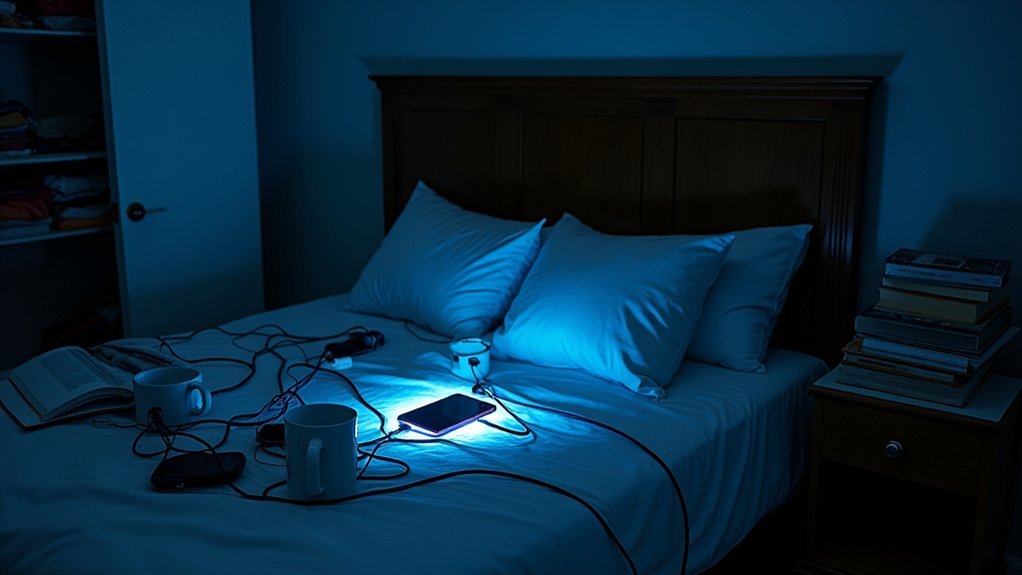
While physical comfort forms the foundation of good sleep, mental stimulation from your surroundings can sabotage even the most comfortable mattress setup.
Your bedroom clutter creates visual distractions that trigger anxiety and make relaxation nearly impossible. Electronics compound this problem by exposing you to blue light, which delays melatonin production and disrupts your natural sleep-wake cycle.
Transform your sleep environment with these essential changes:
- Remove all screens and electronic devices from your bedroom
- Clear surfaces of unnecessary items and visual distractions
- Organize belongings in closed storage to minimize visual chaos
- Establish a calming, electronics-free bedtime routine
Studies consistently show that organized spaces promote relaxation while cluttered environments cause restlessness and racing thoughts that prevent quality sleep.
Frequently Asked Questions
Can Your Environment Cause Insomnia?
Yes, your environment can definitely cause insomnia. You’ll struggle with sleep when exposed to bright lights, excessive noise, warm temperatures, bedroom clutter, and electronics that disrupt your body’s natural sleep patterns.
What Should Your Bedroom Environment Be Like for Better Sleep?
You’ll sleep better in a cool room between 60-67°F with blackout curtains blocking light. Keep it quiet using white noise, choose comfortable bedding, and maintain a clutter-free space to promote relaxation.
Why Can’t I Fall Asleep in My Bedroom?
You can’t fall asleep because your bedroom’s too bright, noisy, cluttered, or uncomfortable. Wrong temperature, poor mattress, or excessive light disrupts melatonin production and prevents your body from relaxing properly.
What Is the Best Environment for Falling Asleep and Staying Asleep?
You’ll sleep best in a cool room between 60-67°F, complete darkness with blackout curtains, minimal noise using white noise, comfortable supportive bedding, and no screens an hour before bedtime.


Leave a Reply