Depression and anxiety create insomnia through multiple pathways that disrupt your body’s natural sleep systems. When you’re depressed, your brain’s sleep architecture changes, reducing restorative slow-wave sleep and increasing nighttime awakenings. Anxiety floods your system with racing thoughts and physical tension, keeping you hyperalert when you should be winding down. This creates a destructive cycle—poor sleep worsens your mental health symptoms, which then makes quality rest even more elusive, trapping you in ongoing sleep struggles that thorough treatment approaches can effectively address.
The Bidirectional Relationship Between Mental Health and Sleep

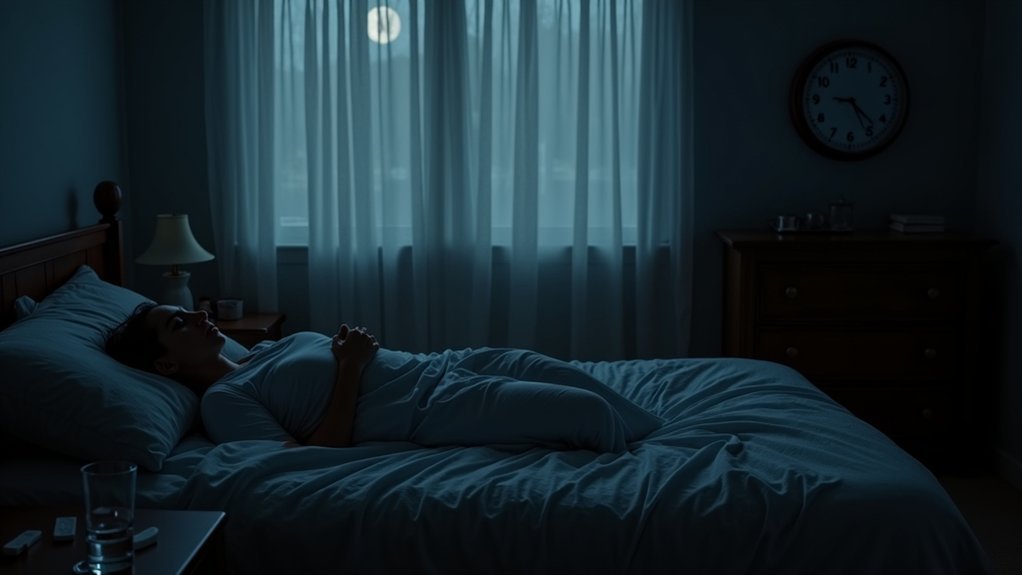
When you’re lying awake at 3 AM with racing thoughts, you’re experiencing firsthand the complex connection between mental health and sleep.
This relationship works both ways – depression and anxiety can trigger insomnia, while sleep disturbances can worsen your mental health symptoms.
If you’re dealing with chronic insomnia, you’re facing a tenfold increased risk of developing depression.
When you don’t sleep well, you’ll experience a 31% reduction in positive moods the next day, making it harder to cope with stress and anxiety.
Poor sleep delivers a 31% hit to your positive mood, leaving you defenseless against tomorrow’s stress and anxiety.
This creates a vicious cycle where poor sleep fuels mental health issues, which then disrupt your sleep further.
The good news? Cognitive behavioral therapy for insomnia can break this cycle, improving both your sleep quality and mental health outcomes.
How Depression Disrupts Normal Sleep Patterns
If you’re struggling with depression, your brain’s sleep machinery isn’t functioning as it should.
Depression fundamentally alters your sleep architecture, reducing the restorative slow-wave sleep your body needs while increasing nighttime awakenings. You’ll likely find yourself caught in sleep difficulties that make both falling asleep and staying asleep challenging.
This happens because depression triggers brain chemistry changes and hormonal disruptions that interfere with normal sleep patterns. About 75% of people with depression experience these sleep issues, often describing their rest as light and fragmented.
The resulting insomnia doesn’t just leave you tired—it amplifies feelings of hopelessness and helplessness. This creates a vicious cycle where poor sleep worsens your depression, which further deteriorates your sleep quality, trapping you in an exhausting loop that affects your mental health and anxiety levels.
Anxiety’s Role in Creating Sleep Disturbances

When you’re anxious, your mind races and your body stays in a heightened state of alertness that makes falling asleep nearly impossible.
You’ll often find yourself lying awake worrying about not getting enough sleep, which creates a vicious cycle where your anxiety about insomnia actually worsens your sleep problems.
Your physical symptoms of anxiety—like rapid heartbeat, muscle tension, and restlessness—keep your body from achieving the calm state necessary for quality rest.
Hyperarousal Disrupts Sleep
Anyone who’s experienced anxiety knows that familiar feeling of being “wired but tired” – your mind races while your body desperately craves rest. This hyperarousal state keeps your nervous system in overdrive, making relaxation nearly impossible.
When anxiety floods your system with stress hormones like cortisol, it disrupts your natural sleep-wake cycle and prevents the deep, restorative sleep you need.
You’ll find yourself lying awake despite exhaustion, your thoughts spinning endlessly. Even when you do drift off, hyperarousal causes frequent awakenings and light sleep that leaves you feeling unrested.
This creates a vicious cycle where sleep disturbances fuel more anxiety, which then worsens your insomnia. The resulting daytime fatigue only amplifies your anxiety symptoms, perpetuating this exhausting pattern.
Worry Creates Sleep Anxiety
The constant worry about whether you’ll fall asleep transforms your bedroom into a battleground between exhaustion and anxiety. Your mind fixates on sleep, creating the exact mental state that prevents it from happening. This sleep anxiety becomes a self-fulfilling prophecy where fear of insomnia actually causes it.
When you’re lying in bed worrying about tomorrow’s responsibilities or racing through endless thoughts, you’re feeding the cycle that keeps you awake. Mental disorders like anxiety disorders don’t just affect your daytime hours—they follow you into the night, creating persistent sleep disturbances.
The irony is brutal: the harder you try to force sleep, the more elusive it becomes. Your worry about not sleeping becomes another source of stress, reinforcing the very insomnia you’re desperately trying to avoid.
Physical Symptoms Prevent Rest
Hyperarousal hijacks your body’s natural ability to wind down for sleep. When you’re dealing with an anxiety disorder, your racing heart rate creates sleep problems that make falling asleep nearly impossible.
Muscle tension throughout your body keeps you physically uncomfortable, while gastrointestinal distress adds another layer of discomfort that prevents restful sleep.
These physical symptoms create a perfect storm for symptoms of insomnia. Your body remains in a heightened state of alertness when it should be relaxing. The combination of stress and anxiety disrupts your natural sleep-wake cycle, leading to irregular sleep patterns.
This creates a destructive cycle where insomnia and depression feed off each other. Sleep disturbances increase your frustration and agitation, which amplifies your anxiety symptoms and makes future sleep even more elusive.
The Vicious Cycle: When Poor Sleep Worsens Mental Health

When you’re caught in the grip of depression or anxiety, poor sleep doesn’t just leave you tired—it actively makes your mental health symptoms worse.
You’ll find that sleep deprivation amplifies feelings of sadness, hopelessness, and worry, creating a destructive cycle where each sleepless night fuels the very conditions that caused your insomnia in the first place.
Breaking this pattern requires understanding how sleep loss sabotages your emotional resilience and discovering strategies that can help you reclaim both rest and mental wellness.
Sleep Deprivation Amplifies Symptoms
Since sleep deprivation reduces positive moods by 31% the following day, you’ll find yourself trapped in a destructive cycle where poor sleep amplifies the very symptoms that keep you awake.
When insomnia disrupts your slow-wave sleep, it compromises emotional regulation, making depression and anxiety symptoms more intense and harder to manage.
Your emotional resilience weakens dramatically, leaving you vulnerable to everyday stressors that would normally feel manageable.
Each sleepless night chips away at your ability to cope, while heightened anxiety and depressive thoughts make quality sleep increasingly elusive.
This bidirectional relationship creates a relentless pattern where mental health deterioration fuels more sleep problems.
Research confirms this dangerous spiral can increase your depression risk tenfold, emphasizing why breaking this cycle is essential for recovery.
Breaking the Destructive Pattern
Breaking this destructive pattern requires a strategic approach that targets both your sleep quality and mental health simultaneously. When you’re trapped in the cycle where insomnia feeds anxiety and depression while these conditions worsen your sleep, you need thorough intervention.
Cognitive behavioral therapy for insomnia (CBT-I) offers the most effective solution by addressing the root causes of sleep disturbances rather than just symptoms. This evidence-based treatment helps you identify and modify thoughts and behaviors that perpetuate poor sleep patterns.
Physical and Chemical Changes That Affect Sleep Quality
Although depression and anxiety are primarily recognized as mental health conditions, they trigger profound physical and chemical changes in your body that directly disrupt your sleep quality.
When you’re experiencing depression or anxiety, your brain’s neurotransmitters like serotonin and norepinephrine become imbalanced, disrupting your natural sleep-wake cycle. Your stress response system also goes into overdrive, flooding your bloodstream with elevated cortisol levels that make it nearly impossible to fall asleep or stay asleep throughout the night.
These chemical disruptions create a state of hyperarousal that keeps your mind racing when you should be winding down.
Depression specifically alters your sleep architecture, reducing the restorative slow-wave sleep your body desperately needs. This chronic insomnia then weakens your immune system and increases fatigue, creating additional physical barriers to quality rest.
Recognizing the Warning Signs of Sleep-Related Mental Health Issues
Understanding these physical changes becomes even more important when you know what warning signs to watch for in yourself or loved ones.
If you’re experiencing insomnia alongside feelings of hopelessness, difficulty concentrating, or persistent loss of energy, these could signal underlying anxiety and depression. Don’t ignore daytime fatigue and increased sleepiness – they’re serious warning signs that your sleep disturbances may be connected to deeper mental health issues.
Since 75% of people with depression face sleep difficulties, and insomnia can increase depression risk tenfold, recognizing these patterns early is essential.
Early recognition of sleep-depression patterns is crucial when three-quarters of depressed individuals struggle with sleep and insomnia multiplies depression risk dramatically.
Ongoing sleep problems don’t just affect your rest; they actively weaken your emotional resilience and coping abilities, creating a cycle that makes recovery more challenging.
Breaking the Pattern: Treatment Approaches That Address Both Conditions
Since sleep disturbances and mental health conditions feed off each other, you’ll need treatment approaches that tackle both problems simultaneously. Cognitive Behavioral Therapy for Insomnia (CBT-I) stands as the gold standard, addressing insomnia while targeting underlying depression and anxiety symptoms.
| Traditional Approach | Integrated Treatment |
|---|---|
| Treats insomnia separately from mental health | Addresses sleep and mood disorders together |
| Relies heavily on sleep medications | Combines therapy, medication, and behavioral changes |
| Often leads to recurring symptoms | Creates lasting resilience and recovery |
You can enhance outcomes by combining antidepressants with sleep-specific treatments. Regular sleep hygiene practices and relaxation techniques like mindfulness meditation help reduce stress while promoting better sleep. Early intervention with thorough treatment plans greatly improves your chances of breaking free from this destructive cycle.
Frequently Asked Questions
Why Does Anxiety Give You Insomnia?
Anxiety triggers hyperarousal in your brain, making it difficult for you to relax and fall asleep. You’ll experience racing thoughts and worry cycles that keep your mind active when you’re trying to rest peacefully.
How Does Depression and Anxiety Cause Insomnia?
When you’re depressed or anxious, your mind races with worries and rumination, creating hyperarousal that prevents sleep initiation. You’ll experience frequent awakenings, light sleep, and elevated cortisol levels that disrupt your natural sleep cycles.
What Happens When You Have Both Anxiety and Depression?
You’ll experience a vicious cycle where anxiety’s hyperarousal prevents falling asleep while depression causes frequent awakenings. This combination dramatically increases your daytime fatigue, emotional distress, and feelings of hopelessness.
How to Fix Anxiety-Induced Insomnia?
You can fix anxiety-induced insomnia by practicing CBT-I techniques, maintaining consistent sleep schedules, using relaxation methods like deep breathing, limiting caffeine intake, and creating a calm bedroom environment.


