
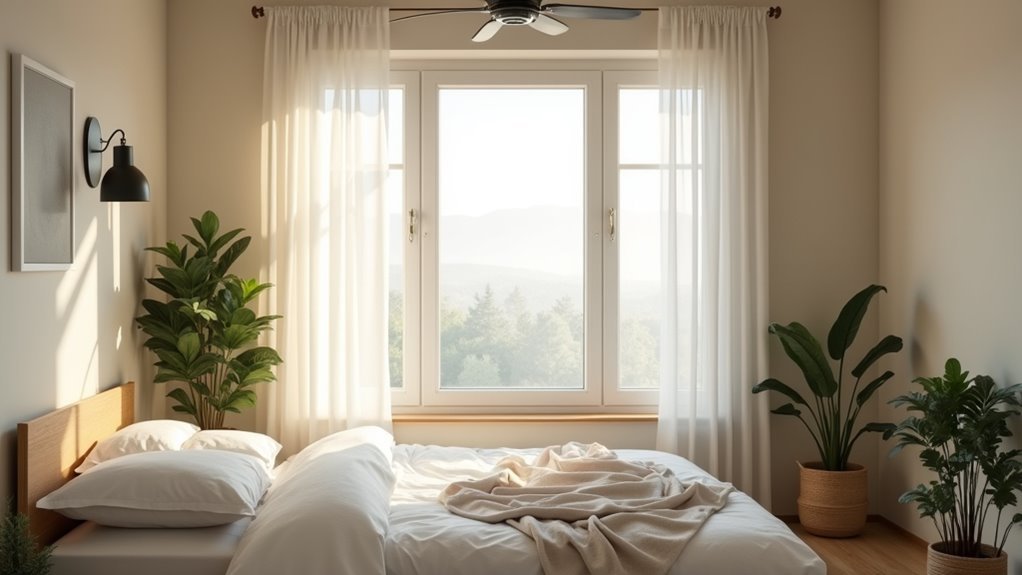
You’ll sleep better by opening windows during cooler hours to create cross-ventilation, positioning fans to pull stale air out while maintaining 60-67°F temperatures. Control humidity between 30-50% using dehumidifiers when needed, and install HEPA air purifiers to eliminate allergens and VOCs. Keep your bedroom door open alongside adjacent windows for ideal airflow, and use smart sensors to monitor CO₂ levels below 750 ppm. These strategic ventilation techniques will transform your sleep environment into the perfect sanctuary for restorative rest.
Open Windows Strategically for Natural Air Circulation

When you open your windows strategically, you’ll create a natural ventilation system that greatly improves your sleep quality by maintaining carbon dioxide levels below 750 ppm.
Time your window opening during cooler parts of the day to maximize fresh air circulation while avoiding temperature spikes that disrupt sleep.
For ideal ventilation, create cross-ventilation by opening windows on opposite sides of your bedroom. This technique enhances airflow and helps regulate temperature within the perfect 16-18°C range.
You’ll notice improved air quality as pollutants and allergens get swept away naturally.
Strategic window opening reduces VOCs from furniture and promotes deeper sleep with fewer nighttime awakenings.
This simple approach transforms your bedroom into a healthier environment where fresh air continuously refreshes your sleeping space.
Use Ceiling and Portable Fans to Enhance Airflow
You’ll maximize your bedroom’s airflow by positioning fans strategically to create cross-ventilation patterns that pull stale air out while drawing fresh air in.
Your fan’s speed settings matter just as much as placement—start with lower speeds and adjust upward until you find the sweet spot that circulates air without creating drafts that disturb your sleep.
Whether you choose ceiling fans for whole-room circulation or portable fans for targeted airflow, each option offers unique advantages that can transform your sleep environment.
Strategic Fan Placement
Strategic fan placement transforms your bedroom into a sleep sanctuary by maximizing airflow and maintaining ideal temperature conditions.
Position portable fans near windows to draw cooler night air inside, improving ventilation and creating cross-breezes that enhance air quality throughout your space.
Set ceiling fans to rotate counterclockwise during warmer months, pushing air downward to create a cooling effect that helps maintain the best temperature for sleep between 60-65°F.
Proper fan positioning reduces humidity levels to the ideal 30-50% range while keeping CO2 below 750 ppm for better sleep quality.
Additionally, fans generate white noise that masks disruptive sounds, creating a more peaceful sleep environment.
Strategic fan placement doesn’t just move air—it actively improves your bedroom’s ventilation system for restorative sleep.
Optimal Speed Settings
Finding the perfect fan speed creates the ideal balance between airflow and comfort for superior sleep quality. You’ll want to adjust ceiling fans to low settings to maintain ideal temperature between 60-65°F while improving air quality. This gentle circulation enhances sleep efficiency by reducing nighttime awakenings without creating disruptive noise.
| Fan Type | Low Speed | Medium Speed |
|---|---|---|
| Ceiling Fans | Gentle breeze, quiet operation | Moderate airflow, slight noise |
| Portable Fans | Targeted cooling, minimal sound | Enhanced circulation, audible hum |
| Sleep Quality | Ideal for rest | May cause disruption |
| Energy Use | Most efficient | Higher consumption |
Start with the lowest setting and gradually increase until you achieve ideal airflow. Personal comfort varies, so experiment with different speeds to find what works best for your sleep environment.
Ceiling Vs Portable
While ceiling fans excel at creating consistent whole-room circulation, portable fans provide targeted cooling exactly where you need it most.
Ceiling fans work counterclockwise during summer to distribute air evenly throughout your bedroom, maintaining steady temperatures that support better sleep quality. They’re particularly effective at improving ventilation and reducing CO2 levels, which enhances overall air quality.
Portable fans offer unmatched flexibility, allowing you to direct airflow precisely where you’ll feel it most. You can position them to create cross-ventilation or focus cooling on your sleeping area.
Both options increase evaporation from your skin, helping you fall asleep faster while reducing nighttime awakenings. Consider combining ceiling fans with portable fans for ideal airflow management and maximum sleep comfort.
Maintain Optimal Temperature Between 60-67°F
One of the most critical factors in achieving quality sleep lies in maintaining your bedroom temperature between 60-67°F (15.5-21°C).
This ideal range facilitates natural heat loss from your body, greatly improving sleep quality and minimizing restlessness throughout the night.
Proper ventilation becomes essential for maintaining this perfect temperature and ensuring better sleep:
- Monitor temperature extremes – Avoid sleeping above 71°F, which causes discomfort and disrupts your ability to fall asleep.
- Prevent overcooling – Don’t let your bedroom drop below 53°F, as this makes falling asleep considerably harder.
- Optimize air quality – Use fans or open windows strategically to maintain airflow and temperature control.
When you maintain this temperature range consistently, you’ll experience improved sleep efficiency and wake up feeling more refreshed and restored.
Control Humidity Levels to Prevent Moisture Buildup

Beyond maintaining proper temperature, you’ll need to control humidity levels between 30% and 50% to create the perfect sleep environment.
Excess moisture buildup leads to mold growth and respiratory problems that disrupt sleep quality. High humidity also increases volatile organic compound emissions from furniture and bedding, compromising indoor air quality.
Use a dehumidifier during humid seasons or in damp climates to maintain ideal levels.
Install an indoor humidity monitor to track conditions regularly and guarantee they stay within the healthy range.
When weather’s dry, open windows to promote fresh air circulation and naturally regulate humidity levels.
Proper humidity control protects your health while improving air quality, creating conditions that support deeper, more restorative sleep throughout the night.
Install Air Purifiers to Remove Pollutants and Allergens
Air purifiers equipped with HEPA filters eliminate up to 99.97% of airborne pollutants that compromise your sleep quality, including dust, pollen, and pet dander that trigger nighttime allergies.
HEPA-filtered air purifiers remove nearly all airborne allergens like dust and pollen that disrupt nighttime sleep quality.
These devices enhance your bedroom’s air quality through multiple mechanisms:
- VOC Reduction: They effectively remove volatile organic compounds (VOCs) from furniture, paint, and cleaning products that can irritate your respiratory system.
- Odor Elimination: Activated carbon filters absorb unpleasant smells and harmful chemicals, creating a fresher sleeping environment.
- CO2 Management: Regular operation helps maintain lower carbon dioxide levels, preventing the sleep disruption that occurs when concentrations exceed 750 ppm.
You’ll benefit from investing in a high-quality unit that operates quietly during nighttime hours.
This guarantees cleaner air without disturbing your rest, making air purifiers an essential component of ideal bedroom ventilation for better sleep.
Keep Bedroom Doors Open to Improve Cross-Ventilation

You’ll dramatically improve your bedroom’s air quality by keeping your door open to create natural airflow throughout your home.
Strategic positioning of your door works with windows and other openings to establish effective cross-ventilation patterns that reduce CO2 buildup and maintain ideal sleeping temperatures.
This simple technique enhances air circulation benefits by allowing fresh air to continuously replace stale, humid air that can disrupt your sleep quality.
Enhanced Air Circulation Benefits
When you keep your bedroom door open, you create a pathway for enhanced air circulation that transforms your sleep environment. This improved ventilation delivers multiple benefits that directly impact your sleep quality and overall health.
The enhanced air circulation provides several key advantages:
- Reduced humidity levels – Open doors prevent moisture buildup that can make you uncomfortable and disrupt sleep.
- Cleaner air quality – Better airflow helps remove allergens and airborne pollutants from your bedroom space.
- Fewer respiratory conditions – Enhanced ventilation reduces stuffiness and promotes easier breathing throughout the night.
You’ll experience fewer nighttime awakenings and improved sleep efficiency when fresh air circulates freely.
The constant air movement also helps maintain ideal bedroom temperatures, ensuring you stay comfortable while sleeping and wake up feeling more refreshed.
Strategic Door Positioning Methods
Strategic door positioning creates powerful cross-ventilation patterns that dramatically improve your bedroom’s air quality.
You’ll achieve peak airflow by keeping your bedroom door open alongside windows in adjacent rooms. This creates a pathway that allows fresh air to flow through your sleeping environment while pushing stale air out.
Position your doors to encourage natural air movement from cooler areas toward warmer spaces. You can enhance this effect by slightly opening doors to bathrooms or hallways, creating multiple ventilation channels.
This method effectively reduces humidity levels and maintains consistent temperatures between 60-65°F.
Your strategic positioning prevents air stagnation, ensuring continuous circulation throughout the night. This cross-ventilation technique eliminates pollutants, reduces carbon dioxide buildup, and creates the ideal sleeping environment for deeper, more restful sleep.
Cross-Ventilation Airflow Patterns
Cross-ventilation transforms your bedroom into a natural air circulation system by harnessing opposing airflow patterns that work continuously while you sleep.
You’ll create effective airflow by strategically opening windows and doors on opposite sides of your room, allowing fresh air to enter while stale air exits naturally.
This ventilation method delivers three key benefits for ideal rest:
- Reduces carbon dioxide levels below 750 ppm, maintaining the perfect threshold for quality sleep
- Eliminates indoor pollutants that accumulate overnight and disrupt your sleep cycles
- Regulates temperature within the 16-18°C range while improving overall air quality
You’ll notice fewer nighttime awakenings and deeper sleep when cross-ventilation patterns effectively circulate fresh air throughout your bedroom, replacing stagnant air that typically causes sleep disturbances.
Monitor Indoor Air Quality With Smart Sensors
Although you mightn’t realize it, the air quality in your bedroom directly impacts how well you sleep each night.
Smart sensors can transform your understanding of your sleeping environment by tracking essential metrics like temperature, humidity, CO₂ levels, and volatile organic compounds (VOCs). An air quality monitor helps you maintain CO₂ concentrations below 750 ppm, which is vital for quality rest—higher levels cause irritability and poor sleep.
These devices provide real-time alerts when air quality issues arise, allowing you to adjust ventilation immediately.
With long-lasting batteries and easy setup, you can place monitors strategically throughout your bedroom.
Frequently Asked Questions
How to Ventilate a Bedroom at Night?
Open your bedroom window or run an exhaust fan to circulate fresh air and reduce CO2 buildup. Use a portable fan for airflow, maintain 60-65°F temperature, and keep humidity between 30-50%.
How to Improve Your Bedroom for Better Sleep?
You’ll sleep better by maintaining your bedroom temperature between 60-65°F, keeping CO2 levels under 750 ppm, decluttering regularly to reduce allergens, and using air purifiers with HEPA filters for cleaner air.
How Do I Get Better Ventilation in My Bedroom?
Open windows and doors to create cross-ventilation, use ceiling or portable fans for air circulation, install exhaust fans if needed, and consider an air purifier to maintain fresh airflow throughout your space.
What Happens When You Sleep in a Poorly Ventilated Room?
You’ll experience elevated CO2 levels causing irritability and poor sleep quality. You’re likely to have more awakenings, less deep sleep, potential headaches from VOCs, and increased risk of respiratory issues.


