

Technology addiction greatly disrupts your rest by exposing you to blue light that suppresses melatonin production and keeps your brain alert when it should be winding down. You’ll experience delayed sleep onset, fragmented sleep patterns, and chronic fatigue even after spending adequate time in bed. Nearly 90% of teens use devices within an hour of sleep, creating a cycle where poor sleep drives you back to technology for comfort, worsening anxiety and depression while compromising your overall sleep quality and mental well-being through this destructive pattern.
Understanding Technology Addiction and Sleep Disruption
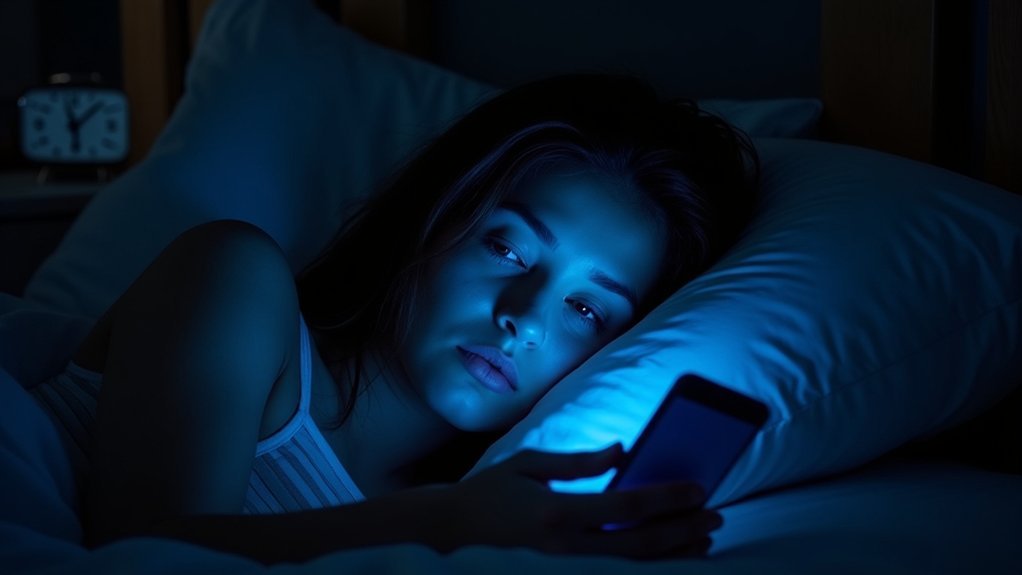
When you find yourself scrolling through social media or playing games late into the night, you’re likely disrupting your body’s natural sleep patterns without realizing it.
Technology addiction fundamentally alters your ability to achieve quality rest. Excessive screen time delays sleep onset, while blue light exposure from devices tricks your brain into staying alert when it should be winding down.
Screen addiction hijacks your natural sleep cycle, flooding your brain with stimulating blue light when it desperately needs darkness and rest.
This compulsive use creates a destructive cycle. You’ll experience insomnia more frequently, leading to sleep deprivation that impairs your cognitive function the following day.
The resulting fatigue drives you back to technology for entertainment and relaxation, perpetuating the addiction. Additionally, constant engagement with digital platforms elevates your stress and anxiety levels, further compromising your mental health and making restful sleep even more elusive.
How Blue Light Exposure Affects Melatonin Production
Although your smartphone’s screen appears harmless, the blue light exposure it emits actively suppresses your body’s melatonin production, disrupting the hormone responsible for regulating your sleep-wake cycles. Research shows that using digital devices for over two hours before bedtime greatly reduces melatonin levels, leaving you feeling alert when you should be winding down.
| Screen Time Before Bed | Melatonin Impact | Sleep Quality Effect |
|---|---|---|
| 0-30 minutes | Minimal suppression | Normal sleep onset |
| 1-2 hours | Moderate reduction | Delayed sleep |
| 2+ hours | Major suppression | Poor sleep quality |
| 3+ hours | Severe disruption | Insomnia risk |
| 4+ hours | Maximum interference | Mood disorders risk |
Health professionals recommend blue light filters, limiting screen usage, or wearing blocking glasses to prevent sleep disorders from worsening.
The Science Behind Screen Time and Circadian Rhythm Disruption
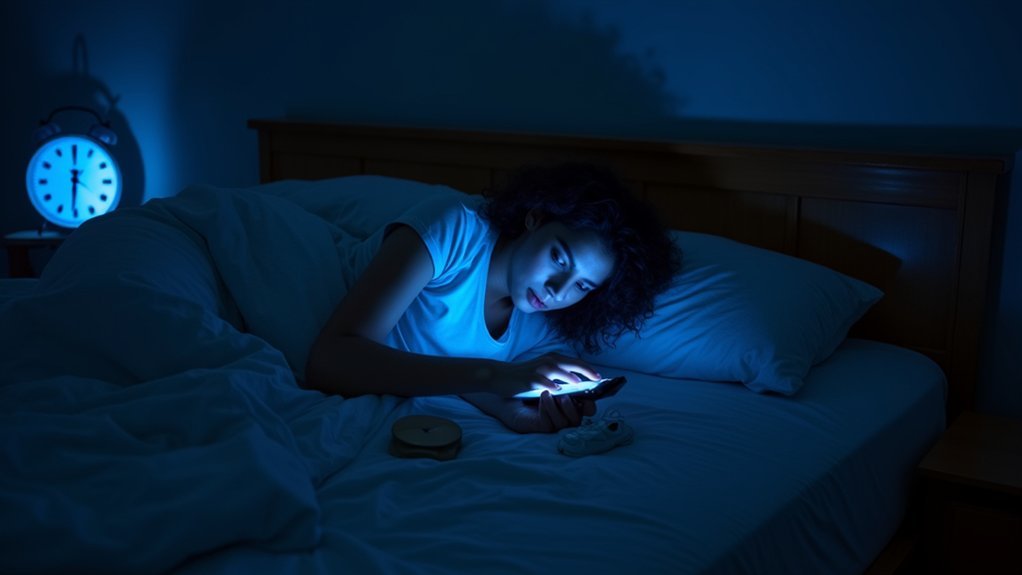
Your body’s internal clock operates on a precise 24-hour cycle, but excessive screen time throws this delicate system into chaos.
Blue light from devices mimics daylight, confusing your circadian rhythm and disrupting natural melatonin production. This hormonal interference makes falling asleep considerably harder.
Research reveals alarming connections between technology use and sleep problems. Heavy screen users experience a 50% increase in sleep disturbances, including insomnia and poor sleep quality.
Children and adolescents face heightened risks due to their developing brains being particularly vulnerable to sleep deprivation.
The National Sleep Foundation recommends avoiding screens at least 30 minutes before bedtime.
This simple change helps restore your body’s natural sleep-wake cycle, allowing melatonin levels to rise properly and promoting restorative rest.
Physical Symptoms of Technology-Related Sleep Deprivation
While your mind struggles with the hormonal chaos of disrupted sleep, your body manifests its own rebellion through a cascade of physical symptoms.
Technology use before bedtime doesn’t just steal hours from your night—it transforms sleep deprivation into tangible health consequences.
The physical symptoms you’ll experience include:
- Chronic fatigue that persists despite spending time in bed, as blue light exposure reduces your sleep quality
- Eye strain affecting nearly 50% of regular users, causing dry eyes, headaches, and blurred vision
- Elevated heart rate and stress levels that make falling asleep increasingly difficult
Your screen time creates a vicious cycle where insomnia breeds more physical discomfort, leading to fragmented sleep patterns and reduced restorative sleep stages that your body desperately needs.
Mental Health Consequences of Poor Sleep From Device Usage

When sleep deprivation from excessive device usage takes hold, your mental health becomes the next casualty in technology’s assault on your well-being.
Technology addiction directly fuels anxiety and depression through compromised sleep quality. Blue light disrupts melatonin production, making it harder for you to fall asleep and stay asleep.
Research shows 60% of people using devices in bed experience sleep disorders, while 30% of adolescents with excessive screen time develop insomnia symptoms.
This chronic sleep disruption wreaks havoc on your cognitive function, impairing concentration and memory.
You’ll find yourself trapped in a vicious cycle where poor mental health drives more device usage, which further deteriorates sleep quality and deepens psychological distress.
Breaking the Cycle of Late-Night Technology Consumption
You’re caught in a destructive loop where late-night scrolling sabotages your sleep, leaving you tired and reaching for devices even more the next evening.
Breaking this cycle requires intentional action: establish a digital detox period at least one hour before bedtime to give your brain time to wind down naturally.
Screen Time Sleep Disruption
As darkness falls and you scroll through your phone one last time before bed, you’re unknowingly sabotaging your body’s natural sleep preparation process. The blue light from your screen disrupts melatonin production, throwing your circadian rhythms completely off balance. This late-night technology use makes you 1.5 times more likely to experience sleep disturbances.
Your screen time’s devastating effects include:
- Delayed sleep onset – Blue light tricks your brain into thinking it’s daytime.
- Reduced sleep quality – Fragmented rest leads to chronic fatigue and poor daytime alertness.
- Increased insomnia risk – 90% of teens use screens before bed, directly correlating with sleep problems.
Breaking this cycle requires establishing screen time limits and implementing proper sleep hygiene practices through technology-free bedtime routines.
Digital Detox Before Bed
Breaking free from late-night screen habits starts with creating intentional boundaries between your digital life and sleep preparation. A digital detox 1-2 hours before bedtime dramatically improves sleep quality by allowing your mind to naturally wind down.
Screen time in the evening disrupts melatonin production, making it harder to fall asleep and maintain healthy sleep patterns. Establishing a consistent bedtime routine without digital devices enhances relaxation and reduces sleep disturbances.
You’ll feel more rested and experience improved cognitive function the following day. Creating tech-free zones, particularly in your bedroom, removes the temptation of late-night technology consumption.
Research consistently shows that limiting evening screen exposure leads to better sleep hygiene and overall rest quality.
Cognitive Behavioral Therapy Techniques for Technology-Induced Insomnia
You can break free from technology-induced insomnia by implementing specific CBT strategies that target both your sleep environment and thought patterns.
Sleep hygiene CBT techniques help you establish boundaries with devices, while thought pattern restructuring methods address the underlying beliefs that keep you scrolling late into the night.
These evidence-based approaches work together to rewire your relationship with technology and restore healthy sleep cycles.
Sleep Hygiene CBT Strategies
When technology hijacks your sleep patterns, Cognitive Behavioral Therapy (CBT) offers proven strategies to reclaim restful nights. These CBT strategies target sleep hygiene by addressing how technology use disrupts your circadian rhythms and sleep quality.
Effective approaches include:
- Establishing consistent sleep schedules – You’ll reduce late-night screen time that interferes with natural sleep cycles.
- Creating tech-free routines – Replace devices with relaxing activities like reading or meditation an hour before bed.
- Implementing mindfulness techniques – You can manage technology-related anxiety while promoting deeper relaxation.
Blue light from screens suppresses melatonin production, making it harder to fall asleep. By limiting screen exposure before bedtime and practicing anxiety management techniques, you’ll develop healthier sleep patterns that aren’t controlled by technology.
Thought Pattern Restructuring Methods
Although technology-induced insomnia stems from various factors, the negative thought patterns surrounding your device use often serve as the primary culprit keeping you awake at night.
Cognitive-behavioral therapy provides effective thought restructuring techniques to combat these destructive mental habits. You’ll learn to challenge irrational beliefs about staying constantly connected, particularly the fear of missing out that fuels your compulsive need to check devices.
Through systematic questioning, you can identify and replace anxiety-provoking thoughts with rational alternatives. For instance, instead of thinking “I must respond immediately,” restructure this to “Messages can wait until morning.”
Combining these methods with mindfulness practices helps you recognize automatic thought patterns that sabotage sleep hygiene. This targeted approach addresses technology addiction at its cognitive roots, considerably improving your mental health and sleep quality.
Creating Healthy Digital Boundaries for Better Sleep
While technology offers countless benefits throughout the day, it’s wreaking havoc on your ability to get quality rest at night. When you engage in technology use close to bedtime, you’re exposing yourself to blue light that disrupts melatonin production and throws off your circadian rhythms.
Nearly 90% of teens use devices within an hour of sleep, creating widespread sleep disturbances.
Creating healthy digital boundaries requires these mindful technology practices:
- Implement screen time limits – Set strict cutoffs at least 30 minutes before bed for a digital detox.
- Establish a tech-free zone – Remove all devices from your bedroom to promote better sleep quality.
- Turn off notifications – Reduce anxiety from constant connectivity by silencing alerts.
These healthy sleep habits greatly improve your mental well-being and overall rest quality.
Treatment Strategies for Restoring Natural Sleep Patterns
Setting boundaries represents just the first step toward reclaiming your natural sleep patterns. Several treatment strategies can help you overcome technology addiction and restore sleep quality.
| Strategy | Method | Benefits |
|---|---|---|
| CBT Therapy | Identify negative thought patterns | Changes behaviors, improves sleep habits |
| Digital Detox Programs | Scheduled tech breaks | Reduces blue light exposure, enhances rest |
| Sleep Tracking Tools | Monitor sleep patterns | Provides insights for routine adjustments |
Cognitive-behavioral therapy effectively addresses technology addiction by changing harmful behaviors. Digital detox programs greatly improve your circadian rhythms by eliminating screen time before bed. Establishing a consistent bedtime routine without devices signals your body to wind down naturally. Education about negative effects of technology, including increased insomnia, motivates lasting behavioral changes that prioritize restorative sleep.
Frequently Asked Questions
How Does Technology Addiction Affect Sleep?
You’ll experience disrupted sleep patterns from excessive screen time and blue light exposure. Your sleep duration decreases by 1-2 hours nightly, while bedroom devices and social media create anxiety, making it harder to fall asleep.
What Is the Impact of Technology on Sleep?
Technology disrupts your sleep by emitting blue light that interferes with your natural circadian rhythms. You’ll experience poorer sleep quality, increased insomnia, and daytime fatigue when you use devices before bedtime.
What Is the Impact of Digital Addiction?
You’ll experience disrupted brain chemistry when you’re digitally addicted, as your reward centers activate like substance addiction. You’ll face increased stress, anxiety, physical strain, and chronic fatigue that severely compromises your body’s recovery.
What Are the Disadvantages of Technology Addiction?
You’ll face disrupted sleep patterns, eye strain, and headaches from excessive screen time. Technology addiction increases your stress levels, causes you to neglect responsibilities, and impairs your cognitive function and focus.


