

You’ll get the most accurate deep sleep tracking from polysomnography in professional sleep labs, which uses thorough sensors to monitor brain waves, breathing, and muscle activity. For daily use, consumer wearables like the Oura Ring 4 and WHOOP 4.0 provide reliable deep sleep estimates through heart rate variability and movement tracking, though they’re less precise than medical equipment. Smartphone apps offer basic tracking but often misinterpret data. Explore how these technologies can transform your understanding of sleep quality.
Medical-Grade Sleep Monitoring Equipment
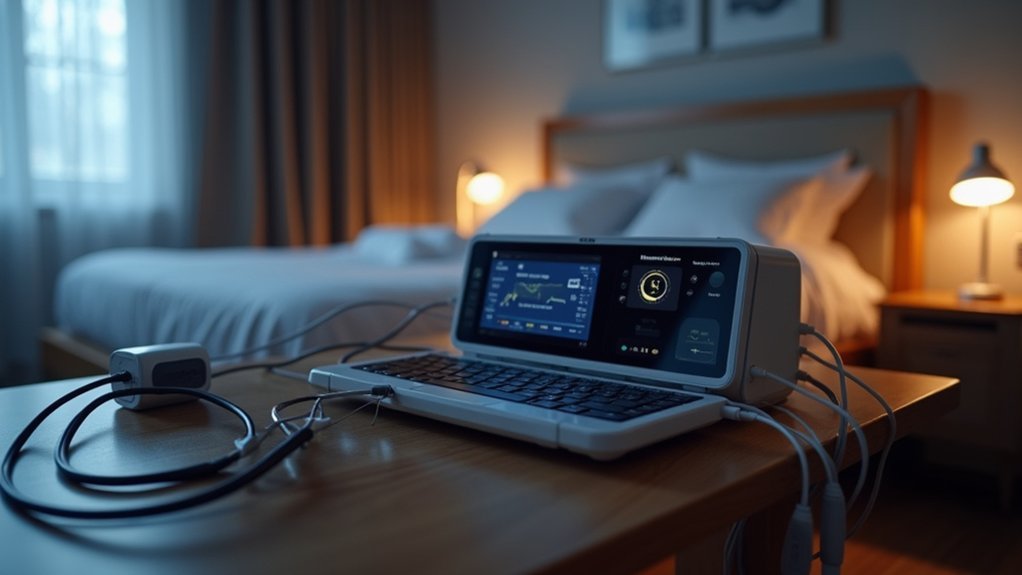
When you’re seeking the most accurate assessment of your deep sleep quality, medical-grade sleep monitoring equipment represents the pinnacle of diagnostic precision.
Polysomnography (PSG) stands as the gold standard, requiring an overnight stay in a sleep lab where sensors monitor your brain activity, eye movement, muscle tone, heart rate, and breathing patterns. This thorough approach allows precise measurement of sleep stages, including deep sleep phases.
Polysomnography delivers unmatched precision through comprehensive overnight monitoring, capturing every aspect of your sleep architecture with medical-grade accuracy.
Advanced systems incorporate EEG technology to track brain waves, differentiating between sleep stages more accurately than consumer devices.
While home sleep apnea tests offer valuable insights, they typically focus on respiratory parameters rather than detailed staging.
Medical-grade sleep monitoring generates extensive reports detailing sleep architecture and disturbances, enabling healthcare providers to develop tailored treatment plans for optimizing your sleep quality.
Consumer Sleep Tracking Devices and Wearables
While medical-grade equipment offers unparalleled accuracy, consumer sleep tracking devices provide a practical alternative for monitoring your deep sleep quality from the comfort of your own bed.
Wearable devices like the Oura Ring 4 and WHOOP 4.0 deliver extensive tracking by monitoring your heart rate and movement patterns throughout the night, providing detailed analysis of sleep stages including deep sleep duration.
The Muse S Headband takes monitoring further by tracking brain activity alongside physiological markers, offering deeper insights into your sleep quality.
For those preferring non-wearable options, the Withings Sleep mat slides under your mattress to collect health data on breathing and heart rate patterns.
These consumer sleep tracker devices employ sophisticated algorithms to analyze your sleep stages with impressive accuracy, making them accessible tools for understanding your deep rest patterns.
Smartphone Apps for Sleep Pattern Analysis
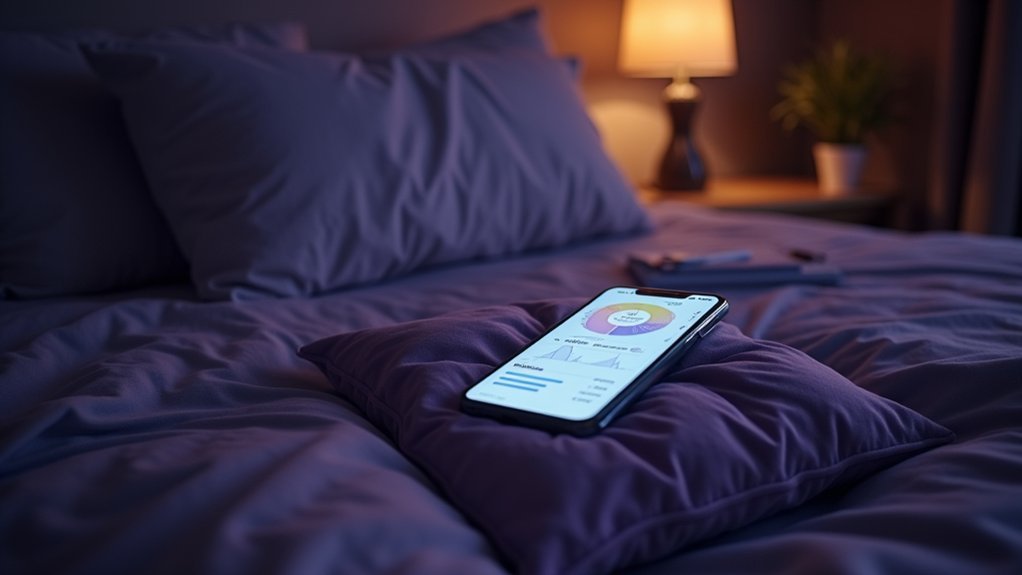
When you’re choosing a sleep tracking app, you’ll find significant differences in accuracy between basic smartphone accelerometer-based apps and those that integrate with wearable devices for heart rate monitoring.
Free versions typically offer basic sleep duration and movement tracking, while premium features include detailed sleep stage analysis, personalized coaching, and extensive reports that break down your deep sleep patterns.
You’ll need to weigh whether the enhanced accuracy and advanced insights of paid apps justify the cost compared to free alternatives that provide fundamental sleep tracking capabilities.
App Accuracy Comparison
Smartphone sleep apps promise thorough analysis of your rest patterns, but their accuracy tells a more complex story. When conducting an app accuracy comparison, you’ll find significant variations in sleep tracking performance between different applications.
Popular smartphone apps like Sleep Cycle rely on actigraphy and user input, which affects the precision of data they collect.
However, dedicated wearable trackers consistently outperform smartphone apps in detecting sleep stages accurately. Devices like the Oura Ring utilize advanced sensors and algorithms that smartphone apps simply can’t match.
You’ll notice that app-based tracking often misinterprets awake time as sleep, creating unreliable data points.
For meaningful insights, you need consistent usage patterns and realistic expectations about smartphone apps’ limitations compared to specialized sleep monitoring devices.
Free Vs Premium Features
Although most sleep tracking apps begin with free basic features, you’ll quickly discover their limitations when seeking thorough sleep analysis. Free versions typically only log sleep duration and provide general sleep quality assessments, while premium features reveal detailed sleep stage breakdowns and personalized insights that uncover true rest patterns.
Premium sleep tracker subscriptions offer smart alarm functions that wake you during lighter sleep phases, ensuring more refreshed mornings.
You’ll gain access to extensive analytics that correlate heart rate, movement, and lifestyle factors with your accurate sleep data. These tracking devices integrate seamlessly with wearables, providing ad-free experiences and extended data storage.
If you’re serious about understanding your sleep quality patterns and making informed improvements, premium features greatly enhance your sleep tracking capabilities beyond basic free offerings.
Under-Mattress Sleep Sensors and Smart Beds
For those seeking thorough sleep monitoring without the hassle of wearing devices, under-mattress sleep sensors and smart beds offer sophisticated tracking capabilities that work seamlessly while you sleep.
Under-mattress sleep sensors like the Withings Sleep use advanced algorithms to monitor your heart rate, breathing, and movement, delivering detailed sleep reports without requiring wearables.
Smart beds such as the Eight Sleep Pod go beyond tracking sleep metrics by incorporating temperature regulation and automatic adjustments for ideal comfort.
You can integrate these sensors with smart home devices to enhance sleep environment based on your sleep data, adjusting lighting and temperature accordingly.
Most sensors work with mattresses under 15 inches thick, helping you identify patterns and improve overall sleep quality.
Heart Rate Variability and Recovery Metrics

You’ll find that HRV measurement accuracy varies considerably between devices, with chest straps typically providing more precise readings than wrist-worn trackers.
Most sleep tracking systems convert your raw HRV data into simplified recovery scores, but it’s essential to understand how these algorithms validate their calculations.
You can maximize the reliability of your recovery metrics by ensuring consistent measurement conditions and comparing trends rather than focusing on daily fluctuations.
HRV Measurement Accuracy
When you’re evaluating sleep trackers for HRV monitoring, understanding measurement accuracy becomes essential since these devices serve as your primary window into autonomic nervous system recovery. The accuracy of sleep trackers varies considerably between models, with consumer devices like the Oura Ring Gen3 showing different baseline readings compared to WHOOP 4.0.
| Device | Average HRV (ms) | Clinical Accuracy |
|---|---|---|
| Oura Ring Gen3 | 31 | Moderate |
| WHOOP 4.0 | 42 | Moderate |
| Clinical Equipment | Variable | High |
| Chest Straps | Variable | High |
| Wrist-based Trackers | Variable | Lower |
Your sleep tracker won’t match clinical equipment precision, but consistent daily tracking reveals meaningful patterns. Focus on trends rather than absolute numbers when evaluating your recovery status and sleep quality through heart rate variability measurements.
Recovery Score Validation
Recovery scores transform raw HRV data into actionable insights, but validating these proprietary algorithms remains challenging since manufacturers rarely reveal their exact calculation methods.
You’ll find that devices like Oura Ring and WHOOP 4.0 combine heart rate variability measurements with data about your sleep duration and quality to generate these scores.
However, you can’t easily verify if your recovery score accurately reflects your actual physiological state since each company uses different algorithms to analyze your sleep patterns.
To validate recovery metrics yourself, track how your scores correlate with your perceived energy levels and performance over time.
When your nightly sleep quality improves alongside higher HRV readings, you’re likely getting reliable data that can guide ideal recovery strategies for better health outcomes.
Blood Oxygen Level Monitoring During Sleep
Blood oxygen monitoring represents one of sleep tracking’s most critical health metrics, as your oxygen saturation levels directly impact how well your body recovers during rest. Devices like the Sleepon Go2Sleep 3 Tracker continuously track blood oxygen throughout the night, alerting you to dangerous drops that may indicate sleep apnea or other respiratory health issues.
| Blood Oxygen Level | Sleep Quality Impact |
|---|---|
| 95-100% | Ideal deep sleep stages |
| 90-94% | Mild sleep disruption |
| 85-89% | Moderate awakenings |
| 80-84% | Significant fragmentation |
| Below 80% | Severe sleep impairment |
These monitoring systems help you identify patterns between oxygen levels and morning restfulness. When your blood oxygen drops below normal ranges, it disrupts deep sleep phases and prevents effective recovery, leaving you tired despite adequate sleep duration.
Environmental Sleep Quality Factors
While monitoring your body’s internal metrics reveals important sleep disruption patterns, your bedroom environment plays an equally powerful role in determining whether you’ll achieve truly restorative rest.
Keep your bedroom temperature between 60-67°F for ideal sleep quality. High noise levels disrupt deep sleep stages, causing frequent awakenings even at low volumes.
Temperature control and noise reduction are fundamental pillars of quality sleep that significantly impact your deep sleep stages.
Remove electronic devices from your sleep environment since blue light suppresses melatonin production and delays sleep onset. You’ll strengthen your circadian rhythms by exposing yourself to natural light during the day, which improves nighttime sleep cycle timing.
Maintain a clean, organized bedroom to reduce stress and help you unwind effectively before bed.
Sleep Stage Detection and REM Cycle Tracking
Understanding your sleep architecture requires tracking the distinct stages your body cycles through each night. Sleep stage detection categorizes your rest into light, deep, and REM phases, with deep sleep comprising 15-20% of an ideal 8.5-9 hour cycle for physical restoration.
Wearable sleep trackers like the Oura Ring and WHOOP 4.0 use heart rate variability and movement data to estimate these stages, though accuracy varies between deep sleep and wake periods. REM cycles occur every 90-110 minutes, lengthening throughout the night, making effective tracking sleep cycles essential for evaluating sleep quality.
The Eight Sleep Pod analyzes body temperature and movement for enhanced monitoring. However, these devices rely on indirect measurements, so clinical sleep studies remain the gold standard for precise sleep architecture data.
Professional Sleep Lab Testing and Polysomnography
For the most accurate assessment of your sleep architecture, professional sleep lab testing offers polysomnography—a thorough testing method that surpasses any consumer device’s capabilities.
This extensive approach monitors your brain waves, oxygen levels, heart rate, and breathing throughout an overnight stay. Multiple sensors placed on your scalp and body track all sleep stages, including REM and deep sleep phases, providing detailed insights into your sleep quality.
Sleep specialists analyze the collected data to identify sleep disorders like sleep apnea and other disturbances affecting your rest.
Professional sleep specialists meticulously examine your overnight data to pinpoint specific sleep disorders and breathing disruptions that compromise restorative rest.
Unlike convenient home trackers, polysomnography remains the gold standard for diagnosing sleep issues. You’ll receive tailored recommendations based on precise measurements of your natural sleep patterns in a controlled environment.
DIY Sleep Quality Assessment Methods
Although professional sleep labs provide the most thorough analysis, you can effectively monitor your sleep quality at home using simple, accessible methods.
A sleep diary helps you track patterns by recording sleep times, wake times, and sleep disturbances, revealing insights into your sleep habits.
Smartphone apps can monitor your sleep cycles, providing data on duration and efficiency over time.
You’ll want to experiment with consistent bedtime routines incorporating relaxation techniques like reading or meditation to assess how lifestyle changes impact your rest.
Environmental factors such as room temperature, noise, and light exposure also affect sleep quality.
Self-assessment tools like the Pittsburgh Sleep Quality Index offer structured evaluation methods for identifying sleep problems.
- Discover hidden patterns disrupting your precious rest
- Transform restless nights into rejuvenating sleep experiences
- Reclaim control over your sleep destiny
- Unlock the secrets to consistently deeper, more restorative sleep
Choosing the Right Sleep Tracking Technology
When selecting sleep tracking technology, you’ll face a fundamental choice between wearable devices like smartwatches or rings and non-wearable options that monitor from your bedside or under your mattress.
Your decision should center on comfort preferences and the specific metrics you want to track, as wearables typically offer more extensive biometric data while non-wearables provide hassle-free monitoring.
You’ll need to evaluate key features like battery life, sleep stage accuracy, and compatibility with your lifestyle to find the tracker that best suits your deep rest monitoring goals.
Wearable Vs Non-Wearable Options
The choice between wearable and non-wearable sleep tracking technology depends on your personal preferences for comfort, functionality, and data depth.
Wearable options like the Oura Ring 4 and WHOOP 4.0 deliver extensive deep sleep metrics alongside fitness tracking features, making them perfect for recovery-focused individuals.
Non-wearable trackers such as the Withings Sleep offer superior comfort by sliding under your mattress while providing accurate heart rate, breathing, and movement monitoring.
Consider these key factors when deciding:
- Comfort – Non-wearables eliminate physical contact during sleep
- Battery life – Affects consistent tracking reliability and user experience
- Data accuracy – Both types effectively monitor deep sleep quality
- Multi-functionality – Wearables include activity tracking and smart alarms
Your choice ultimately depends on whether you prioritize extensive health data or sleep-focused simplicity.
Key Features Assessment
Before investing in sleep tracking technology, you’ll want to prioritize devices that excel at monitoring sleep stages with scientific precision. Your ideal sleep tracker should accurately detect deep sleep phases, which are vital for physical recovery and restoration.
Heart rate variability monitoring is another important feature, as HRV fluctuations indicate your sleep quality and overall health status. Look for thorough data analysis capabilities that track sleep duration, interruptions, and environmental conditions affecting your rest.
| Feature | Why It Matters | What to Look For |
|---|---|---|
| Sleep Stage Accuracy | Precise deep sleep tracking | Scientific-grade sensors |
| HRV Monitoring | Sleep quality insights | Continuous heart rate tracking |
| Data Analysis | Complete sleep picture | Environmental factor tracking |
| User Experience | Daily usability | User-friendly app interface |
Ensure your chosen device offers battery life exceeding seven days and remains lightweight and comfortable for consistent nightly wear.
Interpreting Sleep Data for Better Rest Quality
While wearable devices like the Oura Ring and WHOOP 4.0 provide detailed breakdowns of your sleep stages, you’ll need to understand what those numbers actually mean to improve your rest quality.
Your sleep tracker measures deep sleep duration, which should account for 15-20% of your total sleep time—roughly 1.3-1.8 hours nightly.
When you track sleep consistently, you’ll spot patterns in your sleep data that reveal how lifestyle choices affect your rest:
- Your evening caffeine might be stealing precious deep sleep hours
- Inconsistent bedtimes create chaotic sleep patterns that leave you exhausted
- Low activity levels directly correlate with poor sleep quality
- Weekend sleep-ins disrupt your natural rhythm for the entire week
Regularly analyze these trends to improve their sleep through targeted adjustments.
Frequently Asked Questions
What Device Is Most Accurate for Sleep Tracking?
You’ll find the Garmin Forerunner 165 most accurate for sleep tracking. It provides precise sleep duration and quality measurements without subscription fees, though you should know all wearables estimate sleep stages less reliably than actual sleep duration.
How Can I Measure My Sleep Quality?
You can measure your sleep quality using wearable devices like Oura Ring or WHOOP 4.0, or non-wearable options like Withings Sleep mat that track duration, stages, and disturbances nightly.
What Is the Most Accurate Fitness Tracker for Sleep?
You’ll find the Oura Ring 4 most accurate for sleep tracking, offering precise heart-rate data and detailed sleep stage insights. WHOOP 4.0 and Garmin Forerunner series also provide reliable sleep monitoring capabilities.
What Is the Most Effective Sleep Tracker?
You’ll find the Oura Ring 4 most effective for thorough sleep tracking, scoring 9.1/10. It accurately monitors sleep quality and deep sleep stages, providing reliable data you can trust for optimizing your rest.


