

Bedroom sound dampening improves your sleep by blocking disruptive noises that fragment your natural sleep cycles throughout the night. Even sounds as low as 30 decibels can trigger neural responses that prevent you from reaching deeper, restorative sleep stages. Your ears continuously process sound waves during sleep, keeping your auditory cortex active and making it harder to maintain quality REM sleep. Effective soundproofing creates the tranquil environment your body needs for complete rest and recovery.
How Noise Disrupts Natural Sleep Cycles and REM Stages
While you’re drifting off to sleep, even subtle sounds can derail your body’s natural progression through essential sleep stages. Your brain processes noise differently during each phase, with lighter sleep stages being most vulnerable to disruption.
When noise levels reach just 30 decibels, your shift into deeper, restorative sleep becomes compromised. Traffic averaging 70 decibels creates even more significant interruptions.
Related guide: Best Baby Sound Machines for Whole Household Sleep
Most sleep disruptions occur during stage two non-REM sleep, preventing you from reaching the vital REM phases where memory consolidation and physical restoration happen. Emotional sounds like your name or a baby’s cry trigger immediate awakenings, fragmenting your sleep cycle.
Children and elderly individuals face heightened sensitivity to these disturbances, experiencing increased restlessness and diminished sleep quality throughout the night.
The Science Behind Sound Waves and Sleep Interference
Understanding how sound waves physically interact with your sleeping brain reveals why even minor noises can sabotage your rest. Your ears don’t shut off during sleep—they continuously process incoming sound waves, sending signals to your brain for threat assessment. Even quiet noise at 30 decibels can trigger neural responses that prevent you from moving into deeper, restorative sleep stages.
| Sound Level | Sleep Impact | Recovery Time |
|---|---|---|
| 30 dB | Delayed sleep onset | 15-30 minutes |
| 40 dB | Stage 2 disruptions | 30-45 minutes |
| 50 dB | Frequent awakenings | 45-60 minutes |
| 60 dB | REM fragmentation | 60+ minutes |
| 70+ dB | Complete awakening | Variable |
Your brain’s auditory cortex remains partially active, making the shift from light to deep sleep particularly vulnerable to sound interference, especially during stage two sleep.
Acoustic Foam Installation for Wall Sound Absorption
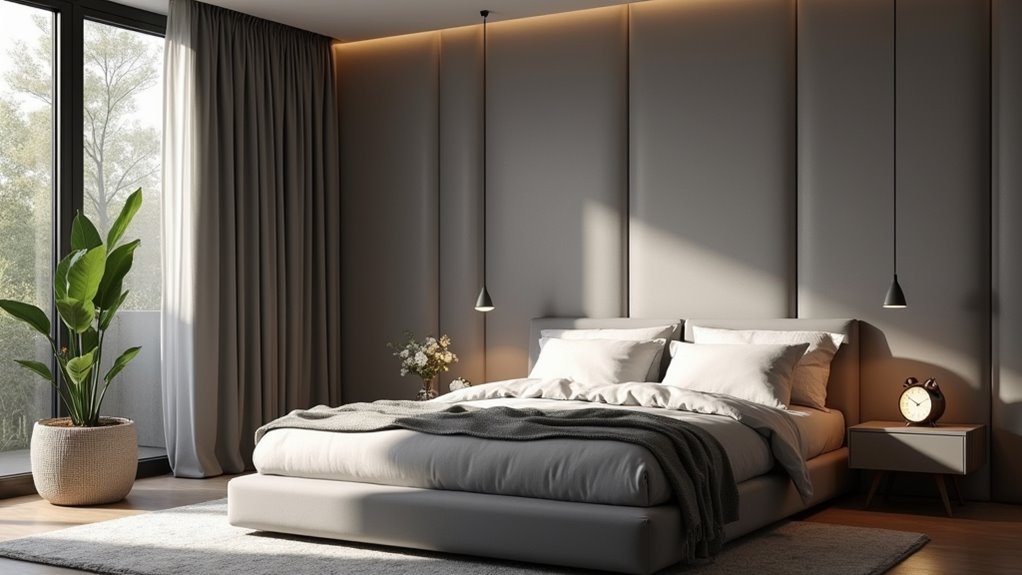
Three key factors determine acoustic foam’s effectiveness: placement strategy, foam density, and wall coverage percentage.
You’ll need to install panels across the entire wall surface to maximize sound absorption and prevent external noise from disrupting your sleep quality. Choose foam density based on your specific soundproofing requirements – higher density materials offer superior noise reduction.
Position panels strategically on walls facing noise sources like busy streets or neighboring rooms. Proper installation creates a quieter bedroom environment that promotes longer deep sleep phases and better overall rest.
Don’t forget regular maintenance to preserve your foam’s efficacy. Clean panels periodically and inspect them for wear or damage.
This simple upkeep guarantees your acoustic treatment continues dampening sound waves effectively, maintaining the peaceful atmosphere essential for quality sleep.
Sound-Absorbing Panels: Materials and Placement Strategies
Beyond acoustic foam, sound-absorbing panels offer expanded material choices and placement flexibility for bedroom noise control. You’ll find these panels made from foam, fabric, and metal materials, each designed to trap sound waves effectively.
For maximum impact, you should cover entire wall surfaces with sound-absorbing panels, ensuring thorough noise reduction.
Strategic placement matters most. Position your panels at first reflection points where sound waves initially bounce off walls. This placement considerably enhances absorption capabilities and improves your bedroom’s acoustic comfort.
The effectiveness gets measured through Noise Reduction Coefficient (NRC) values—higher numbers mean better sound absorption.
Installing sound-absorbing panels in your bedroom directly improves sleep quality by minimizing disruptive noise levels that interfere with rest.
Door Replacement Options for Enhanced Noise Blocking
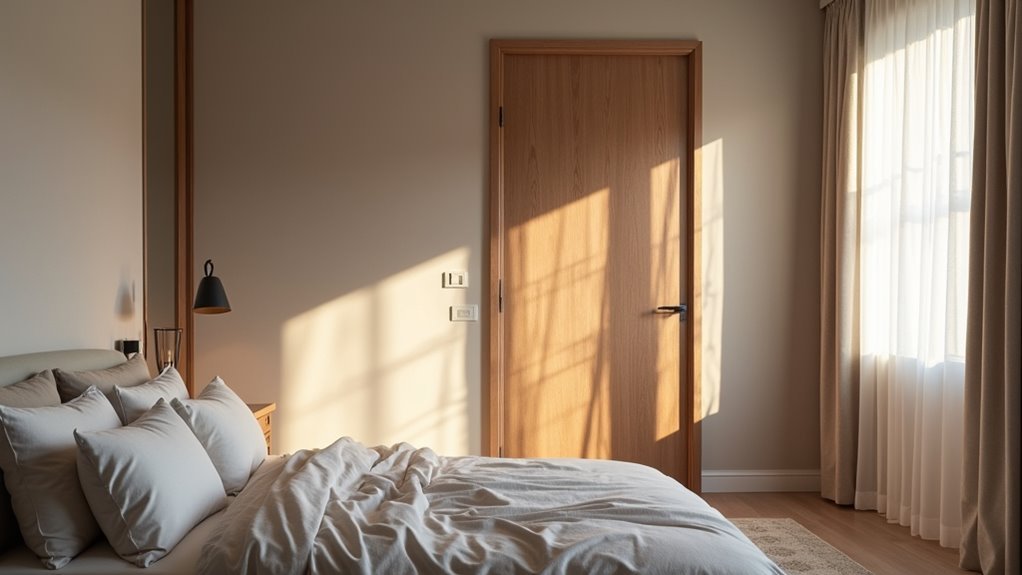
When evaluating door replacement options for superior noise blocking, you’ll discover that solid-core doors dramatically outperform standard hollow-core models in preventing sound transmission. Their increased density creates an effective barrier against unwanted noise.
You’ll maximize performance by adding weather stripping and door sweeps, which seal gaps that allow sound leakage.
Material choice greatly impacts effectiveness. Fiberglass and steel doors offer excellent sound-blocking capabilities due to their weight and density.
For the best noise isolation, consider acoustic doors specifically engineered for soundproofing—they’re particularly valuable in bedrooms facing busy streets or noisy neighbors.
Professional installation guarantees proper fitting, eliminating potential weak points that compromise sound reduction.
When exploring door replacement options, prioritize heavier materials and proper sealing to achieve the best noise control for better sleep quality.
Window Treatments and Heavy Curtains for External Sound Control
Although windows often represent the weakest point in your bedroom’s sound barrier, strategic window treatments can transform them into effective noise-blocking assets.
Heavy curtains with thick fabrics can block up to 50% of external noise when properly installed, absorbing sound waves from traffic and other disturbances that disrupt your sleep environment.
Blackout curtains offer dual benefits by combining light-blocking and sound-dampening properties, promoting deeper, more restorative sleep.
For maximum effectiveness, you’ll want to layer different treatments—combine sheer and blackout curtains to optimize both light control and sound reduction.
Adding soundproof window inserts alongside heavy curtains creates an even more powerful barrier, blocking up to 75% of low-pitched and 95% of high-pitched noises.
Floor and Ceiling Soundproofing Solutions
You’ll need to address noise traveling through your floor and ceiling to create a truly quiet bedroom environment.
Floor impact noise from footsteps, dropped objects, and furniture movement above can seriously disrupt your sleep, while sounds from below can filter up through inadequate flooring.
Installing proper acoustic barriers in your ceiling and implementing floor soundproofing materials will greatly reduce these vertical noise transmissions.
Floor Impact Noise Reduction
Since floor impact noise from footsteps and dropped objects can severely disrupt your sleep, you’ll need targeted soundproofing solutions that address both the source and receiver points of these disturbances.
Installing sound-absorbing underlayment beneath your flooring effectively reduces impact noise transmission between levels, creating better acoustic comfort in your bedroom. You can also mount acoustic panels on your ceiling to absorb noise from upper floors, enhancing your room’s soundproofing capabilities.
Adding carpet or area rugs provides another layer of protection by dampening impact sounds and creating softer surfaces that absorb vibrations.
When you implement thorough soundproofing solutions that combine floor and ceiling treatments, you’ll achieve up to 50% noise reduction, greatly improving your sleep quality and overall health.
Ceiling Acoustic Barrier Installation
When overhead neighbors create constant disturbances, ceiling acoustic barriers become your most effective defense against sleep-disrupting noise transmission. Ceiling acoustic barrier installation requires strategic placement of acoustic foam or soundproofing panels that trap sound waves and minimize their passage between floors.
| Before Installation | During Installation | After Installation |
|---|---|---|
| Sleepless nights | Hope for tranquility | Peaceful slumber |
| Constant footsteps | Careful material placement | Muffled environmental sounds |
| Disrupted sleep cycles | Professional guidance needed | Deeper rest cycles |
| Bedroom stress | Investment in comfort | Enhanced well-being |
| Noise frustration | Complete surface coverage | Sound insulation success |
You’ll maximize noise-absorbing capabilities by ensuring complete surface area coverage. Proper installation prevents ineffective noise reduction that could impact your bedroom’s tranquility. Combined with floor soundproofing, these barriers create an ideal sleep environment.
White Noise Machines vs. Active Sound Cancellation
While both white noise machines and active sound cancellation devices can transform your bedroom into a quieter sanctuary, they tackle unwanted sounds through fundamentally different approaches.
White noise machines create consistent background sounds that mask disruptive noises, forming a soothing auditory blanket that helps you fall asleep faster and reduces nighttime awakenings. They’re affordable and accessible for most sleepers.
White noise machines provide an affordable solution that masks disruptive sounds with consistent background audio for better sleep.
Active sound cancellation devices work differently by generating opposing sound waves to eliminate specific unwanted noises like snoring or traffic. This technology offers more targeted noise reduction but typically costs more and requires charging or maintenance.
Both options effectively improve sleep quality, though your choice depends on your specific noise issues, budget, and personal preferences for creating ideal sleeping conditions.
Professional Soundproofing Installation Benefits
Though white noise machines and sound cancellation devices offer valuable solutions for bedroom noise control, professional soundproofing installation provides the most thorough and long-lasting approach to creating your ideal sleep environment.
Professional soundproofing installation benefits extend far beyond simple noise reduction:
- Expert material selection – Specialists identify ideal sound-absorbing materials for your specific acoustic challenges, ensuring maximum noise transmission reduction between rooms.
- Proper installation techniques – Correct placement prevents costly errors and guarantees your soundproofing systems function as intended.
- Enhanced acoustic comfort – Professional expertise greatly improves overall sound control, leading to better sleep quality with fewer external disturbances.
- Increased property value – Quality installation creates peaceful living conditions that boost your home’s market appeal and value.
You’ll experience transformative results when professionals handle your bedroom’s acoustic needs.
Cost-Effective DIY Sound Dampening Methods
Before investing thousands in professional installation, you can dramatically improve your bedroom’s acoustic environment using simple, budget-friendly techniques that deliver impressive results.
Heavy curtains or drapes reduce outside noise by up to 50%, creating an immediately quieter space. You’ll find acoustic foam panels effectively trap sound waves while promoting deeper sleep cycles.
Heavy curtains can cut outside noise in half while acoustic foam panels create the perfect environment for restorative sleep.
Adding rugs or carpets absorbs sound and decreases noise levels by 30% in high-traffic areas.
Sealing gaps around windows and doors with weatherstripping blocks unwanted noise without major renovations. These cost-effective solutions enhance your overall soundproofing effectiveness considerably.
You can also use book-filled bookcases as sound barriers against walls, creating a tranquil atmosphere while functioning as an affordable DIY solution that reduces noise transmission throughout your bedroom.
Measuring Noise Reduction Effectiveness in Bedrooms
You’ll need to measure your soundproofing efforts to determine if they’re actually working in your bedroom.
Start by testing decibel levels before and after installing sound dampening materials using a smartphone app or dedicated sound meter.
Focus on sound absorption performance metrics like the Noise Reduction Coefficient (NRC) and Sound Transmission Class (STC) ratings to evaluate how effectively your materials block and absorb different frequencies.
Decibel Level Testing Methods
Two primary methods exist for measuring how effectively your bedroom soundproofing reduces noise: baseline testing and post-installation verification.
These decibel level testing methods help you quantify actual noise reduction and determine which solutions work best for your space.
You’ll need a sound level meter to capture accurate measurements throughout this process:
- Record baseline measurements – Document existing noise levels from various sources around your bedroom during different times of day.
- Install soundproofing materials – Apply your chosen sound dampening solutions systematically.
- Conduct post-installation testing – Re-measure decibel levels using identical conditions and locations as your baseline tests.
- Calculate Noise Reduction Coefficient (NRC) – Determine effectiveness ratings from 0 to 1, with higher values indicating better sound absorption.
This systematic approach enables you to achieve measurable noise reductions up to 30 decibels.
Sound Absorption Performance Metrics
After implementing soundproofing solutions, you’ll need concrete metrics to evaluate their performance and justify your investment. The Noise Reduction Coefficient (NRC) serves as the primary measurement tool for quantifying how effectively materials absorb sounds in your environment. Higher NRC values indicate superior sound-dampening capabilities, helping you select the most effective solutions.
To maximize effectiveness, you should cover entire wall surfaces rather than implementing partial coverage, which creates uneven absorption patterns. Strategic placement of denser materials in high-noise areas enhances overall performance.
Properly implemented sound-absorbing materials can reduce bedroom noise levels by 10-15 decibels, dramatically improving sleep quality. This consistent noise reduction leads to increased deep sleep duration, ultimately enhancing your cognitive function and overall sleep health over time.
Health Benefits of Soundproofed Sleep Environments
While many people focus solely on mattress quality and room temperature for better sleep, the acoustic environment of your bedroom plays an equally essential role in your physical and mental health.
The health benefits of soundproofed sleep environments extend far beyond simply getting more rest.
Here’s how soundproofing protects your wellbeing:
- Enhanced deep sleep duration – You’ll gain 15 to 30 minutes of restorative deep sleep when environmental noise disturbances are eliminated.
- Reduced cardiovascular disease risk – Nighttime noise exposure directly links to heart problems, making quiet sleep spaces essential for cardiovascular health.
- Improved mental health – You’ll experience better mood regulation, reduced stress reactivity, and sharper memory when consistent noise disturbances can’t disrupt your sleep cycles.
- Fewer sleep interruptions – Particularly beneficial for elderly and children who are more susceptible to light sleep disturbances.
Maintaining and Optimizing Sound Dampening Systems
Even the most effective sound dampening system won’t maintain its performance without proper care and periodic optimization.
You’ll need to regularly inspect acoustic panels and door seals for damage, as wear and tear diminishes their noise-reducing capabilities. Clean your sound-absorbing panels periodically using a vacuum or damp cloth to prevent dust accumulation that impacts performance.
Proper installation is essential—misplaced panels or seals won’t block sound effectively, wasting your resources. Consider upgrading worn-out materials every few years since older soundproofing loses effectiveness over time.
Monitor your system’s performance by tracking sleep quality and disturbances.
You can make adjustments based on your personal comfort and needs, ensuring your sound dampening continues delivering maximum benefits for better sleep.
Frequently Asked Questions
Is It Good to Sleep With Noise Cancelling?
Yes, you’ll benefit from sleeping with noise-canceling devices. They’ll block disruptive sounds, reduce nighttime awakenings, and improve your sleep quality. Just keep them clean to prevent ear infections and maintain effectiveness.
Why Do I Sleep Easier With Background Noise?
You sleep easier with background noise because it masks sudden disruptive sounds that’d wake you. The consistent ambient noise helps your brain maintain steady relaxation, reducing sensitivity to jarring interruptions throughout the night.
Does Soundproofing a Bedroom Work?
Yes, soundproofing your bedroom works effectively. You’ll block up to 95% of high-pitched noises and 75% of low-pitched sounds, gaining 15-30 minutes more deep sleep nightly while markedly reducing external disturbances.
Is It Better to Sleep With Sound or Silence?
You’ll generally sleep better in silence since it reduces disruptions during light sleep stages. However, if you’re sensitive to sudden noises, white noise can mask disturbances and help you maintain deeper sleep.


