

You can accelerate recovery after sleep deprivation by using light therapy to reset your circadian rhythm and restore natural sleep-wake cycles. Exposure to 10,000 lux light for 20-40 minutes each morning realigns your internal clock, delays melatonin production for better daytime alertness, and promotes essential growth hormone release needed for tissue repair. Clinical studies show significant reductions in sleep onset time and improved cognitive function when you implement consistent light therapy protocols immediately following sleep deprivation episodes.
Understanding Sleep Deprivation and Its Impact on Recovery
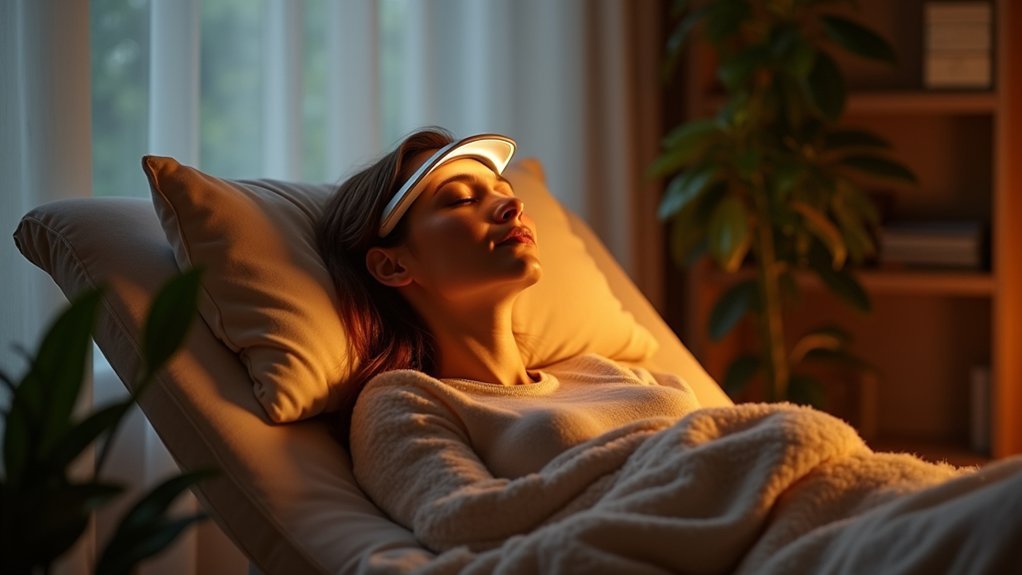
When you don’t get enough sleep, your body’s ability to recover takes a devastating hit that goes far beyond simply feeling tired the next day.
Sleep deprivation wreaks havoc on your recovery by blocking muscle repair processes and increasing inflammation throughout your system. Your hormonal balance gets thrown off completely, disrupting the delicate mechanisms your body needs for ideal healing.
Just one night of poor sleep can slash your physical performance by up to 30%, affecting your strength and endurance.
Your growth hormone production plummets, which is critical since this hormone drives tissue growth and repair after exercise. Meanwhile, stress hormones like cortisol spike, actively breaking down muscle tissue and sabotaging your recovery efforts when levels stay elevated consistently.
How Light Therapy Restores Circadian Rhythm Balance
Fortunately, light therapy offers a powerful solution to combat these sleep-related recovery problems by directly targeting your body’s internal clock.
When you expose yourself to bright light at 10,000 lux intensity for 20-40 minutes each morning, you’re fundamentally mimicking natural sunlight to realign your disrupted circadian rhythm. This targeted light exposure delays melatonin production, promoting alertness and enhancing your mood throughout the day.
Light therapy can help restore your biological clock by providing the precise timing cues your body needs to re-establish regular sleep-wake cycles. Research consistently shows that daily sessions markedly improve sleep quality and daytime functioning, making it particularly effective for jet lag recovery and circadian rhythm sleep disorders.
Optimizing Light Therapy Timing for Maximum Recovery Benefits
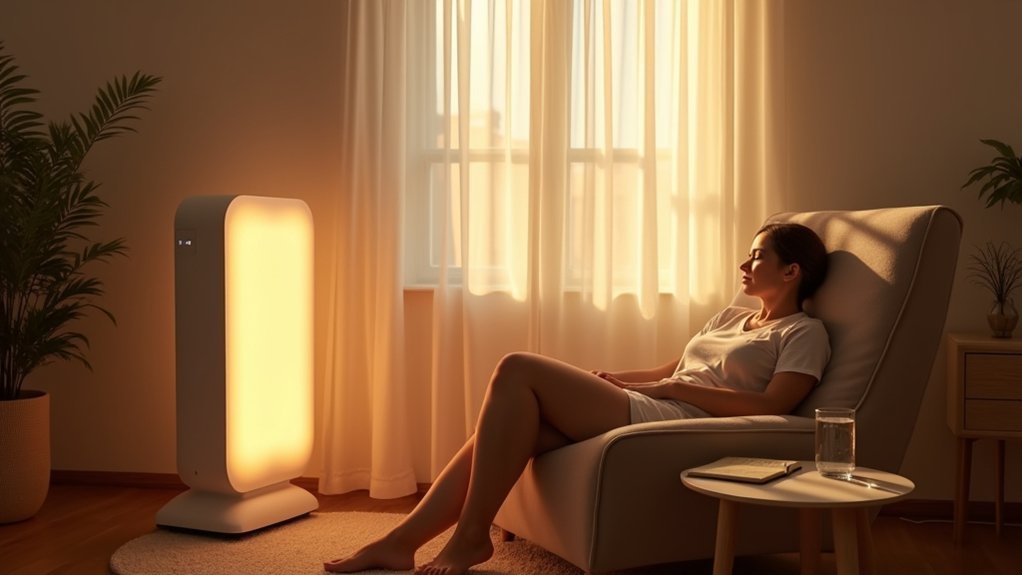
Although light therapy’s effectiveness depends heavily on proper timing, you’ll achieve peak recovery benefits by aligning your sessions with your body’s natural rhythms. Morning administration proves most effective for recalibrating circadian rhythms after sleep deprivation, helping your body shift back to healthy patterns.
| Timing Factor | Ideal Approach |
|---|---|
| Session Time | Early morning (6-9 AM) |
| Duration | 20-40 minutes daily |
| Light Intensity | 10,000 lux |
| Consistency | Same time each day |
| Post-Deprivation Use | Immediately upon waking |
You’ll maximize recovery by maintaining consistent timing and duration across all sessions. This consistency helps establish reliable sleep-wake cycles while enhancing mood and cognitive performance. The strategic timing delays melatonin production, increasing alertness when you need it most during recovery.
Red Light vs. Bright Light Therapy for Sleep Restoration
When you’re choosing between red and bright light therapy for sleep restoration, you’ll encounter distinct light spectrum differences that affect your body in unique ways.
Bright light therapy directly resets your circadian rhythms to help you fall asleep earlier and wake up refreshed, while red light therapy works at the cellular level to reduce inflammation and boost mitochondrial function for improved sleep quality.
Understanding how each therapy impacts your sleep patterns and recovery timeline will help you select the most effective approach for your specific sleep restoration needs.
Light Spectrum Differences
Understanding the spectrum differences between red light and bright light therapy can help you choose the most effective approach for your sleep restoration needs.
Bright light therapy uses 10,000 lux intensity to directly reset your circadian rhythms, making it ideal for morning use when you’re dealing with insomnia or seasonal affective disorder.
Red light therapy treatments operate at 600-850 nm wavelengths, penetrating deeper to improve muscle recovery and boost blood flow without disrupting melatonin production.
While bright light therapy targets your biological clock, red light therapy focuses on cellular repair to reduce inflammation and enhance mitochondrial function.
You’ll experience distinct health benefits from each approach – bright light therapy regulates mood and sleep timing, while red light therapy promotes physical recovery and relaxation.
Sleep Pattern Effects
Since sleep deprivation disrupts your natural circadian rhythms, both red light and bright light therapies offer distinct pathways to restore healthy sleep patterns, though they work through fundamentally different mechanisms.
Bright light therapy delivers 10,000 lux intensity to reset your circadian rhythms by mimicking natural sunlight exposure. When you use morning bright light therapy, you’ll greatly decrease sleep onset latency and improve overall sleep quality. This approach helps phase-delayed individuals realign their sleep-wake cycles, improving sleep duration and daytime alertness.
Red light therapy supports sleep restoration differently by enhancing mitochondrial function and reducing inflammation. You’ll experience better sleep quality through improved relaxation and reduced oxidative stress.
While bright light therapy directly resets your biological clock, red light therapy creates ideal conditions for restorative sleep following sleep deprivation.
Recovery Time Comparison
Although both therapies effectively address sleep deprivation, red light therapy typically delivers faster recovery results than bright light therapy due to its direct impact on cellular energy production.
You’ll experience enhanced ATP synthesis with red light therapy, which accelerates your body’s recovery processes and reduces muscle soreness more quickly than bright light therapy’s 10,000 lux approach.
While bright light therapy excels at realigning your circadian rhythms and improving overall sleep quality, it takes longer for recovery effects to manifest.
Red light therapy’s ability to reduce inflammation and restore energy levels provides more immediate benefits after sleep deprivation.
However, you’ll achieve superior results by combining both therapies—using red light therapy for rapid cellular recovery and bright light therapy for sustained sleep restoration.
Clinical Evidence Supporting Light Therapy in Sleep Recovery
When clinical researchers examined light therapy’s impact on sleep recovery, they discovered compelling evidence that targeted light exposure can effectively counteract sleep deprivation’s harmful effects.
Clinical studies revealed that you’ll experience significant reductions in sleep onset latency and increased total sleep time when using light therapy after sleep deprivation. The research shows you can enhance your mood stability and cognitive function through morning light sessions lasting 20 to 40 minutes.
Morning light sessions of 20-40 minutes significantly reduce sleep onset time while boosting mood stability and cognitive performance after sleep deprivation.
You’ll benefit from light therapy’s ability to realign your circadian rhythms by promoting serotonin production while regulating melatonin levels.
Meta-analysis data confirms that you’ll report improved alertness and mood following treatment, making light therapy an evidence-based solution for recovering from sleep deprivation’s negative impacts.
Implementing Light Therapy Protocols for Enhanced Sleep Quality
Understanding the evidence behind light therapy’s effectiveness naturally leads to the practical question of how you can properly implement these protocols in your daily routine.
You’ll need a 10,000 lux light box for ideal results. Use it daily for 20-40 minutes each morning to realign your circadian rhythms and enhance sleep quality.
This consistent exposure mimics natural sunlight, delaying melatonin production while boosting alertness and mood.
Light therapy proves particularly beneficial if you’re recovering from sleep deprivation, experiencing insomnia, or managing seasonal affective disorder and other mood-related conditions.
However, you should consult healthcare professionals to customize protocols based on your specific sleep issues and individual responses, ensuring maximum effectiveness.
Frequently Asked Questions
Does Light Therapy Help With Tiredness?
Yes, light therapy helps reduce your tiredness by realigning circadian rhythms and promoting wakefulness. You’ll experience improved energy levels and decreased daytime sleepiness through regular sessions of bright light exposure.
How Quickly Does Light Therapy Work for Sad?
You’ll typically see improvements in your SAD symptoms within 1-2 weeks of consistent daily light therapy use. Starting treatment early in fall when sunlight decreases enhances effectiveness and speeds your recovery.
Why Does Light Therapy Relax so Much?
Light therapy relaxes you so much because it stimulates serotonin release, regulates your circadian rhythms, reduces cortisol levels, and mimics natural sunlight. This combination elevates your mood while decreasing stress and anxiety.
Does Light Therapy Help You Wake Up?
Yes, light therapy helps you wake up by suppressing melatonin production and reducing morning grogginess. You’ll feel more alert when you use it consistently in the morning for twenty to forty minutes daily.
In Summary
You can markedly accelerate your recovery from sleep deprivation by incorporating targeted light therapy into your routine. When you’re strategic about timing and light type, you’ll restore your circadian rhythm faster than relying on sleep alone. Whether you choose bright morning light or red evening therapy, you’re giving your body the precise signals it needs to bounce back. Don’t underestimate light’s power to optimize your sleep recovery process.


