

You can recover from anxiety and stress through five key methods: exercising at least 150 minutes weekly to release mood-boosting endorphins, practicing daily mindfulness and deep breathing to activate your body’s relaxation response, building supportive social connections through community activities or volunteering, establishing consistent sleep habits with 7-9 hours nightly and screen-free bedtime routines, and seeking professional therapy when needed for structured coping strategies. These evidence-based approaches work together to restore your mental balance and enhance resilience against daily pressures.
Physical Activity and Exercise for Stress Relief
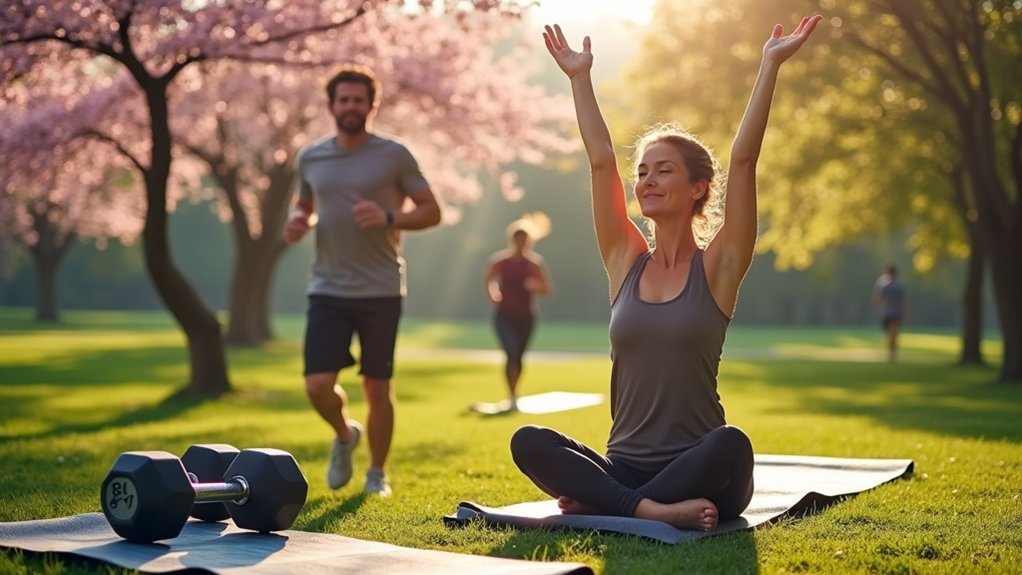
When stress begins to overwhelm your daily life, physical activity becomes one of your most powerful allies in restoring mental balance.
You’ll find that just 150 minutes of exercise weekly dramatically reduces stress while boosting your mental health. Even exercising twice a week for six weeks creates noticeable improvements in your mood and anxiety levels.
Physical activity releases endorphins that naturally lift your spirits and strengthen your resilience against daily pressures. You don’t need intense workouts—simple coping strategies like 10-minute nature walks provide immediate stress relief.
Physical activity doesn’t require intensity—even a simple 10-minute nature walk releases mood-boosting endorphins and provides immediate stress relief.
Choose enjoyable activities like dancing, swimming, or walking to maintain consistency in your routine. These relaxation techniques through movement enhance your overall health while creating sustainable habits that support long-term mental wellness and effective anxiety management.
Mindfulness and Deep Breathing Techniques
While your body benefits from physical movement, your mind finds its sanctuary through mindfulness and deep breathing techniques that anchor you in the present moment.
These practices activate your relaxation response, slowing your heart rate and reducing cortisol levels that fuel anxiety disorders. You’ll improve your mood markedly by dedicating just minutes daily to diaphragmatic or box breathing exercises.
Regular mindfulness meditation creates structural brain changes in areas controlling emotional regulation, enhancing your physical and mental well-being.
Guided meditation apps make stress management accessible, helping you develop skills that boost your quality of life.
When anxiety persists, don’t hesitate to seek help from your support network or mental health professionals who can provide additional strategies.
Building Social Connections and Support Networks

Beyond individual practices, nurturing meaningful relationships becomes one of your most powerful tools for managing anxiety and stress. When anxiety is affecting your daily life, reaching out to friends and family creates essential support networks that help reduce isolation and provide emotional resilience.
Research shows having just one supportive friend can greatly improve your mental health and mood and help you cope better with stressors.
You can build these connections through community activities, volunteering, or joining clubs and support groups. Regular social interactions offer valuable distractions from stress while fostering belonging.
Combined with maintaining a healthy diet and ensuring you’re getting enough sleep, these positive physical and social practices work together to help you stay healthy and manage anxiety effectively.
Creating Healthy Sleep Habits and Boundaries
Since quality sleep forms the foundation of effective stress management, establishing consistent sleep habits and boundaries becomes essential for reducing anxiety and improving your overall mental health. You’ll need 7-9 hours nightly to build resilience against stress and help you feel better physically and mentally.
Create boundaries by setting consistent sleep and wake times to regulate your body’s internal clock. Avoid unhealthy habits like consuming caffeine or heavy meals before bedtime, as these disrupt sleep patterns. Practice breathing exercises or meditation to calm racing thoughts.
| Sleep Habit | Boundary | Benefit |
|---|---|---|
| Screen time limits | No devices 1 hour before bed | Reduces mental stimulation |
| Consistent schedule | Same sleep/wake times daily | Regulates internal clock |
| Caffeine cutoff | None after 2 PM | Prevents sleep disruption |
| Family time boundaries | Quiet hours before bed | Creates peaceful environment |
| Relaxation routine | 15 minutes breathing exercises | Calms anxiety symptoms |
Professional Support and Therapeutic Interventions
Professional support provides a structured approach to anxiety management that goes beyond self-help strategies. When you’re experiencing overwhelming anxiety, therapy and counseling help you identify stress sources and develop effective coping mechanisms.
Cognitive-behavioral therapy stands out as particularly effective, with research showing significant symptom reduction in many patients.
Through professional support, you’ll improve emotional regulation and build resilience to manage stress more effectively. Healthcare professionals often recommend combining therapy with medication for severe anxiety, leading to better treatment outcomes.
The key is early intervention – seeking help when anxiety begins impacting your daily life makes treatment and recovery easier.
This thorough approach to mental health guarantees you receive personalized strategies tailored to your specific needs and circumstances.
Frequently Asked Questions
How to Best Recover From Stress and Anxiety?
You’ll recover faster by exercising regularly, practicing daily mindfulness, connecting with loved ones, eating nutrient-rich whole foods, and managing your time effectively with prioritized to-do lists.
What Is the 3 3 3 Rule for Anxiety?
You’ll identify three things you can see, three things you can hear, and three things you can feel. This grounding technique interrupts anxious thoughts and refocuses your attention on the present moment.
How to Fix Anxiety Naturally?
You can reduce anxiety naturally by exercising regularly, eating whole foods, practicing mindfulness meditation, spending time outdoors, and building supportive relationships. These methods help regulate emotions and lower stress levels effectively.
What Is the 5 5 5 Method for Anxiety?
You’ll identify five things you can see, five things you can hear, and five things you can touch. This grounding technique engages your senses to redirect anxious thoughts and bring you into the present moment.
In Summary
You’ve now got five powerful tools to tackle anxiety and stress head-on. Start with one method that resonates most with you, whether it’s moving your body, practicing mindfulness, reaching out to friends, improving your sleep, or seeking professional help. Don’t try to implement everything at once—you’ll build momentum gradually. Remember, recovery isn’t linear, and you’re already taking the first step by learning these strategies. You’ve got this.


